
“Portent & Fate: The Mythic Aspect of Dream in Contemporary Fantasy” — From The Backlist
The last few weeks have seen a few ups and downs in the writing life, so I’m currently working hard on rebuilding revision momentum — and falling back on a “From The Backlist” post to aid that cause.
Although I do believe it’s a reasonably interesting post, as well as very relevant to the WALL series, so worth refeaturing in its own right. I do hope you agree! 😀
Portent & Fate: The Mythic Aspect of Dream in Contemporary Fantasy
Dream magic plays a relatively significant part in both Thornspell and The Wall Of Night series and one of its more important aspects is that of portent, with fulfillment locked into whether—or how—the foretold doom or destiny will play out.
This aspect of dream and fulfillment is an essential element of both the Greek and Norse myths, as well as folklore. We all recognize, after all, that if our hero or heroine is told something three times, especially by an oracle of some kind, then the foretelling is likely to prove true …
 (This is not just in Fantasy, by the way. In the SFF television series, Babylon 5, I believe careful perusal will show that the captain, John Sheridan, is warned three times that, “If you go to Z’ha’dum, you will die.” Just sayin’)
Yet any exploration of dreams and their “fated” fulfillment in Fantasy also gives rise to the alternative consideration: the extent to which characters have free will. Can they, like Will Thatcher (the mourned Heath Ledger) in the film, A Knight’s Tale, change their stars?

The Greek and Norse myths would answer that question with a resounding “no”—in fact it is usually the protagonist’s endeavours to avoid his or her prophesied fate that brings about the doom.
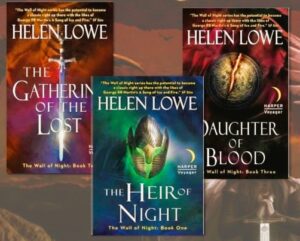
In The Wall of Night series I keep the fate vs free will aspect open by having the prophetic dreams occur very much in the “jumbled workings” of the subconscious. There is truth in them, but they may only imperfectly reflect events that occur in the daylight world. Nothing is certain … and every action a protagonist takes acts on the dream, creating alternative possibilities of fulfillment.
In exploring the prophetic dream tradition, both through reading other writers and in my own work, I suspect that we are also talking about aspiration—the innate human desire to affect our fate and exert control over destiny. The myths, of course, would say that any such aspiration is doomed, its fulfillment stillborn before it has taken the first breath of life — but the great thing about contemporary fantasy is the ability to reshape mythic tradition,if we choose, and find ways to make the old stories new.