
Reading Older Books
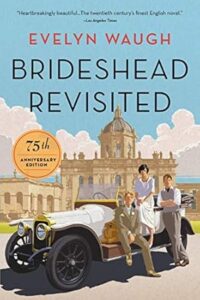
As I said on January 12, pressing “send” on the WALL #4 manuscript doesn’t mean I can put my feet up. Even ahead of the edit, there are infelicities to tweak and belated gaps to plug — but while I’m doing that, I’ve been reflecting on a number of topics. One of which, as I delve into Evelyn Waugh’s Brideshead Revisited, is why I actively strive to read older books, as well as seeking out the new, the new.
Don’t get me wrong, I’m as avid for the new as any other reader—perhaps more so being a writer, as I love to see what my fellow authors are up to. But it’s always good to see how our predecessors-in-writing rolled as well, and what in storytelling has either changed or remained the same. Besides, a good a story is a good story, irrespective of how and when it was told.
I might even channel my inner The Lord of the Rings here, and aver that “the old that is strong does not wither” — although it will, of course, if we don’t read it. So despite the allure of the new and f.o.m.o. on the latest buzz, I do like to include older titles on my to-read table.

Above and beyond thatI particularly like to read older books as they were written and published, rather than updated versions, because even fictional works can provide a great insight into how people thought and lived “back then.” From an historical perspective, I believe it illuminates social change in particular (which is why it matters to read the text ‘as it was writ then.’)
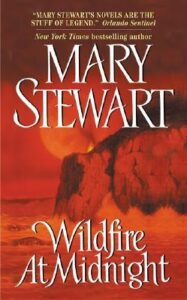
By way of an example, I recently re-read Mary Stewart’s Wildfire At Midnight, which takes place at the time of Queen Elizabeth II’s coronation in 1953. The novel is a suspense / thriller with strong romantic elements, set in an Island of Skye fishing lodge. Although published seventy years ago, I believe it’s still an engaging read, and stands (or withstands) the test of time.
In addition to enjoying the story, however, I noticed at least three aspects that struck me as very different from today:
- Nearly everyone smokes, as a matter of course. No worries about cancer and health, smoking is a social given.
- It’s illegal to fish on Sundays. I vaguely recall, as a very young child, that some people preferred not to play sport or undertake other activities on a Sunday for religious reasons. Now, though, it’s hard to comprehend that seventy years ago in the UK, it was illegal for anyone to fish recreationally on Sundays.
- One of the supporting characters in the book is a paperback writer (think potboilers and pulp fiction) — and it’s pretty clear, from the reaction of the other characters, that publishing in paperback (as opposed to hardcover) is not quite respectable. Although surprisingly (to those other characters), he seems a decent enough fellow. 😀 Interactions that took place thirteen years before the Beatles famously sang “…I want to be a paperback writer” — but even then, maybe, it wasn’t quite respectable… 😉
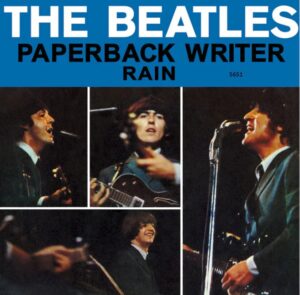
Jacket for singles release of Paperback Writer, 1966



Still enjoy Mary Stewart. Also beside reading the book went to see the film
The MoonSpinners with Hayley Mills. Probably when I was about 12. Found it really creepy in parts
Huh< I didn't even know there was a film. I shall have to see if I can find it streamed somewhere, on via an outlet like Alice’s (Film Library.) I am a huge Mary Stewart fan, for her storytelling, characters, and writing style.