Shooting The Rapids of “Why?” and “What?”
In my Zoom In; Zoom Out post of March 2, I indicated there were other tools in the authorial toolkit if zooming in and zooming out both failed to resolve, or completely resolve anyway, a narrative or character issue.

We zoomed like Korra, but…
Usually, in reaching that point, it’s very likely that the original vision for the narrative, and/or a character, has been superseded by the story’s evolution so is no longer fit for purpose — which is why no amount of zooming in or out is likely to resolve matters.

Sometimes zooming ain’t enough
Whenever I arrive at that apparently insoluble juncture (hint: more often than I would like 😀 ), I find it invaluable to focus on “why?”, and then “what?”
Firstly why, when I have a good handle on both the individual trees and the whole of the forest, is the story still not working the way I envisaged? One of the main ways I shoot these particular rapids is by means of the “morning pages” (a phrase attributable to Julia Cameron), i.e the three longhand pages I write most mornings, which I find an excellent means of wrangling snarls and gnarls in the writing process.

It may be that I will then try different ‘takes’ on a scene or sequence to give effect to the wrangling. Or it may be that I have already done so in reaching this point, which is when asking “Why isn’t it working?” may not suffice. At this juncture, it’s time for the rapids of “what?” — i.e. “So if the story isn’t working out in accordance with my vision, then what is happening?”
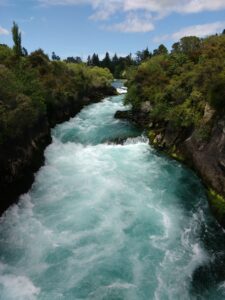
Time to navigate wild waters
This question can be very illuminating, with a range of possible explanations. For example, it may be that an outcome similar to what I originally intended for this scene or sequence has occurred earlier in the story, even if in quite a small way, and the muse doesn’t like to take the same road twice.
Or it may be that given other changes in the story, the original plan isn’t going to work out farther down the track. The ‘snarls and gnarls’ arise when I have realized subconsciously that the story will work better if a different path is taken, but then need to give effect to that on the page.
Gnarly, huh?! AKA not every course runs smooth…
For example (hypothetically!) if two protagonists don’t fall in love as intended, after all; or the conflict between a hero and villain is worked out by some other means than fighting each other, with one or both dying. Or it may be that a duel to the death is the required solution, when the story vision was that the paths of this particular pair would never cross…
So it’s important to be prepared to try different approaches, and also to be willing to change — because no matter how genius one’s original vision, the muse is wise and almost invariably right when it comes to finding the best path through a story. 😀

But books, like rivers, do eventually end in sky. 🙂