
Oct
02
2016


Oct
01
2016
Apparently today is international coffee day!
As an officially designated ‘caffiend’ how could I not be into that?
But I don’t think I could say it better than Anthony Trollope —- “What on earth could be more luxurious than a sofa, a book, and a cup of coffee?”
(Whispers: Well, perhaps a sofa, a book, and a glass of wine… 😉 )
Sep
30
2016
 Yesterday, I posted a review of Wendy Orr’s Dragonfly Song, because I loved the story and wanted to share that love.
I’m an enthusiast by nature so that’s what I tend to do when I love something. 🙂
Recently though, a friend sent me a link to some info via Tall Poppies.org, which suggested there could be

Tall Poppy.Org
other reasons to share your enthusiasm when you enjoy a book. These three points were:
1. Once a book has 50 reviews, Amazon will list it in its newsletters and other promotions.
2. Reviews are the easiest way to say ‘thank you’ to an author and tell their publisher to produce more books
3. Reviews can be short* “I liked it”. It’s the number of reviews that matter the most.
All good reasons to not only share my enthusiasm here on my own blog but to do so on Good Reads as well and maybe even Amazon — if I’m eligible to do so there, of course.
But the same principle holds for any book: if you enjoyed it, why not leave a review and share the love.
—
USA
*And yes, a review can be short, even really short and still be great. For example, Daughter of Blood has a review on Amazon.com that is simply: “5 stars – Impec.” 😉
 Sometimes you read a book that bowls you over — for me, Dragonfly Song by Wendy Orr (author of Nim’s Island among many other titles) is definitely one of those books.
Dragonfly Song is Junior fiction and what I would describe as “legendary history”, i.e. it draws on what we know of real history, but also invokes the stuff of legends, in this case those of Bronze Age Greece/Crete, and includes at least a hint of magic.
The book tells the story of Aissa, the daughter of a priestess-queen who is cast out at birth and must learn to survive in life’s school of hard knocks. Later, she is selected by lot as a tribute to the Minoan kingdom of Crete where she must learn to “dance with the bulls” — or die.
The story is well written and well researched, but what makes it special is the “voice” and character of Aissa. I also loved the way the story is told, in a mix of prose and poetry — or at least prose that is poetic in form. It’s also a book with a great deal of what I call “heart”, which comprises both the integrity of the characters and the emotional depth of the story.
In short, I think Dragonfly Song is wonderful: I loved it.
If you enjoy historical fiction by writers such as Rosemary Sutcliff or Gillian Bradshaw, or fantasy works such as those by Patricia McKillip, Philip Pullman’s The Golden Compass, or my own Thornspell, then you may enjoy Dragonfly Song, too.
—
Additional Information:
I read the AU/NZ paperback edition, 393 pp, published by Allen & Unwin (2016.) I purchased my own copy rather than reading one made available by the publisher or author.
Sep
28
2016

National Writers’ Forum
On September 15, shortly before heading to the National Writers’ Forum, I posted here on listening in relation to writing, including confessing to be a shameless eavesdropper. 😉
During the course of the Forum I attended UK author Chris Cleave’s masterclass on “Writing Psychology” — and was intrigued when he spoke of exactly the same thing: the importance of listening, not only to what people say but how they say it. And what they don’t say, as well…

Chris Cleave
It felt like a coincidence at the time, but I realise it probably wasn’t since being a writer is all about paying attention. Listening is just one of the ways in which you can do that, but it’s an incredibly important one.
Chris Cleave takes the art of listening a step further, however, because he also interviews real people in order to garner the material for his books about fictional characters.
Interviewing is all about paying attention, as well, and listening—but in a much more active way, because the interviewer gets to ask questions on specific topics, i.e. she or he can direct the conversation.
Intriguing stuff. Fantastic, too, to get an insight into another writer’s process.
Dover Beach
The sea is calm to-night,
The tide is full, the moon lies fair
Upon the straits; — on the French coast the light
Gleams and is gone; the cliffs of England stand,
Glimmering and vast, out in the tranquil bay.
Come to the window, sweet is the night-air!
Only, from the long line of spray
Where the sea meets the moon-blanch’d land,
Listen! you hear the grating roar
Of pebbles which the waves draw back, and fling,
At their return, up the high strand,
Begin, and cease, and then again begin,
With tremulous cadence slow, and bring
The eternal note of sadness in.
…
— by Matthew Arnold, 1822 – 1888
—
 Yesterday I posted a poem of Wellington’s Island Bay, so I thought today’s poem had to about the sea as well.
This is only the first stanza of a longer poem, but I think it captures the sense of the ocean and the ocean shore extremely well.
To learn more about the poet, see this excellent biography from the Academy of American Poets:
Matthew Arnold
Sep
26
2016
Although it did not feature in the LoTR films or The Hobbit, this view would still have to be one of the most iconic from inside NZ , aka “Middle Earth”. 😉
It’s of the waterfront at Island Bay, named — you guessed it — for the island, Tapu Te Ranga, which I’ve also seen written as Taputeranga.

The reason it’s so iconic is because the island and the boats form the subject of one of NZ’s most well-loved paintings, Boats, Island Bay (1968), by Rita Angus, 1908 – 1970.
For more information on the painting and Rita Angus, click on:
Boats, Island Bay
Sep
23
2016
 Last weekend (National Writers’ Forum, “Building Fantastic Worlds” masterclass, all that jazz 😉 ), I emphasised the importance of continuity and consistency when world-building — but of course the same exhortation holds true for every aspect of writing.
Even more so when you’re into the fourth and final novel of a four-book series and need to make sure all the small details from #1, through #2 and #3, line up.
Like not trying to re-introduce a character in the work-in-progress (The Wall Of Night #4 — working title The Chaos Gate) that you killed off in the first book (The Heir Of Night, WALL #1). Or even — wait for it — three or four characters: O-o!
That was all part of yesterday’s writing fun — and definitely led me to conclude that maybe I killed off a few too many redshirts in WALL #1… (This is also known as “the George RR Martin Effect”. )
Anyway, fortunately I was onto it early, since these characters are not intended to be revenants. 😀
Phew.
—
If you would like to read a post on a related (including to “the George RR Martin Effect”) but more serious-in-tone topic, you could check out:
When Characters We Love Die
Yesterday, I posted on seven of the (many) NZ Fantasy books I featured as part of my masterclass on Building Fantastic Worlds at the National Writers Forum last weekend. These were books I knew for certain were published overseas as well as in New Zealand.
A participant asked if I could share the information on those books, which was the main reason for the post. However, in the final overhead I had a lot of fun making a border comprised of a whole heap of NZ Fantasy books:

Here’s the great thing, though, it’s not even all of them! But it is a reasonable selection and includes all those I mentioned in the class, as well as m’own books. 😉
Seven of the books were mentioned yesterday, so I won’t feature them again. I will also simply list the books — but where I’ve done an interview with the author or a reading report of any kind, I’ll provide the link for you. I’ll start from top left and move clockwise around the page.
 1. Bloom by Kelly Ana Morey
Magic Realism. I’ve mentioned this book several times on my blog but never indepth, so no link.
.
 2. Tymon’s Flight by Mary Victoria
Epic Fantasy.
I’ve done two interviews with Mary Victoria, for the second and third books in her trilogy. To read, click on:
 3. The Assassin Of Gleam by James Norcliffe
YA Fantasy
The Assassin Of Gleam won the Sir Julius Vogel Award for Best Novel in 2006
.
 4. Mortal Fire by Elizabeth Knox
YA Fantasy.
Mortal Fire won the New Zealand Children’s Book Award for Best Young Adult Fiction in 2014.
In 2015, I included its heroine, Canny Mochrie, in my Fantasy Heroines That Rock My World series on international ‘zine, SF Signal.
.
 5. The Chimes by Anna Smaill
Dystopian Fantasy
The Chimes was longlisted for the 2015 Man Booker prize and shortlisted for the 2016 Nebula Award. The link to our interview is below:
An Interview with Anna Smaill, Author of The Chimes
 .
.
6. Red Rocks by Rachael King
Children’s Fantasy (Junior)
Red Rocks won the LIANZA Junior Fiction Award, the Esther Glen Medal, in 2013.
.
 7. Angel’s Blood by Nalini Singh
Paranormal Urban Fantasy/Romance
Angel’s Blood is the first in Nalini Singh’s Guild Hunter series. Her books have won many awards and appeared on the New York Times bestseller list multiple times.
.
 8. Sacrifice by Joanna Orwin
YA Post-Apocalyptic SciFi
Sacrifice was a finalist in the 2012 NZ Children’s Book Awards. I checked it out early that year:
What I’m Reading: Sacrifice by Joanna Orwin
.
 9. Tales For Canterbury, ed. Anna Caro and Cassie Hart
Anthology: predominantly Speculative Fiction
Tales For Canterbury was published by Random Static as a fund raiser following the Canterbury Earthquakes. It won the Sir Julius Vogel Award for best Collected Work in 2012.
I featured a number of short stories from the collection. To check them out, see:
 .
.
10. The Changeover by Margaret Mahy
YA Fantasy
Possibly one of NZ’s most famous fantasy novels, The Changeover has been widely published internationally and won the Carnegie Medal in 1984, shortly after it was first published. In the USA, it was an ALA Best Book for Young Adults and the School Library Journal Best Book of the Year. It is currently being made into a film starring Timothy Spall, Melanie Lynskey, and Erana James.
.
 11. Once Upon A Time in Aotearoa by Tina Makereti
Anthology: predominantly Speculative Fiction
Once Upon A Time in Aotearoa won the inaugural fiction award at Nga Kupu Ora 2011 – the third Maori Book Awards.
I featured Pania, the protagonist in the short story Shapeshifter, in the SF Signal series, Fantasy Heroines That Rock My World: Pania
.
 12. The Prince Of Soul and the Lighthouse by Fredrik Brounéous
YA Fantasy
Fredrik Brounéous is a Swedish writer resident in New Zealand and The Prince Of Soul and the Lighthouse was his first novel written in English. It won the Sir Julius Vogel Award for Best Youth Novel in 2013. I posted a “What I’m Reading” report here:
“The Prince of Soul And The Lighthouse” by Fredrik Brounéous
.
 13. The Bone Tiki by David Hair
YA Fantasy
Critically acclaimed, The Bone Tiki by David Hair won Best First Book in the 2009 NZ Post Children’s Book Awards and was a Storylines Notable Book in 2010.
.
 14. A Necklace of Souls by RL Stedman
YA Fantasy
A Necklace of Souls won the Storylines Tessa Duder Award in 2012 and was published by HarperCollins in 2013. It was a Storylines Notable Book in 2014 and won Best First Book in the NZ Children’s Book Awards the same year.
.
So waddya reckon? You’re so right, I agree: what an awesome lineup of NZ Fantasy!

Photo credit: Andi Buchanan
In the powerpoint presentation for my National Writers’ Forum masterclass on Building Fantastic Worlds, I used images of bookcovers to illustrate many of the overheads.
In one (No. 35 to be precise) all the seven covers featured were of New Zealand-authored Fantasy novels where the book has been published abroad, either exclusively or in addition to being published here in NZ.
I promised, in the aftermath of the masterclass, to feature the seven books again on my blog, so here they are now.
 Dreamhunter / Dreamquake by Elizabeth Knox
The Dreamhunter /Dreamquake duology has been published by HarperCollins in Australia, Faber & Faber in the UK, and both Farrar, Straus, and Giroux and Square Fish (Macmillan) in the USA. Elizabeth Knox is one of NZ’s most well-known authors and is arguably best-known for this duology and her debut novel, The Vintner’s Luck.
Dreamhunter was nominated for (the former) Montana New Zealand Book Awards in 2006, and was an American Library Association best book of 2007. Dreamquake was a US Michael L Printz Award Honor Book in 2008.
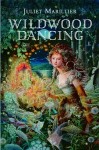 Wildwood Dancing by Juliet Marillier
Juliet Marillier is an expatriate New Zealand author who now lives in Western Australia. Wildwood Dancing is published by Pan Macmillan in Australia and the UK, and Knopf in the USA, as well as being published in translation. It has won awards in both Australia and the USA.
 The Loblolly Boy by James Norcliffe
The Loblolly Boy is published by Penguin Books in New Zealand, Allen & Unwin in Australia, and Egmont in the USA, although retitled as The Boy Who Could Fly. James Norcliffe is a well-known NZ children’s writer, editor, and poet who lives in Diamond Harbour.
The Loblolly Boy won the New Zealand Post Children’s Book Awards’ Junior Fiction Category in 2010.
 Heartwood by Freya Robertson
Heartwood is an epic fantasy novel by New Zealand writer Freya Robertson, who hails from NZ’s Far North. (AKA the “winterless north” for any Northern Hemisphere-ites reading this. 😉 )
Heartwood and its sequel, Sunstone, were both published by the UK’s Angry Robot Books. Heartwood won NZ’s Sir Julius Vogel award for Best Novel in 2014.
 The Bridge by Jane Higgins
Jane Higgins is a Christchurch writer and her debut novel, The Bridge, won Australia’s Text Prize for Young Adult and Children’s Writing in 2010 and was subsequently published by Text (The sequel, Havoc, 2015, is also with Text.)
The Bridge was a 2012 Storylines Notable Book. It was also an Honour Book in the 2012 New Zealand Post Children’s Book Awards as well as winning the YA ‘Children’s Choice’ Award.
 Across the Face Of The World by Russell Kirkpatrick
Another epic fantasy, Across the Face Of The World was published by Harper Voyager in Australia and Orbit in the USA. Although resident in New Zealand at the time the book (and series) was published, Russell Kirkpatrick now lives in Australia.
According to Wikipedia, Across the Face of the World was the biggest selling debut fantasy in the United States in 2008.
 Guardian of the Dead by Karen Healey
Karen Healey not only lives and works in Christchurch, but Guardian of the Dead is largely set in the (pre ‘quake) Garden City. It was first published by Allen & Unwin in Australia and subsequently by Little, Brown & Co Books for Young Readers in the USA — and it’s won more awards and accolades than you can shake a stick at , including in NZ, Australia, and the USA.
 Spark by Rachael Craw
Spark is YA science fiction and its published by Walker Books in Australia — where the legions of Rachael’s fans are known as the “Spark army.” w00t!
It’s also available on this side of the Tasman as is only fitting since Rachael, who originally hailed from Christchurch, now resides in Nelson.
So you see, these books may be homegrown, but people really are reading and loving them in a great many other places. Go Kiwi. 😉
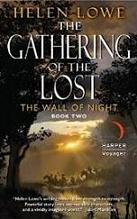
Jacket art by Greg Bridges
The Gathering of the Lost: USA Cover (Harper Voyager) - Read More Here!
"A richly told tale" -- Robin Hobb
"A vividly imagined world" -- Juliet Marillier
"This is an author with a gift for fantasy” -- Catherine Asaro
To read reviews, click Here.
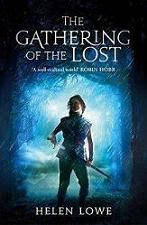
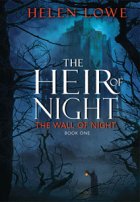
Jacket art by Greg Bridges
The Heir of Night: USA Cover (Eos) - Read More Here!
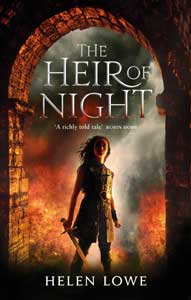
The Heir of Night: UK/AU/NZ Cover (Orbit) - Read More Here!
HEIR won the international Gemmell Morningstar Award 2012 for Best Fantasy Debut.
"THE HEIR OF NIGHT by Helen Lowe is a richly told tale of strange magic, dark treachery and conflicting loyalties, set in a well realized world."--Robin Hobb

Jacket art by Antonio Javier Caparo
Thornspell is my first novel and is published by Knopf (Random House Children's Books, USA). It won the Sir Julius Vogel Award 2009 for Best Novel: Young Adult and was a Storylines Childrens' Literature Trust Notable Book 2009.
