Introduction:
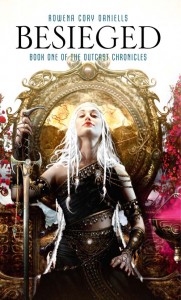 I have been hearing the name of Rowena Cory Daniells for some time now, as one of the exciting new authors of speculative fiction to emerge out of Australia over the past few years. The Chronicles of King Rolen’s Kin was released in 2010. Her new trilogy The Outcast Chronicles (Solaris) is being published in August, September and October of this year.
But Rowena is no newcomer to speculative fiction: she has been actively involved since 1976 when she jointly set up small press publisher Cory and Collins, as well as being involved with the Aurealis Awards and the establishment of Fantastic Queensland.
You can find out more about both Rowena and her new trilogy, The Outcast Chronicles, below her guest post. But right now I am absolutely delighted to welcome Rowena to “…on Anything, Really” to share her thoughts on “Fantasy, the Poor Cousin of Science Fiction.”
—
“Fantasy, the Poor Cousin of Science Fiction”
by Rowena Cory Daniells
It is time fantasy was rehabilitated as a genre?
 I attended a literary event recently. When a librarian heard I was a fantasy writer, she said: ‘Oh, fantasy, that’s the sort of book you feel guilty reading. You know it’s bad for you, but you read it anyway.’ She went on to talk about readers who turn up at the library and have read all of the Wheel of Time and are looking for more series they can devour. She was referring to the big fat High Fantasy books, so loved by readers.
And so despised by reviewers.
Everyone has heard the China Mieville quote: ‘Tolkien is the wen on the arse of fantasy literature. His oeuvre is massive and contagious… He wrote that the function of fantasy was ‘consolation’, thereby making it an article of policy that a fantasy writer should mollycoddle the reader (Miéville, PanMacmillan).’ *
It should be said here that in the past if you were a writer, (with a publisher who was willing to publish your books) you wrote what the publisher contracted you to write and High Fantasy sells.
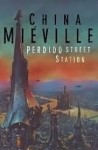 Nowadays, you can self publish and reach an audience. It may not be large, but there will be someone out there who likes your stories. Or you may strike a chord with readers and word of mouth will turn your book into a best seller. So the range of fantasy books available and the blurring of the genres is marching on at a great rate. Even back before technology opened publishing to the masses, people like Mieville (Perdido Street Station, 2000) and VanderMeer (City of Saints and Madmen: The Book of Ambergris 2001) were pushing the boundaries of fantasy.
Mieville did his PhD thesis on “Between Equal Rights: A Marxist Theory of International Law.” In an interview in Believer Mag he says: ‘I’m not a leftist trying to smuggle in my evil message by the nefarious means of fantasy novels. I’m a science fiction and fantasy geek. I love this stuff. And when I write my novels, I’m not writing them to make political points. I’m writing them because I passionately love monsters and the weird and horror stories and strange situations and surrealism, and what I want to do is communicate that. But, because I come at this with a political perspective, the world that I’m creating is embedded with many of the concerns that I have. But I never let them get in the way of the monsters.’
While Mieville sets out to entertain, the issues that concern him naturally creep into his work. Writing a book is a long process. The writer has to be passionate about the characters and their dilemmas.
 I read somewhere that the role of the artist is to hold a mirror to the world so that we can see ourselves more clearly. Sometimes there are truths we don’t want to see, even when they are presented in fiction. The strength of the science fiction genre is that it can hold a distorted mirror to the world and through this we can see more clearly because we are distanced from that which disturbs us. I believe the fantasy genre can also serve as a distorted mirror to help us see ourselves.
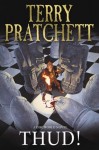
Anyone who has read Terry Pratchett will agree this is what makes his books so powerful. Even as you laugh, you are groaning because his observations are so accurate.
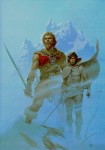
Fafhrd & the Gray Mouser
Back in the 70s, when I had my book store, I discovered Fritz Leiber. I read everything of his I could find. One of Leiber’s Fafhrd and Gray Mouser stories has stuck with me, thirty years later. It appeared in “Swords in the Mist” and was called Lean Times in Lankhmar. Out of work and down on their luck, our two intrepid heroes have to take steady jobs. The Mouser becomes hired muscle for a thug, who shakes down priests. (What is delightful here is that the Mouser puts on a bit of weight and acquires a little pot belly that rests on his thighs when he squats down. I love this touch of humanity). Meanwhile, Fafhrd becomes an acolyte of an obscure god known as Issek of the Jug. Due to Fafhrd’s musical training, the god acquires a following and starts making money, which leads to conflict with the Mouser. The ending had me laughing aloud. It was a scalding commentary on organised religion.
Another writer whose books remain vivid in my mind is Mervyn Peake. His Gormenghast trilogy was so obsessively detailed that even now, when I catch myself slipping into obsessive details I think: ‘I’m getting a bit Gormenghast.’
What these authors have done is use the fantasy genre to comment on society. This is what I’ve tried to do in The Outcast Chronicles. It is still a ripping read, because I love a good story. I like to put my characters in situations that test them as people. And I can do this in fantasy because I build my secondary world specifically designed to test them.
So I think it is time to embrace fantasy. It doesn’t have to be a guilty read. Let’s just enjoy the genre.
—
(Disclaimer, I have not read every fantasy book ever written so I am sure to have missed some of your favourite).
*See an analysis of Peter Jackson’s Lord of the Rings movies with Tolkien’s books here.
—
About Rowena Cory Daniells:
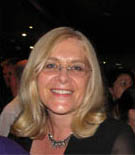
Rowena Cory Daniells
Rowena Cory Daniells has been involved in speculative fiction since 1976 she set up the small press publishing house Cory and Collins with Paul Collins. Working as Paul’s assistant gave her an insight into the travails of Independant Press publication and a great respect for anyone who does it. Since then she has run a bookshop, then a graphic art studio where she illustrated children’s books, and had 6 children in 10 years. Then she sold nearly 30 children’s books and a fantasy trilogy. Her latest fantasy trilogy is with Solaris. With her husband, Daryl, she works in R&D Studios.
Rowena likes to support the writing community so has served on the management committees of Romance Writers of Australia, the Queensland Writers Centre, and the Brisbane Writers Festival. She was one of the founders of Fantastic Queensland (FQ) which runs Clarion South, and served on the Aurealis Awards for five years. She has established a national genre award, and set up national workshops and pitching opportunities, as well as running workshops on writing at national SF conventions, schools and libraries, and World Con 1999.
Together with Marianne de Pierres, she was a founding member of the VISION writing group which went on to form Fantastic Queensland. She and Marianne also formed ROR, the national critiquing group.
Rowena lives by the bay in Brisbane, with her husband and six children. She has studied the martial arts Tae Kwon Do, Aikido and Iaido, the art of the Samurai sword.
She has a Masters in Arts (Research) and received a Distinction in Drama Screen Writing unit through Griffith UNI. Currently, she is an Associate Lecturer at Qantm College.
To find out more about Rowena and her work you can check out her website, here, and her blog, here.
—
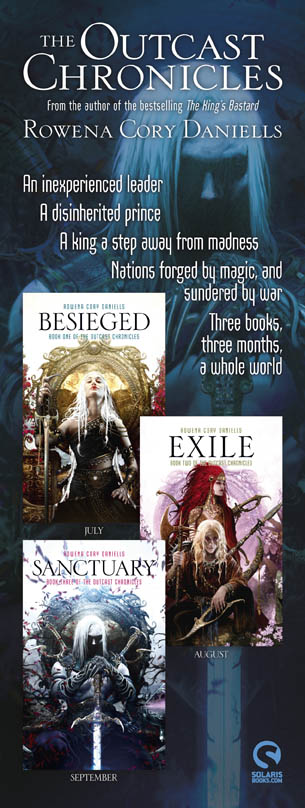 About The Outcast Chronicles:
This series follows the fate of a tribe of mystics, the T’Enatuath. Vastly outnumbered by people without magical abilities, the mystics are persecuted because ordinary people fear their gifts.
This persecution culminates in a bloody pogrom sanctioned by the King who lays siege to the Celestial City, last bastion of the T’Enatuath.
A fantasy-family saga, the characters are linked by blood, love and vows as they struggle with misplaced loyalties, over-riding ambition and hidden secrets which could destroy them. Some make desperate alliances only to suffer betrayal from those they trust, and some discover great personal strength in times of adversity.
The first novel, Beseiged, is out this month, with Exile and Sanctuary following in September and October respectively.
To view the trailer, click here: