
I really enjoyed this Guardian article on:
“The weird afterlife of the world’s subterranean ‘ghost stations'”
So I thought I’d share it as something fun for your weekend—not least because it raises all sorts of speculative possibilities. đ
.
![]() |
![]() |
| I am a novelist, poet, interviewer and lover of story. Welcome to my blog. |
I really enjoyed this Guardian article on:
So I thought I’d share it as something fun for your weekend—not least because it raises all sorts of speculative possibilities. đ
.
The A Geography of Haarth post series is exploring the full range of locales and places from The Wall of Night world of Haarth. Each entry is accompanied by a quote from the books in which the place appears, currently either The Heir Of Night or The Gathering Of The Lost, or both.
Not only are we entering the final stage of our Haarth traverse today, by crossing onto the great plains of “W”—but the initial entry is the Wall of Night itself: how cool is that? (Very cool indeed, I think you’ll find.) đ
—
Wall of Night:Â the vast mountain range that protects the world of Haarth from the Swarm of Dark. Garrisoned by the Derai Alliance, the Wall is said to have been created by the House of Night and is also called the Shield-wall of Night.
.
“The Derai are warlike and fierce,” one storyteller had said solemnly, while another recounted an even older story that claimed the Derai were not from Haarth at all, but had come from the stars long ago. They had, the teller said in hushed tones, built their great strongholds in a night and a day while the world still reeled from their coming. The plains had been riven with earthquake and fire, every river and lake had boiledâand when the cataclysm was over the vast and terrible Wall of Night marched along the northern boundary of the world.
~ from © The Heir Of Night, The Wall of Night Book One: Chapter 16 â Woman of Winter
.
“The Darkswarm warrior, Jehane Mor reflected as they crept toward the skylight, had to be a danger given the powers she had seen his kind use on the Wall of Night, five years before. No obvious aura surrounded the one in the courtyard, but the ability to detect othersâ powers often depended on familiarity with their weaves. And that could work either for or against her now, depending on how much the Swarm knew about Haarth magic.”
~ from © The Gathering Of The Lost, The Wall of Night Book Two: Chapter 5 â The Guild House
.
Last month I admitted that next to speculative fiction, the literary âgenreâ I like best is historical (and that I include both fiction and non fiction under that umbrella.)
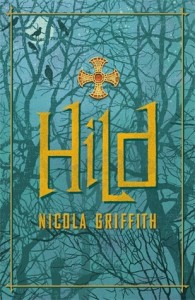
Right now I’m reading another historical novel, Nicola Griffiths’ Hild—and so far, at around three quarters of the way through, I am absolutely loving it. I feel it is one of the best historical novels I have read in quite some time, not even excepting Hilary Mantel’s Booker prize-winning, Wolf Hall. (Which means I am spoiled, because I also really enjoyed my previous historical read, Robert Harris’s An Officer And A Spy.)
Seriously though, so far just about everything about Hild is fabulous: a great historical sense of seventh century, Anglo-Saxon Britain, excellent characterization—especially of Hild herself, but there’s a whole raft of other great characters, and just a wonderful richness of storytelling overall. I am really looking forward to completing the read and sharing my final thoughts.
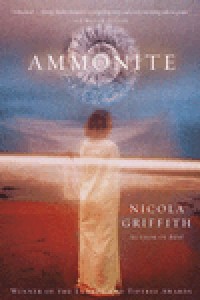
My moment of puzzlement: Hild was nominated for a Nebula Award this year, which is given by the Science Fiction Writers of America for works of science fiction or fantasy. But as above, I am currently a good three quarters of the way through this novel and so far can detect no sign of it being anything but historical fiction. So maybe I am the one who is confused, or maybe because Nicola Griffiths also wrote such wonderful novels as Ammonite (a longtime favourite) she is forever entwined with the genre in the good folk of SFWA’s minds…
Oh, what is Hild about you ask—well, the story is a fictionalized account of the early life of the woman who became St Hilda of Whitby. For a little more information, here’s the backcover blurb:
“Britain in the seventh century – and the world is changing. Small kingdoms are merging, frequently and violently. Edwin, King of Northumbria, plots his rise to overking of all the Angles. Ruthless and unforgiving, he is prepared to use every tool at his disposal: blood, bribery, belief. Into this brutal, vibrant court steps Hild – Edwin’s youngest niece.
With her glittering mind and powerful curiosity, Hild has a unique way of reading the world. By studying nature, observing human behavior and matching cause with effect, she has developed the ability to make startlingly accurate predictions. It is a gift that can seem uncanny, even supernatural, to those around her.
It is also a valuable weapon. Hild is indispensable to Edwin – unless she should ever lead him astray. The stakes are life and death: for Hild, for her family, for her loved ones, and for the increasing numbers who seek the protection of the strange girl who can see the future and lead men like a warrior.
In this vivid, utterly compelling novel, Nicola Griffith has brought the Early Middle Ages to life in an extraordinary act of alchemy. Drawn from the story of St Hilda of Whitby – one of the most fascinating and pivotal figures of the age – Hild transports the reader into a mesmerising, unforgettable world.”
“Vivid and utterly compelling”: so far, I heartily agree with that.
~ by Rebecca Fisher
Every Saturday morning my sister and I would get up early to creep down the hall and watch an episode of Batman: The Animated Series. And itâs a good thing the show did air in the mornings, because absorbing what it had to offer right before bedtime probably would have resulted in a lot of bad dreams. As it was, I had a nightly ritual for a number of years in which I had to check the end of the bed for Scarecrow.
Running from 1992 to 1995, Batman embraced a film noir atmosphere with appropriately themed Gothic architecture and 1950s-era clothing and vehicles. Elements like police blimps and black-and-white televisions existed alongside high-tech gadgets and computer systems, creating a unique visual style.
The âdark decoâ skyline of Gotham City
It was this tone more than anything else that suggested the show was targeted toward an older audience, and though there have been several cartoons since that have garnered a similar amount of acclaim (Avatar: The Last Airbender, Gargoyles) I like to think that it all started with Batman. If nothing else, it was this show that kick-started DCâs successful cartoon franchise, followed by several animated films (Mask of the Phantasm, Mystery of the Batwoman) and superhero spin-offs (Superman: The Animated Series, Justice League and Batman Beyond).
The show was exciting, suspenseful, insightful and surprisingly dark at times, and the writing team was unafraid to end any given episode on a poignant â even tragic, note.
Surely you know it by now. Bruce Wayne is a wealthy philanthropist by day and a masked vigilante by night, inspired by the death of his parents to stamp out crime in Gotham City. In fact, the showâs opening sequence perfectly encapsulates the showâs premise: Batmanâs wealth and agility, his use of fear tactics and high-tech gadgets, his disdain for guns and his respect to the law by leaving the police to find the criminals he has just overpowered.
Along the way heâs assisted by the trustworthy Commissionaire Gordon and his loyal butler Alfred, and eventually joined by Dick Greyson (Robin/Nightwing), Barbara Gordon (Batgirl) and Tim Drake (the second Robin), all donning their own cowls and capes to dispense justice alongside him.
Batgirl, Batman, Robin and Nightwing
But of course, itâs only half a Batman show without its Rogueâs Gallery, and this is where the show really excelled. Far from being a collection of oddly-themed criminals, the writers ensured that almost all of them had clearly defined motivation and an explanatory backstory. From Harvey Dent (Two-Face) to Pamela Isley (Poison Ivy) to Matt Hagen (Clayface), each one is established as a person first and a villain second.
But despite adding some level of sympathy to each one, whether thwarted love, substance abuse, misguided activism or psychological breakdowns, the show doesnât stint on how dangerous they all are. Most of them are nursing personal vendettas against Batman as well as anything from petty crime to attempts at world domination.
Each episode dealt with Batman fighting a particular crook. It sounds simple enough, but the formula was often played with by telling the story from the point-of-view of a sidekick, bystander, or even one of the villains.
Some of the villains in the Rogueâs Gallery
But what surprised me most during my rewatch was how many of the villains werenât particularly flashy at all. A lot of the time Batman has to deal with the likes of crime lords like Rupert Thorne, corrupt corporate executives like Roland Dagget, sadistic security guards like Lyle Bolton, or convicts like Lloyd Ventrix, a man whoâs gotten his hands on an invisibility suit and plans to use it to kidnap his daughter from his ex-wife.
None of them are âsupervillainsâ in any sense of the word; instead theyâre ordinary people misusing whatever amount of power or responsibility they possess. Itâs a theme that fits in nicely with a superhero who doesnât have any preternatural powers, and who uses his significant wealth and privilege to make the streets safer for their most vulnerable citizens.
The show is full of iconic characters and voice actors, from the dark and brooding Batman (Kevin Conway) to the slinky and amoral Catwoman (Adrienne Barbeau) to the totally unhinged Joker (Mark Hamill). Most of these characters are faithful adaptations of their comic book incarnations, but this show made two noteworthy contributions to the Batman mythos.
The first was the creation of Harley Quinn, a bright and perky henchman (er, woman) to the Joker, caught in a sadomasochistic relationship that she just couldnât break free from. Oddly tragic and cheery at the same time, she proved so popular with audiences that she eventually got her own comic book series.
The second was Mr Freeze, previously characterized as a gimmick with a freeze gun, reimagined here as a scientist called Victor Fries whose wife is cryogenically frozen due to a debilitating illness. After a laboratory accident (these things happen a lot in comics), he is forced to don a freeze suit to keep him in sub-zero temperatures. Out for both revenge and a cure for his wife, the audience is painfully aware that even if she is brought back to health, he can never truly be with her again.
The closing shot of him sitting in his cold jail cell, staring at a revolving ballet dancer on a music box is among the showâs most haunting scenes, emblematic of Batmanâs edgy tone.
Batman holds a lot of fond memories for me, and probably for my sister as well (thanks to this show, it was about three years before she stopped answering âCatwomanâ to the question of what she wanted to be when she grew up).
But as a child I was unable to appreciate many finer details, such as the fact it was the first cartoon to have a realistic depiction of guns, or some of the genuinely disturbing animation (Clayfaceâs transformations or the Scarecrowâs drug-induced nightmares are things you probably wouldnât get away with putting on a childrenâs show these days).
Filled with so many classic episodes that it would take too long to list them all, Batman is one of the most important animated shows out there, one which set the tone for many more to follow in its footsteps.
Itâs time to tackle one of the big kahunas. Currently on its eighth season (though technically itâs been running since 1963) Doctor Who is one of the biggest science-fiction franchises out there â so big in fact that Iâm going to restrict my overview to the first season of 2005 reboot, starring Christopher Eccleston as the titular Doctor.
.
Rebecca Fisher is a graduate of the University of Canterbury with a Masters degree in English Literature, mainly, she claims, because she was able to get away with writing her thesis on C.S. Lewis and Philip Pullman. She is a reviewer for FantasyLiterature.com, a large website that specializes in fantasy and science-fiction novels, as well as posting reviews to Amazon.com and her Theyâre All Fictional blog.To read Rebeccaâs detailed introduction of both herself and the series, as well as preceding reviews, click on:
The Fox
The fox is a single red stroke that cuts across
the clearing. The colour seems to hang like smoke,
you can almost see where she has come from.
Her musk (though you can smell nothing)
is specific like a thumbprint on the air.
It isnât raining but thereâs a kind of wet
on your face, a stickiness of insect juices dropped.
The fox is rusty-dull, discreet, not radiant or hot
or pulsing. Not agitated. Not randy.
She is completely dream and intelligence
sliding through the wet grass, the stinging nettles,
the little brittle helmets of dry seed,
a flower or two, relics of the drizzly, petalled summer.
The lyric fox goes down to the creek
where dark and dankness will mask her scent
and the lovely rosette of her face.
Sheâll be able to pause there, for a while, sip water
while the dogs swirl and bell in front of the Big House.
(c) Bernadette Hall
from The Lustre Jug (VUP) 2009
The Fox was a Best New Zealand Poem 2009
—
Fine poems should be read and heard more than once, so I’m continuing with my series of relooking at poets who have had multiple poems featured here on “…Anything, Really” since I joined the Tuesday Poem community in June 2010. Bernadette Hall’s “The Fox” was both one of the early poems featured, on 17 August 2010, and has also been one of the most enduringly popular in terms of readers’ visits. I hope you enjoy re-reading it today.
—
Bernadette Hall is best known for her poetry but also writes short fiction. She has published ten collections of poetry, the most recent being âLife & Customsâ (Victoria University Press 2013). Also in 2013, her edition of poems by the Christchurch writer, Lorna Staveley Anker, was published by Canterbury University Press. Titled âThe Judas Treeâ it reveals Lorna Anker as New Zealandâs first woman war poet with memories of both World Wars. The Dunedin composer Anthony Ritchie used seven of Bernadetteâs Stations of the Cross poems in a symphony which premiered in Christchurch on the 22nd of February this year as a memorial to those who died and those who have suffered as a result of the 2011 earthquake.
—
To check out the featured poem on the Tuesday Poem Hub and other great poems from fellow Tuesday poets from around the world, click here or on the Quill icon in the sidebar.
on the
On September 12, The Guardian featured an indepth interview with renowned author, Harumi Murakami. I thoroughly recommend it to you if you have not read it already:
‘ “Strange things happen in this world,” Haruki Murakami says. “You don’t know why, but they happen.”
…’
The interview is wide-ranging, but the parts that really resonated for me were when Murakami spoke about the writing process. Here are a few examples :
‘ “I like to write. I like to choose the right word, I like to write the right sentence… in the right place. That kind of engineering is exhausting, though: a daily trip to the “basement of the mind” and back up again. “…You have to dedicate yourself to that work. You have no extra space to do something else.” ‘
Also:
‘ “I take time to rewrite,” he explains. “Rewriting is my favourite part of writing. The first time is a kind of torture, sometimes. Raymond Carver [whose work Murakami has translated into Japanese] said the same thing. I met him and I talked with him in 1983 or 84, and he said: ‘The first draft is kind of torture, but when you rewrite it’s getting better, so you are happy…” ‘
And this:
‘ “I don’t like deadlines âŠwhen it’s finished, it’s finished. But before then, it is not finished.” ‘
No doubt other parts of the interview may resonate for you, but when I read these sections in particular I thought: Yup, I hear you!
This past week I celebrated a range women characters with “agency” from my books, as my own personal tribute to Women’s Suffrage week, celebrating 121 years of all women in NZ getting the vote.
And before the weekend was out I promised you an Easter Egg, which in this context is an important character who wasn’t canvassed during the week. So here goes, folks:
So why leave Yorinesarinen until now? Readers hear about her in the first pages of The Heir Of Night, but don’t actually meet her for a while. Because here’s the thing, y’see: as well as being amongst the greatest heroes of the Derai, a really important aspect of this character is that she’s dead…
But let’s meet her now as you would in The Heir Of Night:
“A fire was burning in the center of the clearing and a figure sat beside it, wrapped in a dark, hooded cloak. “You may come closer,” the cloaked figure bade them, without turning around. The voice that spoke was a woman’s, low and clear and pleasant. “It’s quite safe.” … The woman reached up and pushed back the hood, revealing a face that was unmistakably Derai. A net of tiny white stars held the cloud of her black hair in place, while the moonlight revealed high cheekbones above a strong jaw, shadowed eyes, and a humorous curve to the mouth. “Welcome to my fire,” she said…
…Wordlessly, she opened her cloak so they could see the mail beneath, gleaming silver in the moonlight. While they watched it became dull, hacked in a hundred places, with blood dried black around the wounds and in slow runnels across the armor’s surface. “In the world beyond the Gate of Dreams,” Yorindesarinen said, “I did indeed die long ago, slain in my battle with the Worm of Chaos, even though I killed it at the last. We did for each other, that Worm and I.” As she finished speaking, the hacked and bloodied armor transformed into gleaming silver again.”
And then again in The Gathering Of The Lost:
“Desperate, the fleeing creature plunged into a deep fog bank, flowing beneath a long-fallen tree and out the other side. The trees here were taller, their vast trunks soaring skyward around a narrow glade with a small fire burning at its heart. A woman with stars in her hair sat beside the fire, the hood of her cloak thrown back as she played catâs cradle with the flames. The creature hesitated, but the pursuing darkness was pressing close behind, crackling out power like a lightning storm. Terrified, the creature darted toward the fire, cowering low as the woman rose. Her expression was grim as she surveyed the being crouched at her feet. âSomeone,â she said, âhas used you hard.â
The woman looked through the fog toward the approaching storm and raised her right hand, still with the fire in it. The flame roared, leaping skyward, then twisted into a ribbon that circled them both. In the distance, hounds howled, and the fire blazed hotter, becoming a conflagration. The star-crowned womanâs smile was thin. âEven Nindorith,â she said, âwill not like to meet that hunt.â She turned the other way and the flames parted, opening onto a rugged mountainside in northern Emer. âGo,â she bade the creature at her feet. âAnd stay away from Derai in future, for we are not kind to those who cross either our will or our path.â
The creature slipped away, disappearing into the Emerian dusk. The fire roared again, reforming into a mirror through which Yorindesarinenâs scarred face studied Malian, who gazed back at her through the medium of the dream…”
.
I hope you have enjoyed your “Easter egg.”
As for what’s with the long names—well, that’ a subject for another post. đ
—
To check out some of the other women characters, all—I hope—with “agency”, from my writing , click on:
—
To read more about September 19 and NZ womenâs suffrage, try:
Christchurch City Libraries: Votes For Women â 19 September 1893
Te Ara, The Encyclopedia of New Zealand: Voting Rights
What she said: that woman was all kinds of awesome.
Plus, if you don’t like the government you’ve got, or how any government operates, don’t treat citizenship and democracy like spectator sports: they ain’t.
Hokay, said my piece–time to get off my bench and onto the field of play.
The A Geography of Haarth post series is exploring the full range of locales and places from The Wall of Night world of Haarth. Each entry is accompanied by a quote from the books in which the place appears, currently either The Heir Of Night or The Gathering Of The Lost, or both.
This week we have one more locale in “V” to check out.
—
Vertward:Â one of the six wards of the dukedom of Emer, Vertward lies to the southwest of the capital, Caer Argent
.
“In the end, they rode for nearly three hours before the road finally ran out of Maraval wood into blazing sunshine, on the crest of the Vertward down country. The landscape ahead was a patchwork of wheat and barley fields, interspersed with orchards, hop gardens, and neat rows of vines. The late morning air was languid, almost sleepy with heat, and dust rose in a long plume above the road to the south.”
~ from © The Gathering Of The Lost, The Wall of Night Book Two: Chapter 33 â Maraval
.
This week, I’ve been celebrating my characters—all part of also celebrating NZ Women’s Suffrage week and the 121st anniversary of women getting the vote on 19 September, 1893.
On Monday, I looked at women characters from The Heir Of Night (The Wall Of Night Book One), and yesterday it was Thornspell’s turn—including my favourite villain, the Margravine zu Malvolin. đ
Today, it’s time to meet the fabulous, feisty, female cast from The Gathering Of The Lost (The Wall Of Night Book Two).
So again, in honor of Suffrage Week and 19 September 1893:
Malian is the lead character in The Wall Of Night series, so although you got to meet her on Monday, she’s also very much part of The Gathering Of The Lost (Gathering). I chose an adventurous introduction for Malian on Monday, so thought I might continue that theme today. đ
“…Malian sprang to catch up, feeling a rush of exhilaration, so darkly fierce it was almost joy, as they cleared the first narrow street, cobbles flashing beneath them. To fall would be to dieâbut they were not going to fall. Her blood sang as they ran on, keeping to the narrow lanes and close-packed houses of the poorer quarters where there were plenty of sharp angles and deep shadows to hide in.
Soon they were running as one, each knowing intuitively how the other would move, racing up roof slopes without hesitation and plunging down the far side, floating effortlessly across the gaps between buildings until Malian felt as though she were flying above Caer Argent. The pale gold moon kept pace alongside, so close it seemed she might touch it … if only she stretched out her hand at the right moment.
…it was a long time after that when she noticed the stars growing pale, a reminder that the midsummer dawn came early. She knew they must have crossed half the city and by rights she should feel tired, but instead she felt wonderfully and gloriously alive.”
You also met the herald, Jehane Mor, on Monday, but she plays an even more important part in Gathering than she did in The Heir Of Night (Heir).
“…Jehane Mor had taken her first step into deeper shadow, away from the circle of light cast by the nearest gate lantern. Cautiously, she moved along the street, staying out of the light and keeping her psychic shield up, but nothing disturbed its outer edge. She stopped in another pool of shadow ten paces from the Guild House gate, which gaped at her, silent as an unanswered question.
The minutes lengthened, but Jehane Mor remained motionless…The moment she broke cover, slipping out of the shadows and toward the unlit entrance, she caught movement from the corner of her eye. Her head whipped around as a dense inky blot, with long tendrils trailing beneath it, detached from an eave diagonally opposite the gate. The tendrils exploded toward her in a jet of black matter and she sprang back, gathering her power to counterattackâonly to drop to the ground for the second time that night as an arrow sang.”
Yes, you also met the Honor Captain, Asantir, on Monday—and although her role in Gathering is not so extensive, it is pivotal.
“Asantir was still watching Torlun… [whose]…stance remained assured as he met Asantirâs gaze, but the line of his mouth had tightened. He frowned sideways at his second-in-command. âBoras, this is taking too long.â …
âFool!â The old woman spoke with asperity despite her cut and bruised mouth. âSheâs carrying black bladesâthatâs how she defeated the siren worm five years ago. Thatâs where all your power is going now, too, unless I much mistake the matter.â
âBlack bladesâfables for children!â Boras said, but Garan noticed they had all taken a step back.
Torlun looked openly doubtful now, his eyes shifting to the sword hilts beneath Asantirâs hands. Slowly, he took another step back. âYou know this isnât over.â
âNo?â said Asantir, âI think that it is. Quite over.â
I hope you may be starting to get a feeling for why one reader renamed her “Kick-As(s)antir.” đ
Incidentally, you also just met the Old Lady, a senior priestess from the Derai House of Morning.
And The New…But besides these old friends, there’s also a host of new women characters for you to meet. As with the other days, I shall try to introduce them in the order they appear in the story, as they first appear…
“…but it was the woman who slipped into the tent in his shadow who caught and held all eyes. She was clad in a full, deep-red robe, her hair concealed by a coif of gold mesh worked with garnet and seed pearls. The face within the coif was quartered with crimson and charcoal paint, both eyelids and lips darkened to black. The effect was both rich and a little frightening, and Jehane Mor heard more than one indrawn breath, although no one spoke.
Demonhunter tricks, the herald thought… The Lady Sarifaâs painted lids were half lowered, but Jehane Mor knew that she would be sensing the room. The demonhunter looked young, although it was difficult to be sure behind the painted mask. She would undoubtedly be strong, having been sent so far from Ishnapur aloneâ”
“Aravenor nodded to the Patroler on his left. âThis is Yris. She is one of our river pilots and will take you upriver from Farelle.â
Yris bowed, but did not speak. She wore the same long black tunic and visored helm as the riders, but the sword at her side was short and she had a quilted gambeson rather than a mail shirt. When she bowed, the light reflected off what looked like a stylized wave on her visor.”
“…one of them, Carick saw with surprise, was a young woman. Her helmet was tucked under one arm, revealing a dark braid wrapped around her head. She seemed shy, Carick thought, watching her stare at the ground while Audin spoke, nodding in response to his words.”
‘ âAha, so you are awake at last!â said a voice so smooth and rich it made Carick think of cream. The door opened wider, admitting one of the largest women he had ever seen. She must have been at least six feet tall, with a mass of curling, dark brown hair piled up haphazardly and kept in place by combs. The body between shoulder and ankle billowed generously and was arrayed in layers of blouse, kirtle, and a lavishly embroidered cote that made her seem larger still. There were some, Carick knew, who would have called her blowsy, but he thought she was beautiful, with skin as creamy as her voice and the largest, merriest, velvet-brown eyes he had ever seen. It was only when she came to stand by the bed and smiled down at him that he saw the deeply etched crowâs-feet at the corners of her eyes, and threads of silver in her dark hair. âWell, well,â the woman said, smiling still, âwe were starting to think your sleep was going to last forty years, like the young man in the fable.â ‘
‘ “I’m still alive,â he whispered, feeling the wonder of it after his flight through the pass.
âYes.â A grave voice spoke from beside the bed. âBut your lip is bleeding again. You will have to remember not to bite it for the next few days.â The owner of the voice moved so he could see her more easily, holding back a heavy, russet curtain that fell from a wooden rail overhead. He blinked, trying to focus, and this time saw a young woman with a cloud of dark hair framing a delicate face. âDrink this,â she said, lifting a cup to his lips. âIt will help you recover.â
The drink was as cool as her voice, but with an edge of bitterness, and Carick fell asleep again as soon as he had drunk it down.’
‘The instructorâs name, Carick learned, was Solaan, and she was as cool and businesslike as Raven, although considerably older. Her cropped hair was gray as iron, and there were deep tracks around both eyes and mouth in her weather-beaten face.
âThe tattooing?â Carick murmured to Raven. âIs that usual here?â
âShe is of the Hills,â Raven replied, as though that explained everything. âMore importantly, she is a master of this weapon.â ‘
“The young women rode as lightly as the squires, most with long braids trailing from beneath caps of leather or steel. Only the central rider was bare headed, sitting straight and slender in the saddle while the bell of her red-gold hair lifted in the breeze.
âGhiselaine, Countess of Ormond,â Raven murmured, although Carick had already guessed: she sat amongst the other riders like a queen among her knights. He also knew that the youthful countess was famous for her beautyâand this girl was undoubtedly beautiful, with clear, apricot-tinted skin, a perfect oval face, and fine gold-brown eyes beneath arched brows. Like a painting of beauty, Carick thought, as he sketched a bow.”
“The new arrivals formed themselves into two loose groups in the castle’s main hall: the first around a grizzled, powerful, middle-aged man standing beneath a white, horsetail banner; the second in a half circle about a weather-beaten woman of similar years, below a standard crowned with antlers …
The two chieftains inclined their heads, a gesture that was respectful yet without servility. âOur scouts,â said Hawk, âtell us that raider bands are gathering on the borders of our hunting runs. We fear they will strike soon and strike hard, and our numbers are few. So we invoke the bond sworn between us. Let the shade of Emer’s oak be cast over our hills, as was promised, against those who seek our destruction.â
“A second figure came walking out of the wood and up the hill, long robes trailing and the hood pushed back to reveal a pale, high-boned face and shadowed eyes. The newcomer’s head was completely shaven except for one long hank of hair that was plaited from the crown and curved down the right side of the face.
A woman, Carick thought, although he could not have said why, since the bones of the face, the body beneath the long robes, and the hissing voice were all androgynous …
The pale face contorted, then smoothed out as the mist crept around the woman and her shape began to fade. â…But the next time you thwart our work we will bring you down.â
“The priestess-queen, Malian thought… She wore no crown; needed none, in fact, although a narrow gold fillet circled her brow. A border of goldwork edged the pale mantle, and the broad, linked belt around the queenâs waist was also gold. …her crimson gown was slit for ease of riding, so that everyone could see the tanned legs extending into boots of honey leather, rolled to above the knee. Malian could sense the men around her, all trying not to stare. She would have smiled openly except for the proud lift of that wheat-gold head and the austere young stareâalthough the queenâs eyes, the shadowed gray of dawn skies, were fixed on the Duke.”
—
So there you are: a suitable selection, I hope, of women characters to make a fitting celebration of suffrage week. đ
And of course, the big S for Suffrage Day, 19 September, is tomorrow—although I’ve gotten in a little ahead of the game with my celebratory posts because tomorrow is A Geography Of Haarth day. (Although there may be an ‘Easter Egg’—watch this space!)
—
To check out the cast of leading women from The Heir Of Night, click on:
And Thornspell is here:
To read more about September 19 and NZ womenâs suffrage, try:
Christchurch City Libraries: Votes For Women â 19 September 1893
Te Ara, The Encyclopedia of New Zealand: Voting Rights

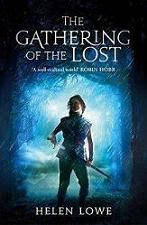
Jacket art by Greg Bridges
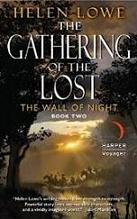
The Gathering of the Lost: USA Cover (Harper Voyager) - Read More Here!
"A richly told tale" -- Robin Hobb
"A vividly imagined world" -- Juliet Marillier
"This is an author with a gift for fantasyâ -- Catherine Asaro
To read reviews, click Here.

Jacket art by Greg Bridges
The Heir of Night: USA Cover (Eos) - Read More Here!

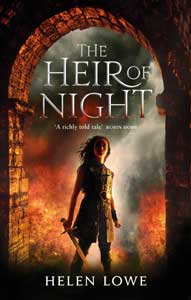
The Heir of Night: UK/AU/NZ Cover (Orbit) - Read More Here!
HEIR won the international Gemmell Morningstar Award 2012 for Best Fantasy Debut.
"THE HEIR OF NIGHT by Helen Lowe is a richly told tale of strange magic, dark treachery and conflicting loyalties, set in a well realized world."--Robin Hobb

Jacket art by Antonio Javier Caparo
Thornspell is my first novel and is published by Knopf (Random House Children's Books, USA). It won the Sir Julius Vogel Award 2009 for Best Novel: Young Adult and was a Storylines Childrens' Literature Trust Notable Book 2009.