



Winter Light
Horizontal strobes
across the russeting slope
disclose the contours of the land
the fierce geography of rock
the patterning of sheep through bracken
lipped water-marks on sand
The mountain’s shadow
bruises the lake.
The season is wintering in
and the cold is like loss:
a cramping hold on bone
muscle, thought, spilling in
from the east.
The air tastes metallic
like snow dissolving on the tongue.
This is the death month;
December’s Druid alphabet
that signified
the rebirth of the spirit.
Ash trees clumsy with unshed seeds,
a deer’s tooth grooving the bark.
I glimpse a snowdrop spiking up
through a dead leaf
before the falling sun herds
us into the longest night.
.
© Kathleen Jones
~ published in Not Saying Goodbye at Gate 21, Templar Poetry, 2011
Reproduced here with permission.
—
As I posted on Saturday 17, I am currently refeaturing Tuesday Poems from the past four years “by poet”, i.e. focusing on those instances where I’ve featured more than one poem by the same poet. Generally, I am proceeding in alphabetical order by poet’s surname, but because it’s currently the winter solstice, this week I have stepped out of sequence to feature Kathleen Jones’ “Winter Light.” I hope you will agree that the poem is perfect for the season, despite our winter solstice being now, rather than in December.
To read my commentary from the initial Tuesday posting, please click on:
“Winter Light”, by Kathleen Jones
You will also find Kathleen’s biography there, but as she is a fellow Tuesday poet I also recommend that you visit her blog:
A Writer’s Life
—
 To check out the featured poem on the Tuesday Poem Hub and other great poems from fellow Tuesday poets from around the world, click here or on the Quill icon in the sidebar.
Two books I’ve very much enjoyed recently are:
 Heartland by Michelle Leggott (Auckland University Press, 2014)
I am a fan of Michelle Leggott’s poetry and I think Heartland is “even better” than its predecessor Mirabile Dictu, which I also enjoyed. I love the continuing theme of family heritage and intergenerational stories, an exuberant ‘who we are’ as much as ‘who are we?’ explored in poetry. I also love the richness of Michelle Leggott’s use of language and her command of the poetic form. A must-read poetry collection, imho.
.
 Mortal Fire by Elizabeth Knox (Gecko Press, NZ; Farrar, Straus and Giroux, US; 2013)
From the outset, I was intrigued by and drawn into this story. I love the character of Canny (the central protagonist) and the world building. I particularly admire the way Elizabeth Knox takes the recognizably ‘real’ –and recognizably NZ real, at that — and weaves it into a “1-step-removed” alternate world. There were also some great secondary characters, such as Sholto, Susan, and Cyrus. I also really liked that Canny’s heritage is “Pasifika” (the quote marks are because this is an alternate world, but still I think Pasifika is a fair term in the context of the story), as although very much part of NZ’s contemporary cultural make up, the Pacific influence is not as prevalent in our storytelling.

The Wall of Night Series map; design by Peter Fitzpatrick
The A Geography of Haarth post series is traversing the full range of locales and places from The Wall of Night world of Haarth. Each locale is accompanied by a quote from either The Heir Of Night, The Gathering Of The Lost, or both.
This week, after some time spent traversing “S”, we enter “T.” 😉
—-
Telimbras: the braided river that runs the length of the Jaransor hills, separating them from the Gray Lands. It eventually becomes a tributary of the Ijir. Also known as “the river of no return.”
.
“She let her mind soar, following the bird, and suddenly the whole world was sharper, clearer, every rock and ridge outlined as though she saw it through the falcon’s eyes. That gaze swung wider, out over the plain, and Malian felt certain that her enemies were there, hidden beneath the milky haze. Their presence buzzed at her, sharp as a wasp along the outer edge of her mind. She could sense an inexorable quality to their pursuit, and did not think the river Telimbras would stop them for long.”
~ from © The Heir Of Night, The Wall of Night Book One: Chapter 25 — The River of No Return
“It takes time and patience and effort to turn out a work of art, and few people seem willing to go all the way.”
~ Harper Lee
—
In a way, this reminds me of the Junot Diaz quote I featured last year:
“The whole culture is telling you to hurry, while the art tells you to take your time. Always listen to the art.”
I suspect they are both getting at the same thing, which is that listening to the art may take time — and to be true to the work, you have to be willing to go with that even if it doesn’t make life particularly easy.
Oft times though, I find I have no choice, because the story refuses to budge until I’ve gotten it right, no matter how I “rant and storm.” 😉
~ by Rebecca Fisher
Introduction:
It’s safe to say that Princess Mononoke is Hayao Miyazaki’s darkest film. I have a friend who still enjoys recounting the tale of a mother who was in the movie theatre with him, only to watch her flee with her young child in her arms when the first decapitated head went flying. This is definitely not a film you want to share with anyone under the age of ten, for not only does it depict fairly graphic violence, but also plenty of death, gore, and creepy demonic possession. For those used to Miyazaki’s gentler films, this can come as quite a shock.

Princess Mononoke may be dark and haunting, bloody and gruesome, but it is also one of Miyazaki’s most memorable films, full of beautiful animation, vivid characterization and hefty themes (his usual favourites: war and environmentalism). It was the first time a Studio Ghibli film became a hit outside of Japan, and if you’re a fan of Pixar movies or Avatar: The Last Airbender, it’s easy to see how much of an influence it had on animation and storytelling in the West.
In other words, this is the Miyazaki film that got the world’s attention.
Premise:
Set in a mythological world that closely resembles 15th century Japan, the Emishi people live peacefully enough in their farming village. At least until the day a terrible demon boar attacks and their young Prince Ashitaka is injured in the ensuing fight. It gets worse when the wise woman declares that the wound on Ashitaka’s arm is cursed – it will eventually spread and infect his soul, killing him in the process. He has no choice but to leave his home and seek out a possible cure somewhere to the West – hopefully by finding the source of the enraged demon. He has only one clue as to its origins: an iron ball retrieved from the boar’s corpse.
 Not something you want to see prowling around your village
His quest takes him through villages terrorized by samurai and forests haunted by spirits, until he reaches the formidable Iron Town, ruled over by the beautiful Lady Eboshi. The township cuts down the trees to produce iron, making it a lucrative community but also putting it at odds with the nature spirits. There have been a multitude of deaths on each side of the conflict, and Lady Eboshi in particular is targeted by a feral girl called San, raised by wolves and determined to halt the encroachment of humans by assassinating their leader.
Struggling with the evil presence that is steadily taking over his arm (and soon enough, the rest of his body), Ashitaka identifies this conflict as the source of the demonic activity and tries his best to find a peaceful resolution.
Story:
As you can probably tell from that premise, Princess Mononoke is packed full of enough characters and plot to make it all truly epic in scope. In his journey Ashitaka also meets an untrustworthy monk who has been sent on a mission from the Emperor to kill the great Forest Spirit in the hopes that it will grant him immortality; a subplot that eventually ties into the greater storyline as the three-way war between samurai, spirits and Iron Town residents gets under way.
It’s sprawling and complex, and not for nothing has it been called “the Star Wars of animated films.” Moving from the lush green forests to the industrial Iron Town, Miyazaki portrays a damaged world whose eco-system has been tipped out of balance; where technology and the environment are both equally destructive forces at war with each other.
 San attacks Lady Eboshi
It’s not as simple as “tree good, weapons bad”. The spirits of the forest can be terrifying and bloodthirsty, attacking innocent people without warning or mercy. Lady Eboshi is hardly a villain, but a respected and intelligent woman who has made Iron Town a powerful industrial centre by employing lepers and brothel-workers – outcasts that would otherwise be shunned by the outside world, and who are therefore fiercely devoted to their mistress as a result. Without Ashitaka, it’s difficult to grasp who exactly the audience should be rooting for.
The film’s final act deals with nothing less than the attempt to kill a god, with Eboshi and her followers heading into the trees to destroy the Forest Spirit and by doing so negate the power of spirits everywhere. As such violent measures only increase the corruption of spirits into yet more demons, Ashitaka is desperate to stop her, seeing it as the only way to heal himself in the process.
Characters:
As a hero, Ashitaka ticks all the boxes. He’s melancholy, moralistic, and wonderfully agile. Perhaps the most exhilarating bits of the movie are watching him fire arrows in quick succession from his bow, or leap on and off his equally nimble red elk Yakul. The animation captures every leap and spin and gesture, almost quicker than the eye can see, with an energy that off-sets his rather stoic personality.
 San and Ashitaka (on Yakul) say their farewells
He’s backed up by an equally strong supporting cast, including the aforementioned Lady Eboshi, who skewers the usual villain stereotypes in order to become an antagonist whom you respect and admire. Much of her hatred toward San and the spirits seems justified (when San attacks Iron Town, Eboshi responds by introducing her to two women that she’s widowed in an earlier scuffle) and at least some of her motivation in hunting the Forest Spirit is the hope that its powers will heal the lepers she’s placed under her protection.
Then there’s San, the feral young woman raised by wolf-spirits (and whose nickname provides the title of the film, the word “mononoke” roughly translating into “spirit” or “monster”), and Jigo the affable but amoral monk/mercenary whose plans to behead the Forest Spirit eventually threaten the entire world.
Conclusion:
Princess Mononoke was one of my first tastes of what Studio Ghibli had to offer, and I can still remember how captivated I was at the visuals on display. They had a visceral effect on me: horror and disgust at the demons; wonder and awe at the Forest Spirit – simply because I had never seen anything like them before. The crawling flesh of the former and the eerie grace of the latter are images you won’t soon forget.
 A glimpse of the mysterious Forest Spirit
It’s definitely not something you want to sit your children in front of, but for anyone interested in the edgy side of animation, as well as a story that’s complex in both scope and characterization, then this is a near-perfect glimpse into a strange and dangerous new world.
.
Next Time: Spirited Away
What is wildly considered Hayao Miyazaki’s masterpiece? Spirited Away, which remains the highest grossing film in Japanese history, as well as the winner of Best Animated Feature at the 2002 Academy Awards. Heck, many consider it one of the best animated films of all time – and I’ll put that assertion to the test next time.
.
About The Reviewer:
 Rebecca Fisher is a graduate of the University of Canterbury with a Masters degree in English Literature, mainly, she claims, because she was able to get away with writing her thesis on C.S. Lewis and Philip Pullman. She is a reviewer for FantasyLiterature.com, a large website that specializes in fantasy and science-fiction novels, as well as posting reviews to Amazon.com and her LiveJournal blog.
To read Rebecca’s detailed introduction of both herself and the series, as well as preceding reviews, click on:
Big Worlds On Small Screens
Today I am the guest editor on The Tuesday Poem Hub and featuring Joanna Preston’s wonderful “Lucifer In Las Vegas.”
To read, click on:
Lucifer In Las Vegas
Please do consider leaving a comment there, as I always look forward to hearing what you think — although I have written a commentary as guest editor. 😉
—
To read the other great poems from fellow Tuesday poets from around the world, check out the blog roll in the Hub’s left hand sidebar.
Tis al-most winter solstice here, but not quite, so I still have time to think of a solstice meal menu. Although if I crept away to the vasty wilds to commune with the winter stars, then the meal might be baked beans over an open fire… I’ll let you know if I do, shall I?
Meanwhile, there are a few more blog related activities coming up this week. Firstly, I am guest editor on the Tuesday Poem Hub tomorrow, so I’ll hope you’ll come across to the Hub and check out my selection. (All other details under wraps until then, though. ;-))
 In a Blogmaister-General flip-flop, I’ve rethought shifting Big Worlds On Small Screens to Thursdays, so Rebecca’s thoughts on Miyazaki’s Princess Mononoke will feature on Wednesday as usual — and continue fortnightly on Wednesdays, too. (AKA, if it’s working well, don’t meddle!)
Which means I’ll have something else for you on Thursday — which could be as small as a favourite writing quote, or as large as last Thursday’s post on whether books and authors should do the speaking.
 Speaking of solstice, as I did at the get-go, don’t forget last week’s shout-out for Flash In The Pan, a Christchurch event for National Flash Fiction Day this coming Sunday, June 22nd. For details, click on Flash In The Pan.
The Wall of Night Series map; design by Peter Fitzpatrick
The A Geography of Haarth post series is traversing the full range of locales and places from The Wall of Night world of Haarth. Each locale is accompanied by a quote from either The Heir Of Night, The Gathering Of The Lost, or both.
Today’s entry is the last of seven for places beginning with “S.”
—
Swift: a river on the Northern March of Emer
.
“And already, Carick thought, the shadows are lengthening. In only a few more hours it will be dark—but he refused to continue that line of thought. Audin and Raven squatted on their heels, watching as his finger traced the line of the Rindle. “Downriver, the Rindle bends east until it joins the Swift. Upstream—” Carick pointed. “One tributary comes out of the hills that separate Emer from Aeris. The other seems to start here, in the mountains.” “
~ from © The Gathering Of The Lost, The Wall of Night Book Two: Chapter 18 — Vigil
On January 20th (2014), I posted on “The Tao Of Writing: ‘The Book That Can be Spoken Of Is Not The Book’.”
The post was an update on writing progress for Daughter Of Blood, The Wall Of Night Book Three, but in it I wrote, amongst other things, that:
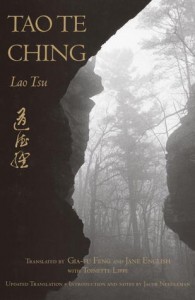 “…the quote in the title…derives from Lao Tzu’s Tao Te Ching. I have paraphrased the opening line, which (in my edition) reads:
“The Way that can be spoken of is not the Way.”
One interpretation of this is that the Tao or Way that can be spoken of or described is not the true Tao, which by implication can only be directly experienced.
The reason I’ve titled this post “The Tao Of Writing: ‘The Book That Can Be Spoken Of Is Not the Book’…” is because I feel that the spirit of the Tao Te Ching quote is directly applicable to writing—that until the book is done and can be directly experienced by readers, then there is little of merit to talk about…”
The part that I have continued to mull over in the intervening period is:
“…until the book is done and can be directly experienced by readers…”
I have also posted recently on the relationship between online interaction and writing books (in my case, novels.) In that case, I felt that “immersion in the one (social media) may actively work against one’s ability to deliver in the other (book-length stories.)“
I also observed that the “conundrum for the modern author though, is how that will work out in a contemporary world where the received wisdom is that it is vital, in order to succeed, for the writer to be active on social media.”
Lots of “terribly important” (or far more likely, unimportant! ;-)) thoughts indeed! Now, here’s one more.
Part of the drive for authors to be on social media is so she/he may either directly or indirectly tout her/his wares by talking about the book de jour, the writing process and the writing life. I know many readers are genuinely interested in these sort of conversations, too, as are other writers. Increasingly though, the question that has been dogging me is whether an author “should” speak about the book, or rather leave the book to speak for itself, through the direct, interactive experience we call reading.
Sure, as the author I can post or talk about my intentions and aspirations when I began telling the story. But the thing about a book-length work is that it’s multi-layered and complex. Books also evolve and grow through the telling, and the stories they relate are dynamic and contextual. So no matter my intention or aspiration as author when I begin my storytelling, it may well be that other threads and themes work their way in as I write. Some of them may even be so subtle or well camouflaged that I may not consciously detect them, whereas a reader may…
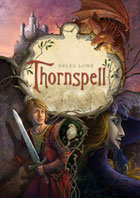 So the moment I say I have written a book and it’s about this or about that, other than at the most broadbrush level (e.g. that “Thornspell is a fairytale retelling of Sleeping Beauty from the perspective of the prince”), then I am already potentially closing off options for those readers who set store by the author’s view.
And what if a reader reads the book and finds something in it that is deep and rich and satisfying for them, but does not accord with what the author has said that the book is about? Does that make the reader wrong about her/his reading experience? Or the author wrong about her/his book? Is it possible, in fact, that both can be entirely right — because ultimately it is the book that speaks and books are indeed nuanced (multi-layered, complex, dynamic and contextual.)
The more I reflect, the more I am personally convinced that it is the book and only the book that should speak, and the author should be, if not invisible, at least largely inaudible on the subject of “the book.” In that sense I come back to the wonderful AS Byatt words that I have quoted here before:
 “Think of this – that the writer wrote alone, and the reader read alone, and they were alone with each other.”
This conversation, however, only occurs through the median of the book…
When it comes to the author speaking, I feel there’s a little more scope for output on writing process and the writing life (both of which are areas this post may be said to touch on), topics that I may return to later.
For today though, I’m interested in putting the thesis out there as to whether it is the book that should speak, or the author — and definitely in hearing your thoughts as readers and/or writers yourselves, should you wish to share them.
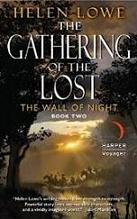
Jacket art by Greg Bridges
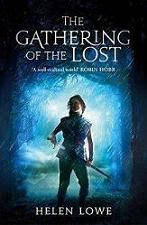
The Gathering of the Lost: USA Cover (Harper Voyager) - Read More Here!
"A richly told tale" -- Robin Hobb
"A vividly imagined world" -- Juliet Marillier
"This is an author with a gift for fantasy” -- Catherine Asaro
To read reviews, click Here.
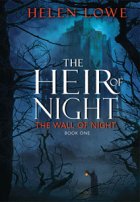
Jacket art by Greg Bridges
The Heir of Night: USA Cover (Eos) - Read More Here!
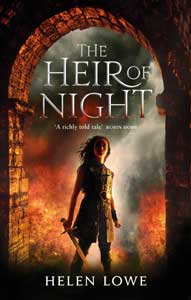
The Heir of Night: UK/AU/NZ Cover (Orbit) - Read More Here!
HEIR won the international Gemmell Morningstar Award 2012 for Best Fantasy Debut.
"THE HEIR OF NIGHT by Helen Lowe is a richly told tale of strange magic, dark treachery and conflicting loyalties, set in a well realized world."--Robin Hobb

Jacket art by Antonio Javier Caparo
Thornspell is my first novel and is published by Knopf (Random House Children's Books, USA). It won the Sir Julius Vogel Award 2009 for Best Novel: Young Adult and was a Storylines Childrens' Literature Trust Notable Book 2009.
