



Teddy
…for a child with leukaemia
Teddy was not well.
Teddy had been feeling sick.
Teddy had to go to hospital.
Teddy was told that he had too much blood.
Teddy did not miss his friends.
Teddy knew the thermometer was not sharp.
Teddy was not scared of needles.
Teddy said the medicine would make him better.
Teddy closed his eyes at night.
Teddy ate his vegetables.
.
Teddy’s small girl lay in the corner of his bed.
She was not so sure.
Her eyes were made from round buttons.
The fluff on the top of her head was worn
As though it had been chewed.
.
© Glenn Colquhoun, published in Playing God, Steele Roberts, 2002
Reproduced here with permission.
—
 As I posted on Saturday 17, I am currently refeaturing Tuesday Poems from the past four years “by poet”, focusing on those instances where I’ve featured more than one poem by the same poet. I am also doing so alphabetically (by surname) and the current poet is Glenn Colquhoun.
Like last week’s refeature, “She asked me if she took one pill…”, I love this poem and talked more about why in 2011 when it first featured. To read the commentary and Glenn Colquhoun’s bio, please click on:
Teddy
—
 To check out the featured poem on the Tuesday Poem Hub and other great poems from fellow Tuesday poets from around the world, click here or on the Quill icon in the sidebar.
 Last week, I participated in another SF Signal Mind Meld on the topic “When Genre Intersects Classical Literature & Myth.”
The more indepth brief was this:
“The Iliad and the Odyssey…the Epic of Gilgamesh…the Mahabharata…Journey to the West… These ancient myths and stories, and many others seem to partake of genre elements. Are they, in fact, on the Road to Science Fiction, to quote James Gunn’s classic series? How do they fit into the world of genre? How can they inform and be used in modern reinterpretations and borrowings of these myths and stories? What writers and stories best rework these myths and legends?”
Here’s my “wee mite” by way of a contribution:
 ” “Ah, Mon-kee…” Oops, got sidetracked into a kids’ TV favorite — but the Mind-Meld request did mention Journey To The West, which informs Monkey.
But seriously, mythology and fairytale/folklore were a formative influence on my path to SF-Fantasy. My first distinct encounter with mythology was a poster of the twelve Olympians featured by an elementary school teacher. I immediately wanted to know more and read all I could of the Greco-Roman, Norse, Celtic, Eygptian and Babylonian myths in swift succession, supplemented by collected folklore and fairytales.
 Unsurprisingly, I was drawn to writers such as the Lewis’s, CS (Narnia) and Hilda (The Ship That Flew), Alan Garner, Ursula Le Guin and Diana Wynne Jones – and anything else I could lay my hands on. As a teen, I graduated to authors such as Tolkien, Cherryh, Moorcock and Joan Vinge. Given earlier reading, I readily recognized mythic influences, from the strong Norse elements of The Lord Of The Rings, to the Mabinogion in Garner’s work, and both fairytale and myth in many CJ Cherryh novels, as well as Vinge’s The Snow Queen. And then there’s the prevalence of the Matter Of Britain in SFF, from works such as Marion Zimmer Bradley’s The Mists Of Avalon, Mary Stewart’s The Crystal Cave, and Patricia Keneally’s The Hawk’s Gray Feather.
 I am sure unconscious mythological influences inform my writing, but there are also conscious decisions, such as weaving aspects of the Arthurian cycle into Thornspell (a fairytale retelling of Sleeping Beauty from the perspective of the prince.) The Wall Of Night series has been said to be pervaded by “Nordic doom… an unrelentingly dark haunting atmosphere” (Specusphere.) Yet the story also draws on a specific Norse myth that should become apparent by the end of Book Three (of Four), due in 2015.
 So I see my path to creating SF-Fantasy as shaped by mythology, and recognize similar influences in other works. Yet so long as authors are “making it new” in each literary generation, the material will never be “old hat.” Fine exemplars include Diana Wynne Jones’s treatment of the Loki story in her first novel, Eight Days Of Luke – a myth recently re-imagined for adults in Joanne Harris’s The Gospel Of Loki.
 Having first experienced Mary Renault’s “legendary history” The King Must Die as a teen, I was intrigued to see the myth of Theseus and the tributes reshaped in Suzanne Collins’ The Hunger Games. Malinda Lo’s Ash recasts Cinderella with a Celtic influenced Faerie and figures such as the Hunter, while giving the traditional story a LGBTQ interpretation. In Junior fiction, Grace Liu retells Chinese myth in The Mountain Meets The Moon, joining Barry Hughart’s (adult) Bridge Of Birds and Guy Gavriel Kay’s Under Heaven and River Of Stars.
Which brings me back to Journey To The West and Monkey, but also the premise, to which I reply that mythology is not only always with us in SFF, but always speaking.”
As is the way with Mind Meld’s though, a diverse range of writers and SFF folk shared their thoughts on the topic, and you can check out the full range of goodness here:
When Genre Intersects Classical Literature & Myth

The Wall of Night Series map; design by Peter Fitzpatrick
The A Geography of Haarth post series is traversing the full range of locales and places from The Wall of Night world of Haarth. Each locale is accompanied by a quote from either The Heir Of Night, The Gathering Of The Lost, or both.
—
Storm Hold: a satellite fort of the Keep of Winds, on the Wall of Night
.
“The Honor Captain nodded. “I have already sent to Storm Hold for wyr hounds,” she replied, “but it will be days before they arrive. Malian cannot wait that long, not if she is in the Old Keep with what’s left of the attackers. And we cannot leave you and the New Keep unprotected.” She frowned. “In the end, we may not have the numbers to do more than scout out the Old Keep. We also risk losing those scouts, if the enemy has anything in reserve.” “
~ from © The Heir Of Night, The Wall of Night Book One: Chapter 5 — The Broken Gate
Big Worlds On Small Screens Features Miyazaki — & Rebecca Fisher Discusses “Kiki’s Delivery Service”
~ by Rebecca Fisher
Note to Readers: From now on, Big Worlds On Small Screens will be posting every second Thursday, not Wednesday as has been the case. So the next post will be on Thursday, 19 June.
.
Introduction:
If Kiki’s Delivery Service was a film made by Western studios, I have no doubt that its eponymous character would fight evil, that she would have a love interest, and that it would be framed as a coming-of-age story. And let’s be honest, the main character would probably be a boy.
For a film about a young witch, Kiki’s Delivery Service is like nothing you would expect from such a supernatural premise. In terms of plot, it basically revolves around Kiki using her powers of magic to work as a delivery girl. That’s it.

But to dismiss this premise as dull or pointless is to miss the charm of the film. I’ll admit, when I first sat down to watch it I was rather bewildered by its gentle pace and lack of clear conflict. Most of the tension derives from Kiki trying to find work in a new city rather than any magic-related shenanigans, and most of the tension revolves around the difficulties she experiences in finding her inner sense of self. Needless to say, it’s a very gentle film in terms of its pacing and content.
Premise:
When a witch turns thirteen she has to leave home for a year, going to a new city to train and share her gift with others. Such is the case for Kiki. Leaving her parents and her neighbourhood behind, she flies on her broomstick to a beautiful city by the sea with only her cat Jiji for company.
 Kiki tells her mother that today’s the day for her to leave
Finding a home for herself in a bakery owned by the very pregnant Osono and her strong-but-silent husband, Kiki tumbles to the idea of hiring herself out as a delivery girl. It’s a perfect occupation considering her broomstick-flying skills allow her to flit around the city much quicker than most.
Story:
It’s rather difficult to describe the story behind Kiki’s Delivery Service, as it plays out more like an episodic string of vignettes than anything resembling the usual three-act structure of most films. There are no villains to defeat or monsters to overcome, only a slender thread of Kiki trying to gather together her self-confidence as she navigates her new surroundings and reaches a fuller understanding of her place in the world.
Like a lot of precocious children, Kiki gets on just fine with the adults in her life, but immediately grows shy and awkward when it comes to the attentions of the young flying enthusiast Tombo. Later, when dispiritedness threatens to destroy her business when she finds she can no longer fly, it takes an excursion out into the wilderness to re-inspire her.
 Kiki enjoys the gift of flying
There are other incidents strewn throughout, like a delivery that goes terribly wrong when Kiki loses the package in question, and the climactic finish, where Tombo’s life is put in danger and only Kiki possesses the ability to save him.
As always, Miyazaki captures the joy and danger of flying when it comes to Kiki’s adventures, especially with his skill at portraying the perspective of a young girl trying to control a broomstick in mid-air. Gusts of winds, flocks of birds, bumpy landings and graceful take-offs – it can be difficult to really capture the rapture and complexities of airborne heights, but Miyazaki makes it look simple, and all the more exhilarating for it.
Characters:
As its main character, Kiki is everything you’d expect from a Hayao Miyazaki heroine: intelligent and polite, good-natured and hard-working. She’s also shyer than most, and what little plot there is revolves around Kiki gaining maturity as she gains a handle on her confidence.
 Ursula helps Kiki find her inspiration
Kiki is surrounded by an incredibly vivid supporting cast, particularly its women, from the motherly Osono who gives Kiki a place to stay, to the free-spirited Ursula who helps her rekindle her inspiration. But Phil Hartman (best known as Troy MacClure in The Simpsons) nearly steals the show as Jiji the cat, adlibbing many of his lines and making Kiki’s feline companion a sardonic foil to her wide-eyed innocence.
Even Osono’s largely-silent husband manages to come across as a three-dimensional character with only a few little gestures (such as making a special sign to advertise Kiki’s delivery service).
Conclusion:
Kiki’s Delivery Service is one of Miyazaki’s gentlest films in terms of plot, and perhaps because of this, one of his most popular. It’s surprisingly relaxing to just watch – after a long day I could feel myself unwinding with a film in which the stakes were no more pressing than a girl delivering packages on time and trying to find her inner self.
 Kiki finally warms up to Tombo
Next Time: Princess Mononoke
We take a turn for the darker and edgier to check out Princess Mononoke, an epic described as the Star Wars of animated features, which holds a place of importance as the first of Hayao Miyazaki’s films to become a hit outside of Japan. This is the Studio Ghibli film that got the world’s attention, and probably the reason that this column exists. Yup, Princess Mononoke was one of my first tastes of Miyazaki’s artistry.
.
About The Reviewer:
 Rebecca Fisher is a graduate of the University of Canterbury with a Masters degree in English Literature, mainly, she claims, because she was able to get away with writing her thesis on C.S. Lewis and Philip Pullman. She is a reviewer for FantasyLiterature.com, a large website that specializes in fantasy and science-fiction novels, as well as posting reviews to Amazon.com and her LiveJournal blog.
To read Rebecca’s detailed introduction of both herself and the series, as well as preceding reviews, click on:
Big Worlds On Small Screens
She asked me if she took one pill for her
heart and one pill for her hips and one pill
for her chest and one pill for her blood
how come they would all know which part
of her body they should go to
I explained to her that active metabolites in each
pharmaceutical would adopt a spatial configuration
leading to an exact interface with receptor molecules
on the cellular surfaces of the target structures
involved.
She told me not to bullshit her.
I told her that each pill had a different shape and that
each part of her body had a different shape and that
her pills could only work when both these shapes could
fit together.
She said I had no right to talk about the shape of her
body.
I said that each pill was a key and that her body was
ten thousand locks.
She said she wasn’t going to swallow that.
I told her that they worked by magic.
She asked me why I didn’t say that in the first place.
.
© Glenn Colquhoun
Published in Playing God, Steele Roberts, 2002
Reproduced here with permission.
—
 As I posted on Saturday 17, I am currently refeaturing Tuesday Poems from the past four years “by poet”, i.e. focusing on those instances where I’ve featured more than one poem by the same poet. I am also doing so alphabetically (by surname), which makes the current poet Glenn Colquhoun.
I love this poem and wrote a detailed commentary for it in 2011 when it first featured. To check out the commentary and Glenn Colquhoun’s bio, please click on:
“She asked me if she took one pill … ”, 2011
—
To check out the featured poem on the Tuesday Poem Hub and other great poems from fellow Tuesday poets from around the world, click here or on the Quill icon in the sidebar.
 My 1 June feature on the Supernatural Underground discusses the sidekick in Science Fiction and Fantasy, particularly the part the sidekick often plays in the traditional “hero’s journey”:
“Often it’s the sidekicks who ground the heroine or hero, like the “Scooby Gang” in Buffy the Vampire Slayer.
And like Samwise Gamgee in The Lord Of The Rings, and Zuzana in the Daughter Of Smoke and Bone series, the sidekick has the heroine or hero’s back…”
To read the full post click on:
Fantastic Sidekicks
But wait, there’s more…

UK/AU/NZ Cover
The post also references my own novels, particularly Thornspell and The Gathering Of The Lost, which got me thinking abut how “sidekicks” can also be major characters in their own right, and whether there is anything at all that distinguishes a supporting character from the “main character” (or characters).
It occurred to me that one rule of thumb might be that, in general, a sidekick is not a point of view character, whereas the ‘lead’ is…
 And then I almost immediately thought of one book, Pat Conroy’s The Prince Of Tides, where this is arguably not the case. The main character, the one who lies at the “heart” of the story, is not the narrator but someone whose point of view we, as readers, never enter. (Note: The book differs significantly from the film, which changed what was the “heart” of the novel to a romantic love story between the narrator and a psychiatrist, which is also part of the book but not its core.)
So what do you think? Can the rule of thumb about point of view still hold as a “principle”? And/or can the sidekick/main character differentiation solely rely on relative page time in the story?
Yes, today’s the day at last — the fourth birthday of the blog.
During that time, I have done approximately 1545 posts, on the variety of topics under Categories, from the “A Geography Of Haarth” series to “Worldcon 2010”, “Earthquake Reports” and “Earthquake Poems”, “Epic Fantasy” to “Tales For Canterbury.”
There are also the guest spots, from Rebeccca Fisher’s “Big Worlds On Small Screens”, through the ad hoc “Book Reviews” for the blog, to “Guest Interviews” with fellow SFF authors, from Brandon Sanderson to Kristin Cashore.
And much much more — which I reckon is a fair bit to celebrate. So let’s party. 🙂
The Wall of Night Series map; design by Peter Fitzpatrick
The A Geography of Haarth post series is traversing the full range of locales and places from The Wall of Night world of Haarth. Each locale is accompanied by a quote from either The Heir Of Night, The Gathering Of The Lost, or both.
Currently, the series is traversing places beginning with “S.”
—
Southern Realms: lands of the world of Haarth that lie between the River and the great deserts beyond Ishnapur
.
“The horizon was primrose, the long Midsummer evening deepening to velvet overhead, as they strolled through the gathering of fighting men from throughout the southern realms. The tents varied from the patched to the sumptuous, but otherwise each campsite was much the same, with a fire pit set to the front and men sitting or lying around it. Most of the knights were Emerian, with the colors of Ward, Mark, or March fluttering above the central tent. The knights’ personal arms were painted on their shields, which were either hung around the tents or stacked to either side of the entrance.”
~ from © The Gathering Of The Lost, The Wall of Night Book Two: Chapter 34 — The Tourney Camp
On May 8 I shared that I was reading m’own books — not because there aren’t a multitude of other books out there to read, but because I wanted to ensure that “…plot threads sown in the earlier books are being picked up as required in WALL3, or being set up for WALL4. Not to mention a general continuity check back through the earlier books.”
I’m pleased to say that overall, it went pretty well. I found a couple of minor continuity errors to set right in WALL3 (aka Daughter Of Blood) but nothing major, thank goodness.
In terms of plot threads, although there are a few aspects that could do with a little beefing up, they all seem to be there, too. So “phew” and “yahoo” — both at once! 🙂
Overall though, despite the element of “weird” mentioned on May 8 (reading one’s own books definitely falls into this category) the exercise was well worth doing and should repay dividends as I swing into the WALL3 edit.
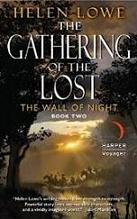
Jacket art by Greg Bridges
The Gathering of the Lost: USA Cover (Harper Voyager) - Read More Here!
"A richly told tale" -- Robin Hobb
"A vividly imagined world" -- Juliet Marillier
"This is an author with a gift for fantasy” -- Catherine Asaro
To read reviews, click Here.
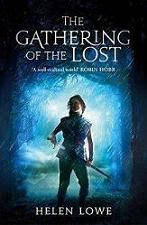
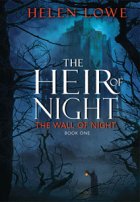
Jacket art by Greg Bridges
The Heir of Night: USA Cover (Eos) - Read More Here!
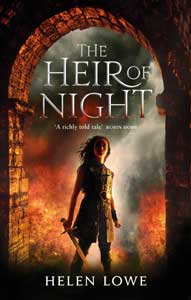
The Heir of Night: UK/AU/NZ Cover (Orbit) - Read More Here!
HEIR won the international Gemmell Morningstar Award 2012 for Best Fantasy Debut.
"THE HEIR OF NIGHT by Helen Lowe is a richly told tale of strange magic, dark treachery and conflicting loyalties, set in a well realized world."--Robin Hobb

Jacket art by Antonio Javier Caparo
Thornspell is my first novel and is published by Knopf (Random House Children's Books, USA). It won the Sir Julius Vogel Award 2009 for Best Novel: Young Adult and was a Storylines Childrens' Literature Trust Notable Book 2009.
