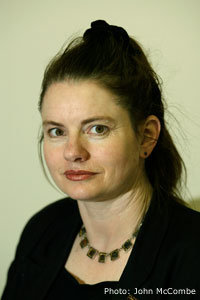
Tim Jones’s guest post in “The Heir of Night F-SF Guest Author Series“ has been reposted on io9 today—-and here’s the link so you can check it out for yourself. And congratulations, Tim: it’s a great article and deserves to be so widely read!
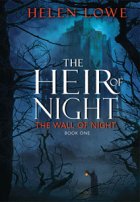
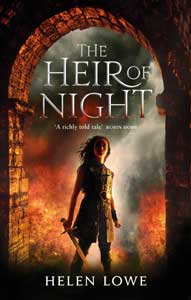
Eos (HarperCollins USA) have just posted my lasted guest post on “Cover Love” on their Out of this Eos blog: you can check it out, here.
And earlier in the week Orbit featured a guest post on “The Heir of Night: Keeping It Real with Armour and Weapons.”
Some more fun stuff to check out for the end of the week. And tomorrow, the F-SF Series will be back with guest author, Michael Pryor.
It’s Friday—and as we have a “lull” in the F-SF Guest Author Series I thought it could be time for an update on what’s happening around the “… Anything, Really” traps.
Firstly, about that Guest Author Series—I know that both I and the guest authors are delighted that so many of you are visiting to read their posts on the topic of “Why F-SF Rocks My World” and that some of you are even writing in through my website to say so: thank you! Nice, too, to see that the series is being picked up in other places, such as this post on the ACC Library Blog.
Draw to Give Your Name To A Character in The Wall of Night, Book Two—And don’t forget that so long as the F-SF Guest Author series is running, any comments you post will qualify you for the Draw to Give Your Name To A Character in The Wall of Night, Book Two. Just in case you’ve forgotten, here’s the details:
Provisos:
- Each time you comment on a post by an F-SF guest author (in the series starting tomorrow) your name will get an additional entry into the draw (only 1 new entry per F-SF author post, however);
- The name included in the book is to be your real name;
- I reserve the right to adapt your name to best fit a fantasy character, e.g. “John the Miller” as opposed to “John Miller”, but your full name and the winning of this competition will be included in the “Acknowledgments” section of the book.
- Note: If you don’t want your name included in the draw, just write “n.i.d.” (not in draw) after your comment.
Speaking of Libraries: Christchurch City libraries have posted a new author interview with me where the discussion covers many things, including The Heir of Night and Thornspell.
Armageddeon, Saturday 23 October—I’ll be at the Armageddon Expo in Auckland on Saturday 23 October, joining the Whitcoulls team (Stand 45) at 11.30 am to talk about the genesis of The Heir of Night and why I love—and most particularly write!—epic fantasy. So if you live in Auckland or are visting over the Labour weekend break, I would love to see you there.
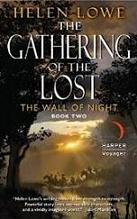
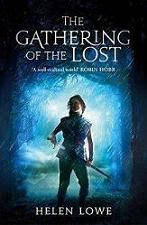
What Else Have I Been Up To This Week? Fired by your enthusiasm for the next instalment in The Wall of Night series I’ve been working very hard on WALL2 (Working Title: The Gathering of the Lost) with over 8000 words under my belt so far this week. My goal for the month—to see if I can’t knock off 60,000 words, which should just about see the book done. I’ll keep you posted on how I’m going—and btw: inducements may be offered!
And today I’ve drafted my Big Idea post—on the Big Idea behind The Heir of Night and The Wall of Night series—for 21 October, when I’ll post as a guest on John Scalzi’s Whatever blog. So do put that date in your diaries and come on over to support me with a comment on the day. You know I’d love to see your friendly faces there!
Tim Jones is a New Zealand based novelist and short fiction writer, poet, editor and blogger—but most importantly (to me; I concede Tim may see it differently!), a friend in speculative fiction and one of my first writing contacts in the field. Unfailingly generous and supportive, it is with very great pleasure that I introduce Tim to you today, posting on “Why F-SF rocks [his] world.”
—
F-SF Guest Series Post: Tim Jones
The good news is, we’re living in a science fiction novel. The bad news is, it was written by J. G. Ballard.
When people complain that the Golden Age of science fiction never came true, they usually mean that the space programme has devolved to a series of uncrewed robot missions, or that we don’t all have flying cars. But another, slightly later era of science fiction — the era I grew up with — is showing a dispiriting level of predictive power.
I’m referring to the science fiction of the late 1950s through to the 1970s: the social SF of writers like Fred Pohl, Ursula Le Guin and James Tiptree, Jnr, on the one hand, and the British New Wave SF exemplified by J. G. Ballard on the other.
Ballard, that exhilarating, exasperating bard of entropy, turns out to have had sharper eyes than most. The other day, I was looking at images on my computer of housing developments in the US abandoned in the wake of the credit crunch that started in 2008: rows of McMansions, left uninhabited because their owners could no longer afford the mortgage payments, standing empty and desolate, their drained swimming pools filling with leaves.
These were images straight from an early Ballard novel. Of course, the basis for all that imagery was Ballard’s own experience, early in World War II, of being wrenched from a privileged expatriate enclave in Shanghai into Lunghua internment camp, and seeing the world he knew collapse around him.
A counterexample: one of the concepts that excited me most in the SF I read as a youngster was the universal translator, a device that would render any language immediately intelligible to someone who did not speak or read it. Now I have a universal (or close to universal) translator at my fingertips. It’s called Google, and all I have to do is press the “Language tools” link to the right of the search box to access what is (though we rarely think of it in these terms) its quite astonishing power.
Did I get into reading, and then writing, SF because of its predictive ability? Not at all. I started to read SF because it offered an escape from the rigours of life as a young English boy growing up in a part of New Zealand that didn’t have a lot of time for Pommie bastards who spoke funny. I kept reading it, and began to write it, because it spoke to me about my life and my hopes for the future far more directly than any number of novels about status anxiety in middle-class drawing rooms. And I keep reading it today — though my reading has broadened greatly from the days when SF was almost all I read — because the best SF still speaks to my hopes and fears for myself, my family and the world in all the ways that mainstream fiction, for all its virtues, often does not.
That’s why my favourite SF writer over the last decade or so is Kim Stanley Robinson. His best books, notably his Mars Trilogy, bring together everything I have loved in SF over the years: there’s the hard-SF world-building, the fascination with the interaction of characters adapting to a new environment, the politics of inhabiting and organizing a new world, and under it all an enduring sense of wonder at the strangeness and beauty of the universe. That’s the sort of SF I like to read, and the sort of SF that, when I can, I like to write.
Robinson’s hopes and Ballard’s fears. Somewhere in between these two marquees, I pitch my tent.
—
About Tim Jones:
Tim Jones is a poet and author of both science fiction and literary fiction. He lives in Wellington, New Zealand. Among his recent books are fantasy novel Anarya’s Secret, short story collection Transported (Vintage, 2008), which was longlisted for the Frank O’Connor International Short Story Award and is now available for the Kindle, and poetry anthology Voyagers: Science Fiction Poetry from New Zealand (Interactive Press, 2009), which he co-edited with Mark Pirie. Voyagers won “Best Collected Work” at the 2010 Sir Julius Vogel Awards.
The latest news about Tim and his writing is on his blog at http://timjonesbooks.blogspot.com/
Just to let you know that we have a few revisions to the F-SF Guest Author Schedule:
Today, 14 May, Tim Jones is substituting for Tracey O’Hara with a great science fiction based post—just as a wee break from the fantastic Fantasy run we’ve been having 🙂 —and Tracey will be taking Tim’s slot on Sunday 17.
Fellow Sci-Fi author, Marianne de Pierres, is also shifting from tomorrow’s Friday 15 spot to Monday 25, so I will most likely be substituting a fill-in post for Friday. 🙂
And don’t forget that the “Enter the Draw to Give Your Name To A Character in The Wall of Night, Book Two” Competition! is continuing throughout the F-SF Guest Author series: I’ll give you all the details again tomorrow or you can check here now. (You’ll have to scroll down.)
I am delighted to welcome Kim Falconer today, as my fourth guest in the F-SF Author Series. I have been aware of Kim’s work for some time, but as with many of the other guest authors, only had the pleasure of meeting her in person at the recent Worldcon in Melbourne. And although it may be argued that the most important way to know an author is through her or his work, it is always very nice to be able to put a face and a personality to fine writing! So please welcome Kim Falconer, posting on: “Why FSF rocks [her] world.”
F-SF Guest Series Post: Kim Falconer
Congratulations, Helen, on the release of The Heir of Night and thank you for inviting me to ” … on Anything, Really!” I’m delighted to be here.
Speculative fiction is my first, then and finally love and like all true lovers, it takes me places I’ve never been before. While fiction and nonfiction are busy trying to convince me of what was and what is and what should be, Spec Fic is quietly asking what if? Some say that’s a cheap way to travel, entertaining and fun, but it’s more than that. So much more!
There is a wonderful Zen teaching that says: The Great Way is gateless, approached by a thousand paths. Pass through this barrier, you walk freely in the universe. When it comes to storytelling, speculative fiction is the Great Way—it opens the mind. This function of Spec Fic isn’t new, or given only to the spiritual-weird-off beat subgenres. It’s found in every good Spec Fic story—no exceptions—and has since the beginning of time.
From the early development of our species, the shamans told stories about animals and the supernatural places they went when they died. It was our way to express and commune with the unknown and we still need that connection, now more than ever. As an explanation of the universe, science has failed. It’s too inconsistent and ever changing to be a reliable guide. After making all kinds of discoveries over the last two hundred years, we find out now that most of science fact isn’t ‘real’ after all. We aren’t living in Newton’s world anymore. According to new discoveries in quantum physics, what we call ‘real’ is so crazy even the physicists are shaking their heads.
Time flows forward and backward, DNA communicates in superposition, ninety percent of the universe is unknown and ‘reality’ may be an elaborate holographic projection. These notions are not science fiction. They’re current discoveries and theories. The foundation of our world view is changing so fast we are often as unsure about ‘reality’ as we were back in the cave people days. In such a state, we need stories that ask what if to guide us, to help us prepare for the future and to open our minds.
Spec Fic has a powerful effect on how we perceive the world because it turns out the brains can’t tell the difference between imagination and ‘reality.’ If we are emotionally engaged with a story—not aware of reading it but actually immersed to the degree we see the story unfold through the characters’ eyes, become frightened when they are in danger and uplifted when they are safe, tantalised when they fall in love—it is the same, to our brains, as if those events were really happening.
This is the true magic of speculative fiction. It takes us to a place where the what if becomes real. By going there in the mind, we experience it in the body. New neural pathways form, conduits of the Great Way. From that point onward, a different perspective becomes possible because we have, for a time, lived it.
If any story can change the way we think, it’s Spec Fic. Enough to rock anybody’s world, wouldn’t you say?
About Kim:
Kim Falconer is a HarperVoyager author writing epic science fantasy, stories about real people in extraordinary situations—nano-tecnology, witchcraft, quantum computers, fast horses, hot bards, stunning tattoos and environments on the brink of destruction. Her novels always begin with a grain of truth. Kim’s latest series is Quantum Encryption. Book #1 is out now, Path of the Stray. Currently she’s working on Books #2 & #3. There is a sneak preview of Road to the Soul, out February 2011 and her most recent short story, Wolf Being, appears in Spectra Magazine, Sept 2010. You can find her on kim.falconer.com, FaceBook, and Twitter.
Maze
What I miss is gravel
crunching under foot or wheel,
wide sky above
the road straight into horizon.
I want to walk the crease
of a prairie book, lines of wheat
as even type, all one size
the word gold over and over.
London’s a fused maze
of alphabets: wherever you walk,
each road, wherever it turns,
is utterly paved or cobbled crookedly.
A crazed typesetter has been at work
every night for centuries, his head
swirling with shadows thrown
on crumbling walls by candle-flame.
He has set every line diabolical
in a different font and size,
Hot lead in higgledy-piggledy frames
and gutters overflowing with errata.
© Nancy Mattson
from Writing with Mercury (Flambard Press) 2006
—
I met Nancy Mattson in 2008, when she and her husband, Mike Bartholomew-Biggs, also a poet, were resident in Christchurch for several months and appeared as guest poets as part of the Canterbury Poets’ Collective annual Autumn Season of Poetry Readings at Madras Cafe Bookshop. Nancy is an ex-patriate Canadian now resident in London, and I love the way the poem, Maze, captures that experience in poetic form, using the extended metaphor of print. Nancy herself says:
“When I first moved to London twenty years ago I kept getting lost in the winding streets, the layers of history and the echoing voices of writers. What a contrast after the openness of the Canadian prairies, where I was born and raised. I now claim both places as part of my psychogeographic inheritance.”
Today is the third post in The Heir of Night F-SF Guest Author Series and I am delighted to introduce Mary Victoria, a fellow, NZ-based, epic fantasy author (although I also thought I detected elements of steampunk in her recently released novel, Tymon’s Flight.) I was privileged to be able to interview Mary on Women on Air, Plains 96.9 FM when Tymon’s Flight first came out (and include a link to the interview below her bio) and also had the very great pleasure of appearing on the “Writing Strange Lands” panel with Mary at Worldcon. So without further ado, I give you Mary Victoria, on our series theme of: “Why Fantasy-Science Fiction rocks my world.”
F-SF Guest Series Post: Mary Victoria
Stories are full of magic. Don’t let anyone convince you otherwise. A story can masquerade as reality. It can do a splendid job at impersonating the ordinary, the grindingly mundane. But that is simply the spell it weaves. We are all willing dupes, seeing in black letters on a white page a troupe of living, breathing characters and scenes of joy or infamy. There is no tale that is not an act of invocation. ‘I am Truth, I am Reality,’ says the illusion: believe at your peril. You are entering a web of consensual deceit, catching a ball the author throws at you, participating in a game of shared imagination.
As you can probably tell, I’m of the tedious ‘every author writes Fantasy’ persuasion. Don’t worry, I won’t go all deconstructionist in this blog post. I’ll simply say that genre distinctions do not speak to me. At best they are a pitching and marketing device, a way of providing readers with the stories they like, or at least pretending to provide the story they like before moving on to interesting alternatives. So, why do I write in that storytelling shorthand that makes a reader think, ‘Ah, Fantasy’? Why in particular that code which throws up the warning sign, ‘Epic Fantasy: dragons be here’?
The short, and partially correct answer in my case was that I had a story which cried out to be written as speculative fiction. A coming of age tale set in a giant tree the size of a mountain range had to be either Fantasy or Science Fiction. I suppose it could have taken place in the ‘real world’, as the ravings of a lunatic. But that would have necessitated a clumsy narrative framing device; I was more interested in what happened inside the picture. So I chose Fantasy, or rather Science Fiction disguised as Fantasy, or rather Science Fantasy –
Whoops. Have I given away too much? You’re not supposed to know that yet, not in the first book. But there it is, in a nutshell. The beauty of Fantasy is its flexibility. It is a genre that can morph into anything, that can be anything, from Truth to Dream to Philosophy to Poetry. For a slippery fish such as myself, the possibilities are intoxicating. Fantasy is the ultimate nod to creativity. Anything goes so long as one is able to pull it off. So long as the spell is cast adroitly enough.
I doubt if I will always write Epic Fantasy. I doubt that I am even now, strictly speaking and with an eye to very narrow definitions, writing Epic Fantasy. But I will always be to some degree a writer of speculative fiction, because I love the freedom that form gives. From the subtlest forays of ‘magical realism’ and alternate history to all-out space opera and epic, dragon-ridden sagas, it’s all for me. I love that breadth of choice. And should I break down one day and write a tale of everyday life and love set in a corner of the so-called real world, rest assured that I would still be cheating. Quietly.
There would be a creeping sense of possibility, a whiff of magic in the pages, that gave the game away.
About Mary Victoria:
Mary Victoria was born in 1973 in Turners Falls, Massachusetts. Despite this she managed to live most of her life in other places, including Cyprus, Canada, Sierra Leone, France and the UK. She studied art and film and worked as an animator for 10 years before turning to full time writing. She now lives in Wellington with her husband and daughter. Her first book, Tymon’s Flight, was released by HarperVoyager in August 2010. The sequel, Samiha’s Song, is due out in February 2011. Visit her on Live Journal: http://maryvictoria.livejournal.com/
To listen to Helen Lowe’s radio interview with Mary Victoria, click here (then either press the “play” icon to listen or download the mp3.)
In “breaking news”, I am to be in Auckland at Armageddon over Labour Weekend—on Saturday 23, in fact. I will be joining the Whitcoulls team (Stand 45) at 11.30 am to talk about the genesis of The Heir of Night and why I love—and most particularly write!—epic fantasy. So if you live in Auckland or are visting over the Labour weekend break, I would love to see you there.
The Details Again:
ASB Showgrounds: Saturday 23 October
Whitcoulls, Stand 45
11.30 am
Be there, or be square! 😉
The Heir of Night map is currently featured on the Out of this Eos blog, with a joint post by artist Peter Fitzpatrick and myself, discussing the genesis of the map. You can check it out here.
—
And there’s two new online interviews available: one with Rebecca Fisher of FantasyLit.com; and the other on the Galaxy Bookshop (Sydney) blog.
—
Plus three new online reviews for The Heir of Night:
—
And last, but by no means least, in Wichita, Kansas, The Heir of Night is on the “Staff Recommends” stand of the Barnes and Noble bookstore at Bradley Fair, recommended by the wonderful Georgette. Thank you, Georgette—both for the recommendation and for sending through the photo!