As those of you who checked in here on Monday will know, it was the tenth anniversary of the February 22, 2011 earthquake, which did so much damage in Christchurch and Canterbury, and affected all our lives profoundly.

Prime Minister Jacinda Ardern
A National Remembrance Service was held in Christchurch, at the Canterbury National Earthquake Memorial. The leading address was given by the Prime Minister, Jacinda Ardern, who concluded her speech with the final lines from one of my earthquake poems, The Sparrows.
I felt, and feel, tremendously honoured, humble, and moved, that my words were chosen to play a part in such a significant event: in remembering those who passed away and honouring Christchurch and everyone who has suffered and endured through the past decade.
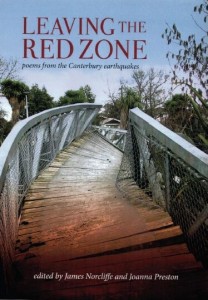
The poem was included in Leaving The Red Zone: Poems From The Canterbury Earthquake, edited by James Norcliffe and Joanna Preston, and published by Clerestory Press, in 2016.
The full text of the speech, including full audio, is here:
National Remembrance Service: the Prime Minister’s Speech
The Sparrows follows, for those who wish to read it in full. The image below it is of the painting, I meant it to be a poem about sparrows, by Dunedin artist, Claire Beynon, which features the first two lines of the poem:
.
The Sparrows
I meant it to be a poem about sparrows
and how the silence that followed
the February 22nd earthquake
included their absent voices —
& not just sparrows but the starlings
and blackbirds, the finches and wax-eyes
that normally fill the day with their bustle
about the business of living …
……………………………. all fallen silent,
hidden away, or gone further to find food
since half the city was covered
in a slick of water and mud. I threw
old bread onto the island of grass
in our own grey sea and waited …
…………………………..… and waited.
And then, finally, they came
their wings clouding the sun.
.
© Helen Lowe, 2011
.





 Magic Systems in Fantasy: AK Wilder Talks Crown Of Bones with Helen Lowe on the Supernatural Underground
 Over the last few weeks I’ve posted about some of my Christmas – New Year viewing and reading. Obviously the holiday’s been over for some time now, but it’s still appropriate to talk about Ursula Le Guin’s The Dispossessed (first published in 1974) in that context, because I picked it up in a secondhand bookshop in Picton, while waiting to cross from the South Island to the North on the Cook Strait ferry.
 In other words, The Dispossessed works at several different narrative levels and in my view represents Ursula Le Guin at the height of her powers, as does her equally famous novel The Left Hand of Darkness. The latter has been one of my favourite books for a long time, but The Dispossessed has now joined it on the favourites’ shelf.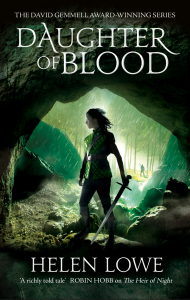
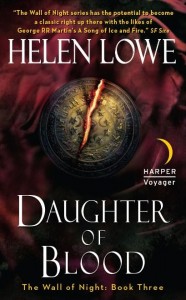


 Later today, the second in my

 Or check out what I had to say about LOS NEFILIM in my Romance in Fantasy series in 2019 (also on the SU):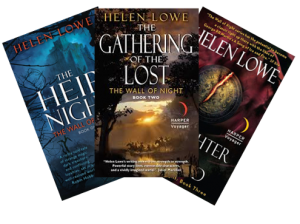


 Along with film and television viewing, a rainy Christmas – New Year break also presented the opportunity to settle in with a good book.
 On occasion, literature is discussed as if character and plot driven stories are mutually exclusive. In my view, the best stories deliver on both – and The Dry does this “in spades.” (No pun intended. 😉 ) I particularly liked that I did not start to suspect the actual perpetrator, or their motivation, until immediately before the big reveal. I also really liked the way the events of the past and present resolved. In fact, I found the ending, along with every other aspect of the book, extremely satisfying.