
Dec
25
2019


Dec
23
2019
 Many years ago, when I lived in Sweden for a time, the festival known as Lucia (aka Saint Lucia’s Day) was a pretty big deal in the immediate run-up to Christmas.
Lucia falls on December 13 and light is a big part of the celebrations, with young girls being chosen by their church or community to wear the traditional crown of candles.
My calendar tells me that today is Hannukkah this year (although it is not celebrated on a fixed date like Lucia or Christmas.) And Hannukkah, like Lucia, is associated with candles and light, although the reason for the festival is different.
Christmas, too, is strongly associated with candles, possibly because in the Northern Hemisphere it falls in the darkest month of winter, but also because the festivities have their roots in the old celebrations of winter solstice, which marked the seasonal turning-point, back toward the light of spring and summer.
 In fact, when you look at Wikipedia’s list of festivals and holidays in December, there are more of ’em than you can shake a stick at.
So whether you’re celebrating Hannukkah today, or recently celebrated Lucia or Bodhi Day, or will be celebrating Christmas on either the eve of the 24th or the day of the 25th, or any of the other December festivals around the world, my very best wishes to all of you.
I’ll be enjoying the long summer evenings here before lighting any candles, but I still hope to light a few—and on the 25th I’ll be celebrating with NZ family.
And do be careful out there, especially if you’re travelling along with what may seem like the rest of the world!
UK/AU/NZ
The About The Characters post series focuses on the minor characters in The Wall Of Night series, in large part because:
“I think it’s the presence of the smaller characters that “makes” a story, creating texture around the main points of view.”
~ from my Legend Award Finalist's Interview, 2013
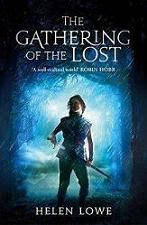
Initially, the series focused exclusively on characters from The Heir of Night, but now I’m continuing on with minor characters from both The Gathering Of The Lost and Daughter of Blood simultaneously — in alphabetical order, of course!
(The quotes, together with the covers, indicate the books in which the character appears.)
—

USA
Ileyra: a herald of the Guild house in Ishnapur
Jehane Mor … looked around as the hall door opened and two heralds in the flowing grays of the Ishnapuri branch of the Guild walked in. They looked alike enough to be brother and sister, and their accents, when they spoke their good mornings, bore the lilt of the far-off southern empire.
Jehane Mor and Tarathan rose and bowed as one, speaking their names and Guild house in the formal style, and the Ishnapuri heralds replied in kind. “I am Ileyra,” the young woman said, “and this is Salan, my brother in both blood and the Guild.”
“ ‘It is a very long way from Ij to Ishnapur,’ ” Salan quoted gravely, then added, with the ghost of a smile, “but we came by sea, which made the journey swifter. And safer, since I understand the overland route still runs through very wild country.”
~ from © The Gathering Of The Lost, The Wall of Night Book Two: Chapter 2 — A Libation for Seruth
 And It’s That Time…
…that crazy time, I might add, when the phone never stops ringing or texting with end-of-year “things to do”, and there are decorations to be hung, cards to be written, and presents posted and wrapped. Yes, you are indeed quite right, I’ve left everything much too late!!!
Then again, we all know how that happens: when Life is Life-ing, and books are a-writing, and the end-of-year sneaks up and sandbags you while you’re busy looking the other way. 😉
However, there are upsides, like Christmas (here) also being when cherries come into all the shops — because it’s summer here, however much that may seem “just wrong” to all m’ Northern Hemisphere peeps. 🙂 And I remind myself, as the phone rings again, that life is all about people, and this is a time of year that has come to be all about connecting and/or re-connecting with family and friends.
I know, I know: as well as being about spending far more money than most of us can afford, along with overeating and overdrinking, aka the season of excess. 😕 Although that is, of course, a choice and the celebration need not be excessive.
 However, once we get through that hurly-burly rush to the 24th, or whatever day your office closes down, and whatever celebrations we all do — or choose not to do — with family and friends, there is usually at least a few days of wonderful quiet time: eating leftovers, putting our feet up, and with a little luck (particularly for all us hopeful authors out there) settling down with a good book. 😀
(Absolutely no self-interest here, sirrah: nay, none whatsoever!)
So-o: Time To Think About Books To Give & Read!
Seriously, though, if you love books and literature and want to support their continuance, then in buying books for yourself and giving books as gifts to others, you will be playing a vital part in ensuring this happens.
I can assure you, too, that buying and giving books unquestionably helps their authors to continue, which is another reason — along with the first, and also Simply Loving Books — why I buy books myself!
So in case you, like me, are still rushing to get all your gift buying done, or you want to think how to spend your prezzie cards or vouchers, I thought I’d recap the list of books I read and really enjoyed this year (which are not all necessarily written in this year, though most are close to it.)
Since some of the authors are friends of mine, which is how I got advance copies of their books, I’ll mark their works with an asterisk.* But I’m also linking to my posts on each book, so you can get an idea of why it spun my wheels. (The links are embedded in the reference following each quote.)
And Here They Are: M’ “Reads Of 2019” (in order read):
 The Bloody Chamber by Angela Carter
“The Bloody Chamber is a retelling of traditional folk and fairytales with a particular focus on more contemporary settings—although some I would also describe as ‘timeless’ or ‘time-slippish’—as well as famously empowering the heroines and generally giving the stories a more female-centric slant.” — H Lowe, 10 June 1019
More worthy than readable? you may ask. Let me assure you that these tales are worthy of your attention.
 My Mother and The Hungarians by Frankie McMillan*
I loved this collection of linked flash fiction by Frankie McMillan, which was longlisted for NZ’s Ockham Prize for Literature and garnered Frankie invitations to literary events about the globe.
“Frankie McMillan has a ‘voice’ that I’ve always found particularly distinctive. In the spirit of Emily Dickinson, she has a slantwise take on the world and people in it, a take that picks out the curious and downright strange, oddities and absurdities—to the extent that I always think of her work as subversive: not so much in a political sense but in terms of received wisdoms and traditional ways of looking at the world.” — H Lowe, 8 July 2019
And if your can’t find My Mother and The Hungarians, Frankie’s The Father Of Octopus Wrestling (yes, it is as intriguing as the title!) was published just a little earlier this year.
 Milkman by Anna Burns
Milkman won the Booker Prize in 2018, which may be all that needs to be said, but I managed a few more words. 😉
“If pressed, though, I would say that this book is about a society under pressure (The Troubles in Northern Ireland) and how that pressure pervades and distorts every aspect of individual, family, and community life…[and also about]…personal survival and maintaining the bonds of personal relationship and community in the face of the extreme conditions. … I think Milkman is a terrific, though challenging, read and I really recommend it.” — H Lowe, 15 July 2019
 The Gossamer Mage by Julie Czerneda*
The Gossamer Mage marks a new Fantasy series for Julie. Here’s what I thought:
“The world, the magic, the mystery, not to mention a cast of very real characters — distinctive and original, THE GOSSAMER MAGE wove a spell that kept me reading well past ‘lights-out.’ “ — H Lowe, 29 July 2019
 Book Of Colours by Robyn Cadwallader
“Dear readers, this is a beautiful book and I really enjoyed reading it…Most of all I like the way the art of illumination is almost a character in itself, and how the intersection between the art and the individuals informs the book.” — H Lowe, 12 August 2019
Where Oblivion Lives (Los Nefilim Series) by Teresa Frohock*
I discussed this book on the Supernatural Underground blog:
 “If challenged to come up with a single adjective to describe Diago and Miquel, the word would be “fidelity.” They are faithful to each other, to Rafael, and to their values, even where those values cut across some of Los Nefilim’s traditional loyalties and behaviors.
.
So if you like historical fiction and supernatural/paranormal fantasy, noir thrillers, dark fantasy and/or horror, together with lovers whose fidelity and commitment fuel an endless love, then I think you’ll find a lot to like in Where Oblivion Lives…“ — H Lowe, 1 October 2019
 The Bastard Brigade by Sam Kean
The Bastard Brigade is non-fiction and covers: “The True Story of the Renegade Scientists and Spies Who Sabotaged The Nazi Atomic Bomb.”
[This is a] …“very readable and accessible book, generally historically accurate but with the focus on storytelling and personalities, rather than heavy duty science—although there’s enough science there to ensure the reader understands the scientific achievements (and failures) and also the stakes.” — H Lowe, 7 October 2019
I’m going to mention two more books, because I’ve just finished reading them and they’re both terrific, but you’ll have to bide a wee to find out why I think so:
Deeplight by Frances Hardinge
Once Upon A River by Diane Setterfield


Happy reading, dear readers—may these stories or others carry you on their tide: through the festive season and into the new year.
Dec
12
2019

The Wall of Night Series map; artist Peter Fitzpatrick
Huzza! We’re back to the A Geography of Haarth post series, which is traversing the full range of locales and places from The Wall of Night world of Haarth — although there aren’t too many entries left until we hit Z!
From January 25, 2013 to November 25, 2014, the series explored locations encountered in The Heir Of Night and The Gathering Of The Lost. Now the series has resumed to ensure the geography of Daughter Of Blood (The Wall Of Night Book Three) is included in our “grand tour”, epic fantasy style. 🙂
Each locale is accompanied by a quote from the relevant books where the place occurs, and the new series comprises updates of previous entries as well as the new listings.
—

USA

UK/AU/NZ
Wild Lands: vast wilderness lying between the Winter Country and The River
So as soon as the weather allowed they would leave as part of separate hunting parties, each band following a distinct tributary of the Wildenrush south toward the River. A journey across the Wild Lands, Malian thought, which Linden says will take most of the summer—and only a few short months ago I believed that no one ever went there.
~ from © The Gathering Of The Lost, The Wall of Night Book Two: Prologue
.
USA
UK/AU/NZ
She donned Nhenir, currently disguised as the tinker’s greasy leather cap, before knotting an equally grimy kerchief over the top and leading the gray from the ruin. Initially, she rode north to see if she could discern any sign of the Hedeld fort, but like the trading post, it must lie farther toward the Wild Lands than she had realized. When she reached a high point on the road and saw nothing but trees interspersed with water courses and bog country, Malian knew that The River truly had given way to wilderness.
~ from © Daughter Of Blood, The Wall of Night Book Three: Chapter 35 — Dissonance
Dec
09
2019
Recently, I’ve had a swathe of new arrivals for the TBR pile, and with the Christmas – New Year break coming up, which aligns with the summer holidays here in the Southern Hemisphere, it’s the perfect time to be thinking about books to read.
So here’s the swathe:
 Behrooz Boochani: No Friend But The Mountain
Behrooz Boochani fled persecution in Iran, but was imprisoned by the Australian government in the Manus Island detention centre for six years. No Friend But The Mountain is his autobiographical account of the road to Manus and an eyewitness account of the detention centers, that was typed into a mobile phone and communicated secretly to the outside world. The book has won four major prizes and Boochani is currently in NZ, where he appeared at a WORDChristchurch (literary festival) event.
 Teresa Frohock: Carved From Stone and Dream
Recently, I read and enjoyed Teresa Frohock’s Where Oblivion Lives, and this is the second book in the Los Nefilim series. Set in the end period of the Spanish Civil War of the 1930s, the human conflict mirrors that between angels and demons, in which nefilim (nephilim) are the foot soldiers for either side. It’s receiving early praise from reviewers, including a starred review from Publishers Weekly — but hey, I was already keen to read on Teresa’s past track record.
Frances Hardinge: Deeplight
This is a coming-of-age read about a world in which the gods have died a generation ago, but the Undersea that spawned them is still very much alive — and where god artifacts are major business. A few people have recommended this book to me now, so I’ll definitely be giving it a go.
Diane Setterfield: Once Upon A River
Diane Setterfield attended the WordChristchurch festival in 2014, but this is her latest work. Featuring an area of the upper Thames river in the late Victorian era, it appears to be historical fiction with a dash of magic realism thrown in. I’m currently reading it so will be reporting back very shortly.
 Markus Zusak: Bridge of Clay
Thirteen years after The Book Thief took the world by storm, Markus Zusak brought out Bridge of Clay, which is set in contemporary Australia. A book about five brothers, the focus of the book is the fourth brother, Clay:
Let me tell you about our brother
The fourth Dunbar boy named Clay.
Everything happened to him.
We were all of us changed through him.
I’m guessing there may be something in there about a bridge, as well. 😉
And that’s it. But more than enough to be going on with, I reckon.
Dec
05
2019
UK/AU/NZ
USA
Well, I had some fun anyway, so I hope you did too! 😀
Here’s the wrap up for all the Daughter of Blood posts for November:
Why Celebrate Daughter of Blood? — You’ll be pleased to know I had several affirmative answers. 😉
The Daughter of Blood Q&A — Round One — kicked off four weeks of ab-fab reader questions.
The Daughter of Blood Q&A — Round the Second — even moar great questions!
Midpoint — of the month with a matching post from the book!
The Daughter of Blood Q&A — Lucky Number Three — those “stonking” (an excellent word learned from Rosie C. via Twitter!) questions kept on coming. 😉
Something Readers Might Not Know — your comments suggested you liked this one…
The Daughter of Blood Q&A — Final No. Four — last but never least!
Oh, there was also the post that kicked it off, since I suspected what might be the most pressing question for many readers:
It’s Not The End Yet But I Can See It From Here: A WALL #4 Update
And all done for the November of DAUGHTER!
 It’s a bit nerve wracking to be wrapping up Supernatural Underground for the year, but it is indeed that time!
On the SU, 2019 has been my Year of Romance (#YoR) in Fantasy Fiction (#RIFF) and for the preceding nine months I’ve focused on a single book.
To wrap up, though, I decided to explore a few different takes on romantic relationships, from Barbara Hambly’s The Ladies of Mandrigyn in 1984, through until more recent times when the spotlight has come onto diversity a lot more.

It’s definitely a “slice of Fantasy” view rather than an exhaustive treatise, but I hope it proves interesting nonetheless:
Romance in Fantasy Fiction: Celebrating Difference
And please do add your favourites and recommendations in the comments: the more, the merrier!


I know, I know, how can it be over already? And yes, of course if a few late comers arrive at contact[at]helenlowe[dot]info over the weekend, I’ll answer them next week. 🙂
But now for the questions at hand—I’m rolling up my sleeves as I say that, because we’ve crept up to six for today (gulps — but only in jest!)
Oh, yes, I almost forgot until Adrian’s question reminded me: it’s Thanksgiving in the USA today, so Happy Thanksgiving to those who celebrate it. And to everyone else, have some real or virtual pumpkin pie anywayz. 😀
UK/AU/NZ
Ashley: You were writing Daughter of Blood during the Christchurch earthquakes. Did they influence the story in any way?
I began writing Daughter during the period of the earthquakes themselves, which extended from September 2010 through until December 2011, with the last big earthquake on 23 December of that month (although aftershocks always continue for a period afterward, but that’s the generally accepted endpoint of the major events.) Mostly, though, I would say the book was written during the period of initial aftermath when everything was still in devastation mode and generally at at sixes-and-sevens for a long time. The insurance and rebuild phase had momentum by the time I finished in early 2014 but really only kicked off for me at the end of that year. That period, which continued for me until 2017, was also hugely disruptive, just in a different way—but any influence would be on WALL #4 (The Chaos Gate) rather than Daughter.
As for whether the earthquakes and the initial aftermath period had an influence on the story of Daughter of Blood, as opposed to the writing process, I find it really hard to point to any direct correlation. However, the Wall of Night story is about people under pressure, in circumstances that are often traumatic, so having “lived” that (albeit in a particular circumstance—i.e.natural disaster—that is not reflected in the book), it may help the characters responses to feel more authentic. One point I made in an Australian interview, though (after The Gathering of the Lost was published), was that it may be years before the full effects of the earthquakes are known, so may also take a more objective observer, looking back, to identify influences in my writing.
Bethany: The Swarm prince at the beginning of Daughter of Blood has snake hair. If you did it to make him creepy, it worked!
I wanted Aranraith to stand out, and not in a good way, so the serpent hair was part of achieving that effect. Arguably, snakes get a raw deal in religion and storytelling, but that also means they convey a lot of unspoken messages to readers. The Biblical serpent is a clear manifestation of evil, while Medusa in Greek myth, who has the original serpent hair, is an ambiguous character depending on which story you read—but with a gaze that turns people to stone, unquestionably she’s powerful. Serpents are closely associated with poison, which is clearly dangerous but also often an underhand or secretive way of killing. The phrase “snake pit” conveys a sense of danger, too, but also hostility and competitiveness—and snake pits are a staple of the horror movie genre.
So yes, I did intend it to make Aranraith creepy, but so much more, too. 🙂
Andrew: Is there a difference between the “black blades”, which are swords, and the black spear?
The answer is there may be, in terms of origin, because their origins are as yet unclear. I think readers may detect something of this in the way Kalan’s black spear has more of a “personality” than Asantir’s black swords. However, in terms of how they function, the “black blades” of the swords and the blade, or head, of the spear are (reasonably clearly, I hope!) next to identical. And when you get the three of them together, they may not be indomitable but they are a force to be reckoned with.
Forrest: You said In Q&A 1 that you did a lot of research into battles and sieges. Was there anything else in the book that you researched as much?
Yes: medicine! You’ll recall Myr has an interest in healing and there are injuries associated with the Honor Contest in the first part of the book and then again with the siege in the second half. So I did a lot of reading about warfare injuries and how they were treated in the ancient and medieval worlds, then looked at the (increasingly rapid) evolution of treatments over more recent centuries. I also checked in with two doctors over the finer details. I wanted that aspect of the book to be authentic, but the final bridge between our modern understanding and the world of the book had to be “healing magic.” 😉 Although the magic healers, like Kion of Sea and Vael of Stars, and Myr herself (albeit without the magic), still had to have training: they couldn’t just magically wave their hands about and “hey presto”—because that’s part of the authenticity, too, you see.
USA
Jane: In Game Of Thrones, people talked about Daenerys having “hard power” and Sansa “soft power.” Would you say that’s the difference between Malian and Myr in Daughter of Blood?
I have read some of those discussions, enough to understand the context anyway, including that Daenerys “hard power” is because she commands armies and dragons in her own right and also claims the Iron Throne by right as the Targaryen heir. Whereas Sansa’s “soft power” is said to be because she works through and with others, and is awarded her command and status, chiefly by more powerful men. (I hope I’ve gotten that right from the discussions, because I haven’t watched the TV series, only read the books (to date.)
With that context established, I think there may be some overlaps with Malian and Myr but it’s not absolutely clearcut. I also think that while “hard power” and “soft power” may be good summary phrases for each, it’s not for the same reasons as in Game Of Thrones (GoT.)
So if we take Malian, she definitely has magical power of her own in spades, which gets used in a “hard power” way. She’s also the chosen champion and the Heir (crown prince/princess) of Night, so makes a claim to leadership of the Derai on both those grounds. Her “hard power” also includes learning the assassin’s arts through the Shadow Band of Ar. Plus she wields the chosen champion’s weapons of power, which are another aspect of hard power. BUT although Malian may make a claim to lead the Derai, she’s still an exile so doesn’t lead anyone yet. And although she’s made a strategic military alliance, the army that’s brought her isn’t actually hers. So the power she has comes from her personal magical strength, including the personal weapons of power, but not directly from commanding armies. (Alas, too, she has no dragons!)
On to Myr, who is definitely the “softer” character, in personality as well as power. She has no magical powers and isn’t interested in weapons and fighting although she’s been taught both. In terms of standing in her society, she’s a disregarded youngest daughter, albeit of a ruling house — ALTHOUGH she does claim a leadership role as Daughter of Blood during the siege, which is hers by right. She has to remind others present of that fact, but it’s not the same as them giving her the rights. Overall, though, her power in the story stems from personal integrity and moral suasion, a far “softer” power than Malian wields.
I think, in the best Elven fashion from The Lord of the Rings, I have now said both “yes” and “no”—which is a different thing entirely from a Kiwi “YeahNah”, which is really just “Nah.” 😉 Whereas I think in this case it’s a “Yes”, overall, but not quite in the Daenerys/Sansa mould.
Adrian: Is there a festival like Thanksgiving in your book?
There are festivals in Daughter of Blood, but not so many as in the second book, The Gathering Of The Lost. Most of the festivals in the WALL world are tied to the seasons. So Autumn’s Eve, the Ash Days, and Autumn’s Night, at the very end, are all seasonal festivals, but because of the way the story unfolds, the characters don’t get the chance to focus on the festivities associated with them. Not only no dragons (see Jane’s question above) but also no turkey or pumpkin pie!
—
USA
And there it is, I’m done—and this is the last (official) Thursday Q&A for my “Celebrating Daughter of Blood month” of November.
A huge thank you to everyone who sent in questions: I hope you’ve enjoyed reading the answers even half as much as I’ve enjoyed posting them! 😉
Don’t forget, too, for those who hail from the USA or Canada, that the spark for celebrating Daughter for this month was it being on Kindle Monthly Deal at US$1.99. So if you know readers you think may like the book, please do pass the word along. (The close-off is December 2.)
Daughter Of Blood
Kindle Monthly Deals
To support Daughter of Blood being a Kindle Monthly Deal in the US/Canada from 1 November – 2 December (2019, of course! 😉 ) I’ve dedicated my blog November to the book. (Pauses for wild applause and ear-splitting hurrahs.)
USA
And this is the very last week — which is why I’m featuring Something You Might Not Know about Daughter of Blood.
Here it is: Did you know that Daughter of Blood wasn’t the original title of the book? Yeah? Nah? Or taking the Kiwi option: YeahNah…
The answer is in fact, yes, it wasn’t the original title.
My working title for the book was The Riven Shield — which is pretty cool, imho. #JustSayin’
Although that immediately begs the question: why not carry the title through to the published work? The decision was entirely mine and not my publishers — but otherwise I’d love to hear what you think might be reasons. (Hint: there were reasons plural, not just the one.)
Any guesses, anyone? (AKA We could have some fun with this! 😀 )
UK/AU/NZ
—
Last Q&A Thursday, As Well!
This Thursday will be the last dedicated Daughter of Blood Q&A as well, so if you haven’t asked your question yet, just email to my webmail:
I’ll be on it from there! (And it’s Thanksgiving Thursday, too. Even better. 🙂 )
Jacket art by Greg Bridges
The Gathering of the Lost: USA Cover (Harper Voyager) - Read More Here!
"A richly told tale" -- Robin Hobb
"A vividly imagined world" -- Juliet Marillier
"This is an author with a gift for fantasy” -- Catherine Asaro
To read reviews, click Here.
Jacket art by Greg Bridges
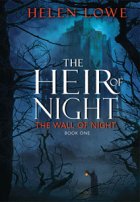
The Heir of Night: USA Cover (Eos) - Read More Here!
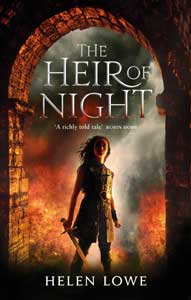
The Heir of Night: UK/AU/NZ Cover (Orbit) - Read More Here!
HEIR won the international Gemmell Morningstar Award 2012 for Best Fantasy Debut.
"THE HEIR OF NIGHT by Helen Lowe is a richly told tale of strange magic, dark treachery and conflicting loyalties, set in a well realized world."--Robin Hobb

Jacket art by Antonio Javier Caparo
Thornspell is my first novel and is published by Knopf (Random House Children's Books, USA). It won the Sir Julius Vogel Award 2009 for Best Novel: Young Adult and was a Storylines Childrens' Literature Trust Notable Book 2009.
