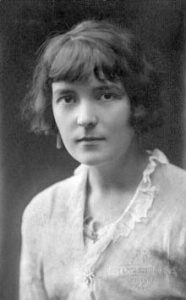
Katherine Mansfield, 1888 – 1923
Last week, I mentioned Katherine Mansfield’s Miss Brill in the context of a “drawing in” mode of storytelling, as opposed to a more observational and distancing narrative style.
As noted then, what I mean by “drawing in” is that as reader I am drawn into the world of the story and the lives of the characters, experiencing the events of the story through their eyes and emotions. Although it can sometimes work to feel as if you are ‘outside’ the story, looking in on the ‘play’ of characters and emotions, generally I find this less satisfying as a reading experience.
Katherine Mansfield (1888 – 1923) is recognized as one of literature’s outstanding short storyists (yes, I did coin that word!) and although I have read and enjoyed many of her works, Miss Brill is one of those that has stuck with me. It’s short but very powerful, and despite being published almost a century ago, is still compelling reading (imho.)
Miss Brill is an ageing single woman living alone, and the story hones in on the routine of her life, and her Sunday routine in particular. What matters is what the routine tells us without a narrative discussion by the author. We understand that Miss Brill is not only ageing, single, and lives alone, but that she is poor, isolated, and lonely. The power of the story is that by the end we also feel the fragility of such circumstances, because while reading we have walked in Miss Brill’s shoes.
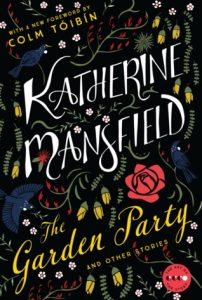 That was my experience of the story at any rate, and I have read it several times now. More than any other short story I can recall, Mansfield’s Miss Brill illuminates an aspect of human nature and of the human condition, holding up a mirror to society and ourselves. As an author, it exemplifies what great writing is and sets a standard to aspire too. The bar is a high one, but that is at it should be.
Note: the reason I haven’t talked about what happens in the story in specific terms is because it is a short story, one that merits being read in the original rather than me telling you everything about it here. 😉
Miss Brill is part of the collection titled The Garden Party and Other Stories, which first appeared in 1922.

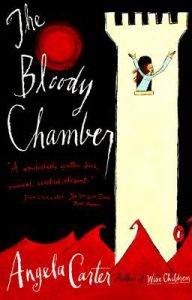 Angela Carter (1940 – 1992) is an SFF name I’ve known for quite some time because although relatively shortlived, she’s an iconic writer from the 1970s and 1980s, credited with reframing speculative fiction through a feminist lens. She also received more awards for her writing than you can shake a stick at.
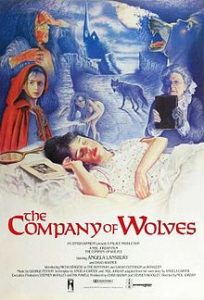 The collection contains ten stories, several of them told two different ways: for example The Courtship of Mr Lyon and The Tiger’s Bride are both retellings of Beauty and the Beast, each with a different slant. Similarly, The Werewolf and The Company of Wolves, offer two different takes on Little Red Riding Hood. The latter was the basis for the 1984 film of the same name.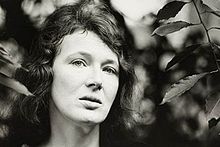



 Just to recap, I have dedicated 2019 as my Year of Romance (#YOR) on the Supernatural Underground, specifically Romance in Fantasy Fiction (#RIFF). Because as I indicated last month, Fantasy is how I roll. 😀
 Also known as: When The Stars Don’t Align, aka It Could Never Be – but to find out more, rock on over to Supernatural Underground and check out the post in full: 😉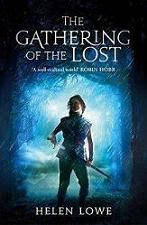

 Some years ago when I lived in Sweden, I was told that in the main language of neighbouring Finland (i.e. Finnish, as opposed to Swedish, which is also an official language there) there are only two pronouns: one personal, denoting ‘he/she’ for people; and one impersonal, denoting ‘it’ for inanimate objects.