
“What an astonishing thing a book is. It’s a flat object made from a tree with flexible parts on which are imprinted lots of funny dark squiggles. But one glance at it and you’re inside the mind of another person, maybe somebody dead for thousands of years. Across the millennia, an author is speaking clearly and silently inside your head, directly to you. Writing is perhaps the greatest of human inventions, binding together people who never knew each other, citizens of distant epochs. Books break the shackles of time. A book is proof that humans are capable of working magic.”
~ Carl Sagan, 1934 – 1996

I’m busy beavering on the “you know what” so am settling for this quote as today’s post — but when it comes to quotes there is no ‘settling’, because what a humdinger! I not only love the sentiment — which may just have something to do with why I write books. 😀
Enjoy!
As you can see, I’m making an effort to close the gap between my “Just Arrived” and “just read” posts for the books that cross my path — which was easy to do with The Bookbinder of Jericho, written by Pip Williams, because for those who enjoy historical fiction, it’s a very readable book.

As indicated in my Just Arrived post, the story is centered on the Oxford University Press book bindery through the World War One period. Peggy Jones and her twin sister, Maude, both work in the bindery, but Peggy wants to be and do more, starting with actually reading the books she binds. Over the course of the novel, her aspiration consolidates into an ambition to win a scholarship and attend Somerville, a women’s college in Oxford.
Issues of class and gender in early twentieth century Oxford, as a microcosm of the larger society, are central to The Bookbinder of Jericho. For example, Peggy is able and intelligent, but because of her class, educational opportunities have been limited and she lacks the financial resources to pursue higher education. Yet even if she can get a scholarship to study at Somerville, and completes her course of study successfully, Oxford University will not award women degrees.

The advent of World War One sees men leave the University Press to serve in the army. At the same time, Oxford sees an influx of Belgium refugees, many of them deeply traumatized by their exposure to war and the invasion of their country. Lotte, who comes to work in the bindery with Peggy and Maude, struggles throughout to overcome her experiences. Soon afterward, Somerville is turned into a soldiers’ hospital and the community receives its first war wounded — a culmination of events that profoundly affect Peggy, Maude, and their fellow book bindery workers.
The Bookbinder of Jericho weaves together Peggy and Maude’s personal relationships, and Peggy’s ambitions in particular, with the wider issues of the war, and the social change that emerges as it progresses. In that sense it’s a “slice of life” and “slice of history” narrative, juxtaposed with insight into the work of the bookbindery and technical art of creating books. Peggy’s personal journey is also far from straightforward, with her sense of duty, and responsibility for Maude, proving as personally significant as class and gender in pursuing her ambitions.

Although stories about confronting the barriers of class and gender are not new, what makes them work are the depth of the characters and the society brought to life. Pip Williams creates her alchemy through the bookbindery’s work, and the emotional demands and challenges of a world war on everyone the story touches.
Peggy and Maude’s relationship, and the “worlds” of the bookbindery and Somerville pulled me into the story, and kept me engaged until the end. If you like historical fiction and women’s stories, set within a larger historical and social context, then I think you’ll also enjoy The Bookbinder of Jericho.
It may also appeal if you have enjoyed Pip Williams’ first novel, The Dictionary of Lost Words, or books such The Remains of the Day by Kazuo Ishiguro, Book of Colours by Robyn Cadwallader, or Vera Brittain’s Testament of Youth.


I read a paperback edition of The Bookbinder of Jericho, 438 pages, published by Affirm Press, that I purchased in a genuine brick-and-mortar bookshop. 😀
So-o, way-aways back on Monday, I posted an update on WALL #4 revision progress, namely that I had completed the revision of the first section in Part 2 (of the manuscript of two distinct parts. I reported on completing Part 1, here.)
But as Gail’s question on the update highlighted, it’s also helpful to know how many sections Part 2 contains — so thank you, Gail, for prompting me to say. 🙂

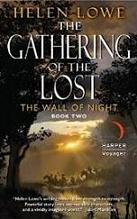
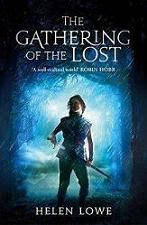
I know, it looks like a LOT of sections… (That’s Gathering, by the way.)
I did have to do a quick review and headcount, though, just to be completely sure of the precise number, but the answer—ta da!—is six.
That’s six in total, dear readers, including Section 1, which I’ve just reported “done.” So that’s one down, five to go.
And although you may recall that I revised the final section first (because it needed major changes that I wanted to capture while they were fresh in my mind), it must stay on the list. That’s because it will still need consequential changes, whether tweaks or more substantive, to fit with the rest of the revision.

Sometimes, wrangling the narrative via hand is still required.
As I also indicated on Monday, the sections are of varying lengths, similar to the other books — although that can and does change, sometimes quite significantly, through the revision process. Also, length alone may not determine how long revision will take: it’s always far more about what’s happening with the narrative and the characters.
So as with so much else in life, the way through is to keep turning up and moving the work forward, one word, sentence, paragraph, page, chapter and section at a time. So as per my June 9 post, my next update will be when Section 2 is done. It’s currently titled The Gap by the way, and it comprises a section of the narrative that has been integral to the WALL story since I first started telling it to myself—long before I ever put pen to paper.
It’s a marathon, but there’s alchemy still, in the mix
I wrote, on June 9, that: “Future updates will be on each section of Part 2 as I complete them. I’ll report on them here, under About My Books and About What I’m Doing, as that occurs.”
In keeping with that commitment, I confirm that Section 1 of Part 2 of the work-in-progress is now a wrap, so it’s onward to Section 2. In fact, I’ve already made a start. 😀

I’m pleased with how this last section went, but by way of sounding a caution, it’s also one of the shorter sections in the work-in-progress. So please do not stop invoking, and most particularly propitiating, the Muses! You may be sure that I am doing likewise!!
Otherwise, as I also said in my last update: Onward!

Avatar Kyoshi from “The Last Airbender”
I did hope for a ‘milestone’ post today, but am not quite there, so instead will share a “moment of eye-roll” from the revision front.

Doorstop, or revision manuscript?
Very often, revision involves big ticket decisions like “Does the narrative need this section at all, in order to ‘work’?” or “Is this part written in the right character’s point-of-view?” and “have I gotten all the action in the right, let alone the best (as per Coleridge’s observation on poetry) order.”
By ‘right’, of course, I mean an order that makes logical sense and will stand up to the test of the manuscript as a whole.

Knocking off those sections, one by one…
These big ticket items can be more hair-tearing exercises than eye-roll territory — with the latter, and a few grins, coming with the smaller stuff, like typos. Yesterday’s winner in the typo-and-reflexive-eyeroll-territory was “representating. Now what, I wondered, was I supping with my tea when I typed that?
Although it’s resolving the big ticket questions that matters in terms of getting the manuscript to D&A (recently discussed here), I do like to pick up such typos when I notice them, because despite the best efforts of myself and the team editorial, particularly copy- and proof- editors, they do have a habit of slipping through into the printed book.

Printed books – happy days!
Yes, indeed — it’s August and that means a post for Supernatural Underground. But not just any post, I’m up to #7 — seven dear readers! — in the Great Leaders of Speculative Fiction series.

Great leaders in my humble opinion anyway, although I do endeavour to back my picks up with a few “terribly important thoughts” ( 😀 ) on wherein their greatness, and leadership chops, lie.

This month’s pick is Signe de Barbentain from the awesome (again, imho!) A Song for Arbonne by Guy Gavriel Kay. Now, I have mentioned Signe here before, but more as a soundbyte, whereas my latest SU post is taking a deep dive.

So without further ado, I give you:
Signe de Barbentain: Another Great Leader of Fantasy & Science Fiction Literature
A few years ago I read and enjoyed The Dictionary of Lost Words by Pip Williams, so I’m pleased to have the opportunity to read her follow up novel, The Bookbinder of Jericho, which won the Australian Book Industry Awards (ABIA) General Fiction Book of the Year for 2024.

Here’s what the backcover has to say about what’s “inside the book”:
“The Bookbinder of Jericho is a story about knowledge – who makes it, who can access it, and what is lost when it is withheld.
In 1914, when the war draws the young men of Britain away to fight, it is the women who must keep the nation running. Two of those women are Peggy and Maude, twin sisters who work in the bindery at Oxford University Press in Jericho. Peggy is intelligent, ambitious and dreams of studying at Oxford University, but for most of her life she has been told her job is to bind the books, not read them. Maude, meanwhile, wants nothing more than what she has. She is extraordinary but vulnerable. Peggy needs to watch over her. When refugees arrive from the devastated cities of Belgium, it sends ripples through the community and through the sisters’ lives. Peggy begins to see the possibility of another future where she can use her intellect and not just her hands, but as war and illness reshape her world, it is love, and the responsibility that comes with it, that threaten to hold her back.”
As a lover of words, books, and historical fiction, this book does sound like core Helen reading, so having already enjoyed The Dictionary of Lost Words I am fairly confident of reading satisfaction ahead. 😀
In my most recent work-in-progress update, I advised that Part 1 of the manuscript revision process is now complete and that I’m now into Part 2. If you haven’t already read it, the link will take you there. 🙂

Yep, there was an update recently.
Subsequently, a few readers have come back to me regarding a publication date, so I’ve realized that it’s time for a reprise on the whys-and-wherefores of publication dates in traditional publishing. Chiefly that it’s the publisher, rather than the author, that sets the publication date.
The ‘catch’, of course, is that the publisher can’t set a publication date until the manuscript has been delivered and the editor has accepted it. (This is called “Delivery and Acceptance” or “D&A” in the traditional process.)

Revision time…
So until I have revised the whole manuscript and the publisher has accepted it, there won’t be a publication date for The Wall Of Night #4. In other words, the ball is definitely in my court!
Given this, you may be assured that I am striving for “full speed ahead” (“and damn the torpedoes”) on Part 2 of the manuscript, and will do my best to keep you apprised of progress as regularly as I can.

Knocking off those sections, one by one…
I am always very conscious of how long readers have been waiting for this book. I also very much appreciate—and certainly never take for granted—readers’ commitment to the series. So I can promise you that my corresponding commitment is always to complete the series and the story and get it to the publisher immediately the revision is complete.
You may also rest assured that I will let you know here immediately any and all of these milestones are checked off. At which point…

Flowers, wine, chocolate — all the celebrations will ensue

USA
The “Meet the Minor Players” post features the minor characters in The Wall Of Night series. One of the reasons for posting this series is because the major characters always get featured and discussed, but: —
“I think it’s the presence of the smaller characters that (also) “makes” a story, creating texture around the main points of view.”
~ Helen Lowe (from my Legend Award Finalist’s Interview)
Initially, the series focused exclusively on characters from The Heir of Night, but now I’m continuing on with minor characters from both The Gathering Of The Lost and Daughter of Blood — in alphabetical order, by name, of course!
~*~
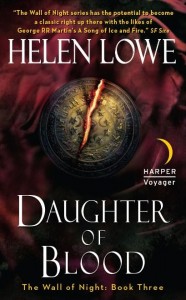
UK/AU/NZ
Princess Coreil: head of the Coreil, a major merchant clan of Ij, in the River lands
“It was quite a gathering,” agreed Tarathan. “I saw Count Ambard bail you up as soon as Princess Coreil had finished exchanging pleasantries.”
“He did. Where the Athiri lead, the Coreil, and now it seems the Ambardi as well, will follow … ” Jehane Mor shook her head. “Although neither the count nor the princess had anything particular to say.”
~ from © The Gathering of the Lost, The Wall Of Night Book Two – Chapter 3, Revelry and Masks