 The About The Characters post series focuses on the minor characters in The Wall Of Night series, in large part because:
“I think it’s the presence of the smaller characters that “makes” a story, creating texture around the main points of view.”
~ from my Legend Award Finalist's Interview, 2013
Initially, the series focused exclusively on characters from The Heir of Night, but now I’m continuing on with minor characters from both The Gathering Of The Lost and Daughter of Blood simultaneously — in alphabetical order, of course!
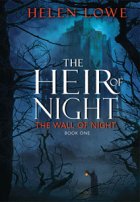
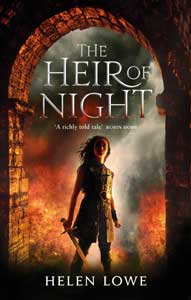
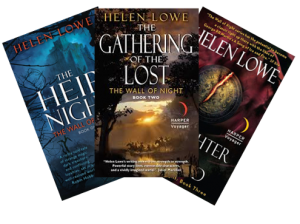
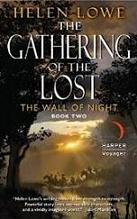
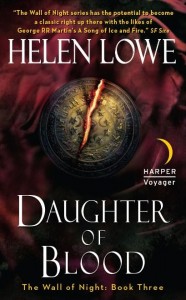
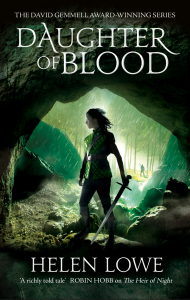
(The quotes, together with the covers, indicate the books in which the character appears.)
—

UK/AU/NZ

USA
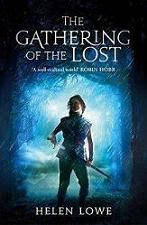
Girvase: a knight in training, in the southern realm of Emer
“A clangor shattered the morning’s peace, followed by voices shouting. Still half asleep, Carick fumbled the shutters open, shading his eyes against the early sun. Girvase and Hamar were circling each other in the center of the yard, swords in hand, while their comrades yelled from the perimeter. Carick recognized Malisande and Alianor, looking down from the loft, while Raher, Audin, and Jarna stood just inside the gate. The two combatants continued to cut and thrust, their faces intense with concentration. When Carick leaned further out, he could see Ser Bartrand striding down the hill, with Col, the Master Archer, beside him.”
~ from © The Gathering Of The Lost, The Wall of Night Book Two: Chapter 14 — Maister Gervon
.
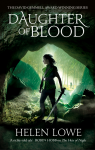
UK/AU/NZ
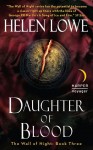
USA
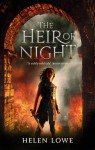
“The tune he whistled beneath his breath was from one of the Emerian songs of springtime love. For a few moments he could have been back in the small gray castle with Audin and Jarna working close at hand, while Girvase and Raher sparred in the yard and the damosels called out encouragement. “
~ from © Daughter Of Blood: The Wall of Night Book Three, Chapter 7 — Fire and Water

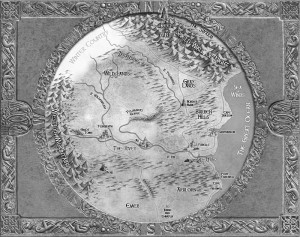

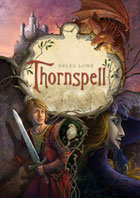 In terms of my published work, I believe the historical influence is most evident in Thornspell, which evolved as a Middle European-style kingdom very much in the style of the Holy Roman Empire and its affiliated states in the early Renaissance period. The period is recognized in terms of clothes, technology (which includes armour, weapons etc) and the broadbrush of how the nobility live.



 Recently on Good Reads (GR) I was asked a question about worldbuilding. I’m not terribly active on GR because there’s only so much social media a gal can do in a meaningful way and still write books and deal with realtime life, so questions are a relatively rare event. 😉
 As I grew up and my original world idea developed, I realized that a dark world, while atmospheric, made for challenging worldbuilding and difficult storytelling, so I revised the “darkness” back to more of a twilit world, with an accompanying stark and bleak landscape, that became the Wall of Night. I also originally thought the wall would be an actual constructed wall (like the Nightwatch’s Wall of Ice in A Game of Thrones) but the more I thought about it the more the “mountain range as shield-wall” idea took hold.
 Other “Big Ideas” I (believe I) perceive in Fantasy worldbuilding, which pervade the stories, include:
 If you think of a world as being similar to a human body, the spine is the central column, or core idea, that connects everything else.
 In order for the world to be real for readers, it must first be real in your mind so that the characters can experience their surroundings in a real way.
 Yet it is not enough to simply experience, the characters must also respond emotionally to what they experience. For example, in any given situation, does the character feel fear or horror, foreboding or doubt; happiness or confidence? Do they respond to stimuli with joy and delight, or disgust and loathing?
 The reality of the worldbuilding will help you, as author, to know how your characters respond. It will also help your readers not only understand what’s going on for your characters, but to understand environment and world through their senses and perceptions, i.e. the world becomes real for all involved.



 What I’m reading right now, and yes, really enjoying! (thought I’d get that out there right away 😉 ) is Julie Czerneda’s Search Image, the first in her new science fiction series, the Web Shifter’s Library.
 Last week I was ruminating on potential themes for this year’s first-of-the-month posts on the


 However, as part of the new year (2019!) and year nine (also 2019 😉 ) I’ve been mulling over whether I could or should contemplate having a theme for this year. It would have to fit with the Supernatural Underground (SU) ethos of course, which began as “Books That Go Bump In The Night” and is now “Where Fiction Makes The Heart Beat Faster.”