
Jul
05
2016

Introduction:

Guy Gavriel Kay
Guy Gavriel Kay is the international bestselling author of twelve previous Fantasy novels and a book of poetry, as well as a considerable number of essays. He has been awarded the International Goliardos Prize for his work in literature of the fantastic and won the World Fantasy Award for Ysabel in 2008. In 2014 he was named to the Order of Canada, the country’s highest civilian honour. His writing has been translated into more than twenty-five languages.
I have personally followed Guy Gavriel Kay‘s writing since reading his first publication, the Fantasy trilogy known as The Fionavar Tapestry, so am both delighted and honoured to be interviewing him here today.
This interview focuses on his thirteenth and latest novel, Children of Earth and Sky. Thanks to Hachette New Zealand, I also have two copies of the novel to give away today to New Zealand readers — details will follow the interview.
And now, although it may be Matariki and the deep midwinter here, I’d like to extend a very warm, Aotearoa-New Zealand welcome to Guy Gavriel Kay.
~~~

UK/AU/NZ cover
Interview:
Helen: Guy, your writing career is both illustrious and enduring, having now spanned over thirty years. Throughout that time, your books have been published as “fantasy”, when arguably what you write is as much history as fantasy. What, for you, marks the boundary between the two and where do they overlap in your writing?
Guy: I think a major component of boundaries, in art, on the map, is that they tend to shift. So I can’t (or won’t?) pin down a clear dividing line. My own angle on this is to push for eroding such artificial literary borders. The energy we spend on sorting a category or slot for a work of fiction is better spent on more important questions: Is it good? How good? Why?
Helen: Your first publication, the Fionavar trilogy, is epic fantasy, while your second, Tigana, marked the shift into alternate history. What sparked the shift in focus?
Guy: Hard to say looking back so far (always be suspicious of artists who offer clear, retrospective explanations of what are often intuitive processes). I knew I didn’t want to write what I called ‘a four volume trilogy’ and I knew I needed to challenge myself (and by extension, readers).
I also thought (this much I know) that fantasy or the fantastic tended to not be allowed to do or be certain things, in literature, and I wanted to challenge this, too. (And that limiting came from both within the genre and without – and still does, actually.)
Helen: Your latest novel, Children of Earth and Sky, is a sweeping story set in the period that marked the rise of what we know as the Ottoman Empire, and in many ways history itself is both the main protagonist and antagonist in the book. How do you make this potentially distancing approach work while still keeping the story engaging for readers?
Guy: Well, first of all thank you for suggesting it does work. But the caveat is – always – that no book or author can work for every reader. You are entirely right to suggest that I try to engage with history itself, not just figures within it, and this involves some of what has been called a cinematic ‘pulling back’ of the camera. This allows us (author and reader) space to set events in a context.
This does not appeal to every reader, though, Helen. Some don’t want to be pulled back, they want ‘total immersion’, identification with the characters, ‘relatability’ to triumph. By using the devices I do, I appeal to some, and raise eyebrows of others. No artist serious about her or his work can avoid this.
Helen: A great deal of Tolkien’s The Lord of the Rings concerns the themes of loss, regret, and endings in a highly magical, alternate world. Arguably, the majority of your novels address similar themes in more “realistic” settings derived from history, for example the fall of Sarantium (Byzantium/Constantinople) to the Asharites (Ottoman Turks) in Children of Earth and Sky. Do you agree, or would you point to an alternative focus?
Guy: I’d just say that each book has different themes and motifs dominating. The search for overarching themes in my work is better done by critics and scholars. One writer long ago described my poetry as ‘the poetry of “almost”’ and I thought it was perceptive. That may link to your observation.
I do find myself drawn to cultures and times on the cusp of change, because this offers sharp focus for many elements, and an obvious avenue to drama and tension. Given that – change embedded in the books – I wouldn’t quarrel with the idea that ‘loss’ or the risk of it is involved for some. Tolkien’s sense of loss was nostalgic, though: things were better once. I don’t have that feeling as a given, in my nature or my books.
Helen: Another theme that I have detected in your writing is that of relationships that step outside convention and expectation, or at least what we perceive as being the norm historically. How much of your treatment of relationship derives from your research and how much arises from fantasy fiction’s ability to ask “what if?” and explore otherness?
Guy: Interesting question. I am always on the hunt for stories and elements in history that allow me to plausibly do certain kinds of ‘outside the norm’ people and relationships. This is especially true for the women in the novels, where I want to explore agency for them, but not do so gratuitously, or by superimposing a 21st century woman into the past.
So finding medieval female physicians helped give me Jehane in Lions, the real-life poet Li Qingzhao absolutely gave me Lin Shan in River of Stars, legends about violent, magic-wielding women among the pirates of the Adriatic town of Senj opened the way to Danica in Children. So I’d say the weight, as to your question, tilts that way, in my work.
Helen: In writing alternate history, usually set in times of war and associated cultural and social upheaval, how do you strike a balance between the often tragic outcomes of history and endings that offer readers some hope and a degree of happiness? Do you feel the need to do so, in fact?
Guy: I’ve actually been informed by the administrator of the Sidewise Award for Alternate History that I’m not eligible for it, because I don’t write it! And I agree! I’m doing something different, and I feel very lucky I’ve been able to do it for so long, with a measure of success and reward – because it would have been so easy for me to fall between every literary crack there is, just about!
I don’t feel any need to ‘steer’ an ending in any direction. Each book imposes its own demands. I do have a view of the world and history that recognizes (and honours) integrity, friendship, love, art … this is why, although the books can carry darkness and violence (as life does) I’m not at all embedded in ‘grimdark’ fiction or anything analogous.
Helen: Finally, I am aware that you sent some time in New Zealand and also Australia during the time you were writing the Fionavar trilogy, to the extent that some of the names of the trilogy’s Paraiko giants are Maori, e.g. Taieri. Have you returned to NZ or Australia since then and do you have any plans for future visits? And to what extent, beyond names, does travel influence your storytelling?
Guy: I’d love to get back to both. I have had discussions with colleagues there, and did have a couple of invitations to conferences and conventions years ago that couldn’t be made to work. Our time in New Zealand was vivid, and remains memorable. I was also part of the runner-up pair in the Whakatane bowling league championships that year, I’ll have you know. I keep forgetting to put it in my resume!
I used to say that some people could evoke olive groves and vineyards while watching the bus rumble past out their window, but that I did better looking out at olive groves and vineyards. That is no longer as true (or necessary), but it remains true that travel can trigger ideas, associations, images.
Ysabel was written because we went back to Provence after ten years for a year. Children of Earth and Sky is very much a product of a return to Venice, and visits to Prague, Dubrovnik, and the Dalmatian coast. Not formally ‘research’ trips, but in a way a novelist who works as I do is always researching on the road.
Helen: I believe I and many others in the antipodean writing and Fantasy-Science Fiction communities will hope that your road and research, either independently or together, bring you back this way again sooner rather than later.
In the meantime, thank you very much for returning to the New Zealand-of-the-interwebs for this interview. It has been a great pleasure having you on the blog and discussing both your writing generally and Children of Earth and Sky.

UK/AU/NZ cover
For more information on the novel, click on Children of Earth and Sky
~~~
And Now — Drum Roll! — for the Giveaway Details (NZ Only):
Hachette NZ have very generously offered two copies of Children of Earth and Sky for giveaway to New Zealand readers only.
The recipient will be drawn from commenters on this interview — so that’s all you have to do: leave a comment on this post and be in the draw to win!
You may leave more than one comment in terms of discussing the interview, but each commenter’s name will be entered into the draw only once.
The opportunity to enter will remain open until 12 midnight, Friday 8 July (NZ time). The draw will be made using Random.Org Integer Generator and posted on the blog on Saturday 9 July. (Go to the top of the masthead to check.)
If I haven’t heard from the winners by 5 pm, Wednesday July 13 (NZ time), I will redraw with the results posted here on Thursday July 14.
The books will be forwarded to the winners by Hachette NZ.
~~~
About the Interviewer:
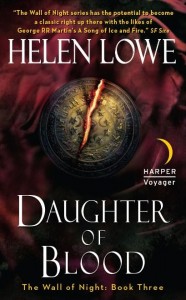
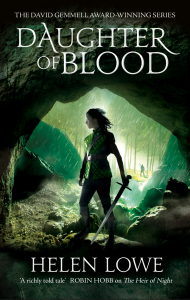
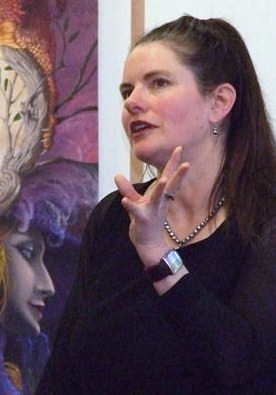 Helen Lowe is a novelist, poet, interviewer and blogger whose first novel, Thornspell (Knopf), was published to critical praise in 2008. Her second, The Heir of Night (The Wall Of Night Series, Book One) won the Gemmell Morningstar Award 2012. The sequel, The Gathering Of The Lost, was shortlisted for the Gemmell Legend Award in 2013. Daughter Of Blood, (The Wall Of Night, Book Three) was published on January 26, 2016.
 The week ahead is going to be the week of the interview!

On Monday 4, I’m posting an interview with internationally renowned author, Guy Gavriel Kay focusing on his newly released Children of Earth and Sky.
More details are available here: An Interview with Guy Gavriel Kay
Plus there’s to be a giveaway, with two copies up for grabs from Hachette NZ (for NZ readers only, I’m afraid.)
—
 On Wednesday 6 (NZ time; Tuesday 5, US time) I’ll be going live on twitter to interview fellow Supernatural Underground author, Kim Falconer, about her new-out paranormal urban fantasy, The Blood In The Beginning.
To find out more, click on: A Twitter Interview with Kim Falconer
And stay tuned to the Twitter hashtag: #thebloodinthebeginning
USA
Recently, I’ve been reflecting on how trees not only influence human creativity in terms of art and literature, but play an important part in defining the fantasy landscapes in my books.
In the follow-up post, I focused on Thornspell. In turn, I next focused on The Heir of Night and The Gathering of the Lost, Books One and Two respectively in The Wall Of Night quartet.
Today it’s the turn of Daughter Of Blood (The Wall Of Night, Book Two.)
Unsurprisingly, given the nature of the Wall of Night as discussed in relation to HEIR, trees mainly appear in the Southern Realms sections of the book. In those sections, however, they more than play their part.
UK/AU/NZ
The first excerpt features the importance of trees in providing shelter for travellers in the wild:
“Malian let her mind follow the secondary route, leaping over huddled villages with their sheep pens and rocky fields, to settle on a pine grove near the crest of the road’s first long ascent into the foothills. She had camped a night in the dry earthy hollow beneath the trees, which grew so close together that only the very heaviest rain fell between the branches. Now, it was the best shelter she could recall along the secondary route’s wild terrain.”
~ from Daughter Of Blood, Chapter 15, The Night Fair
In some cases, the trees in a landscape conceal:
“Her campsite was a ruined chapel to Seruth, situated amidst heavily wooded terrain and so well concealed behind creepers and close-growing trees that she had nearly missed it the previous day… The interior was more complete than it had appeared from the outside, with thick vines creating a secondary roof and much of the walls and floor remaining, despite thickly layered leaves underfoot.”
~ from Daughter Of Blood, Chapter 35, Dissonance
And in others reveal:
“When she reached a high point on the road and saw nothing but trees interspersed with water courses and bog country, Malian knew that the River truly had given way to wilderness.”
~ from Daughter Of Blood, Chapter 35, Dissonance
Whatever the circumstances, however, trees are always integral to the worldbuilding in the fantasy world of Haarth.

KimFalconer
It’s all happening on the interview front right now: on Monday 4 I’ll be posting a blog interview with Guy Gavriel Kay — and on Wednesday 6 I’m doing a Twitter interview with Kim Falconer, discussing her new novel The Blood In The Beginning.
The Blood In The Beginning is paranormal urban fantasy with a ‘take-no-prisoners’ heroine, Ava Sykes.
.

So I’m planning to ask Kim about her urban fantasy world-building, particularly the post-cataclysmic elements, and developing a(n awesome) heroine like Ava — among other questions.
Here are the details:
Date:
Wednesday 6 July, NZ/Australian time; Tuesday 5, USA/Canada/UK et al
Time:
NZ: 11.00 am
Australia EST: 9 am
US EST: 7 pm (Tuesday 5)
(That’s NZ for me, Australia for Kim, & the US for the Supernatural Underground, since Kim and I are both part of the SU community. 😉 )
Where:
On Twitter!
How To Find Us:
I will be asking questions from @helenl0we
Kim will be answering on @KimFalconer
BUT you don’t have to be on Twitter yourself to find us because we will be using a Twitter hashtag:
#thebloodinthebeginning
So just search on #thebloodinthebeginning, click on “Live” and you will be up with the play. 😉
How To Participate:
However, you will have to be on Twitter to chip in with your own question for Kim, or contribute a comment.
We’d love it if you do — but are equally happy if you prefer to just follow the hashtag.
See you on the 6th! 🙂
~ by Rebecca Fisher
Whether or not you’ve seen Gremlins, I’d stake money on the chance you know the rules surrounding their existence. When bringing home an exotic pet called a mogwai, there are three things you must never, ever do:
- Never expose it to bright light.
- Never let it get wet.
- Whatever you do, never feed it after midnight.

These are the rules that inevitably get broken when Mr Peltzer brings home a cute and cuddly mogwai for his son Billy. Although I’m always bemused by just how casually the Peltzer family accepts the presence of an entirely undiscovered species into their household, Billy grows extremely fond of the pet he calls Gizmo.
 Who wouldn’t grow fond of him? He’s adorable!
But then the inevitable happens. With a few splashes of water, Gizmo multiples into several more mogwais, and when these considerably more mischievous creatures trick Billy into giving them food after midnight, they transform into the terrifying gremlins.
Now it’s up to Billy and his would-be girlfriend Kate to stop the gremlins from terrorizing the town and ruining Christmas.
Gremlins did well enough at the box-office to warrant a sequel, and is perhaps best remembered for its special effects. At the time Gremlins was a trailblazing movie for its use of mechanical puppets, sparking a number of copycat films that also attempted to capitalize on the technique (for example: Ghoulies, Critters, Munchies, Hobgoblins – I promise I’m not making any of these up).
 Why you shouldn’t get them wet…
But watching Gremlins as an adult made me realize that despite my fond memories of getting scared half-to-death as a child, it’s an oddly constructed film. The film’s first act introduces an array of townsfolk, many of whom go missing entirely once the gremlins start their rampage.
Other scenes seem random to the point of bizarre – anyone who has already seen the movie will know exactly what I’m talking about when I mention Kate’s story about her father’s disappearance. It has no bearing on the story, it’s grisly and upsetting, and after she confides to Billy about it, it’s never mentioned again!
 Kate tries to fend off the gremlins at the local pub
It’s one of those movies that some kids will love and others will be traumatized by, but re-watching it after so long reveals that it’s also a very strange movie, one that moves a bit uncomfortably between horror and comedy. Still, it’s since become a cult classic on account of its amazing puppetry and unforgettable premise, and for those reasons deserves a place on this list.
.
Next Time:
The reboot is just around the corner, so let’s finish this column off with the ultimate in 80s fantasy-horror-comedy: Ghostbusters.
.
About The Reviewer:
 Rebecca Fisher is a graduate of the University of Canterbury with a Masters degree in English Literature, mainly, she claims, because she was able to get away with writing her thesis on C.S. Lewis and Philip Pullman. She is a reviewer for FantasyLiterature.com, a large website that specializes in fantasy and science-fiction novels, as well as posting reviews to Amazon.com and her They’re All Fictional blog.
To read Rebecca’s detailed introduction of both herself and the series, as well as preceding reviews, click on:
Big Worlds On Small Screens
Rebecca won the 2015 Sir Julius Vogel Award for Best Fan Writer, for writing that included Big Worlds On Small Screens.
To what shall
I liken the world?
Moonlight, reflected
in dewdrops,
shaken from a crane’s bill.
Dōgen, 1200 – 1253
—
According to Wikipedia, Dōgen was a Japanese Buddhist priest, writer, poet, philosopher, and founder of both Eihei-ji monastery and the Sōtō school of Zen in Japan.
I first learned of Dōgen and Eihei-ji in Peter Matthiessen’s book Nine-Headed Dragon River which led me to visit the temple, located in a mountainous region of western Honshu, when I visited Japan.
The poem is among the most famous zen poems, addressing the nature of impermanence.
UK/AU/NZ cover
A while back, I did a “Just Arrived” post for Guy Gavriel Kay’s latest novel, Children of Earth and Sky.
I said then that I hoped to be able to do an interview once I’d read the book—and I can now confirm that I have read the book and an interview will be forthcoming next Monday, 4 July.
In addition to the interview, Hachette NZ will also be doing a giveaway—so if you don’t already have the book then this could be your chance. 😉
In the meantime, just to whet your reading appetites further, here are the verdicts from two major review journals:
“Kay triumphs at creating complex political landscapes and then populating them with characters who make the stakes important and the struggles real. Another magnificent history-that-never-was from a master.” — Library Journal, Starred Review
“This big, powerful fantasy offers an intricately detailed setting, marvelously believable characters, and an international stew of cultural and religious conflict writ larger than large.” — Publishers’ Weekly
UK/AU/NZ
Recently, I reflected on how trees not only influence human creativity in terms of art and literature, but play an important part in defining the landscape of the fantasy worlds in my books.
In the following post, I focused on Thornspell. Next I turned the spotlight on The Heir of Night, Book One in The Wall Of Night quartet.
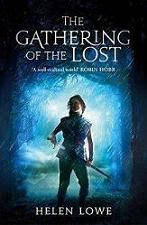
Today it’s the turn of The Gathering of the Lost (The Wall Of Night, Book Two.)
The opening scene in The Gathering of the Lost was with me for many years before I wrote the book, chiefly because I saw the “fragile blossom” of the opening scene every spring in my home city of Christchurch:
“Spring came to the River in a flurry of blustering winds and driving rain that turned the local roads into quagmires and hurled the first fragile blossoms to the ground … it took the heralds the best part of a chill and dreary month to complete their journey. The rain continued, steady and unrelenting, and they slept in small wayside inns or camped in the leafless woods.”
~ from The Gathering Of the Lost, Chapter 1, The Road to Ij

USA
Post earthquake, the dicey roads have been pretty realistic as well, but to be honest I wrote this sentence before any of that happened.
This second book in The Wall Of Night series takes place in the Southern Realms of the world of Haarth, which have more than their share of tree-ed landscapes. Another, toward the mid-part of the book, is the forest called Maraval:
“Mostly, Malian let the others talk as the miles fell behind them and Maraval forest rose up ahead like a green cloud … as the road took them deeper into the wood … the cavalcade fell silent, and the only sound was the clip of their horses’ hooves, the song of birds, and the deep susurration of the myriad leaves overhead. “
~ from The Gathering Of the Lost, Chapter 33, Maraval
Trees help define landscape again in the final part of the book when Malian comes to the village of Butterworth, in southern Aralorn:
“She rode into Butterworth as the poplar leaves became gold tinted. The village had an alehouse as well as a forge, with a crumbling stone tower on the edge of the nearby chestnut woods.”
~ from The Gathering Of the Lost, Chapter 53, The Solitary Tower
So there you have it: trees, landscape, worldbuilding — The Gathering of the Lost.
Kim Falconer is a friend and fellow author from the Supernatural Underground, which makes the arrival of her latest book, paranormal urban fantasy, The Blood in the Beginning, doubly exciting.
And because I’ve taken a sneak peek already, I can tell you that The Blood in the Beginning features a heroine called Ava Sykes who is truly take-no-prisoners and kickass.
I can also tell you that this book is fast-paced and I love the world building already.
But since it’s a “just arrived”, what does the back cover blurb have to say:
.
Ava Sykes Wants To Put The Past Behind Her … But Some Things Just Won’t Die
Some things are better left in the dark . . .
Undergraduate by day, bouncer by night, Ava Sykes is just trying to make her way in New LA, a city recovering in the ‘Aftermath’ the time after an earthquake tore the country apart. Ava studies hard, trains at the local dojo, and teaches kids self-defence. Sure, she has a rare blood disorder and a stolen identity, but who doesn’t keep a few secrets these days? Life is tough, but when Ava takes a job at the trendy new club, Poseidon, her financial worries seem to be over.Then the evil wakes up.After stumbling into the VIP area of the club, where humans are on the menu, Ava is attacked in the street, and finds herself in the hospital, trying to put the pieces together. The bizarre hallucinations aren’t helping, and neither is Dr. Miguel Rossi, the man who claims to know more about her origins than she does.
Shocked to the core at the discovery, Ava begins a search for her birth mother — and the truth — but with a copycat killer on her tail, the attractive and powerful Daniel Bane offering to protect her and a doctor bent on unravelling her mysterious ‘condition’, the facts are hard to pin down. Meanwhile, the ‘otherness’ in her blood makes her increasingly irresistible to all the wrong people.
Ava used to dream of knowing where she came from but faced with the truth, she’d give anything to forget.
Kim’s also made a book trailer, which you can check out here:
The Blood In The Beginning — trailer
No reviews yet — but with The Blood In The Beginning and Ava Sykes about to hit the streets next month, I am sure there will be soon.
I am hoping, too, that Kim will join me here for a guest post and some giveaway fun, and we may be going to do a Q&A on Twitter as well — so definitely Watch This Space. 😉
Jacket art by Greg Bridges
The Gathering of the Lost: USA Cover (Harper Voyager) - Read More Here!
"A richly told tale" -- Robin Hobb
"A vividly imagined world" -- Juliet Marillier
"This is an author with a gift for fantasy” -- Catherine Asaro
To read reviews, click Here.
Jacket art by Greg Bridges
The Heir of Night: USA Cover (Eos) - Read More Here!
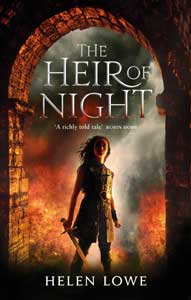
The Heir of Night: UK/AU/NZ Cover (Orbit) - Read More Here!
HEIR won the international Gemmell Morningstar Award 2012 for Best Fantasy Debut.
"THE HEIR OF NIGHT by Helen Lowe is a richly told tale of strange magic, dark treachery and conflicting loyalties, set in a well realized world."--Robin Hobb

Jacket art by Antonio Javier Caparo
Thornspell is my first novel and is published by Knopf (Random House Children's Books, USA). It won the Sir Julius Vogel Award 2009 for Best Novel: Young Adult and was a Storylines Childrens' Literature Trust Notable Book 2009.
