



~ by Rebecca Fisher
Introduction:
Chuck ran for five seasons between 2007 and 2012, surviving the 2008 Writer’s Strike as well as the surplus of spy-related material that came out in the early-to-mid 00’s. It had plenty to contend with, including Alias, 24, Kim Possible and Spooks on television, and Spy Kids, Johnny English, Mr and Mrs Smith and Agent Cody Banks on the big screens.

For a while there, we all seemed to be obsessed with espionage-related entertainment, and though Chuck was a late-comer to the bandwagon, it managed to outstay all the competition; ending just as popular culture shifted its attention to emo-vampires and Sherlock Holmes.
Premise:
Charles “Chuck” Bartowski is a normal guy working in the electronics department of the local BuyMore. Average job, average friends, average life. Things wouldn’t be too bad except that he’s still hung-up over getting kicked out of university after his best friend Bryce Larkin framed him for cheating on an exam.
But then one day, completely out of the blue, Chuck gets an e-mail from Bryce. He opens it, and unwittingly has an entire database of government secrets downloaded into his head. (Just go with it). Turns out that Bryce was a rogue spy for the CIA, and the last thing he managed to do before his death was send a stolen file to Chuck’s computer.
Now every time Chuck sees or handles a random object that has a link to international espionage, he has “flashes” in which his brain downloads pertinent information about various criminals, assassins and terrorists. Yeah, it’s pretty much exactly what happens to Phoebe Halliwell on Charmed, except with super-computer technology instead of witchcraft.
 Chuck and his two bodyguards. Guess which one he likes more.
Enter Sarah Walker and John Casey. The former is CIA, the latter is NSA, and both have been sent to retrieve what’s been dubbed the Intercept. Once they find out that it’s permanently lodged in Chuck’s head, they become Chuck’s undercover bodyguards instead – Casey as a sales clerk at the BuyMore, Sarah in the hotdog parlour across the road. And just to make things really interesting, Sarah poses as Chuck’s girlfriend to explain their near-constant togetherness.
Story:
Needless to say, you’ll need to suspend your disbelief if you’re going to enjoy Chuck. More Get Smart than Spooks, more James Bond than The Bourne Identity, this show has fun with the spy genre, infusing it with comedy, pratfalls, wisecracks, and romantic complications.
 Chuck tries to be helpful.
Most of the obstacles faced come about due to Chuck’s fish-out-of-water experiences in the world of espionage, and thankfully the writers don’t feel the need to turn him into an instant expert. Armed with only his technological know-how and some sheer dumb luck, Chuck occasionally gets to save the day, though the real heroics are usually left to the professionals.
And though most episodes are standalone stories, a long-running arc is eventually introduced in which it’s revealed that there was a lot more to Chuck’s expulsion and Bryce’s betrayal than first appears…
Characters:
Zachary Levi carries the show as the sweet-natured Chuck, who is simultaneously delighted and terrified by the new direction his life has taken. Australian Yvonne Strahovski manages to combine Sarah Walker’s lethal efficiency with real warmth and vulnerability, whilst Adam Baldwin was a shoe-in for the role of John Casey. (He’s basically a slightly-less-psychotic version of Jayne from Firefly).
 Chuck and Casey – this is how they usually interact.
It’s in the relationships between these characters that things are taken a bit more seriously. Chuck pines for Sarah, but she has a dark history of her own that’s gradually revealed over the course of show. Chuck’s relationship with his beloved sister, Ellie, is strained when his double-life starts interfering with hers.
Even comic relief characters such as Morgan Grimes (Chuck’s best friend) and Ellie’s boyfriend (nicknamed Captain Awesome because he’s good at everything) get their own moments of three-dimensionality.
Conclusion:
Chuck is tailor-made escapism for your average twenty-something male nerd, in which a shy and self-effacing everyman is treated to wild adventures and a gorgeous love interest, all because he’s just such a nice guy (seriously, that’s the reason Bryce sends him the e-mail that changes his life).
The show only just manages to edge itself into the “sci-fi” genre thanks to its use of the high-tech McGuffin in Chuck’s head, but as it’s filled with geeky pop-culture references and actors who have since become familiar faces in genre film and television, I thought it would be acceptable to include Chuck in this particular column.
.
Next Time: Game of Thrones
I can’t believe I haven’t covered Game of Thrones yet!
.
About The Reviewer:
 Rebecca Fisher is a graduate of the University of Canterbury with a Masters degree in English Literature, mainly, she claims, because she was able to get away with writing her thesis on C.S. Lewis and Philip Pullman. She is a reviewer for FantasyLiterature.com, a large website that specializes in fantasy and science-fiction novels, as well as posting reviews to Amazon.com and her They’re All Fictional blog.
To read Rebecca’s detailed introduction of both herself and the series, as well as preceding reviews, click on:
Big Worlds On Small Screens
Day of Delivery
It wasn’t simply your name
or how it arrived at twilight,
a dream, somehow Jungian,
instinctive and ancestral.
It was my whole day:
a journey, a crossing,
a boy who appeared
and forgot to check
for danger. A thrash of brakes;
the way the boy slipped
beneath my silver bonnet;
the way I was emptied
of breath: this was a landscape
as uneven as the beginnings
of motherhood.
And the way the boy reappeared,
unscathed, smiling, moments later
and ran away: this was a window opened
on a newly decorated room, the paint drying,
a cot emptily expectant, a mobile waiting
to play its music, and a woman
in a chair rocking herself to sleep.
(c) Siobhan Harvey
Reproduced here with permission
—
As I said last week, fine poems should be read and heard more than once. So I’m continuing with my current series, relooking at poets who have had multiple poems featured here on “…Anything, Really” since I joined the Tuesday Poem community in June 2010. Siobhan Harvey’s Day of Delivery first posted here on March 20, 2012, and also included a “Poet’s Note” that had evolved from an earlier “Poet’s Corner” email feature that I ran for a year or two. I reinclude it here:
About the Poem: The Poet’s Note—
“Out of the quarrel with others we make rhetoric; out of the quarrel with ourselves we make poetry,” W. B Yeats
While compiling a first New Zealand poetry collection for publication, my life was consumed by the wrangle I conducted with myself. I needed to row, deliberate and re-examine a lot: which poems to include; which to discard; which to edit and how; which to write from scratch. ‘Day of Delivery’ is a poem which falls into the latter category. Compiling the poetry collection, it became clear that I needed to write ‘Day of Delivery’ because it would maintain the themes of family and ancestry which underpin the book, particularly the section, ‘My Son and I’ in which it’s placed. In truth, however, it’s a poem which I’ve struggled with wanting and not wanting to write ever since the experience behind the poem occurred 6 years ago. In 2003, while driving along the undulating Tripoli Road in Tamaki, Auckland and with the afternoon sun low and strong enough to nearly blind me, a boy ran out in front of my car. I put my brakes on, but not before the child disappeared under my bonnet. I can still feel the panic I experienced, exacerbated as it was by the certainty that I’d killed somebody. As I fumbled to open my door, however, the child reappeared and ran away. Dramatic and surreal perhaps, but it took on extra, poetic intent because that happened to be the first day I instinctively knew my son was going to be born. Since, my mind has fused the two events, and so the poem attempts to balance the near death of the mysterious boy with the coming life of my son. Even as I write this, I know the reason I long disputed the need to pen ‘Day of Delivery’ lay in the fact that its grave confessional – that I almost killed another human being – would be inextricably entwined with its completion. That internal argument ended once ‘Day of Delivery’ was written, and there was release in letting it out into the world.”
— Siobhan Harvey
—
 Siobhan Harvey is the author of, Cloudboy (Otago University Press, 2014), which was winner of New Zealand’s richest prize for poetry, the Kathleen Grattan Award for Poetry. Also recently released, with Harvey as co-editor, is Essential New Zealand Poems (Penguin Random House NZ). Her other awards include runner up in the 2014 New Zealand Poetry Society’s International Poetry Competition, runner up in 2012 Dorothy Porter Poetry Prize (Aus) and runner up in 2012 Kevin Ireland Poetry Competition. Her work has recently been published in Books Unbound, Evergreen Review, Pilgrimage (Colorado State University Press), Segue (Miami University Press), Stand (UK), Structo (UK) and the New Zealand Poetry Society 2014 anthology, Taking Back the Sky. Her creative nonfiction has been published in magazines in New Zealand and America, and is a finalist in the 2014 Landfall Essay Prize, as well as being Highly Commended in 2013 Landfall Essay Prize, and runner-up in 2011 Landfall Essay Prize. Between 2006 and 2013, Harvey co-ordinated New Zealand’s National Poetry Day. She lectures in Creative Writing at AUT’S Centre for Creative Writing, and has a Poet’s Page on The Poetry Archive (UK), here: Siobhan Harvey.
—
 To check out the featured poem on the Tuesday Poem Hub and other great poems from fellow Tuesday poets from around the world, click here or on the Quill icon in the sidebar.

credit: Patty Jansen; reproduced with permission
The recent “blood moon” (full lunar eclipse) of October 8, together with this wonderful photo taken by Australian writer, Patty Jansen, got me thinking about the importance of the moon in Fantasy.
Joy Chant’s Red Moon and Black Mountain immediately sprang to mind, because a significant feature of the book is the red moon:
“In the cleft between the peaks there was a glow like fire. As they watched the moon rose, and with a shock of horror and disbelief the children saw that it was red.”
I tend to think of Red Moon and Black Mountain as Kids/YA fiction because I first read it at that age and two of the three protagonists are definitely “junior”, but I understand it was published as adult Fantasy back in the day (1970-1.) It also won the Mythopoeic Award in 1972, perhaps not surprisingly since the Award is for works that best exemplify “the spirit of the Inklings” and I have always felt that Red Moon and Black Mountain owes a considerable debt to both JRR Tolkien and CS Lewis. Having said that, the story also has its own distinct voice, especially in Oliver’s story arc amongst the Khentorei of the plain. I really enjoyed the story when I first read it and still have my 1982 Unicorn edition. (The cover is really cool, too, but I couldn’t find it on the web.) If interested, Erin Horáková posted a great retrospective on TOR.com in 2013, which you can read here:
Forgotten Classics: Joy Chant’s Red Moon and Black Mountain
 Another Fantasy for younger readers where the moon is a pervasive influence is Alan Garner’s The Moon of Gomrath(first published 1963), in which the Old Magic is also moon magic—a power that Susan, one of the two main characters, gets caught up in:
“She has ridden with the Shining Ones, the Daughters of the Moon, and they came with her from behind the north wind…”
Isn’t that wonderful and mythopoeic? Later Susan learns more of her power:
“…this is moon magic and we wear a part of it.” She held out her wrist, and Susan saw a white bracelet there. “Our power waxes, and wanes: mine is of the full moon, the Morrigan’s is of the old…You are young and your bracelet is the young moon’s. Then you can be more than the Morrigan, if you have courage.”
As you may have picked up from the Morrigan reference, The Moon of Gomrath references magic from the Celtic cycle and like its predecessor, The Weirdstone of Brisingamen, and Elidor (which I discussed here before, in Encountering Fantastic Worlds), was one of my favourites as a Junior reader. I know some reviewers found aspects of the story opaque and the magic very strange—but I loved it: not least, I suspect, because of Susan’s central role.
 Still sticking with Junior fiction, a more recent work where the moon is central is Grace Lin’s Where the Mountain Meets The Moon (2009), another Mythopoeic Award winner in 2010—although it draws on classic Chinese myths rather than those from the western tradition. Beautifully told, the book weaves a number of traditional stories into the tale of Minli, who goes on a quest-journey to find the Old Man In the Moon and change her fortune. Along the way, she is joined by a dragon who can’t fly and meets a number of friends and helpers, from an ox boy to a king.
 The moon also features prominently in Neil Gaiman’s The Ocean At the End Of The Lane (2013), which won a British National Book Award and Book Of The Year in 2013, and the Locus Award for Best Fantasy Novel 2014:
“Moonlight spilled onto the stairs, brighter than our candle flames. I glanced up through the window and I saw the full moon. The cloudless sky was splashed with stars beyond all counting. “That’s the moon,” I said.
“Gran likes it that way,” said Lettie Hempstock.
“But it was a crescent moon yesterday. And now it’s full…”
“Gran likes the full moon to shine on this side of the house. She says its restful, and it reminds her of when she was a girl,” said Lettie.”
Hmm, I think there may just be something magical about that moon, and maybe about Gran, too—but no spoilers! If you haven’t already read this book, then hie thee and read it for yourself: I’ll be surprised if you’re disappointed.
 “Until the sun dies and the moons falls…” Yes, indeed, not one moon but two are a—if not the—defining magical influence in Guy Gavriel Kay’s A Song For Arbonne, but it is in The Summer Tree, the first novel in his Fionavar Trilogy (another tale that draws on the Celtic mythos) that a crimson moon rises at a vital juncture in the book:
“Above the eastern trees of the glade of the Summer Tree, there came the rising of the Light. And on the night of the new moon, there shone down on Fionavar the light of a full moon. As the trees of the forest began to murmur and sway in the sudden wind, Paul saw the moon was red, like fire or blood, and power shaped that moment to its name…Red moon in the sky on new moon night, so that the glade of the Godwood could shine and the Summer Tree be wrapped below in mist, above in light.”
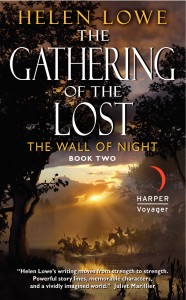 Moon magic is also an important part of The Gathering Of The Lost, both in the defence of the hill fort in the earlier part of the book and later when Malian walks the path of earth and moon:
“The moon was a glowing, aqueous shield reflected in the heart of the pool as Malian stepped barefoot onto the moon track that stretched across its surface. The water from the cup had been cool fire, traveling down her throat, and now moonlight shimmered along her veins…she could see threads of power spinning out ahead of her. It reminded her of Yorindesarinen’s silver path through the Gate of Dreams, which Jehane Mor had called a ropewalk across vast deeps.  Now Malian felt the rough strands beneath each footstep, even though her eyes told her that she was walking down into the water, descending to the heart of the reflected moon.”
So there you are, proof—if proof were needed—that the moon in all its aspects is an essential element of Fantasy.
And this is only a quick selection: I’m equally keen to hear your favourite instance of the moon and/or moon magic featuring in your Fantasy reading.
 My 1 November post is up now on the Supernatural Underground — and my subject is:
Supernatural Couture!
Because…“In books, too, attention to couture detail is often part of the background fabric (he-he) of the storytelling.”
Enjoy the fun—and share your favorite costume either here, or there. 😉
.

The Wall of Night Series map; design by Peter Fitzpatrick
The A Geography of Haarth post series is exploring the full range of locales and places from The Wall of Night world of Haarth. Each entry is accompanied by a quote from the books in which the place appears, currently either The Heir Of Night or The Gathering Of The Lost, or both.
Right now the series is traversing the great plains of “W”–which is also the final traverse of the series. Including today, there are only three entries left!
—
Wildenrush: a major river in its own right and tributary of the great river, Ijir
.
“She had been dreaming deeply, reliving the rain-spattered evening five years before when she and Linden, the Spring singer of the Winter people, had walked into the River’s northernmost trading post on the Wildenrush and found Cairon of Ar sitting by the autumn fire.”
.
~ from © The Gathering Of The Lost, The Wall of Night Book Two: Chapter 30 — The Welcome Cup
Introduction:
Ashley Capes is a fellow poet and Fantasy author from Australia who has been a regular participant here for a few years now. Ashley also interviewed me a few months back so with his own debut novel, City Of Masks, recently published I felt it was time to return the hospitality—and give readers the opportunity to find out more about his work.
So without further ado, I am very pleased to welcome Ashley today—and remember, comments are always welcome. 😉
—
Guest Post: Ashley Capes On City Of Masks and Beginnings
 Hi! My name is Ashley and I’m writing this post today because Helen was kind enough to offer me a guest spot on her blog!
She also generously gave me free rein in regard to topic, so I thought I’d talk about ‘beginnings’ because beginnings (and where we claim they occur) have always interested me and I hope a bit about the way my first novel, City of Masks, came to be, will prove interesting.
And once I started to reflect on it, I realised there were a few options.
On one hand, it probably starts after being read The Hobbit in Grade Four, which definitely sparked my imagination. I can still remember the colour and feel of the carpet, the pins and needles from sitting and listening.
On another level, I might be able to claim that the seven or so novels I wrote before City of Masks, none of which were good enough to publish, but which taught me something about my process or obsessions, and about plotting and revising especially, were responsible. I think I could safely credit my family for encouraging me to write when I was young – or maybe the smell of books, just being determined to be part of the world of words, pushed me into being a writer, into beginning the thorny path to publication.
Or, if I look at a time period a few years back, then I’m in Italy, on the Amalfi Coast. My wife and I were lucky – very, very lucky – to spend three weeks travelling Italy in 2011 and it was there that I saw amazing coastline that caught my eye. Clinging to the sheer mountains around the town were deep green lemon groves and winding, narrow roads where, when cars passed, they did so slowly and with side mirrors folded in.
The buildings were perched right on the coast, where they’d jut out to bear the brunt of winter waves, waves that climbed so high as to seem ridiculous – I was glad we were there at the start of Autumn. But based on photos I saw in a camera shop, it’s clear why most of the town slid into the sea during a tsunami in 1343.
The whole town of Amalfi felt steeped in history, in natural beauty and story-potential, and I didn’t realise until after I got home that it would be the chief inspiration for the setting of City of Masks. (And so the beginning might well have been a setting, rather than a premise or character.)
Finally, I could probably just as easily take the first few words as a starting point – which was little more than a sketch of my main character, Notch, in jail, falsely accused of murder, just as the book starts now. I had perhaps five hundred words written back in January of 2013 and I felt like there was a chance, from that beginning, that I’d finish this story and be happy with it – which I did!
Hope you enjoyed reading a bit about how I started City of Masks and thanks for inviting me, Helen!
—
Thank you, Ashley. 🙂
As well as Ashley’s post on beginnings, I thought you might be interested to read the backcover synopsis for City of Masks, plus the first 230 of those 500 words, so here they are:
City Of Masks:
“Waking in Anaskar Prison, covered in blood and accused of murder, nobody will listen to Notch’s claims of innocence until he meets the future Protector of the Monarchy, Sofia Falco.
But Sofia has her own burdens. The first female Protector in a hundred years, her House is under threat from enemies within, the prince has made it clear he does not want her services and worst of all, she cannot communicate with her father’s sentient mask of bone, the centuries-old Argeon. Without the bone mask she cannot help anyone — not herself, and certainly not a mercenary with no powerful House to protect him.
Meanwhile, far across the western desert, Ain, a young Pathfinder, is thrust into the role of Seeker. Before winter storms close the way, he must leave his home on a quest to locate the Sea Shrine and take revenge on the people who drove his ancestors from Anaskar, the city ruled by the prince Sofia and Notch are sworn to protect, whether he wants their help or not.”
.
Chapter One:
The chill of prison bars against his temple did little to ease Notch’s headache. Decades of dank didn’t help either, nor snoring from another cell, where someone was impersonating a bear. Or dying. In the poor light it was hard to tell.
Notch squinted. Noon sun barely crept through the small, grated windows on his side of the building. Even cells across the way were shadowed. Sunlight, in addition to a piece of bread and some water, were high points, while the straw ‘bed’ and stale body odour of criminals were typically unpleasant. Worse places than Anaskar City prison existed. At least he hadn’t been beaten yet – a twinge in his shoulder reminded him how much some guards enjoyed their work.
His cellmate raised his voice and Notch turned. The man had probably been speaking for some time; his drawn face was expectant. Years of imprisonment had washed out his Anaskari tan.
Notch leaned against the bars. “What is it, Bren?”
“Did you kill her, truly?”
“No.”
Bren nodded. “Innocent then.” He knelt in the corner, his fine coat of blue long since gone to grime, his face pressed against the stone wall. “Listen to this one.” He scratched at an armpit with some vigour. “It’s hard to see but I think it says ‘death to the Shields of Anaskar’ and it’s got a signature, but I can’t make it out.”
—
You can read the rest of those beginning five hundred words—and the whole of Chapter One, in fact—on Ashley’s website:
City Of Masks
—
About Ashley Capes
 Ashley is a poet, novelist and teacher living in Australia. He teaches Media and Music Production, and has played in a metal band, worked in an art gallery and music retail. Aside from reading and writing, Ashley loves volleyball and Studio Ghibli – and Magnum PI, easily one of the greatest television shows ever made. His latest novel is City of Masks and his fifth poetry collection, old stone, is due for release at the end of 2014.
 Recent posts on “great heroines” (all summarised here) reminded me that I needed to round up my final thoughts on Hild by Nicola Griffiths.
In my “What I’m Reading” post on September 25, I said:
“…so far, at around three quarters of the way through [Hild], I am absolutely loving it. I feel it is one of the best historical novels I have read in quite some time, not even excepting Hilary Mantel’s Booker prize-winning, Wolf Hall … just about everything about Hild is fabulous: a great historical sense of seventh century, Anglo-Saxon Britain, excellent characterization—especially of Hild herself, but there’s a whole raft of other great characters, and just a wonderful richness of storytelling overall.”
I can tell you right now that having completed Hild over the intervening month (yes, reading “is” very slow at the moment), I don’t resile from any of those prior conclusions.
To recap, Hild is an historical novel, a fictionalised account of the early life of the woman who subsequently became known as St Hilda. Although little is known of Hild’s life in terms of the period covered by the book, something is known of the general period from the Anglo-Saxon Chronicle and other sources, and the author keeps within that known framework. Specifically, the setting comprises the British Isles in the seventh century, when Hild’s uncle, Edwin, was ruler of the kingdom known as Northumbria, which extended (broadly) from the river Humber in the south up to the Antonine Wall (the Stathclyde area.) This was the period when the Anglo-Saxon kingdoms were warring with each other and the remnant kingdoms of the Roman-British; it was also the period when Christianity was starting to take hold in the Anglo Saxon kingdoms.
Hild’s personal story is set against the backdrop of these events in a vivid and compelling way, with the era and its people drawn out of the scanty historical record in a manner that makes for both rich and absorbing reading. It’s clear the author has done considerable research, which brings the world to life on the page–but not in a way that makes the reader feel overwhelmed by historical detail. Hild remains historical fiction, but nonetheless bridges the gap between the worlds of “then” and “now” by creating an authentic milieu that readers can absorb and enjoy, while simultaneously experiencing its difference—which I believe is a hallmark of the best historical fiction.
The portrayal of Hild is as vital and fascinating as that of the world she inhabits. No surprises there, perhaps, since this is Hild’s story and the book is told entirely from her (third person) point of view. Nonetheless, she is undoubtedly one of the “great” heroines of my recent reading in any genre. Hild is intelligent, courageous, compassionate, inquiring; she is also a completely believable human character, prey to fear, doubt, and plenty of “growing pains.” She also meets my Monday post’s heroine criteria of: “resolution in the face of…adverse circumstances…[while]…seeking for solutions”, as well as those circumstances frequently involving “grave risk”, but also the need for Hild to concern herself with “choices between right and wrong, either at a personal or societal level, or both.” Throughout the book, Hild was also a heroine I empathised with, especially as there was no lack of consequences, either personally or for those she loved, inherent in almost every aspect of her life.
So, the historical world brought to life and a great central character: check. But Nicola Griffiths’ Hild also meets other tests: my personal yardstick which says that not just the main character, but every person that steps onto the page must be as real and believable, albeit in their modest way, as the main character. And the story throughout is engrossing and enjoyable—an all round great read, in my view.
I definitely recommend Hild to anyone who enjoys historical fiction, compelling characters, and a fine tale, well told.
—
Additional Information:
I read the UK, trade paperback edition (544 pp) of Hild published by Black Friars, an imprint of Little, Brown Book group.
Although Orbit, an imprint of Little, Brown is also my UK publisher, I did not receive a review copy of the book; I bought Hild m’ownself from a real live bricks’n’mortar book store! 😉
Van Gogh in Aotearoa
The spirit is alive
in Starry Night reproductions
which hang, like crucifixes,
in varsity bed-sits,
petit bourgeois do-ups
and nouveau riche villas
across Aotearoa.
In such replicas, he’s reborn,
picks up his paintbrushes
and begins to set the All Blacks:
McCaw, Howlett, So’oialo,
upon the terra firma of his canvas
as if they’re men at work, harvesting.
Then, he finds his Arles in Akaroa,
where Port Louis-Philippe’s spectre
besets him with visions,
small prophecies, of fresh work:
Landscape under a Summer Sky,
The Rue Jolie Bridge at Akaroa,
Three White Cottages in Rue Balguerie.
Soon, forgetting sunflowers,
he forms a fresh muse
from the soleil-radiance
of kaka-beak and kowhai.
Finally, like Rangi and Papa,
he brings land and sky together
in a blue-black darkness
above the Desert Road
where stars are birthed so crisply
they stand in place of him
and speak of things long dead.
(c) Siobhan Harvey
Reproduced here with the permission of the poet.
—
Fine poems should be read and heard more than once, so I’m continuing with my series of relooking at poets who have had multiple poems featured here on “…Anything, Really” since I joined the Tuesday Poem community in June 2010. Siobhan Harvey’s Van Gogh In Aotearoa featured here on October 26, 2010 and I am very pleased to be able to refeature it here today—and to have two more wonderful poems from Siobhan forthcoming over the next two weeks.
—
 Siobhan Harvey is the author of, Cloudboy (Otago University Press, 2014), which was winner of New Zealand’s richest prize for poetry, the Kathleen Grattan Award for Poetry. Also recently released, with Harvey as co-editor, is Essential New Zealand Poems (Penguin Random House NZ). Her other awards include runner up in the 2014 New Zealand Poetry Society’s International Poetry Competition, runner up in 2012 Dorothy Porter Poetry Prize (Aus) and runner up in 2012 Kevin Ireland Poetry Competition. Her work has recently been published in Books Unbound, Evergreen Review, Pilgrimage (Colorado State University Press), Segue (Miami University Press), Stand (UK), Structo (UK) and the New Zealand Poetry Society 2014 anthology, Taking Back the Sky. Her creative nonfiction has been published in magazines in New Zealand and America, and is a finalist in the 2014 Landfall Essay Prize, as well as being Highly Commended in 2013 Landfall Essay Prize, and runner-up in 2011 Landfall Essay Prize. Between 2006 and 2013, Harvey co-ordinated New Zealand’s National Poetry Day. She lectures in Creative Writing at AUT’S Centre for Creative Writing, and has a Poet’s Page on The Poetry Archive (UK), here: Siobhan Harvey.
—
To check out the featured poem on the Tuesday Poem Hub and other great poems from fellow Tuesday poets from around the world, click here or on the Quill icon in the sidebar.
Jacket art by Greg Bridges
The Gathering of the Lost: USA Cover (Harper Voyager) - Read More Here!
"A richly told tale" -- Robin Hobb
"A vividly imagined world" -- Juliet Marillier
"This is an author with a gift for fantasy” -- Catherine Asaro
To read reviews, click Here.
Jacket art by Greg Bridges
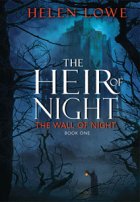
The Heir of Night: USA Cover (Eos) - Read More Here!
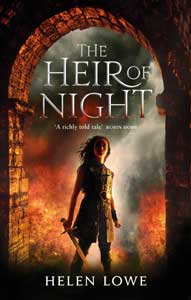
The Heir of Night: UK/AU/NZ Cover (Orbit) - Read More Here!
HEIR won the international Gemmell Morningstar Award 2012 for Best Fantasy Debut.
"THE HEIR OF NIGHT by Helen Lowe is a richly told tale of strange magic, dark treachery and conflicting loyalties, set in a well realized world."--Robin Hobb

Jacket art by Antonio Javier Caparo
Thornspell is my first novel and is published by Knopf (Random House Children's Books, USA). It won the Sir Julius Vogel Award 2009 for Best Novel: Young Adult and was a Storylines Childrens' Literature Trust Notable Book 2009.
