
“You can’t think yourself out of a writing block; you have to write yourself out of a thinking block”
—
You know, I think this is so, so true…
![]() |
![]() |
| I am a novelist, poet, interviewer and lover of story. Welcome to my blog. |
“You can’t think yourself out of a writing block; you have to write yourself out of a thinking block”
—
You know, I think this is so, so true…
Although I titled last week’s A Geography Of Haarth post the final roundup I realized that I had a few more final reflections to share, mostly of a number-crunching nature.
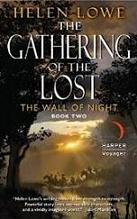
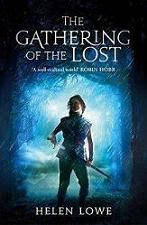
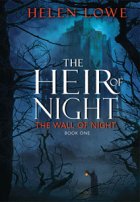
As noted the series that has explored the full range of locales and places (so far) from The Wall of Night world of Haarth. Each entry has been accompanied by a quote from the books in which the place appears, whether The Heir Of Night or The Gathering Of The Lost (or both.)
The series followed an alphabetical approach, starting with “A” (Academy Island) and working through to the final locale of Wymark under “W.” The further reflections include noting that:
In terms of where in Haarth the locales fall, so far the Wall Of Night story has canvassed the following number of places in each of the following regions:
Aralorn: 2
Emer: 26
Gray Lands/Jaransor: 6
Ishnapur: 3
(Diverse) Other: 10
River: 23
Supernatural Realms: 2
Wall of Night: 15
And there you have it: that’s what nigh on 2 years of Fantasy geography and worldbuilding fun will get you. 😉
.
When I’m working hard on my own writing, I really enjoy re-reading old favourites. One benefit is that because I already know what’s going to happen, I’m not tempted to read into the wee small hours until the book is finished—I am happy to restrict myself to small bites. It’s also fun to reacquaint myself with a tale I’ve loved in the past and figure out whether it still spins my wheels as a reader.
A few weeks back I mentioned that I was re-reading Restoree by Anne McCaffrey, which I first read while at High School, so I thought I should let you know how I found it.
Just to give a quick plot summary for those who are not familiar with the story, the heroine, Sarah, is kidnapped by aliens (no, seriously) and remembers nothing more until she wakes up on a strange planet with a new outward appearance. She finds herself working in a menial capacity in what appears to be a psychiatric asylum and gradually realises that the patients are drugged political prisoners. Her particular charge turns out to be the former Regent of the quasi-medieval, but space-level-technology world, whom Sarah subsequently helps escape. In so doing she finds herself pitchforked into the middle of planetary level politics and an interplanetary war against the Mil, a technologically superior race that preys on other species. The latter scenario provides a credible explanation for the quasi-medieval political structure and space age technology of the planet, Lothar, because the Lotharians (he-he) have first captured a ship—by as much luck as good management—and then piggy-backed off the Mil’s technology.
First published in 1967, several aspects of the story are somewhat dated, particularly the “Aw shucks” dialogue. I also couldn’t help noting that although the story has a proactive heroine, Sarah is the only proactive—or, in fact, active—female character in the book. All the other “active” characters in terms of the plot action and figures in authority are all male.
On the positive side, Sarah is initially a very active heroine, working out what’s going on in the asylum and playing an instrumental role in the Regent, Harlan’s, escape. Later she is less active (in a taking action sense) but still plays a crucial role as a dues ex machina in Lotharian political affairs and in facilitating communication between Lothar and their established allies when seeking to include Earth in an alliance against the Mil.
The story itself is space opera, pure and simple, i.e. do not expect heavy-duty, “hard” science here. But it is a reasonably engaging adventure story nonetheless, with plenty of action, political maneuverings, and reasonable worldbuilding. I think the way Lotharian society has developed as a result of Mil predation is plausible, as is their socio-psychological response to the Mil themselves. And there are space ships and a critical space battle—and although I am a leetle uncertain of some of the technology involved, being space opera, so long as there is a conveniently placed wormhole, or the like, it would be churlish to delve to deeply.
Ah, I hear you ask, but what about the romantic elements? Well, what about them? I suspect that one of the reasons I enjoyed Restoree so much as a mid-teen was precisely because of the romance between Sarah and Harlan, juxtaposed with the space-adventure story. (I suspect Restoree may have been my Twilight. 😉 ) The romance does have Mills and Boons-ish overtones in places, but Sarah maintains her agency throughout and the romance develops into an actual relationship grounded in the “real”, such as when Harlan has to get Sarah to i.d. other Earth victims of the Mil. Also, since romance is an integral part of life, I’m not sure why I should object to romantic elements in my SF reading—a point I made in relation to NK Jemison’s The Hundred Thousand Kingdoms in 2011.
Overall, therefore, I feel that Restoree, despite some dated aspects, still stands the test of time as a fun, adventurous tale with some more serious aspects—and romantic-elements goodness to boot—but which should not be embarked on too seriously as a reading adventure.
On Sunday, I posted a few thoughts on Interstellar in which I concluded that: “I don’t think it’s made it into my “top” SF films.”
But then I immediately wondered what films I would put on that list. My very first qualifier on that has to be that I am not a big film-goer, so my viewing is not exhaustive, but nonetheless, I do have favourites, as follows:
Star Wars: (the real ‘first” movie)—because it’s fun and adventurous and had space ships and a real sense of worlds and space. Plus “A long time ago in a galaxy far far away…” was just magic! Space opera? You betcha—but I still enjoy watching it again from time to time. A big reason, I suspect, for that is because as the first film, Star Wars was spared the “overblown” elements that overwhelmed the sequels, with the exception of The Empire Strikes Back.
Blade Runner: For me, Blade Runner is all about atmosphere, chiefly the world and the world-weariness of Dekker. But it also takes a slant-wise look at a really important question, what makes a human being—only without any big speeches or heavy-handed philosophizing.
Alien/Aliens: Alien is atmospheric, eerie—and basically a great psychological thriller set in deep space. It’s also a really compelling take on what I regard as one of the great SFF themes, “person alone.”
Aliens is an equally great action movie set in space, but despite the difference in pace/focus it’s a sequel that really works for me—or it may be that the change in pace/focus is why it works as a sequel, rather than trying to do exactly the same thing over again.
Gattaca: Gattaca is another one of those “deceptively simple” stories, which in this case means that it takes one idea, the implications of genetic engineering in a near-future world, and works it through in a powerful and straightforward way, by focusing on the implications for human aspiration.
Deep Impact: I love this film, particularly because it actually has quite good science, as well great storytelling and interesting characters, including positive and interesting women characters. Personally I think it knocks Armageddon out of the ballpark.
Forbidden Planet: Although an oldie (it was made in 1956) and accordingly dated in some ways, I still think Forbidden Planet has a lot to recommend it in terms of classic SF storytelling, with space travel and interplanetary exploration that anticipates the Star Trek genre. But it’s also a story that is as much about human psychology and motivation as external action.
Galaxy Quest: Because it’s such a brilliant take-off of Star Trek, but also has it’s own story integrity. Always fun.
.
Other films that are up there, too, include:
.
ET: “phone home” remains in the lexicon, as does the image of the kids riding their BMX’s across the face of the moon
Contact: I was a little disappointed by the ending to Contact, but I loved the overall idea and the focus on how “first contact” might come about.
Terminator/Terminator2: for very similar reasons to Alien/Aliens in fact, although set on a pre-Apocalyptic Earth, rather than in space, plus I love Sarah Connor
The Matrix: So cool! (But what do you mean, sequels? I’m sure it’s a standalone film!)
Inception: If only because you’re never really sure what’s real and what isn’t!
The Puk-Wudjies
They live ‘neath the curtain
Of fir woods and heather,
And never take hurt in
The wildest of weather,
But best they love Autumn, she’s brown as themselves,
And they are the brownest of all the brown elves;
When loud sings the West Wind,
The bravest and best wind,
And puddles are shining in all the cart ruts,
They turn up the dead leaves,
The russet and red leaves,
Where squirrels have taught them to look out for nuts!
The hedge-cutters hear them
Where berries are glowing,
The scythe circles near them
At time of the mowing,
But most they love woodlands when
Autumn’s winds pipe,
And all through the cover the beechnuts are ripe,
And great spikey chestnuts,
The biggest and best nuts,
Blown down in the ditches, fair windfalls lie cast,
And no tree begrudges
The little Puk-Wudjies
A pocket of acorns, a handful of mast!
So should you be roaming
Where branches are sighing,
When up in the gloaming
The moon-wrack is flying,
And hear through the darkness, again and again,
What’s neither the wind nor the spatter of rain?
A flutter, a flurry,
A scuffle, a scurry,
A bump like the rabbits’ that bump on the ground,
A patter, a bustle
Of small things that rustle,
You’ll know the Puk-Wudjies are somewhere around!
by Patrick Reginald Chalmers, 1872 – 1942
—
I always loved this poem as a child, especially lines such as:
“When loud sings the West Wind//The bravest and best wind” and
“So should you be roaming//Where branches are sighing,
When up in the gloaming//The moon-wrack is flying”
The rhythm and the images called up are both wonderfully evocative.
The poet, Patrick Reginald Chalmers, was (according to Wikipedia) “an Irish writer, who worked as a banker. His first book was Green Days and Blue Days (1912), followed by A Peck of Malt (1915).”
—
.
To read the featured poem on the Tuesday Poem Hub and other great poems from fellow Tuesday poets from around the world, click here or on the Quill icon in the sidebar.
Note: I have tried to be broad-brush in my comments, but the following May Contain SPOILERS for some.
—
Yesterday I shared my initial reaction to the movie Interstellar, reflections that still hold good.
I’d like to add, though, that it was really refreshing to see a film that while “big” in its conceptualisation was not about “big battles.” Much as I like big, heroic stories I can’t help feeling decidedly “over” films that reduce the storytelling to big battles (es-pecially if that was not the focus of the original: yes, Prince Caspian, I’m looking at you!)
Which leads me to my next reflection: yes, Interstellar is classic “epic” storytelling! Think about it: we have the “farm boy”, who goes on an epic (interstellar) journey, with a band of brothers and lovable “animal”—ahem, robot—sidekicks: and why—to save the world, of course! The journey also comprises a take on “there and back again” with the changed hero unable (Odysseus fashion) to return to the old life…
Given the science, as I indicated yesterday, is pretty much “fantasy science” one could even argue that it is not only epic, but “epic fantasy”—but even for me, that would be stretching too long a bow. Let’s just say that this is definitely Space Opera and not hard SciFi. 😉
On the one hand: it’s about space—and the robots were cool (I liked it, too, that they did not turn out to be “evile” robots, for a change)—the characters were pretty good, too, and I can’t complain about lack of story—some parts of which were pretty durned exciting, as well.
On the other hand: “fantasy”–physics (and chemistry/biology, too, with the explanation for the nitrogen-isation of Earth’s atmosphere) and I had several “less-is-more” moments with the storytelling…
Oh, yes, and the film passed the Bechtel test—Lois and Murph had a conversation (brief, but nonetheless a conversation) that was not about men.
Overall? I enjoyed Interstellar well enough and certainly don’t regret having been to see it on the big screen (in fact I’d go so far as to say it’s a big screen film with the effects etc) but I don’t think it’s made it into my “top” SF films.
Click here, for my additional Thoughts On Interstellar
Last Friday I posted the final entry for A Geography Of Haarth, a series that has explored the full range of locales and places from The Wall of Night world of Haarth. Each entry has been accompanied by a quote from the books in which the place appears, whether The Heir Of Night or The Gathering Of The Lost (or both.)
A Geography Of Haarth commenced on February 8, 2013 (Academy Island) and has pretty much posted every Friday through until last Friday, November 14, when the final entry, Wymark, featured. That’s “almost” two years and approximately 90 entries altogether, which is not bad going!
To check out the full sequence, you can click here:
What to replace it? Well now, I may have to think about that… But I’d like to do something book related to keep up the Friday tradition—because I do think almost two years and ca. 90 entries is “tradition” terrain.
On Tuesday, I featured the poem One Day, from my Ithaca Conversations sequence as this week’s Tuesday Poem.
As I noted on Tuesday, the Ithaca Conversations sequence is a slant-wise (to paraphrase Emily Dickinson) look at characters and events from Homer’s The Odyssey.
Over recent years, I’ve featured several other poems from the sequence, so I thought I’d do a wee feature today, with links to the full poems. 😉
So, in order posted since 2010:
—
“The Wayfarer: Odysseus at Dodona
Acorns lie strewn with old leaves, thick
as years beneath the shadow of spreading oaks
where an old woman stoops, picking up sticks
that are no more or less twisted than she, binding
them onto her bent back, and watching with one
bright, blackbird eye as the wayfarer approaches,
an oar balanced across his knotted shoulder, his eyes
narrowed between deep seams, as one who has looked
out to numerous horizons and seen wonders…”
To read the full poem, click here.
The Wayfarer was a finalist in the Takahe Poetry Competition in 2006 (judged by David Howard) and published in Takahe 62. The post includes a reasonably full discussion of the Ithaca Conversations sequence.
—
“Argos
Lying nose to paws in the shadow of the arched gate,
eyes fixed on the white, twisting road to the sea,
listening for the familiar footstep, the beloved voice
that urged me on as we raced together, over
the rocky mountainside, both young, both strong
of heart – how my voice echoed in the craggy
heights, belling out for stag, or wild boar: all done,
all done with now…”
To read the full poem, click here.
Argos won Australia’s A2O poetry competition in 2007 and was published in the Writerlynks anthology Grow.
—
“The Trojan Shore
Tonight, the wind blows bitter
from the stony heights
beyond the city, gusts
at the thousand cook-fires,
lifts dust and grit from the plain,
driving through tent flaps
and into eyes, rank
with the stench of a siege camp…”
To read the full poem, click here.
The Trojan Shore was published in JAAM 2008, edited by Tim Jones.
—
“Homing
He hears it, in every slap
of wave against wood,
as the ship cleaves water
like a seabird, hears the word
that he has hungered for
through the lost years,
whispered to him now
by the sea as it bears him up,
speeds him on like a lover
to the consummation
of his long-held dream
of home…”
To read the full poem, click here.
Homing was also published in JAAM 2008, edited by Tim Jones.
—
To finish, we had better come back to One Day
“One Day
He sits in the wide door to his father’s house,
playing with toys,
crudely painted soldiers with gilded helms,
gleaming in the sun.
His nurse tells him he is a prince,
will be a king some day, and a warrior;
his mother stoops, whispers,
tells him of his father who is king,
long lost, long sought,
longed for …”
The poem was posted in full on Tuesday, here.
One Day was published in International Literary Quarterly 14, February 2011
—
This is not all the Ithaca Conversations poems, but I hope it gives you a feeling for the sequence. Enjoy.
.

Jacket art by Greg Bridges
The Gathering of the Lost: USA Cover (Harper Voyager) - Read More Here!
"A richly told tale" -- Robin Hobb
"A vividly imagined world" -- Juliet Marillier
"This is an author with a gift for fantasy” -- Catherine Asaro
To read reviews, click Here.

Jacket art by Greg Bridges
The Heir of Night: USA Cover (Eos) - Read More Here!

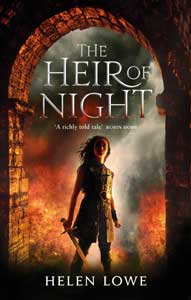
The Heir of Night: UK/AU/NZ Cover (Orbit) - Read More Here!
HEIR won the international Gemmell Morningstar Award 2012 for Best Fantasy Debut.
"THE HEIR OF NIGHT by Helen Lowe is a richly told tale of strange magic, dark treachery and conflicting loyalties, set in a well realized world."--Robin Hobb

Jacket art by Antonio Javier Caparo
Thornspell is my first novel and is published by Knopf (Random House Children's Books, USA). It won the Sir Julius Vogel Award 2009 for Best Novel: Young Adult and was a Storylines Childrens' Literature Trust Notable Book 2009.
| M | T | W | T | F | S | S |
|---|---|---|---|---|---|---|
| 1 | 2 | |||||
| 3 | 4 | 5 | 6 | 7 | 8 | 9 |
| 10 | 11 | 12 | 13 | 14 | 15 | 16 |
| 17 | 18 | 19 | 20 | 21 | 22 | 23 |
| 24 | 25 | 26 | 27 | 28 | 29 | 30 |
| 31 | ||||||