“I loved your ‘world of Haarth’ series so much, I thought I might steal the idea for my book.”
—
Heh! Belinda was referring to the A Geography Of Haarth post series—a clear case of “steal at will!” đ
Again, this comment came via Twitter.
![]() |
![]() |
| I am a novelist, poet, interviewer and lover of story. Welcome to my blog. |
—
Heh! Belinda was referring to the A Geography Of Haarth post series—a clear case of “steal at will!” đ
Again, this comment came via Twitter.
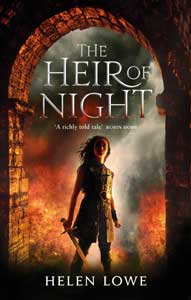
The A Geography of Haarth post series is exploring the full range of locales and places from The Wall of Night world of Haarth. Each entry is accompanied by a quote from the books in which the place appears, currently either The Heir Of Night or The Gathering Of The Lost, or both.
The series is currently traversing âWâ, the final letter in this series—although fortunately there are many places in the Haarth world beginning with “W”. đ
—
Westgate:Â one of the largest islands forming the River city of Ij and the one closest to the western Road Gate; contains several market squares and a large warehouse quarter with headquarters of several major trading houses and embassies from other River cities.
.
“The heralds’ Guild House was located on a large island known as Westgate, where the Main Road officially entered the city. For the first time since Terebanth, the main road branched at the foot of the hill where the heralds had drawn rein. One branch ran south to the river port and the Great Southern Gate, while the other led north, toward a smaller gate where red-roofed merchant houses sprawled along the city side of the river. The main, western gate was simply known as the Road Gate and the closer the heralds came to it the busier the road became. Merchants and other long distance travelers were joined by farmers and carters coming and going from the city markets, as well as country families eager for the sights and entertainment of the festival. First hawkers’ booths, and then inns and stables, began to crowd along either side of the roadâand the clatter of hooves and jingle of harness, the creak of carts and the cries of the hawkers filled the afternoon air.”
~ from © The Gathering Of The Lost, The Wall of Night Book Two: Chapter 1 â The Road To Ij
.
Yesterday I spoke to the University of Canterbury’s creative writing class about “story” and writing process—which was a lot of fun and I hope at least something in what I had to say was encouraging.
In the susbequent discussion, one of the students asked me why I chose to write Fantasy and although I tried to say something eloquent and inspiring, the gist was, “because I love it.”
But in 2012, I addressed this very question on SF Signal, in what I feel was a reasonably eloquent and slightly fuller manner. So I thought I’d share some of what I said then with you today:
“The reason I want to celebrate epic fantasy is fairly straightforward: I love the genre…I love big, sweeping, adventurous stories where thereâs a lot at stake and whatâs at stake matters. I love stories of heroism, and friendships that endure in the face of darkness and despair â but sometimes fail, too. I love sword fights, and glorious charges, and forlorn hopes, and âbands of brothersâ holding together through the âthick and thin.â I love magic, too, and if comes with a thread of darkness, danger, and the surreal, then all the better. World building is also really important to me, and not just landscapes but cultures as well: I want the world and the societies to be real for me when Iâm reading and thatâs what I strive for in my own writing. And I like a bit of romance â not big R romance which has itâs own genre, but what I call âlittle râ romance, which is integral to all our lives and definitely has its place in big book epic. [My books]…may be about magic and danger, roof top pursuits and forced marches by night, tourneys and battles, bands of brothers â and sisters â but [they’re] also about love…So there you have it: epic and adventure and magic, battles and flights, world building and emotional power, friendship and love. If you enjoy any or all of these things in your reading, then you may just find something in…[my storytelling]…that you will like.”
So I guess basically, it still comes down to: “I write Fantasy because I love it.” At the end of the day, what better reason is there to do anything?
Over the last few days I’ve been tweeting about working on a “gnarly” chapter—in the slang derived sense of “difficult.” (Although it may also relate to the more formal “gnarled”, meaning “bumpy” or “twisted”, e.g. often a tree.)
So this particular chapter has difficult aspects, which makes for a bumpy ride for the writer. đ
Some of those aspects include:
Pacing:
This is a transitional chapter, so although things need to happen, their chief purpose is to move the story, and the reader, forward into the next section of the story. So part of the gnarliness was:
Sequencing:
Transitional or not, the chapter contains both verbal and physical conflict, which is all about sequencing. For example, once the physical action has started, it’s unlikely that the contenders will stop to discuss matters before the dust settles—so if there’s going to be ‘argy-bargy’ and/or taunting, it probably needs to happen early on, or there needs to be a very good reason for the antagonists to break off hostilities for a good old chin-wag.
Continuity:
The decisions characters make, and the actions they take, need to be logical under the particular circumstances and consistent with any ground rules that have been established previously. For example, if it has been established earlier in the story that it is too dangerous for characters to traverse certain terrain on foot, then they had better send for their horses before attempting it!
Characters’ Behaviour:
With this particular chapter, one of the elements I kept coming back to was whether all the characters were behaving believably, both under the circumstances and consistent with their previously established characters. Just when I thought I’d finally got it right, I realized that one of the character’s behaviour still didn’t quite gel—a “grrgh-aargh” moment! However, it may be that the process of paring back earlier inconsistencies and confusions was what illuminated that fact.
Written down like this, it doesn’t seem that gnarly—but nonetheless, the confluence of all these elements in one small chapter has made for a “bumpy” couple of days.
Still, I can hope if I’ve negotiated every bump and snarl satisfactorily, the final outcome may also be “gnarly” in the alternate slang sense of “extra good” or even “awesome.” đ
THE LONGEST DAY OF THE YEAR
One word one word and then another,
one word and another, waiting for the
light to come stealing in, you ask what
is it that love dares the self to do?
All he wanted was to put his shoes out
in the moonlight. To hear music be the
saint of laughter again. And all that
time rehearsing his lines in the dark;
the love-mess of it all â when so much
forgetting is always about remembering;
on the long walk backwards to meet
himself coming the other way, but didnât
Itâs just that Iâm made of clouds, he said,
so many of my words have lost their
happiness. That endless dream of being
awake forever and there is no one there
How the longest day of the year keeps
getting shorter. And I am too much alone;
if you love me will I love you too, will you?
It seemed to matter that there was no
marvellous music anymore:Â all that he
could hear one word one word and then
another, waiting for the light to come
stealing in, all that he could hear was
how he lives in the buried talk of others;
inside the long history of goodbye
(c) Michael Harlow
~ published in âThe Tram Conductorâs Blue Capâ (Auckland University Press) 2009
Reproduced here with permission
.
—
Fine poems should be read and heard more than once, so Iâm continuing with my series of relooking at poets who have had multiple poems featured here on ââŠAnything, Reallyâ since I joined the Tuesday Poem community in June 2010. Michael Harlowâs The Longest Day Of The Year was posted here on 22 May 2012, at which time Michael offered the following comment:
âPoems that ask what it means, in the face of the absurdities and shadowy things thrown up by life, to ârisk delightâ; and what that might mean when we are looking-out and listening-in for a language to say something about how mysterious we are to ourselves and to the world
Poems that are lyric moments of recognition of what happens when we stand up and speak in front of ourselves and others; you could say a way of âbeing restoriedâ; a way of letting âwords dream againâ, so that making the âinvisible, visibleâ is at the heart of what the I call the âpersistent imaginalâ. From this âthe poem springsâ
And there are poems that come calling on and celebrate the âprivilege of ordinary astonishmentsââso that one day âa single original carrot shall be pregnant with revolutionâ (an echo from the painter CĂ©zanne)
Poems that acknowledge and reflect on how it is always that the âlight lies down with the darkâ, however various the shuffling  weathers of the heart turn up loss and death, time and memory, despair and delight; when âforgetting is always about rememberingâ
And on those occasions that poems return to that inevitable and archetypal mystĂ©rion, what is it âthat love dares the self to doâ?
A poetry that rests on and enacts the belief that we need to âsee the sounds and hear the wordsâ, so that despite every dark thing there is in the world, there will always be music, when âwords singâ poetry makes intimate everything that it touches ( there is always the distinct possibility of romanceâ, and more); naturally, poetry wants to go to the heart of the matter.”
— Michael Harlow
—
Michael Harlow was born in the United States and arrived in New Zealand in 1968. He has published seven poetry collections: Edges (1974), Nothing but Switzerland and Lemonade (1980), Today is the Pianoâs Birthday (1981), Vlaminckâs Tie (1985), Giottoâs Elephant (1991), Cassandraâs Daughter (2005, 2006), and The Tram Conductorâs Blue Cap (2009, Finalist National Book Awards 2010). He has been poetry editor of Landfall and Robert Burns fellow at the University of Otago. In March 2014 he received the Lauris Edmond Memorial Award for Distinguished Contribution to Poetry in New Zealand.
—
.
To check out the featured poem on the Tuesday Poem Hub and other great poems from fellow Tuesday poets from around the world, click here or on the Quill icon in the sidebar.
Like most—all?—writers, I’m also a reader; in my case, an avid one. đ
So I read The Telegraph’s recent article on author Nick Hornby’s views on reading with considerable interest. In particular, Nick Hornby was reported as arguing that:
“readers should put down difficult books immediately if they are not enjoying them.”
His reasoning, apparently, is that: “Battling through them, he said, would only condition people to believe reading is a chore, leaving a ‘sense of duty’ about something you ‘should do’ “
I am not entirely unsympathetic to his viewpoint, since I can recall several novels I’ve “battled through”, only to wonder at the end why I bothered.
However, I cannot entirely agree with him either, because a book I regard as one of the best I’ve ever read, Aldous Huxley’s Eyeless In Gaza, is one where I had to struggle to get through the the first half of the book—but I did persevere and when I got to the end I felt so rewarded for the effort and so glad I had stuck with it.
And writing, as I have said recently, in a Supernatural Underground post “The Secret I Didn’t Share…” can be “a long distance endurance event.” So it may be that some reading experiences will also more closely resemble marathons than the 100 metre dash. Both can deliver rewards, but they may be different rewards depending on time and mood.
Sometimes, too, the best course when a book is not “gel-ing”, may not be to give up on it altogether, but to come back to it later, when time and energy levels are more conducive to the style of tale you’re reading. This worked for me with Ursula Le Guin’s The Left Hand Of Darkness. When I first tried to read it I was working very intensely and so was always very tired. I also only ever had a short period late at night for reading and the read wasn’t gel-ing for me. So I did put the book aside until conditions were more conducive—and with both more time and higher energy levels, I not only got into the story straight away, I again thought it was one of the most interesting and thought provoking novels I had read for some time.
But perhaps that is where Nick Hornby and I diverge in our approach—because for me reading is rarely “just” about entertainment. I read for pleasure, so I do want to be entertained, but part of that pleasure comes from encountering ideas and points of view that illuminate and challenge. I certainly don’t think a book has to be “difficult” to be “good”, but sometimes good or very good books aren’t immediately accessible—so that can mean a long distance read rather than just a quick 100 m dash. And in the case of both Eyeless In Gaza and The Left Hand Of Darkness, although I enjoyed both books very much, neither was a book I “raced through”: there was far too much going on for that.
Don’t get me wrong, there are many fun aspects to the writing life. đ
But one of the most fun, to my way of thinking, is when you’ve grafted away on a manuscript for what feels like for-ev-er, and although it’s finished publication day is still somewhere off in the vast-y distance—but then you get your first sneak preview of the cover concept for the book.
What was once only a story in your mind has already become a manuscript, but when you get that first exciting glimmer of what the cover could look like, somehow the whole process starts to feel like: Yup, this is definitely a book.
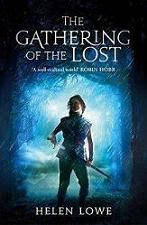
So-o, the other day I got my first sneak peek at the cover concept for the UK edition of Daughter Of Blood, The Wall Of Night Book Three (the same cover ‘family’ as those featured today)—and that felt pretty cool.
It’s still only a concept, so no piccies yet—but “in due course”, for sure!
—
For a little bit more re Daughter Of Blood, you can also check out these posts:
Sneak Preview: A Synopsis For âDaughter Of Blood, The Wall Of Night Book Threeâ
Some Very Good News For âDaughter of Blood, The Wall Of Night Book Threeâ
The A Geography of Haarth post series is exploring the full range of locales and places from The Wall of Night world of Haarth. Each entry is accompanied by a quote from the books in which the place appears, currently either The Heir Of Night or The Gathering Of The Lost, or both.
The series is currently traversing “W”—which will be its final instalment.
—
Western Mountains:Â the range that forms the western border of Emer
.
“The company halted just inside the treeline, studying the open land. Banks of mist rolled out from either side of the Rindle, which had dwindled to a small stream here as it purled from wooded hills. More ranges rose behind them, blue and wild, until they reached the jagged heights of the Western Mountains. The peaks were tipped with dawn as Carick turned to look back the way they had come. The ridge they had crossed swept up and away, still drowned in shadow that was broken only by jagged outcrops and sheer cliffs of pale stone. He found it hard to believe that they had made their way down in darkness and remained unscathed.”
.
~ from © The Gathering Of The Lost, The Wall of Night Book Two: Chapter 20 â The Leas
.

Jacket art by Greg Bridges
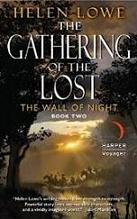
The Gathering of the Lost: USA Cover (Harper Voyager) - Read More Here!
"A richly told tale" -- Robin Hobb
"A vividly imagined world" -- Juliet Marillier
"This is an author with a gift for fantasyâ -- Catherine Asaro
To read reviews, click Here.

Jacket art by Greg Bridges
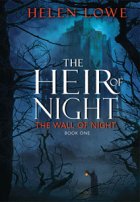
The Heir of Night: USA Cover (Eos) - Read More Here!

The Heir of Night: UK/AU/NZ Cover (Orbit) - Read More Here!
HEIR won the international Gemmell Morningstar Award 2012 for Best Fantasy Debut.
"THE HEIR OF NIGHT by Helen Lowe is a richly told tale of strange magic, dark treachery and conflicting loyalties, set in a well realized world."--Robin Hobb

Jacket art by Antonio Javier Caparo
Thornspell is my first novel and is published by Knopf (Random House Children's Books, USA). It won the Sir Julius Vogel Award 2009 for Best Novel: Young Adult and was a Storylines Childrens' Literature Trust Notable Book 2009.