 Looking back, this week I had another look at some great heroines of SFF I’ve encountered over the past three years, with More Great Heroines Part 1 on Monday, and More Great Heroines Part 2 on Thursday.
 In addition to my 10, commenters also suggested:
- Persimmon Gaunt in Chris Willrich’s Scroll Of Years series (Genre: Sword & Sorcery)
- Breq in Ann Leckie’s Ancillary Justice & Ancillary Sword (Genre: Science Fiction)
- Zuleika in Mike, Linda & Louise Carey & Nimit Malavia’s The Steel Seraglio (Genre: Fantasy)
- Drozde in Mike, Linda & Louise Carey’s The House of War and Witness (Genre: Fantasy)
- Isyllt Iskaldur of Amanda Downum’s Necromancer Chronicles series (Genre: Fantasy)
- Samarkar-la in Elizabeth Bear’s Eternal Sky series (Genre: Epic Fantasy)
A nice list to be going on with, but I am happy to hear more suggestions if you want to keep ’em coming. 😉
—
 As for my own heroines, it was put to me on Twitter that I needed to include Malian, Rue, et al on my great heroines list. But I guess I was thinking more of books I’d read by other writers—especially as, looking a little further back, I did take a look at my own heroines fairly recently:
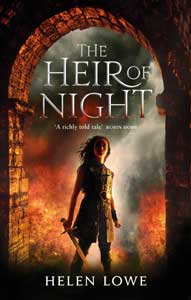
Celebrating My Women Characters: The Heir Of Night
Celebrating My Women Characters: Thornspell
Celebrating My Women Characters: The Gathering Of The Lost
Celebrating My Women Characters: Yorindesarinen
And yes, I shall have a similar look at the heroes too, by’n’by, but am in heroines mode right now… 😉
—
Looking Ahead: A Guest Post From Ashley Capes, Plus More…
 Coming up on Thursday this week, I’m very pleased to be featuring a guest post from Ashley Capes, a fellow poet and Fantasy author from Australia. Ashley has been a regular “…on Anything, Really” commenter for a few years now and interviewed me a few months back so with his own debut novel, City Of Masks, recently published I felt it was time to return the hospitality—and give readers the opportunity to find out more.
Also coming up this week (warning: what follows may be subject to change without notice!) I’ve been thinking a bit about what makes a SFF heroine great, about the recent blood moon and the moon in Fantasy, and also about whether “story” is greater than the sum of its constituent “craft” parts…
If the posts flow on into next week then that’s all to the good, right? Righto! (Or should that be, “write on”… ;-))