

Mar
29
2014

Mar
28
2014

The Wall of Night Series map; design by Peter Fitzpatrick
The A Geography of Haarth post series is traversing the full range of locales and places from The Wall of Night world of Haarth. Each locale is accompanied by a quote from either The Heir Of Night, The Gathering Of The Lost, or both.
This week, the series continues with locales under “R.”
—
Rindle: a river in the Northern March of Emer
.
“The night grew cold as the stars changed position above them and the track alternately climbed and plunged down. Carick stumbled more than once when he had to lead Mallow, and tried not to think of Malisande and Alianor, or the other damosels, lost somewhere in the moonless hills—or already lying dead in the deep channels or shingle wash of the Rindle. He stumbled again and wished he was a cat, or one of the Patrol, since River legend claimed they could see in the dark. Yet despite his poor night vision, he was still not sure how he and Mallow came to be at the end of the line after their next stop, the path behind them lost in darkness.”
~ from © The Gathering Of The Lost, The Wall of Night Book Two: Chapter 19 — Dark Of The Moon
Mar
27
2014
Yup, still writing furiously to make that stretch goal of finishing Daughter Of Blood, The Wall Of Night Book Three by 1 April.
You can toot if you like, to show your support! 😉
~ by Rebecca Fisher
Introduction:
I would have loved to have been a fly on the wall when this show was pitched to network executives. It’s almost impossible to come up with a more outlandish premise: taking The Legend of Sleepy Hollow by Washington Irving, a spooky short-story about a nebbish school-teacher called Ichabod Crane who may or may not have been killed by a headless horseman, and conjecturing that said teacher was a British spy in the Revolutionary War, that the Headless Horseman was one of the Four Horsemen of the Apocalypse, and that the forces of evil are going to use the town of Sleepy Hollow as their battleground in the seven years of tribulation that lead up to the end of the world.
I mean, it doesn’t get any weirder than that.
 Yet for some reason, I wasn’t remotely surprised that the show became so popular. Various media outlets called it “the surprise hit of 2013”, though I knew from the moment I saw the first trailer that it would pick up a cult following. Perhaps it was the actors, perhaps it was the genre, or maybe there was just something about the premise that sounded crazy enough to work.
Premise:
It’s 1781 and America is in the midst of its Revolutionary War against the British. Ichabod Crane is a spy and field officer for the Americans, having thrown his lot in with them on moral grounds. Yet it’s on the battlefield that he meets his end, beheading a Hessian mercenary moments after he’s been delivered a fatal wound. It’s there that the two of them apparently die together in the mud.
 Ichabod faces the masked Hessian in battle
Yet Ichabod Crane awakes, centuries later, in modern-day Sleepy Hollow, bewildered and disoriented. There he crosses paths with Lieutenant Abbie Mills, a young police officer whose friend and mentor has just been found beheaded on the job. Banding together, the two of them manage to find a way to (temporarily) banish the Headless Horseman running amok through the town.
Their purpose seems clear enough: under Abbie’s guidance Ichabod will contribute his wide array of occult knowledge and first-hand experiences of the Revolutionary War (the effects of which still resonate in contemporary Sleepy Hollow) to her investigations – something that comes in handy when supernatural phenomena begins to pop up all over Sleepy Hollow. More than that, Ichabod insists that two of them are actually the Two Witnesses as prophesised in the Book of Revelation, destined to stand against evil and prevent the end of the world.
Story:
In a nutshell, the weekly episodes of Sleepy Hollow can be described as a mix of the paranormal activity of The X-Files, the conspiracy theories of National Treasure, the buddy detective pairing of Elementary, and the creepy monsters of Supernatural. It carefully treads the line between genuine scares and tongue-in-cheek humour, and even has a good dose of American history thrown in for good measure.
 From left: Captain Frank Irving, Katrina Crane, Ichabod Crane and Abbie Mills
As it turns out, Ichabod’s life was preserved by the actions of his wife Katrina van Tassel, a Quaker nurse and secret witch who was part of a coven that protected Sleepy Hollow from evil forces. It was her spell that put Ichabod into his centuries-long slumber (perhaps a nod to Washington Irving’s other famous short-story, Rip Van Winkle) and now she’s trapped in Purgatory as a result, awaiting rescue.
Because Sleepy Hollow was created by Alex Kurtzman and Roberto Orci, contributors to Fringe and Alias (among other things), you can expect a fair amount of foreshadowing and continuity in regards to its story-arc. Though most episodes are standalone stories with a one-shot villain, there are seeds sown throughout the length of its first season to indicate that there’s a long-term plan in store.
The limited amount of episodes (thirteen as opposed to the usual twenty-two) means that the story can move along at a swift pace without the need for endless filler episodes, and it’s packed full of dry comedy, not-too-gory deaths, and tons of intrigue and suspense. The show is also to be lauded for its commitment to diversity when it comes to race and gender, with a wide range of characters from varying backgrounds. As a final touch, the show is beautifully shot, capturing the New England atmosphere of the township, complete with autumnal trees and mist-shrouded lakes.
 Abbie introduces Ichabod to baseball and the art of heckling the umpire
However, be warned: if you’re a fan of Washington Irving’s original short-story, you’ll find nothing familiar here but the names.
Characters:
Tom Mison and Nicole Beharie have sublime chemistry as Ichabod and Abbie, putting their friendship alongside other beloved fictional partnerships such as Mulder/Scully, Kirk/Spock, Sherlock/Watson and Xena/Gabrielle. As Ichabod struggles to come to terms with 21st technology, Abbie has her own demons to contend with. As a teenage girl she was witness to a strange incidence in the forest: the appearance of four white trees, a horned monster, and a voice that said: “come and see…” It was at that point she blacked out, only to awaken several days later when a search party found her in the forest.
 Abbie and her sister Jenny
She’s still haunted by the event, especially since her sister Jenny (Lyndie Greenwood) was with her at the time. But although Abbie lied about what happened in order to avoid getting into further trouble, Jenny stuck to her story and was consequently admitted to a mental institution. The sisters are now estranged, though Abbie has to call upon Jenny’s training and know-how in the face of escalating paranormal occurrences throughout Sleepy Hollow.
Then there’s Abbie’s boss, Captain Frank Irving (Orlando Jones), who gives the duo free rein even as he grows increasingly suspicious of what’s really going on, and Luke Morales (Nicholas Gonzalez), Abbie’s ex-boyfriend who gets increasingly suspicious of Ichabod and his ways. And keep your eyes out for veteran character-actors Clancy Brown, John Noble and John Cho, all of which have important recurring roles as participants in the good-versus-evil conflict.
Conclusion:
And so the board is set, pitting our two heroes against a range of ghouls, witches, demons and other monsters. Sleepy Hollow has fun playing around with American history, Biblical lore and even old dark fairytales, all of which permeate the storylines and give our heroes the edge they need to fight back against evil.
 Yes, the Headless Horseman is carrying a machine gun. Filming this scene is probably the reason why they made the show in the first place.
It’s hard to really pinpoint any singular reason behind its success, suffice to say that Sleepy Hollow simply hit the jackpot when it came to cast chemistry, fish-out-of-water comedy regarding Ichabod trying to cope with modern life, and a premise that’s so outlandish that it somehow loops back around to working perfectly.
Next Time: Buffy The Vampire Slayer
I’ve already written about Xena Warrior Princess, one of the great feminist icons of the 90s. Now it’s time to tackle the other one: Buffy the Vampire Slayer, a show born out of Joss Whedon’s subversive idea that the blonde teenager strolling into a dark alley by herself after dark might well prove to be a match for any monsters that could be lurking there.

Rebecca Fisher
About The Reviewer:
Rebecca Fisher is a graduate of the University of Canterbury with a Masters degree in English Literature, mainly, she claims, because she was able to get away with writing her thesis on C.S. Lewis and Philip Pullman. She is a reviewer for FantasyLiterature.com, a large website that specializes in fantasy and science-fiction novels, as well as posting reviews to Amazon.com and her LiveJournal blog.
To read Rebecca’s detailed introduction of both herself and the series, as well as preceding reviews, click on:
Big Worlds On Small Screens
Mar
25
2014
after you leave
sun falling
across the wall
© Helen Lowe
—
Toward the end of last year I spent upward of 5 weeks in a remote coastal location, working on my current book.
I also wrote a number of haiku during that time, which I have been featuring as Tuesday Poems. This is the final haiku in the sequence.
—
 To read the featured poem on the Tuesday Poem Hub and other great poems from fellow Tuesday poets from around the world, click here or on the Quill icon in the sidebar.
Mar
24
2014
Mar
23
2014
 I’ve now completed three posts on Mary Stewart’s Madam, Will You Talk, on March 5, 19, and 20th respectively — and have argued that despite being published in 1955 it stands the test of time pretty well.
There is one element that really does date it though, dear readers — and I wonder if you guess even before you read on…
Absolutely everyone smokes. It’s pretty much a universal given in the story that at moments of stress, reflection or simply as a matter of course, every character will light up.
And that, I believe, really is a huge social shift between 1955 and 2014.
Mar
22
2014

credit: B Miller
I’ve been posting a few “Inside Middle Earth” photos, including shots from a friend’s road trip around Aotearoa-New Zealand last year. I’m currently featuring ones that have made their way onto a personalised calendar (of which I get one!)
This photo is of a pool in the geothermal area at Wai-O-Tapu, between Rotorua and Taupo in the central North Island, and is one of the photos featured for March 2014.
Mar
21
2014
The Wall of Night Series map; design by Peter Fitzpatrick
The A Geography of Haarth post series is traversing the full range of locales and places from The Wall of Night world of Haarth. Each locale is accompanied by a quote from either The Heir Of Night, The Gathering Of The Lost, or both.
This week, the series commences places that begin with “R.”
—
Red and White Suite: a suite of rooms in the Earl’s quarter of the New Keep of Winds
.
‘Malian sighed deeply and let the tabletop grow still under her hand. The Red and White suite was richly furnished and strewn with entertainments for her amusement but—however well gilded—she was aware that it was a cage. “Confined,” she muttered, “until my father decides what to do with me.” ‘
~ from © The Heir Of Night, The Wall of Night Book One: Chapter 17 — Eye Of The Storm
Yesterday I talked about what I loved best about Mary Stewart’s Madam, Will You Talk: namely a brave and resourceful heroine, Charity Selborne, with a clear moral compass, who is still has a great deal to offer readers fifty nine years after first publication in 1955.
There is one aspect of the book though, that I am not so keen on, which is that Stewart does stick with the persistent ‘romantic’ trope that it is credible for a woman to fall in love with a man who has terrified and threatened her — before the misunderstandings on both side that have led to this situation are clarified and resolved.
To be fair, the book is still not repugnant in this respect, because the male protagonist plays on Charity’s belief that he is a murderer rather than actually committing wrongdoing, but nonethless Charity believes he is an evildoer and is in fact — unsurprisingly — terrified of him. But still, to fall in love with someone under those circumstances, seems unlikely at best, but is more likely wildly improbable.
And may I say, it’s really hard to see where the attraction in such characters lies.
I’d also like to argue that it’s an element that is of the book’s time and to read it in that context—but since the trope not only persists but is still widespread in “romantic” scenarios I can’t do that. To give Stewart credit though, it’s really the only time she uses it amongst those of her novels I’ve read — and as aforesaid, her use of the trope in this case is in a sufficiently mild form that it does not negate the numerous excellencies of the story.
So Madam, Will You Talk is still recommended reading, despite an element that I’m not so keen on.
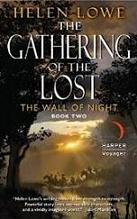
Jacket art by Greg Bridges
The Gathering of the Lost: USA Cover (Harper Voyager) - Read More Here!
"A richly told tale" -- Robin Hobb
"A vividly imagined world" -- Juliet Marillier
"This is an author with a gift for fantasy” -- Catherine Asaro
To read reviews, click Here.
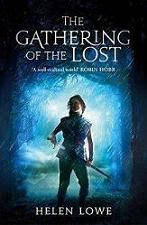
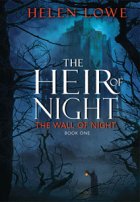
Jacket art by Greg Bridges
The Heir of Night: USA Cover (Eos) - Read More Here!
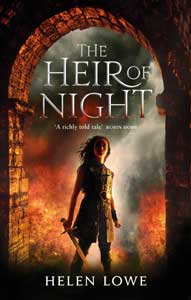
The Heir of Night: UK/AU/NZ Cover (Orbit) - Read More Here!
HEIR won the international Gemmell Morningstar Award 2012 for Best Fantasy Debut.
"THE HEIR OF NIGHT by Helen Lowe is a richly told tale of strange magic, dark treachery and conflicting loyalties, set in a well realized world."--Robin Hobb

Jacket art by Antonio Javier Caparo
Thornspell is my first novel and is published by Knopf (Random House Children's Books, USA). It won the Sir Julius Vogel Award 2009 for Best Novel: Young Adult and was a Storylines Childrens' Literature Trust Notable Book 2009.
