

Nov
10
2013

Nov
08
2013

The Wall of Night Series map; design by Peter Fitzpatrick
The A Geography of Haarth post series is traversing the full range of locales and places from The Wall of Night world of Haarth.
After a brief sojourn in “J”, it’s onwards into “K.”
—
Keep of Stone: fortress stronghold of the Derai House of Adamant
.
“The Earl paused again, a deep line between his brows as his right hand clenched into a fist. When he resumed speaking, his voice was harsh. “Your mother was sent to the Keep of Stone and no word came back to tell us how she fared until two years later. “
~ from © The Heir Of Night: The Wall of Night Book One; Chapter 18 —Parts Of The Truth
.
Garan rubbed at his chin again; he needed to shave. “If the Stone priests are doing escort duty, they may be less inclined to pick fights.” He wasn’t going to rely on it, though, not given what he knew of Keep of Stone priests and their ways.
~ from © The Gathering Of The Lost: The Wall of Night Book Two; Chapter 28 — Border Crossing
Introduction:
Aimee Slater is a fellow member of SpecFicNZ who has recently returned to the United States. She is also in the process of releasing her self-published novel, Breakable. I am delighted to have her here today to tell you a little about her book and what led her to write the Breakable story.
—
Aimee L. Salter, author of Breakable: Why This Story?
 On the surface, Breakable is the story of a seventeen-year-old named Stacy who can look in the mirror and talk to her future self.
It’s clear Stacy has a lot to overcome: She’s bullied at school, disapproved of a home, and in love with her best friend, Mark, who doesn’t think of her “that way”. Then, as the story progresses, Stacy discovers that her adult self has lied to her. A lot.
When I started writing Breakable over two years ago, the story was a compulsion for me. I couldn’t let it go. Why did this story demand to be written, when I had so many ideas, some of which were equally commercially viable?
I don’t know. And I’m sure if I did, my answer to that question would be different to every other writer’s. What I do know is that over the course of two years editing, revising, and over-hauling, I had to ask myself again and again why was I writing it? Because at its core, the answer to that question drove every decision I had to make.
For me the goal was very clear: Primarily I wanted young readers to know that I remembered what it was like to be seventeen years old. That I hadn’t forgotten what their world was like. Secondarily, I hoped those readers who suffered similar problems to my characters would know that I understood, and they weren’t alone.
A lofty goal? Probably. Will I achieve it? Maybe not. But I took a shot. And hopefully, even if kids aren’t thinking about it in quite those terms, they are at least aware of not being alone. Even if it’s only because the story resonated for them during those hours they sat behind its pages.
You see, at its heart, Breakable is about a girl’s battle against social isolation, and a general erosion her sense of self-value. A subject dear to my heart because, though Stacy and I are very different, we share a lot in the high school experience.
So whether my book succeeds or fails as a commercial product, as a writer I succeed when someone reads it and doesn’t feel cut-off anymore. And frankly, I get to share my world with someone whom I might never have met had I not written the book. That means I’m not alone for those hours either.
It’s a win-win, really.
Breakable, is available for Kindle, Nook and in paperback (via Amazon.com). You can also add Breakable to your to-read list on Goodreads at http://www.goodreads.com/book/show/18377058-breakable
—
About Aimee Salter:
 Aimee L. Salter was born in America, but spent much of her young (and not-so-young) life in New Zealand. After picking up a Kiwi husband and son, she’s recently returned to the USA.
She writes novels for teens and the occasional adult who, like herself, are still in touch with their inner-high schooler.
You can find Aimee at www.aimeelsalter.com, on Twitter (www.twitter.com/@AimeeLSalter) and Facebook (www.facebook.com/AimeeLSalter).
by Rebecca Fisher
Introduction:
Some collaborations are a match made in heaven. That Neil Gaiman’s novella Coraline was adapted into a stop-motion film by Henry Selick (who also directed The Nightmare Before Christmas) is a dream come true, melding Gaiman’s creepy fairytale with the stunning visual brilliance of Selick’s imagination. The result is one of those rare movies that enhances and enriches the original source material, making the two versions of the same tale virtually inextricable when it comes to exploring the content and characters and themes. So for this particular review, I’ll be talking about Coraline the book just as much as Coraline the film…

Premise:
Coraline Jones is not happy about her current situation in life. She’s been forced to move with her parents to a sub-divided Victorian mansion (painted pink) where she’s separated from her friends, it constantly rains, and her parents remain far too busy with their own assorted deadlines to pay much attention to her.
But on one particularly dull day, Coraline discovers a small door that leads to another section of the house. Down a strange tunnel is a surreal parallel world where the food is delicious, the toys are delightful, and her parents focus all their attention solely on her. As part of the dream-like quality of the experience, Coraline bemusedly takes all this in her stride, noticing only one unsettling element of this strange new world: that her Other Mother and the rest of this place’s denizens all have shiny black buttons in the place of eyes.
 Which Mother would you prefer?
But there’s too much excitement for Coraline to pay much attention to such an oddity – not when there are magic gardens and mice circuses and trapeze acts to enjoy. Best of all, her Other Mother is cheerily domestic and lovingly attentive, a far cry from the irritable woman of her ordinary life.
But when things seem too good to be true, it’s usually because they are. Soon enough the catch emerges, and Coraline is horrified when the Other Mother tells her that she’s welcome to stay in this world forever – provided that she allows her to sew buttons into her eyes. What started out as a game is now a fight for survival as Coraline pits her cunning and courage against the terrifying Other Mother in a bid to escape her domain.
Story:
Prior to re-watching the film I decided to read the book for the first time, and it was interesting to note the myriad of differences between the two versions of the story. Gaiman’s Coraline is more introverted and cautious, whilst Selick’s is belligerent and out-going. Because much of the book is conveyed through Coraline’s internal dialogue, a new character called Wybie is introduced so that the filmic version has someone to share exposition with. As the grandson of the owner of the Pink Palaces, Wybie also provides more backstory on the history of the house and inadvertently gives Coraline a creepy little doll that the Other Mother uses to spy on her intended victims.
 Coraline with her loving Other Family…
In terms of structuring the story, it’s interesting to note that the film spends a lot more time on the Other Mother baiting the trap and Coraline exploring the parallel world, whilst the book has this part over-and-done with quickly so as to focus on Coraline’s attempt to find her missing parents and the eyes of the ghost children (which includes a terrifying confrontation with her Other Father in the basement).
Whereas the book is superior in demonstrating the very real love that Coraline’s parents have for her, the film does a better job at establishing Coraline’s boredom, making her ripe for the manipulations of the Other Mother. The little changes (the portal in the book is a normal-sized door, whilst in the film it’s so small that it has to be crawled through) and the big changes (the final confrontation with the Other Mother’s hand plays out completely differently) each provide fresh perspective on the key components of the story. No matter what order you read the book or watch the film, each storytelling medium has its own strengths in expanding the different aspects of the tale.
Characters:
As mentioned, Coraline is quite a different character in the book than the film, but either way she still makes for a great heroine. Like many twelve year olds forced to move away from familiar surroundings on the whim of their parents, she spends the first half of the movie complaining and grizzling, only to eventually assert herself and step up to the challenge of saving herself and parents from the Other Mother. The technical skill that goes into creating Coraline and the world she lives in is nothing short of incredible, with a level of complexity in movement and expression that (up until this point) had not yet been matched in stop-motion animation.
To back up the stunning visuals is a range of talented voice actors: Dakota Fanning as Coraline, Teri Hatcher and John Hodgman as both sets of her parents and Keith David as a mysterious black cat that can traverse both worlds.
 Wybie: did he steal Coraline’s thunder?
Among fans of the book and film, Coraline’s friend Wybie has ended up a rather divisive figure: though some feel that he’s a necessary component in giving Coraline someone to talk to over the course of the film, others think that Coraline herself was robbed of her final victory over the Other Mother’s clawed hand by having Wybie rescue her at the last moment. Any book readers will attest that Coraline carefully plans out the trap she sets out for the Other Mother’s hand (a nice reflection of the Mother’s own entrapment of Coraline) and achieves victory all by herself – a sequence that is entirely missing from the filmic version. What are your thoughts?
Conclusion:
The strength of the story (book and film) lies in the way it draws upon countless fairytales in order to shape its course. Changeling parents, imprisoned souls, a mirror-world, a talking cat, a series of riddles – we’ve all known thousands of stories that contain these elements, but none of it ever feels stale or overworked. Much like the witch of the Gingerbread House, the Other Mother uses sweets and delights to lure her victims in; and just like the heroes of old, Coraline must undergo a threefold trial and rely on her cunning and bravery to free herself from the villain’s clutches.
 Coraline makes the journey into the Other House
And the film adds its own little touches. The Other Mother noticeably never eats any of the food that she lays before Coraline. The first plants that Coraline notices in the garden are pitcher plants, which lure insects with their sweet-smelling nectar before trapping and devouring them. The Other Father’s playful song that he performs for Coraline is laden with a hidden warning: “we will never take our eyes off Coraline!”
You could watch this movie a dozen times and find some new detail every time. Like most stories that are based on the oldest and darkest of fairytales, Coraline simultaneously feels new and yet deeply familiar at the same time – as all the very best stories do.
—
Next time:
Norman Babcock has the same problem as that kid from The Sixth Sense: he sees dead people. But unlike Cole Sear, he gets along rather well with the deceased, and prefers their company to the living. But when a friendly ghost brings him warning of a terrible zombie invasion, it’s up to Norman to rescue the town from the undead destruction that’s scheduled for Halloween.
—

Rebecca Fisher
About The Reviewer:
Rebecca Fisher is a graduate of the University of Canterbury with a Masters degree in English Literature, mainly, she claims, because she was able to get away with writing her thesis on C.S. Lewis and Philip Pullman. She is a reviewer for FantasyLiterature.com, a large website that specializes in fantasy and science-fiction novels, as well as posting reviews to Amazon.com and her own LiveJournal blog.
To read Rebecca’s detailed introduction of both herself and the series, as well as preceding Big Worlds On Small Screens reviews, click on:
Big Worlds On Small Screens
Having slept, the cat gets up,
yawns, goes out
to make love.
.
— by Kobayassi Issa, 1763-1827
I have previously posted two of Issa’s haiku, the world of dew and spring rain, both in 2011. In both I noted that Issa is one of the great haiku masters and I very much the elegance of his work.
—
 To read the featured poem on the Tuesday Poem Hub and other great poems from fellow Tuesday poets from around the world, click here or on the Quill icon in the sidebar.
Nov
04
2013
 The David Gemmell Awards were announced on the evening of Thursday 31, on the opening night of the World Fantasy Convention in Brighton — and The Gathering Of The Lost did not, alas, take home the axe…
 That honor, and the Legend Award, went to US Fantasy novelist Brent Weeks for The Blinding Knife (Orbit) — so first and foremost, congratulations, Brett!
If you’d like to read the official announcement, it’s here, and you can also read Brent’s finalist’s interview, here.
So, was I disappointed? Just a little, of course, because being human, hope springs eternal — but to be honest, my expectations of winning were never that high, given I was a new and building author up against several more established names. And even if I had cherished greater hopes, I think the viewing stats on the finalists’ interviews made it fairly clear that — if bets were being taken — Brent should be the bookies’ favourite. 😉
As I said last Monday in “Adding To The Epic Conversation”, even having been voted onto the final shortlist for the award was absolutely awesome from my point of view. It felt like a real “win” and a tremendous vote of confidence from readers and supporters of the WALL series.
Earlier in the year I featured the AS Byatt wrote:
“Think of this – that the writer wrote alone, and the reader read alone, and they were alone with each other.”
So to wrap up my own involvement in this year’s Gemmells’ process, I would really like to thank everyone who has spent that precious time alone with GATHERING and through the book, with me. I am hugely grateful, not only for the support, but because I cannot help feeling that is what an award like the Legend is truly all about: the captains and the kings may depart, the shouting and the tumult die away, but I hope the stories, and the space in which writers and readers meet through their medium, will not only remain, but endure.
—
And on that note, best go and get me some writing in on completing Daughter Of Blood, so we can all be alone together again, only this time within the medium of another book! 😉
Nov
03
2013
“… in Heir of Night – everything about this book felt fresh and new to me. I loved it utterly and recommend it highly to friends who ask me for books to read for younger readers, not because I think it reads young, but because Malian is such an engaging character and I identify with her, and I know younger, newer readers would identify with her more than with say, David Eddings’ characters and books. Some books just don’t age well, even fantasy novels.
In the Heir of Night books, there’s no pretend, no artifice and it doesn’t feel to me, as a reader, that I’m struggling to keep up but there is especially no skimping on world-building and complex layered political and religious shenanigans. And it’s presented to me in a new and fresh way – a cast of characters whom I both like and dislike and trust and distrust.
I like too that Malian speaks like a real person. The dialogue is fresh – this is what should keep any book fresh, be it fantasy or science fiction or whatever.”
—
Liz’s comment appeared on “What Makes for ‘The New’ in Epic Fantasy?” and as I replied then, in respect of her remarks on HEIR: “Wow — thank you, Liz.”
Nov
01
2013
The Wall of Night Series map; design by Peter Fitzpatrick
The A Geography of Haarth post series is traversing the full range of locales and places from The Wall of Night world of Haarth. Today’s entry is the second for “J.”
—
Jhaine: one of the Southern Realms of Haarth
.
‘He, at least, seemed prepared for trouble, with the multiple braids of his hair clubbed into a knot and a pair of short, curved swords strapped to his back. Asantir’s brows had risen again when she saw them, for swallowtail swords were a weapon of Ishnapur.
“And Jhaine,” Tarathan had answered, when she said as much, “but they are popular now in the cities of the River.” ‘
~ from © The Heir Of Night: The Wall of Night Book One; Chapter 10 — In The Old Keep
.
‘ “Except Jhaine,” Audin said, when she asked. “The Jhainarians are horsemen beyond compare and say they have no need of Lathayrans to swell their ranks.”
“What you really mean,” Kalan drawled from behind them, “is that Jhainarians are xenophobes with little love for those beyond their borders. Besides, they’re mercenaries themselves: Jhainarian auxiliaries are among the Shah of Ishnapur’s elite.” ‘
~ from © The Gathering Of The Lost: The Wall of Night Book Two; Chapter 30 — The Welcome Cup
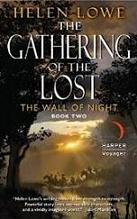
Jacket art by Greg Bridges
The Gathering of the Lost: USA Cover (Harper Voyager) - Read More Here!
"A richly told tale" -- Robin Hobb
"A vividly imagined world" -- Juliet Marillier
"This is an author with a gift for fantasy” -- Catherine Asaro
To read reviews, click Here.
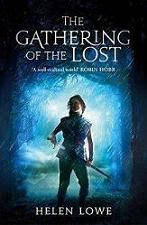
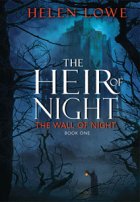
Jacket art by Greg Bridges
The Heir of Night: USA Cover (Eos) - Read More Here!
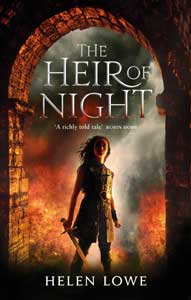
The Heir of Night: UK/AU/NZ Cover (Orbit) - Read More Here!
HEIR won the international Gemmell Morningstar Award 2012 for Best Fantasy Debut.
"THE HEIR OF NIGHT by Helen Lowe is a richly told tale of strange magic, dark treachery and conflicting loyalties, set in a well realized world."--Robin Hobb

Jacket art by Antonio Javier Caparo
Thornspell is my first novel and is published by Knopf (Random House Children's Books, USA). It won the Sir Julius Vogel Award 2009 for Best Novel: Young Adult and was a Storylines Childrens' Literature Trust Notable Book 2009.
