“You must not fear, hold back, count or be a miser with your thoughts and feelings. It is also true that creation comes from an overflow, so you have to learn to intake, to imbibe, to nourish yourself and not be afraid of fullness. The fullness is like a tidal wave which then carries you, sweeps you into experience and into writing. Permit yourself to flow and overflow, allow for the rise in temperature, all the expansions and intensifications. Something is always born of excess: great art was born of great terrors, great loneliness, great inhibitions, instabilities, and it always balances them.”
~ Anaïs Nin, 1903 – 1977
The A Geography of Haarth post series is traversing the full range of locales and places from The Wall of Night world of Haarth — and we’re now in “K.” 😉
—
Keep of Winds: fortress stronghold of the Derai House of Night
.
” ‘For it is the House of Night that holds the Keep of Winds,’ “ Malian chanted in reply, ” ‘foremost of all the strongholds on the Shield-wall of Night.’ It was you who first taught me that, Nhairin.”
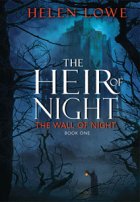
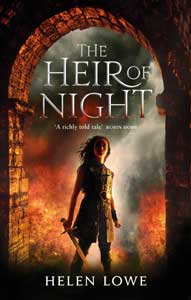
~ from © The Heir Of Night: The Wall of Night Book One; Chapter 1 — The Keep Of Winds
.
“The voice snuffed out as the flames had done and Malian breached the surface of the darkness like a diver, to find herself standing before the main gate of the Keep of Winds. The keep cleaved the dream realm like the prow of a great ship, yet the Derai world massed behind it was as closed to her now, even in the realm of dreams, as it was in the waking world.”
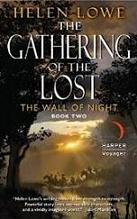
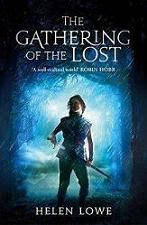
~ from © The Gathering Of The Lost: The Wall of Night Book Two; Prologue
Introduction:
On October 31 I began a new “mini-post” series titled “Here’s SpecFicNZ Wellington.” As explained, effectively my fellow SpecFicNZ-ers are introducing themselves using a series of common headings:
Here’s Who: a short, first person introduction to the member
Here’s Why: the member writes or works in speculative fiction
Here’s What: an example of the member’s work
Here’s Where: you can find out more about the writer and their work—and I really hope you will!
And now I am very pleased to introduce this week’s guest, Sally McLennan.
—
Here’s SpecFicNZ–Wellington: Featuring Sally McLennan
Here’s Who:
I am a writer of children’s books, fairy tales for grown-ups, erotica, horror and more. I studied English at Canterbury University and went on to edit newspapers in Sydney. I have been writing fiction full time since the publication of my first book Deputy Dan & the Mysterious Midnight Marauder.
My passions are reading and my one and a half Clydesdales (my mare is pregnant!). I am addicted to (quality) documentaries and chocolate. I also love getting into hot water, or the sea, either will do.
.
Here’s Why:
I can’t help it really. I loved words and puzzles ever since I first encountered them. Writing is like a combination of both: novels are the most complicated jigsaw puzzle you can get. You not only solve the puzzle to make a picture you get to invent each piece! I got my first award for writing when I was eight and I still have it. There is no going back.
I was that kid who staggered under piles of books when eventually emerging from the library and who was most often told off for day dreaming in class. My reveries were usually about the characters I had encountered in ink-worlds. Nothing is better than the opportunity to make books of my own.
Plus, what’s not to love? I sometimes work in my pajamas and I have written (published work!) while on the back of an elephant. The entirety of life is my story fodder and I try to live in adventures. Delicious!
.
Here’s What:
Somewhere Else
In Else, the creatures of legend have read our fantasy novels. There, monsters believe the human children that appear are fairytale heroes, who must be recruited, or destroyed. This is because Else is a world at war. The teens washed up there will not survive this bloody and brutal conflict unless they escape and make a place of their own.
From the moment she is swept from a sheep farm in New Zealand into Else, a world where fiction and truth are hopelessly confused, Sarah struggles to regain her footing. She is seized and sent to a concentration camp — known as the Academy of Heroes — but often called Camp Flotsam. There Sarah must rapidly measure up to the expectations of those around her whether they be the dreams of Minotaur, and other creatures who staff the camp, or those of her human peers. But when Sarah’s little sister Lily appears in the camp, Sarah knows she has to come first. Sarah sets about trying to rescue her and get back home. She may die in the attempt.
Deputy Dan & the Mysterious Midnight Marauder
A crime spree so unfathomable that law enforcement agencies are stumped and the public is captivated.
A criminal so strange that no one can guess who the culprit could be. It’s up to the youngest policeman in the nation to follow a trail of clues and catch the criminal mastermind red handed. This is a whodunit about magic and regrets, about learning to feel more and judge less, and the true treasures in life.
Deputy Dan & the Mysterious Midnight Marauder won the Sir Julius Vogel Award for the Best Professional Publication in 2009 and the Conclave Award in 2006 for The Best Work in Fantasy Poetry.
.
Here’s Where:
My website: http://www.sallymclennan.com/
Facebook: https://www.facebook.com/SallyMcLennanAuthor
Twitter: https://twitter.com/Sally_McLennan
—
The “Here’s SpecFicNZ–Wellington” series will be posting every Thursday for the next six weeks.
Introduction:
Freya Robertson is a fellow speculative fiction author based right here in Aotearoa-New Zealand, and although she has written other books, her first epic fantasy, Heartwood, is “just out” in the USA and UK.
I recently interviewed Freya on SF Signal, and when I also asked her what what she considered to be the major theme or idea behind the book, we decided the best way to answer that question might be for her to do a guest post on the topic.
I am very pleased to welcome Freya here today to do just that.
—
Guest Post: Freya Robertson On “What Lies At the Heart Of Heartwood”
I’m here to talk about Heartwood, my epic fantasy from Angry Robot Books. In particular, I’d like to share “what lies at the heart of Heartwood?”
On the surface, the book is about many things. At its most simple, it’s a traditional epic fantasy, about a quasi-medieval society where physical strength is prized above emotional strength, about castles and knights and warfare. It’s about high stakes and long journeys, magnificent battles and saving the world. It does have a fresh twist with its lack of elves, dwarves and orcs and its more modern gender balance. But at its heart, it’s about religion and history, and how over time, the truth can become lost.
I studied history and archaeology at university, and one of the most important things I learned was how it becomes more difficult to interpret documents and artefacts the further back in time you go. It’s easy to put our own bias, ideas and desires into that interpretation, and it becomes harder and harder to find the “truth”. One fictional representation of this is in Star Trek: Voyager, in the 91st episode “Living Witness”. The holographic doctor’s backup program is activated seven hundred years after Voyager’s contact with an alien race. He materialises in a museum where a recreation of events is shown in which all the major details are wrong and the crew are portrayed as sadistic and brutal, because it suits the alien race to push their own political agenda in this way. The doctor is able to help set the record straight by explaining what life was really like at the time.
I used to show this clip when I taught archaeology as I thought it was a great way to summarise the notion that it’s very easy to distort the “truth”, and to show how the interpretation of history changes over time. For example, the Vikings were once portrayed as vicious, bloodthirsty hooligans interested only in raping and pillaging. Over the last few years, scholars have focussed on the fact that they were also farmers and traders, sometimes painting them as relatively peaceful landowners who were just looking for new land. Undoubtedly the truth is somewhere in the middle.
In the opening narration of the movie version of The Lord Of The Rings, Galadriel says, “Much that once was is lost, for none now live who remember it… History became legend, legend became myth.” And this theme is at the heart of Heartwood. The people of the land think of themselves as physical beings. They worship the Arbor, which is the holy tree whose Pectoris or heart was formed from the tears the god Animus cried. They know the Arbor connects them to their god as well as to the land, and they know they should honour the annual Veriditas or greening ceremony every year to ensure the land continues to be fertile. But what they don’t understand is their real relationship to the element of earth, and that because they have forgotten how to maintain the Veriditas properly, the balance has been lost and the element of water is—quite literally—on the rise.
Linked into this theme is the issue of environmental concerns, and the possibility that because we surround ourselves with concrete, we’ve lost our connection to the earth. My personal belief is that there may be elements of religion that have been lost or distorted over time, or where the meaning of something has changed because we, as a people, have changed. The story isn’t meant to push an agenda or be preachy, or to declare I believe there’s a problem with any religion in particular. I just enjoyed exploring the notion of how religion and history can evolve into myth, and how the meaning of things can sometimes change or be lost.
I also explored the notion of how difficult it must have been to be a Templar-style holy knight, celibate and religious and yet also a warrior. The notions that “thou shalt not kill” – unless it’s your enemy – intrigued me, and I enjoyed exploring how the knights, both male and female, balanced these apparently contradictory ideals.
If you’re interested in medieval history, monasticism, religion, nature religions, myth and folklore, hopefully you’ll find something of interest to read about in Heartwood!
—
About Freya Robertson:
Freya is a lifelong fan of science fiction and fantasy, as well as a dedicated gamer. She has a deep and abiding fascination for the history and archaeology of the middle ages and spent many hours as a teenager writing out notecards detailing the battles of the Wars of the Roses, or moping around museums looking at ancient skeletons, bits of rusted iron and broken pots.
She has published over twenty romance novels under other pseudonyms and won prizes in fifteen short story and poetry competitions. Freya lives in the glorious country of New Zealand Aotearoa, where the countryside was made to inspire fantasy writers and filmmakers, and where they brew the best coffee in the world.
To find out more about Freya, you can find her on her website or her blog, or follow her on Facebook and Twitter.
Roll of thunder
Hear my cry
Over the water
Bye and bye
Ole man comin’
Down the line
Whip in hand to
Beat me down
But I ain’t
Gonna let him
Turn me around.
~ Traditional
—
This “poem” comprises the lyrics from a traditional, Black American spiritual of the American South, probably most well known now for its association with the Newbery Medal winning novel, Roll Of Thunder, Hear My Cry by Mildred D. Taylor.
—
To read the featured poem on the Tuesday Poem Hub and other great poems from fellow Tuesday poets from around the world, click here or on the Quill icon in the sidebar.
On October 17 I posted my congratulations to Eleanor Catton, who was my immediate predecessor as writer-in-residence at the University of Canterbry, on winning the Booker Prize for The Luminaries.
I also said that I loved what I heard of Eleanor’s acceptance speech, where she spoke of “worth” and “value” — so much so that I am posting the relevant excerpt from the speech here. I hope it resonates for you as much as it did for me — but I feel her words speak eloquently for themselves so shall offer no further commentary:
.
“When I began writing The Luminaries, I was very much in the thrall of Lewis Hyde’s wonderful book, The Gift, as I still am.
And his conception of the creative enterprise as explored in that book was very important to me in how I came to understand the West Coast of the South Island of New Zealand, during the years of the gold rush.
The region is rich in two very different minerals, gold, prized by Europeans for its value, and greenstone or pounamu, prized by Maori for its worth.
Gold being pure currency, can only be bought and sold. Pounamu as a symbol of belonging and prestige, can only be given.
An economy based on value, in Lewis Hyde’s conception, is not necessarily inferior to an economy based on worth, but the two must somehow be reconciled in the life of an artist who wishes to make a living by his or her gift, by his or her art.
…
I am very aware of the pressures upon contemporary publishing to make money and to remain competitive in a competitive world, and I know that it is no small thing that my primary publishers, Granta, here in London, and Victoria University Press in New Zealand, never once made these pressures known to me while I was writing this book.
I was free throughout to concern myself of questions not of value, but of worth.
This is all the more incredible to me because The Luminaries is and was from the very beginning, a publisher’s nightmare …
I am extraordinarily fortunate to have found a home at these publishing houses and to have found friends and colleagues and people who have managed to strike an elegant balance between making art and making money.”
~ Eleanor Catton
The A Geography of Haarth post series is traversing the full range of locales and places from The Wall of Night world of Haarth.
After a brief sojourn in “J”, it’s onwards into “K.”
—
Keep of Stone: fortress stronghold of the Derai House of Adamant
.
“The Earl paused again, a deep line between his brows as his right hand clenched into a fist. When he resumed speaking, his voice was harsh. “Your mother was sent to the Keep of Stone and no word came back to tell us how she fared until two years later. “
~ from © The Heir Of Night: The Wall of Night Book One; Chapter 18 —Parts Of The Truth
.
Garan rubbed at his chin again; he needed to shave. “If the Stone priests are doing escort duty, they may be less inclined to pick fights.” He wasn’t going to rely on it, though, not given what he knew of Keep of Stone priests and their ways.
~ from © The Gathering Of The Lost: The Wall of Night Book Two; Chapter 28 — Border Crossing