
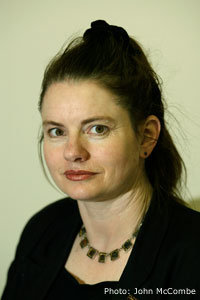
And just to let you know that the article I wrote on my reading for the Hugo Awards is currently up on the Out of this Eos blog—please do check it out! 🙂

Jul
21
2010
The Influences on Story (2) blogpost giveaway is now closed and it has been great to get such interesting responses around place and the influence of land, city and planet scapes on our imaginations as writers and readers. So thank you everyone who read—and most particularly everyone who commented!

"The Heir of Night" Cover Flat
In terms of the giveaway of a signed cover flat of the US edition of The Heir of Night, which is out in the States, Australia and New Zealand in October (it’s March 2011 for the UK), the sorting hat has already sorted

The Sorting Hat
and the winner is: Ripley Patton
Ripley posted about: “ … a 5 week tour of Alaska via the Inland Passage, mostly on various ferries, and it had a huge impact on me … [inlcuding] … two short stories … The Derby (short-listed for an SJV) and Traveling by Petroglyph.”
Congratulations Ripley—I will email you to arrange delivery.
The First Artist on Mars
Well, the first professional artist
There were scientists who, you know
dabbled
but NASA sent us —
me and two photographers —
to build support for the program.
The best day?
That was in Marineris.
Those canyons are huge
each wall a planet
turned on its side.
I did a power of painting there.
You can see all my work
at the opening. Do come.
Hey, they wanted me to paint propaganda —
you know, ‘our brave scientists at work’ —
but I told them
you’ll get nothing but the truth from me
I just paint what I see
and let others worry
what the public think.
Still, the agency can’t be too displeased.
They’re sponsoring my touring show.
That’s coming up next spring.
Would I go back? Don’t know.
It’s a hell of a distance
and my muscles almost got flabby
in the low G. Took me ages
to recover — lots of gym and water time
when I should have been painting.
But Jupiter would be worth the trip!
Those are awesome landscapes
those moons, each one’s so different.
Mars is OK — so old, so red,
so vertical. Quite a place
but limited, you know?
(c) Tim Jones
Tim writes:
“The First Artist On Mars” was first published in Blackmail Press 15 (May 2006) and was included in my second poetry collection, “All Blacks’ Kitchen Gardens”, where it forms part of a sequence about the exploration of Mars called “Red Stone”. That sequence was inspired by Kim Stanley Robinson’s superb Mars Trilogy, but this rather conceited artist is entirely my own invention.”
—
Helen writes:

Voyagers
Tim Jones is a fellow Tuesday Poem poet, as well as an editor and writer of speculative, literary and interstitial fiction. In addition to The All Black’s Kitchen Garden, his short story collection, Transported, was published by Vintage in 2008 and longlisted for the 2008 Frank O’Connor International Short Story Award. He is also the co-editor, with Mark Pirie, of Voyagers: Science Fiction Poetry from New Zealand (Interactive Publications, 2009). I initially encountered “The First Artist on Mars” in Voyagers and felt that the invention of Tim’s “rather conceited artist” was an excellent one—and yet the feeling for Mars as place still came through.
—
This thread to the poem, of course, fits with yesterday’s second instalment of my “Influences on Story” post series, in which the influence I looked at was landscape, in reality and on the imagination. If you check out the post, you’ll see that there’s also an opportunity, as writers, to comment on whether there are landscapes that have strongly influenced your work. Or you can comment as a reader re landscapes in fiction that you have either particularly enjoyed (as I enjoyed Mars in this poem) or felt shaped a work.
By way of extra encouragement, everyone who comments will go in the draw to win a signed cover flat of The Heir of Night.  (The commentary and giveaway opportunity will run until 9 am Wednesday morning, NZ time.)
So do feel free, poets and poetry readers, to take a look and participate!
To read more Tuesday Poems go to the main site (or click on the Quill icon in the sidebar).

"The Heir of Night"
I’ve just had my first, public reader response to The Heir of Night—if you don’t count the wonderful cover quote from Robin Hobb—in this case from my fellow Tuesday Poem poet, Joanna Preston.
Joanna has posted her response to Heir on both her A Dark Feathered Art blog and also on Library Thing. Each post is a little different from the other, so you may like to check out both.
Of course, like every writer, I’m always thrilled when a reader likes my work—but in Joanna’s case she’s a pretty tough sell when it comes to the written word, so I’m doubly glad The Heir of Night cleared the bar!
—
Please note: I just had to add this post, but there’s also a commentary and giveway—of an Heir of Night cover flat—around the influence of landscape on creative writing that’s still running, under “Influences on Story (2)” immediately below. Because tomorrow is Tuesday Poem day (where landscapes of Mars will feature) the commentary and giveaway opportunity will run until 9 am Wednesday morning, NZ time. So do check it out and participate. 🙂
Jul
19
2010

Matariki (Pleiades)
On June 23, I first wrote about influences on story in terms of festivals such as Matariki, the Maori New Year, which is marked by the rising of the Pleiades constellation into southern hemisphere skies; May Day; and the related festival of Valborgmassafton (May Day’s Eve) in Sweden. (This festival is also known as Valpurgis Night in Germany). Part of what sparked that reflection was writing an episode in the second book of the Wall of Night quartet which dealt with a festival called Summer’s Eve, which is “always held on the first new moon of summer.”
Earlier this week I received an email from Finland, from “Seregil of Rhiminee”, the pseudonym for a reviewer and moderater for the RisingShadow website, which has sections in both Finnish and English. Well worth a look if you’re interested in Fantasy, because I understand the English language site has over 28,000 fantasy and science fiction listings (although not all have been reviewed). This—of course!—got me remembering Finland, which I visited when I was living in Sweden: taking a summer boat trip through the archipelago adjoining the old capital of Turku (or Abo), and making the winter train journey from Helsinki to Leningrad (as it still was then—before the name of St Petersburg was restored).
The summer trip was wonderful, but I have to admit that it was my winter journeys that made the most enduring impression on me, both in Finland and Sweden—perhaps because they were so different from anything I would encounter in temperate New Zealand (except in the very high mountains or exceptional circumstances, such as the Big Snow of 1992.) I made two journeys into winter country, the first being the trip along the Gulf of Finland through snow covered forests of fir and birch; the second to the far north of Sweden in the very heart of winter. I still remember the tremendous depth of snow lying, the vast forests stretching away beneath whitewashed sky, the air like dry ice in your lungs when you went outside—and the stillness was profound. I saw elk and reindeer for the first time, as well, and visited the small museum in Arjeplog with its account of the Lapps’—or Sami’s—history in the north.

Sea ice, Gulf of Finland
Years later, those memories are still working their way through my writing. It’s there in poems such as North and also in the Winter Country and the Winter People in my new novel, The Heir of Night. Heir is coming out in the USA, Australia and New Zealand in October (UK folk have to wait until March 2011) and although the Winter Country is not Sweden or Finland, my vision of it has definitely been influenced by my personal experience of those landscapes. Similarly, the Winter People are not Lapps or North American Indians, but some of what they are has definitely evolved from my reading about/understanding of those cultures and their histories.
I find that story, characters and the landscape of my stories all evolve out of myth, imagination—I hope you will agree, once you get a chance to read Heir, that the Wall of Night is almost completely imagination, and the Gate of Dreams steeped in myth—but also from experience. My vision of the Winter Country, especially when writing passages like the one immediately following, has undoubtedly been shaped by my winter experience of both Sweden and Finland.
“It had been one of those bright-as-diamond days between blizzards, with the sky pale blue crystal and the snow stretching away forever, white and gleaming. She had been out hunting and come upon him some distance from the camp, a solitary figure in the circling world of white and blue, staring at something far up in the sky. Rowan had stopped, following his gaze, and seen the hovering speck that was a snow falcon, riding the currents of the air.
The Earl had watched it for a long time and when at last he turned his head he had looked straight into her eyes and smiled, an expression as rare as winter sunshine in the grimness of his face. “It is Winter itself that hawk,” he had said, “the brightness and the wildness and the freedom of it. I could watch it forever.”
from The Heir of Night, The Wall of Night Book One
—
What about you? Writers—are there landscapes that have strongly influenced your work? Readers—are there landscapes in fiction that you have either particularly enjoyed or thought shaped the work?
Just to get the ball rolling—and in the spirit of this post—I would cite the wintry north of Philip Pullman’s The Golden Compass, with its snow, northern lights, and panzer bjorn (love those armoured bears!) Also the alternative University of Oxford that opens the book.
"The Heir of Night" Cover Flat
By way of extra encouragement, everyone who comments will go in the draw to win a signed cover flat of The Heir of Night. 🙂
Oops, late addition(!): Because tomorrow is Tuesday Poem day (where landscapes of Mars will feature) the commentary and giveaway opportunity for “Influences on Writing (2)” will run until 9 am Wednesday morning, NZ time.
Jul
18
2010

Tethys
This is a photograph of Tethys (pronounced ‘TEE-this’), one of the moons of Saturn, taken by the Cassini probe. Cool, huh?
As “Bad Astronomer” Phil Platt said: “How forbidding and lovely!”
To find out more about Tethys, check out these links:
Bad Astronomy: A Billion km ice mountain against the black!
http://www.solarviews.com/eng/tethys.htm
Jul
18
2010
Jul
17
2010

Palimpsest: Catherynne M Valente
In terms of “what I’m reading” right now, I’m on a big push to read all the fiction finalists for the Hugo Awards, and this week I finished Catherynne M Valente’s Palimpsest, which I found an intriguing read, but not a particularly easy one—although the story did come together at the end. I don’t want to say too much about any one book in the Hugos finalists’ lineup until I’ve read them all, but I know a couple of other readers who gave up on Palimpsest before reaching the end, and in one case, after only a few chapters. So this is definitely not a book for everyone . . . but for myself, I’m glad I read it. I don’t know whether or not it will turn out to be my favourite of the six finalists (I have read three so far, with three to go including Robert Charles Wilson’s Julian Comstock: A Story of 22nd-Century America, which I have just started reading)—but yes, definitely glad I’ve read Palimpsest.
Taking a little time out from the Hugo reading, I also finished the second book in Tamora Pierce’s Beka Cooper series, the novel called Bloodhound.

Bloodhound: Tamora Pierce
I have been a fan of Tamora Pierce’s writing since reading Alanna: The First Adventure, way back when, and was pleased when Beka Cooper: Terrier returned to the Tortall world of that first Song of the Lioness series, although at an earlier time period. I really like the character of Beka Cooper—she’s a smart, resourceful, tough, but also compassionate heroine. My kind of gal, definitely, and I enjoyed reading the Bloodhound story.
But as regular readers may have guessed, since I interview poets for the Women on Air programme, Plains 96.9 FM, I also read a lot of poetry books. At the moment I am re-reading Voyagers: Science Fiction Poetry from New Zealand (Interactive Press),
Voyagers
edited by Tim Jones and Mark Pirie, as well as reading Pascale Petit’s The Treekeeper’s Tale (Seren) for the first time.
I suspect many people may have thought there would not be sufficient science fiction poetry written in New Zealand to make up an anthology, but Voyagers proved any doubters wrong with a wonderful compilation of poems on topics as diverse as space travel, apocalypse, extra-terrestrials and altered states. It’s up for a Sir Julius Vogel Award this year, too, in the category of “Best Collected Work”—a well-deserved nomination, in my opinion.

The Treekeeper's Tale: Pascale Petit
The Treekeeper’s Tale is the third collection from celebrated UK poet, Pascale Petit, that I have read (or will have read, once I finish). Petit’s poetry is emotionally powerful, savage even, in books such as The Zoo Father and The Huntress, but she also has a powerful command of language. So despite finding these first two books challenging reads, I also found the poetry extremely inspirational. I am finding The Treekeeper’s Tale a gentler read, but no less inspirational poetically. The subject matter (so far) is of nature and archaeology but with the same mythological overtones I remember from the earlier collections. I am really enjoying it and although I won’t know if I have a favourite poem until I finish, so far Siberian Ice Maiden is a strong contender.
Just to give you a feeling for Petit’s use of language, here are the opening lines to the poem Hieroglyph Moth:
“When the white ermine wings
opened at night
like a book of frost
smoking in the dark,
I understood the colour of vowels
painted on moth fur –
the black, red, saffron signs
of a new language.”
(c) Pascal Petit
from Hieroglyph Moth, in The Treekeeper’s Tale
—
So now, time to share—what are you reading currently?
Jul
16
2010
The Christchurch Writers’ Festival Programme was out today and I’m in it!
I’ll be involved in two events, both on Friday 10 September: Hot Off the Press in the morning and Speed Date A Writer, a NZ Book Council event for school kids in the afternoon.
This week has been somewhat mixed on the writing front, with a lot of interruptions and other commitments to be met, so I only managed 6078 new words for Part 3 of The Gathering of the Lost (The Wall of Night, Part Two). But it’s good to feel that I’m growing the manuscript and I hope to the word count by at least 50% again next week. In fact, I’ve set myself the writing challenge of finishing the first draft of Part 3 within the month, ie by 12 August, so I’ll definitely have to both get writing and keep the words coming!
So what reward do you think I should give myself if I meet the challenge? Just the reward of a job well done, or something more? I think it will have to be something special if it’s to be an incentive—but feel free to put forward ideas. 🙂
Congratulations to fellow Christchurch-based writer, Jane Higgins, who has just won the Text Prize for her Young Adult, speculative fiction novel, The Bridge, which will now be published in Australia and New Zealand in August 2011.
The Text Prize for Young Adult and Children’s Writing is an annual prize awarded to an outstanding unpublished manuscript by an Australian or New Zealand writer. Text publisher Michael Heyward had the following to say about The Bridge:
“The Bridge is a superbly written, fast paced adventure set in a world in which just about everything has gone wrong … Jane Higgins’ cast of characters must make life and death decisions to survive, but this novel is also about choices, about connections, and the quest for identity. It asks essential questions: Who am I? Where do I belong? It is a thoroughly deserving winner of The Text Prize, and we know it will find a lot of fans. We very much look forward to putting The Bridge on the international rights market ahead of publication.”
Jane Higgins is a research sociologist at Lincoln University in Christchurch and a graduate of the Hagley Writers’ Institute.
Congratulations again, Jane, for this tremendous & very well deserved success–I know we’ll all be looking out for The Bridge in the bookshops, come August next year.
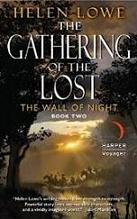
Jacket art by Greg Bridges
The Gathering of the Lost: USA Cover (Harper Voyager) - Read More Here!
"A richly told tale" -- Robin Hobb
"A vividly imagined world" -- Juliet Marillier
"This is an author with a gift for fantasy” -- Catherine Asaro
To read reviews, click Here.
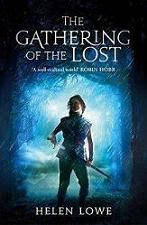

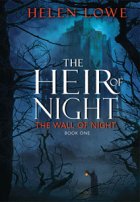
Jacket art by Greg Bridges
The Heir of Night: USA Cover (Eos) - Read More Here!
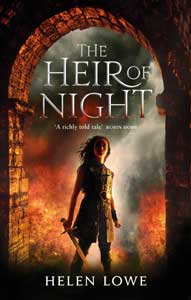
The Heir of Night: UK/AU/NZ Cover (Orbit) - Read More Here!
HEIR won the international Gemmell Morningstar Award 2012 for Best Fantasy Debut.
"THE HEIR OF NIGHT by Helen Lowe is a richly told tale of strange magic, dark treachery and conflicting loyalties, set in a well realized world."--Robin Hobb

Jacket art by Antonio Javier Caparo
Thornspell is my first novel and is published by Knopf (Random House Children's Books, USA). It won the Sir Julius Vogel Award 2009 for Best Novel: Young Adult and was a Storylines Childrens' Literature Trust Notable Book 2009.
