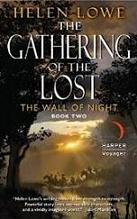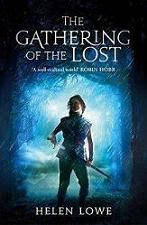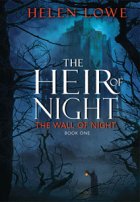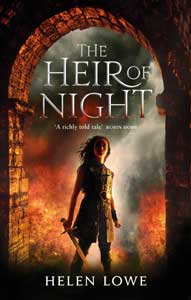
Now, here’s the thing about living on one side of the world while your books are published on the other: a great deal of the exicting stuff happens “while you are sleeping.” The flip side of that coin, is that sometimes you get up in the morning to read some very exciting emails.
As a writer, there’s not much that’s more exciting than getting the email that says an author whose work you have loved since their very first novel hit the shelves, also likes your book.
So as you can imagine, there were a few handsprings and cartwheels when I opened my editor, Kate Nintzel’s, email titled “Robin Hobb on The Heir of Night” and read the following:
“THE HEIR OF NIGHT by Helen Lowe is a richly told tale of strange magic, dark treachery and conflicting loyalties, set in a well realized world.”
— Robin Hobb
A very special moment.
Thank you, Robin Hobb. I feel very honoured.
And although it’s only midway, this is already shaping up to be a week of special moments:
On Monday, I wrote about The Heir of Night AREs (Advance Reader Editions) arriving and how exciting and special that was.
And today, my US publisher, Eos, are featuring an intro from me on their Out of this Eos blog and giving away 5 AREs of Heir to readers. Sadly, this is only for US/Canada readers, since Eos is only publishing into that market—but I do have one, personally signed ARE right here to give away to a reader from “anywhere else” who comments on this post today: the winning name to be ceremonially drawn out of a hat before the next post goes up tomorrow!
So comment away—and do check out the Out of this Eos post. I am sure Kate would love for you to leave a comment there as well.
I introduced the Tuesday Poem concept and blog last week when I posted a poem by Sappho (6th Century BC), “You know the place: then … “
Tim Jones started the “Greek” trend on 1 June when he published Alfred Lord Tennyson’s Ulysses. Today he has continued the trend by publishing my poem, Homing, which he first selected for publication in JAAM 26 in 2008. As Tim notes on his blog today, Homing was published together with a companion poem, The Trojan Shore, both of which form part of a sequence I have been working on called Ithaca Conversations.
The Ithaca Conversations sequence reflects my long held love of myth and legend, a love which began when my Standard 4 teacher, Mrs Hook, placed a colourful poster of the “Twelve Olympians” on our classroom wall. I was fascinated, absorbed … and read every book about the Greek myths that I could lay my hands on. The reading process continued into adult life, with translations of Ovid, Homer, and less mythic but equally legendary stories such as Xenophon’s Anabasis, as well as novels such as Robert Graves’ Homer’s Daughter. But the Iliad and the Odyssey were amongst my earliest loves and the power they exerted over my imagination is best evidenced by the way they continue to infiltrate my poetry and short fiction—and that the novels I write are centred around epic, legend and myth, both in what is loosely our world (Thornspell) and alternate worlds (The Wall of Night Series.)
So I thought I’d complement Tim’s poem with another from the sequence, which also provides a slant into the Odysseus legend: This poem, The Wayfarer, was a finalist in the Takahe Poetry Competition in 2006 (judged by David Howard) and published in Takahe 62.
The Wayfarer: Odysseus at Dodona
Acorns lie strewn with old leaves, thick
as years beneath the shadow of spreading oaks
where an old woman stoops, picking up sticks
that are no more or less twisted than she, binding
them onto her bent back, and watching with one
bright, blackbird eye as the wayfarer approaches,
an oar balanced across his knotted shoulder, his eyes
narrowed between deep seams, as one who has looked
out to numerous horizons and seen wonders: the moon’s
twinned horns rising from a twilit sea like some mythic
beast, awe and terror bound into the one moment
of seeing – those same eyes strayed now into this land
of low, green hills where the margin of the world
is always close as the line of the next, wooded slope
meeting sky, and where a crone hobbles closer
beneath her load, head twisted up to see him better,
curious as a crow, cackling to think there can be
any burden greater than hers in this world of suffering,
flapping work-worn hands and husking at him
in her cracked voice, bidding him return to the hearth
fire and the home isle, to sit in the sunlit porch
with grandchildren clutching at his knees –
but the wanderer hears only the ravens cawing,
lifting in clouds from the sacred grove, darkening
the sun with their wings, crying out that he is fated,
condemned to roam across sea and land, never
resting or knowing ease until he comes at last
to some far country where salt too is a stranger
and no traveller has ever brought word to those
who dwell there, or led them to imagine
the immeasurable vastness, the restless expanse
of the great ocean, that is the circumference,
the greater part of an unknown world.
(c) Helen Lowe, 2006
4.45 p.m. with a blue winter’s dusk already closing in, and the desk lamp casting a saffron glow across work screen and piles of jotted notes. A vehicle turning into the drive breaks the quiet; a door slams although the engine stays running. Glancing out the window I see the red and yellow of a DHL courier van, and even before the brisk knocking on the front door, I think: “Aha. I know what this might be.”
And it is: a carton of AREs (Advance Reader Editions) of The Heir of Night, all the way from New York and my editor Kate Nintzel at Eos (HarperCollins USA.) I sign for the courier and then it is back into the study to open the carton—and then finally, after many years of work, I have the very first version of my story in book form. And I have to tell you, this is a really special moment, because the whole thing about a book is that it’s tangible. I can hold it in my hand and feel the texture of the cover and the pages once I open it up; I can smell the newness of the paper. And see that the cover (by Australian artist Greg Bridges) is every bit as wonderful in reality as it looked in remote on the screen. The map, too, looks absolutely fabulous in print.
(It’s epic Fantasy right, there has to be a map. And there is. An extraordinarily amazing map drawn by Peter Fitzpatrick. But I’m going to do a special post all about that “later.”)
So I know this is an ARE and not the final, proofed, everything-the-way-it-ought-to-be-book. But it still feels like a book and looks like a book—and just like the real, final book, I can put it in my bag and pull it out at a moment’s notice and show all my friends (relatives, passing strangers in the street …) 🙂 And it is special, and really nice, to have something tangible to show—and share—for all the hard work.
The next step, of course, is to hope that your story will go into the world and find its readers, because reading is to writing as day is to night—but just for this night, it’s time to pause and drink a dram for the journey thus far, and to The Heir of Night.
Ah—thank you to Bookman Beattie for his very warm welcome to the world of blogging over on Beatties Book Blog. I love reading your blog, Graham, and hope to send through more of the post material and interview links “soon.”
It’s another cold, wet, miserable Sunday—perfect weather for reading and blogging. Due to getting the blog up and running this week, as well as sticking with the programme for writing Gathering (The Wall of Night Series, Book Two), I have fallen a little behind on the reading. Which means I’m still reading Trudi Canavan’s The Ambassador’s Mission, whereas normally I would have expected to be well finished by now.
But I’m close—and I have to say it’s exactly the kind of Fantasy fiction I enjoy, so it’s easy to get into the story and race along once I do get a few moments with the book. There’s not just the magicians (& not only in the Magician’s Guild city of Imardin, but also in, or from other lands) with their varying forms of magic—and a Rogue wizard to hunt—but also the overlapping thieves’ world. I have always loved thieves’ worlds in Fantasy and have encountered some wonderful thief characters and worlds over the years: from Tamora Pierce’s Upright Man, first encountered in Alanna: the First Adventure; PC Hodgell’s Tai-tastigon in Godstalk, and more recently Scott Lynch’s The Lies of Locke Lamora.
What thieves’ or magician societies have you particularly enjoyed in your SciFi-Fantasy (SF-F) reading?
Once I’ve finished The Ambassador’s Mission, the SF-F “to be read” list is still looking very high. That is because I am hoping to read all the shortlisted books for both the Hugos and the Mythopoeic Awards. I’ll definitely be reading for the Hugos, because this year, for the first time ever, I am registered for Worldcon and so am eligible to vote. So I feel I have to read the nominated books. And I always read as many as I can of the Mythopoeic Award finalists because I have loved so many competition winners over the years. From books like the very first winners, Mary Stewart’s The Crystal Cave and Joyce Chant’s Red Moon and Black Mountain, in 1971 and 1972 respectively, through favourite books and authors such as Orson Scott Card’s Seventh Son (1988), Patricia McKillip’s Ombria In Shadow (2003) and Robin McKinley’s Sunshine (possibly my favourite vampire book—paranormals, magic and baking!) in 2004, and Neil Gaiman’s Anansi Boys (gotta love that title, don’t you?)
Anyway, you can check out the list of previous Mythopoeic winners for yourself, here. And feel free to let me know if there’s any of your favourites there.
As you will see, the 2010 Mythopoeic Award finalists are:
Children’s:
Kage Baker, The Hotel Under the Sand (Tachyon)
Shannon Hale, Books of Bayern consisting of The Goose Girl, Enna Burning, River Secrets, and Forest Born (Bloomsbury)
Grace Lin, Where the Mountain Meets the Moon (Little, Brown)
Malinda Lo, Ash (Little, Brown)
Lisa Mantchev, Eyes Like Stars (Feiwel &Â Friends)
Adults:
Barbara Campbell, Trickster’s Game trilogy consisting of Heartwood, Bloodstone, and Foxfire (DAW)
Greer Gilman, Cloud & Ashes: Three Winter’s Tales (Small Beer Press)
Robert Holdstock, Avilion (Gollancz)
Catherynne M. Valente, Palimpsest (Spectra)
Jo Walton, Lifelode (NESFAÂ Press)
Sadly, in terms of “so many books to read: so little time” there is only one overlap to the Hugo Awards, and that is with Catherine M. Valente’s “Palimpsest.” So Palimpsest is definitely there on my reading table, and in a quick skim of the back cover blurb I am intrigued to see the story described as a “lyrically erotic spell …” But I’m starting with the Kids/YA books first and currently have Kage Baker’s The Hotel Under the Sand and Grace Lin’s Where the Mountain Meets the Moon on the table.
And I will post my personal winner here before the Mythopoeic Society make their final announcement—but I won’t be able to do that with the Hugos, given that I’ll actually be voting on that one.
Just for all those NZ readers, if you’re wondering why I haven’t mentioned the finalists for the Sir Julius Vogel Awards, it’s because I’ve already read ’em. I even nominated a couple and am definitely going to be voting. But you can check out the 2010 list of finalists here. In the Best Novel: Adult and Young Adult categories, in particular, I’d love to know which books you personally have loved reading.
And this means that I should have done my “It’s Friday!” post yesterday. But I was so excited about the green comet, and envious of all you Northern Hemisphere folk who can just go outside in the dark pre-dawn and see it for yourselves (maybe), that I decided to post about that instead.
So now it’s Saturday and so I’m going to tell you about “What I’m Working On” and “What I’m Reading” today, instead. Easy!
What I’m Working On: Books & Blogs, Pretty Much!
Yesterday, after I posted about the green comet, I worked on Gathering (The Wall of Night Series, Book Two), where I am still revising Part 2. “Still” because a lot of this past week has been taken up with getting this blog up and running—the posting part is not too difficult (I am a writer, after all) but the techie background stuff of getting the blog page to look as much like my website as possible, and to link through to the website in a seamless way, has required extra help.
This help has come in two parts. Firstly in the form of my friend Fitz who designed my Helen Lowe and Thornspell websites and did a re-design so it would fit in with the blog page look. The second major assist has been from another good friend, Joff, who is very much a webbie guy and got in there and “re-engineered” the blog theme to fit my needs and get the website marry-up running smoothly. And by the way, answered all my “blogs-for-dummies” questions with great patience and good humour—because sadly, although I would not describe myself as a technophobe, (I can definitely learn “how to”, but—) it’s not really my “thing”, so the learning curve is always pretty steep. But I think we’re getting there!
Joff and Fitz also have their own websites/blogs, so if you want to know more just click on their names and check them out. And if you leave a comment, tell them I said to say “hi”.
Now, back to revising Part 2 of Gathering. Yesterday I got through 17 pages, which may not sound like a lot, but often is. This is because revision is not necessarily a strictly linear process. A big part of revision is continuity, so often you have to go back and check what a character said or did before (or even who, exactly, said or did what), and “before” can be 5, 6, even 10 chapters back. Frequently I then have to make changes in both places to keep things in synch—and also work my way ‘forward’ to where I ended up, making sure that the changes stay good all the way through.
There can be a lot of these sorts of considerations when you’re revising a first draft, because with the first draft you’re always working with material that was “just written”—where the most important thing is just getting the ideas and the characters and the flow of the story down there on the paper (ok, e-paper, but you get my drift) . And it’s fun and it’s wild and it’s exciting, but yeah, sometimes there can be a little bit of mopping up to do, both with the sequencing of the action—not just what happens, but where it happens, and how—but also with the characters. Very often the way I originally envisage a character and start writing them will change and evolve in response to the action of the story and the other characters they encounter, so I also need to go back and ensure that the character remains consistently the same person throughout.
Don’t get me wrong, characters can change and they definitely do, but there has to be a rationale for that change in the story, an evolution that the reader can understand and “buy” (in my “book” anyway). In fact, you could probably say that continuity is one of the things I pay a lot of attention to in my writing . Pace is really important, too, and something I also pay pretty close attention to right from the get-go.
I think that’s enough for one post, so I’ll leave “what I’m reading”—squeezing in between the writing and the blogging!—for tomorrow’s post. And hey—enjoy your weekends. 🙂
I know, it sounds like a comic book superhero, doesn’t it?
But it’s real and it’s official name is “Comet McNaught (C/2009 R1)” (which is pretty boring, let’s face it—do these astronomers have no imagination?) and if you’re in the northern hemisphere it is currently visible in the extreme northern sky in the early morning. Word is, it may even be visible to the naked eye if the sky is dark enough. So get up early and take a look.
Those of us down here in the southern hemisphere (officially, that’s “downunder”) will have to make do with the photos. You can see a wonderful photo and also “read all about it” in far more detail on the Bad Astronomy blog, in the post Actually, if You’re A Comet It *Is* Easy Being Green.
So go check it out and read about solar winds and what actually does make this particular comet such a beautiful green. And as Phil Plait, the “Bad Astronomer” says: “This comet promises to be a good one, so if you get a chance, go out and hunt it down.”
That’s you, Northern hemispere-ites: you’ve got your marching orders. Get up early and go check it out!
On Wednesday night I went to see Chekhov’s play, The Seagull, which is being put on at the Court Theatre, in the historic Arts Centre. I knew that The Seagull was one of Chekhov’s most famous plays, but although I studied The Cherry Orchard and Platonov/Wild Honey at university I realised, as I took my seat, that I really had no idea of The Seagull story. But sometimes that is the best way to find out what the play is about, by actually sitting through it!
Nonetheless, it was with considerable amusement that I realised that the play was—to an extent—about being a writer and the writing life (obviously, being a Chekhov play, there was a LOT more to it than that). And given the equally amused “aside” glances of my friends as the writer Trigorin went through his second act monologue on this very subject, elements clearly still rang true after over a century.
Or perhaps—the lowering reflection—writers are just not very original in their relationship to their art and the writing life is in itself a well-worn trope? (Scary thought!)
But if you want to hear the details of that particular discussion for yourself, you will have to go and see the play—the Court staging was excellent, with subtle and powerful performances from all the central characters. And although the dramatic approach Chekhov effectively pioneered in The Seagull has now become mainstream, it is still possible to see how the subtleties within the play, and the prevalence of subtext, were ground breaking—and established Chekhov as one of the pre-eminent modern dramatists.
Or if Anton Chekov’s The Seagull is not playing in a theatre near you, get a copy of the play and have a read. I think it will repay the effort.
I have just heard from the wonderful Anne Aitkenhead, the product manager who imports and supports Thornspell at Random House New Zealand (and Anne has been marvellously supportive over the past eighteen months)Â that:
Thornspell will be out here in paperback on July 2—perfect for some winter school holiday reading!
It was very exciting, as an author, to have my first book come out in hardback, which Thornspell did under the Knopf imprint. And it is a beautiful book. I just love it and always will. But the paperback edition, which is being published under the Yearling imprint (it’s still Knopf, but just a different “label”), is also beautifully presented. And again—very exciting to see some of the excellent reviews that Thornspell received, from publications as prestigious as Kirkus, Booklist and The Bulletin of the Center for Children’s Books, featured inside the cover.
You can read more about Thornspell, including excerpts from the book and many of the reviews, on the Thornspell website, here.
But I’ll include some of the reviews inside the cover right here:
“A quiet hero anchors this nicely crafted blend of fairy tale and dreamscape . . . . A very human and nevertheless magical drama. Thoughtful and understated.” — Kirkus Reviews
“Lowe brings the fairy tale to life, adding both complexity and a believable hero, as well as an Aurora who’s more than just a “sleeping beauty.” This is a fun retelling with much to offer readers.” — School Library Journal
“This “Sleeping Beauty” retelling skilfully expands the basic story of the uninvited guest seeking revenge into a full-blooded tale of ambition and romance . . . . The charming modifications hang together nicely with the traditional elements of the story, and romance readers as well as fairy tale aficionados will delight in this deft handling of the tale.” — The Bulletin of the Center for Children’s Books
And Frances Grant in Canvas (the New Zealand Herald) wrote:
“Lowe gives what might have been yet another fantasy quest story a darkly imaginative and sensual dimension as her hero fights his way between his world and the strange faerie realm.”