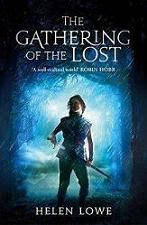

Under snow …
As promised on May 31, on the 11th anniversary of the blog, I’m going to be revisiting posts from the backlist on a semiregular basis, because after eleven years there’s a fair amount of backlist to revisit. 😉
On 31 May, I was tossing up whether to revisit the backlist in a totally random way or go for themes. I still haven’t finally decided, but I suspect it’ll probably end up being a bit of both, i.e. I may settle on a theme for a while, then randomly leap to something else.
To kick things off, since winter solstice is almost upon us here in the Southern Hemisphere, I thought I’d revisit a winter-themed post from 2012: The Magic of Winter Worlds.
The post is by no means an exhaustive list of winter-themed works and was never intended to be, but if you like, you can join in the fun by adding “winter world” fantasies that have been published since 2012 — or from before it for that matter! Particularly if they’re a favourite!
Otherwise, enjoy!
—
The Magic Of Winter Worlds from 21 July 2012
Recently I posted my poem “North” here, and alluded to a journey into the far north of Sweden, to Arjeplog just south of the Arctic circle, which inspired it.
Again recently, I have begun reading Australian author Jo Spurrier’s debut Fantasy, Winter Be My Shield, first mentioned under “Just Arrived” here — and these two posts got me thinking about what a great tradition winter worlds are in Fantasy-SciFi.
Here are a few of my favourites:
The Narnia of CS Lewis’s The Lion, The Witch & The Wardrobe, of course. I have think that moment when, together with Lucy Pevensie, I stepped through the back of a wardrobe and into the snowy landscape of Lantern Waste was definitely one of the most magical of my reading childhood.
As an adult, Ursula Le Guin’s The Left Hand of Darkness provided a similar defining moment, with the physical world of Winter (Gethen) absolutely dominating the cultural, sexual, and political landscape of the story.
From there, I moved on to Michael Scott Rohan’s “Winter of the World” series (the first trilogy comprises The Anvil of Ice, The Forge of the World, The Hammer of the Sun), in which the encroaching ice (think ice age) is an aware power and the Norse myth influences on the storytelling — perhaps fittingly given the world — are strong. (Just in case you’re wondering, I think this is a good thing and the series a very interesting, if at times grim, one.)
And then there’s Mark Helprin’s Winter’s Tale — which is more like historical urban fantasy (meets the Gangs of New York) and is rich, mythic, magic realist imbued — and where winter undoubtedly ‘colours’ the entire story.
More recently I’ve read Kate Elliott’s Cold Magic (the first of a “Cold’ trilogy) which also picks up the idea of an ice age realm where the ice influences magic — but in a world where alternate history means the Carthaginians fought the Romans to a standstill, retaining their maritime empire, and North African (Mali) magicians have emigrated (ahead of a ghoul/zombie horde) to hook up with Celtic druids, I think you’ll already be getting that the story is going very different places to Michael Scott Rohan’s ice…
Nor should stories such as Peter Hoeg’s Miss Smilla’s Feeling For Snow be overlooked, if only for the wonderful descriptions of winter and snow; this is a very atmospheric book. And how could I forget Joan Vingt’s “The Snow Queen”? Short answer, I can’t—again it’s a favourite novel and one where the prolonged winter world of Tiamat, but also the imminent transition to an equally prolonged summer is essential to the story being told.
Picking up on extended winter/summer worlds again, “Winter is Coming” in George RR Martin’s “A Song of Ice and Fire” series, even if it is not quite here yet — but the giant wall of ice and the Night Watch definitely set the scene from book one, A Game of Thrones.
And now I am reading the new Jo Spurrier epic, Winter Be My Shield, where winter and snow also dominate the world building.
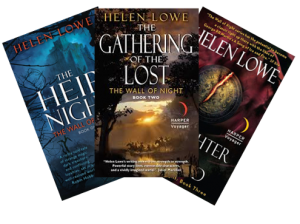
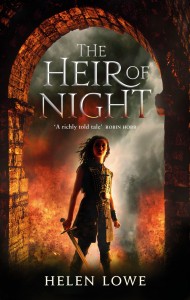
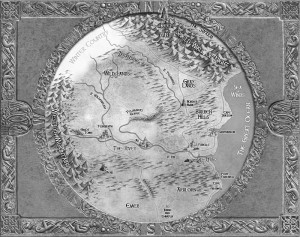
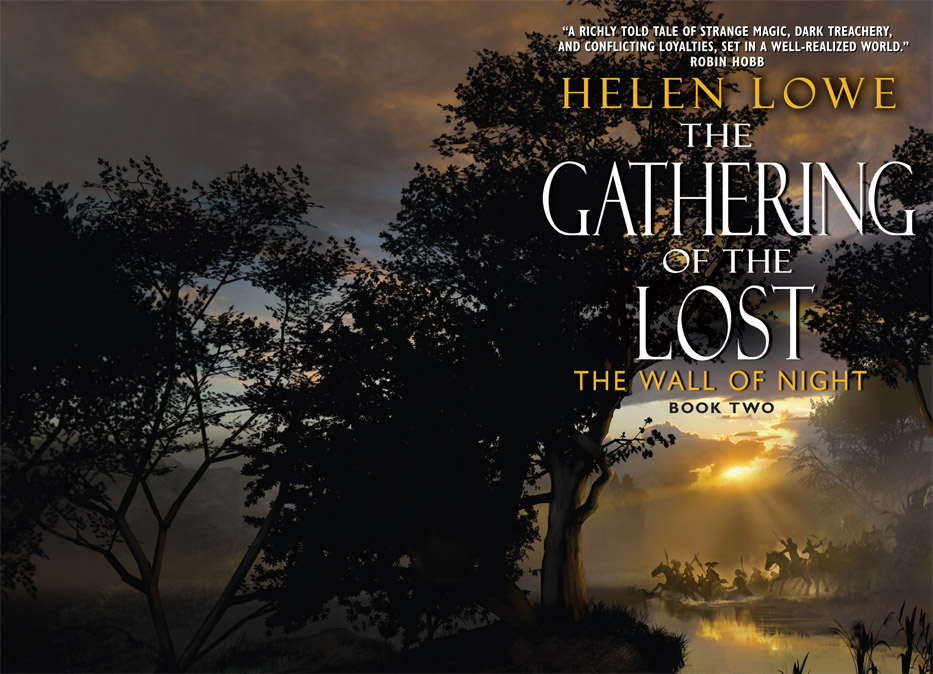
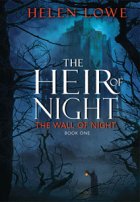
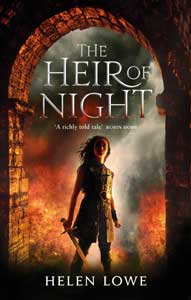
There are also distinctive winter elements to wider worlds, such as the Winter Country in my own “The Wall of Night” series, and the north of the Finnish witches and panzer bjorn in Philip Pullman’s The Golden Compass.
The more I think about it, it seems fairly clear that winter worlds hold an enduring fascination, so now I’m thinking about why that might be… In part, I suspect it is because winter landscapes and worlds are so dramatic, stark and elemental. Physically, they challenge us — and the white on white of snow worlds is also a very strong aesthetic.
Can you think of other reasons for their enduring popularity in Fantasy-SF or literature generally?
And what are your great winter worlds that I’ve missed mentioning?
—
The books mentioned in the 2012 comments were:
JV Jones’ SWORD OF SHADOWS Series
Brian Ruckley’s GODLESS WORLD series (Winterbirth, Bloodheir, Fall of Thanes )
John Farrow’s City of Ice (which is a thriller not fantasy but it’s set in Montreal during a bone-chilling winter).
Susan Cooper’s The Dark Is Rising
‘Winter’s Night’ by Boris Pasternak (a poem)
Matthew Kirby’s Icefall.


I am scheduling this post ahead of time, as we are currently in the middle of a Very Heavy Rainfall Event, with a state of emergency declared in the area where I am and the possibility of both power failure and evacuation on the cards. So I thought I’d get this loaded, no matter what occurs between my now (midday Sunday) and when this goes live at 6.30 am on Monday morning.
Aside from all of that, Monday 31 is the 11th anniversary of my
While this is unsurprising, in looking back over the blog I realized that it contains a considerable backlist of material on these key topics, much of which is still of interest.


For those of you who are not on Twitter but are 


On
Today my theme is the somewhat eclectic array of older titles that have crossed my reading ken of recent times, originating in such diverse quarters as the back of the bookshelf (somewhat cobwebby, but hey, that’s what dusters are for!), the local hospice shop, the library remaindered table*, and the neighbourhood “book fridge.”**
by George Millar, DSO, MC – the “first book of true war adventure to be published in England and America after the War (1945)”, it’s a firsthand account of the authors’ experience as an operative in Nazi-occupied France. My edition was republished by PAN in 1956 and was not, I gathered, quite so heavily censored.
The Grandiflora Tree by Shonagh Koea. Published in 1989 by Penguin, this novel is the only one set in New Zealand and explores bereavement and how little we may actually know those to whom we are (ostensibly) closest.