

Always looking to the light ahead…
On Thursday I cited what I considered a very valid excuse for not commencing the “Heroes in Fantasy” post series on Supernatural Underground:
“…which is that getting that WALL #4 section I mentioned here finished has taken longer than expected. I’m really hoping today or tomorrow will see it done..”
And it did! So woo-hoo (toots vuvuzela) — because ticking off chapters and sections is all about keeping the story and the manuscript moving forward.
So although I still have to do that tax return and a few other items of administrivia, as soon as they are marked off, too, it will not only be “onward”, but back into the book and the series’ final section.
Have a good week, everyone!
—
P.S. If you’re following the worldbuilding posts, I’ll be back with the next one on Monday 14.

Taking a moment to appreciate the view, even if the quest-journey’s not done yet.

 I know, I know, I was supposed to dive into the “Heroes in Fantasy” series on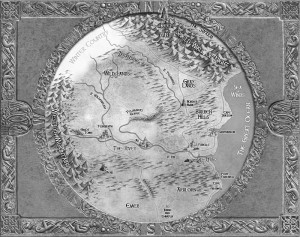


 In terms of my published work, I believe the historical influence is most evident in


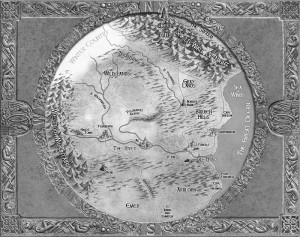

 As I grew up and my original world idea developed, I realized that a dark world, while atmospheric, made for challenging worldbuilding and difficult storytelling, so I revised the “darkness” back to more of a twilit world, with an accompanying stark and bleak landscape, that became the Wall of Night. I also originally thought the wall would be an actual constructed wall (like the Nightwatch’s Wall of Ice in A Game of Thrones) but the more I thought about it the more the “mountain range as shield-wall” idea took hold.
 Other “Big Ideas” I (believe I) perceive in Fantasy worldbuilding, which pervade the stories, include:
 If you think of a world as being similar to a human body, the spine is the central column, or core idea, that connects everything else.
 In order for the world to be real for readers, it must first be real in your mind so that the characters can experience their surroundings in a real way.
 Yet it is not enough to simply experience, the characters must also respond emotionally to what they experience. For example, in any given situation, does the character feel fear or horror, foreboding or doubt; happiness or confidence? Do they respond to stimuli with joy and delight, or disgust and loathing?
 The reality of the worldbuilding will help you, as author, to know how your characters respond. It will also help your readers not only understand what’s going on for your characters, but to understand environment and world through their senses and perceptions, i.e. the world becomes real for all involved.


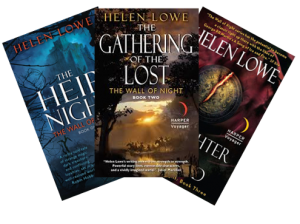 The
The 



 Yes, it’s finally time for