
 Currently I’m doing a post series where I report back on books on the “older to old” spectrum that I’ve read recently. Note: There are no really old (pre 19th century) or really, really old (think Xenophon’s Anabasis) books in the mix, so essentially they’re all “modern” works.
Yes, by implication I am calling 19th century works, e.g. Austen, Dickens, Eliot et al) “modern”, my argument being that they fit the criterion in terms of the “novel” format and their “sensibility”, which is still very accessible to modern readers.
 Anyway, not to get sidetracked into categorizing books by age, the books I’ve been reading lately are all published from 1945 onward. So not that old in terms of the history of literature but certainly not on the new or recent publications shelves of either book shops or libraries.
So far I’ve only posted on two books from my eclectic (aka no rhyme, reason, or method to the reading process beyond interest and availability) list, but I thought I’d share some of the reasons why I read older books, especially when there are so many new books out there.
 Reason the First: There are some great reads out there that may not have made the “classics” list but are still enjoyable reads, so I would be depriving myself from experiencing their goodness if I restricted myself to reading and posting on new books only.
 Reason the Second: As with all the arts (and pretty much everything people do, for that matter) writing has its seasons and its fashions. Reading older books is a great way of gaining perspective on the ways writers have rocked readers’ worlds in the past, as well as what maybe didn’t work so well, or might not in today’s world. All of which is grist for the writer’s mill. 😉
Reason the Third: As a history geek (pretty much) I am always interested in where we’ve come from and what we’ve thought and done before as ‘uman beings, cultures, and societies. Reading books from earlier eras offers a window into how people thought and what concerned them, and their own take/takes on the events of their era. I value that insight, which sometimes (but not always) offers perspective on contemporary concerns and events.
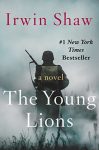 Reason the Fourth: While non fiction may offer more rigorous insights in terms of Reason the Third, sometimes fiction can be equally if not more fascinating. Last year, for example, I discussed Irwin Shaw’s The Young Lions and how aspects of the book were eerily prescient of current concerns (over two posts, hence the two links — probably best read sequentially.)
Yet even lighter reading can offer considerable insight from a socio-cultural perspective. An example I often cite in this respect is Mary Stewart’s Wildfire at Midnight (1956), which was set in 1953, with the coronation of Queen Elizabeth II and the ascent of Mt Everest by Tenzing Norgay and Sir Edmund Hillary as the backdrop that frames the story. The story is a romantic thriller set in a remote fishing lodge on the Island of Skye, so reasonably light fare but well written and well told, as Mary Stewart’s books always are.
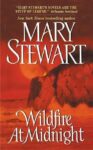 Reading it, several social history aspects really leapt out at me. Firstly, absolutely everybody smokes as a matter of course. Also, it’s illegal to fish on a Sunday, which I believe many contemporary readers would struggle to get their heads around. And it was clearly not at all respectable to be a paperback writer, although the said individual in this case was a surprisingly reasonable person given his socially below-par occupation… 😀 (Note: I should clarify, this is the narrator’s summation of his occupation and character, not mine.)
 Anyway, these are just a few of the reasons I read older books, other than just to enjoy a greater variety of stories and storytelling techniques.
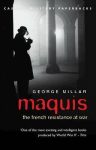
The next book I’m likely to feature will be Maquis, a nonfiction work first published in 1945.



 On another note, if you haven’t caught up with my Supernatural Underground post from 1 July, but are following the Magic in Fantasy series, the following link will take you there:
 Supernatural Underground


 North was first featured on the blog as part of my contribution to the Tuesday Poem community. Although the community put up its shutters some years ago now, the blog is still extant and features some wonderful poems, from ancient to modern — well worth a look for anyone who enjoys poetry:


 To kick things off, since winter solstice is almost upon us here in the Southern Hemisphere, I thought I’d revisit a winter-themed post from 2012: