
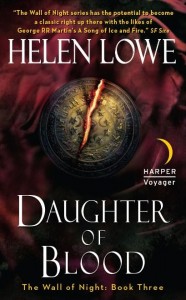
USA
My last About The Characters post featured Koris, a marine escorting Lord Nimor, the Sea House’ envoy.
Posting about Koris recalled a conversation with a friend away-aways back, who was puzzled about why I called the Sea House soldiers “marines.” Her puzzlement chielfy arose because she thought marines were, by definition, specifically a US military corps.
My reply was that, in fact, “marines” is precisely the right term for troops trained to serve on land or sea, in the same way that “sailors” or “mariners” refers to those that sail in ships. So although I could make up a term, which I would then have to explain, it seemed far easier just to use the established term, exactly as I have with “sailors”, “mariners”, “guards”, “warriors”, “knights” et al, throughout the trilogy.
In The Wall Of Night series, Sea is the Derai House (think clan, or even nation) dedicated to ships, the sea, and keeping the Derai Alliance’s maritime trading routes open. In addition to the mariners that sail the ships, Sea also fields soldiers dedicated to fighting on those ships, but also capable of fighting on land.
Hence Koris, in Daughter of Blood, is one of the marines escorting the Sea House envoy, Lord Nimor, in a land-based journey.
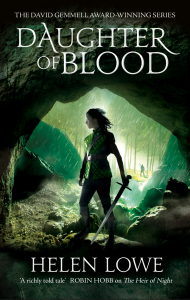
UK/AU/NZ
Historically, marine corps go back as far as Roman times, with ship-based infantry being used to invade opposing ships. The Venetian maritime empire employed “Fanti de Mar” (i.e. sea infantry) on its vessels, a practice adopted by both the Spanish and Portugese in the 1500 and 1600s—both the precursors of modern-day marine corps in those countries.
White it’s true that the US Marine Corps is probably the most famous such corps currently, the UK has also had Royal Marines as part of the Royal Navy for many centuries. The UK marines played a particularly prominent part in the Napoleonic wars, taking part in several significant land-based incursions as well as playing a major part in battles such as Trafalgar.
Their motto, Per Mare, Per Terram, translates as “by sea and by land.” The Royal Marines remain part of the Royal Navy, whereas the US Marine Corps are a distinct branch of the armed services, although still (as I understand it) part of the Department of the Navy.
At any rate, I hope this potted history is sufficient testament to “marine” as a common term for (originally) ship-based infantry uses in both sea battles and amphibious operations—exactly like the Sea House marines in The Wall of Night series. 🙂

 It’s been quite a while since I’ve done a Gorgeous Words post, but I can think of absolutely no reason why I shouldn’t dip back in, and add to, an earlier post series — or more of a mini series in this case. 🙂
 I believe Laini Taylor’s prose is lush, in the most positive sense of that word (e.g. luxuriant, abundant, sensory), with poetic rhythm, glorious imagery, and a real knack for evoking emotion and setting.


 Tis that time of year again: just as the Northern Hemisphere (NH) year is “closing in” to autumn, with all its colour, followed by winter (yes, indeed-y, “winter is coming” for NH folk) we are starting the swing into spring.


 On Twitter,


 So, having talked Han Solo and Spike, along with Merry and Pippin, some of the lovable rogues that populate the pages of fantasy literature include:


 In this Having Fun post series, I always end with a quick look at my own books, so I won’t break tradition. 🙂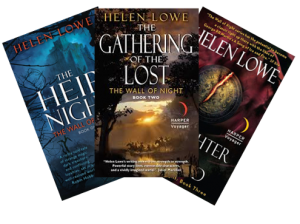
 For today, I’ll leave you with a recap of my thoughts on Master Shoka, from CJ Cherryh’s The Paladin:
 In commencing this post, it was in my mind that I’d read a couple of other
  In fact, I believe “character” is the key to all Kate Atkinson’s writing, both in terms of her keen eye for the light and shadow, rough and smooth of individuals, as well as their interactions with the warp and weft of society. This is just as true of her detective novels as it is of any of her contemporary realism or recent-historical (World War 2) books.
 Transcription, the third novel in my mini-binge of Kate Atkinson reading, is from the same recent-historical (World War 2) stable as Life After Life and its companion, A God In Ruins, only without the time-shift/overlapping lives elements. Transcription is straight-out historical fiction, centered on the WW2 counterintelligence operation to effectively “corral” UK fascists, i.e. the traitors and potential quislings thought they were gathering intelligence for the SS but were delivering it to MI5 operatives.