
 Recently, I’ve been talking about short fiction (just a little, here and here.) Also, June 22nd was NZ’s National Flash Fiction Day and one of NZ’s foremost exponents of the short fiction art, and flash fiction in particular, is undoubtedly Frankie McMillan.
So there seemed no better way to round off the short fiction posts than to tell you about Frankie’s collection, My Mother and the Hungarians. (Hungarians, for short. 😉 )
Just to get to the most important things first, I really enjoyed reading it. My Mother and the Hungarians is flash or very very short fiction, in many ways a Siamese twin to prose poetry. In this case, though, themes run through the collection, to the extent that it works together as a cohesive whole.
Frankie McMillan has a ‘voice’ that I’ve always found particularly distinctive. In the spirit of Emily Dickinson, she has a slantwise take on the world and people in it, a take that picks out the curious and downright strange, oddities and absurdities—to the extent that I always think of her work as subversive: not so much in a political sense but in terms of received wisdoms and traditional ways of looking at the world.
For me, Hungarians really worked in terms of its keen observation, humour, and pathos, as well as a sequence of connected short fictions. Clearly, I’m not alone in my appreciation either, since it was longlisted for the Ockham National Book Award in 2017.
If you like (very) short fiction and a slantwise look at the world, I recommend My Mother and the Hungarians. I know it’s still available in good book shops because I purchased my copy in Unity, Wellington. 🙂

Frankie MacMillan
I also note that an interview with Frankie appeared in the latest edition of Takahe magazine. The interviewer was Zoë Meager.
By way of the usual disclosure, yes, Frankie and I really are on first name terms. 😉 I also esteem her creative voice highly. Because of this, I have featured her work on my blog several times, so you might like to check out:
Out Of The Blue, 28-9-2010
My Father, The Oceanographer (17-01-2012)
Cathedral of the Poor (21-5-2013)
The house on Holloway Street (23-8-2016)
I also featured Frankie’s work on The Tuesday poem blog:
“Hourglass” and “at night my dead mother appears wanting soup” (17-3-2015)

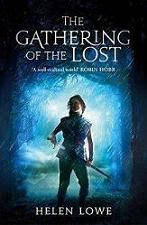

 Yep, you guessed it — it’s the 1st of the month and that means Supernatural Underground! For this year, it also means my Year of Romance in Fantasy Fiction (#YOR #RIFF) is rocking on, alternating between more recent books and titles of longer standing.
 I love this book, so if you don’t already know it and Katharine Kerr’s writing, rock on over to Supernatural Underground and find out more.


 To lift spirits in the coldest darkest week of the year


 …mainly a reminder that I have my Year of Romance in Fantasy Fiction post series going on there right now, with a new installation on the first of every month. 😀
 However, I mentioned fellow Supe author
 Kim Falconer
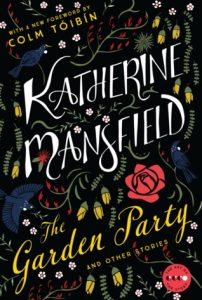 That was my experience of the story at any rate, and I have read it several times now. More than any other short story I can recall, Mansfield’s Miss Brill illuminates an aspect of human nature and of the human condition, holding up a mirror to society and ourselves. As an author, it exemplifies what great writing is and sets a standard to aspire too. The bar is a high one, but that is at it should be.
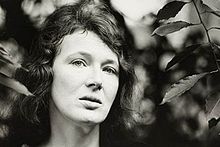
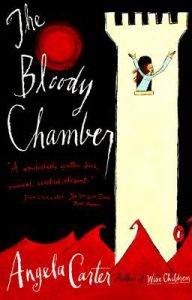 Angela Carter (1940 – 1992) is an SFF name I’ve known for quite some time because although relatively shortlived, she’s an iconic writer from the 1970s and 1980s, credited with reframing speculative fiction through a feminist lens. She also received more awards for her writing than you can shake a stick at.
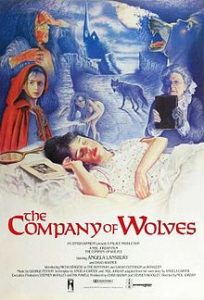 The collection contains ten stories, several of them told two different ways: for example The Courtship of Mr Lyon and The Tiger’s Bride are both retellings of Beauty and the Beast, each with a different slant. Similarly, The Werewolf and The Company of Wolves, offer two different takes on Little Red Riding Hood. The latter was the basis for the 1984 film of the same name.