Ideas Are Everywhere: A Post From Inside The Writing Life
Over the past few weeks, I’ve taken a closer look at both finding inspiration, and inspiration versus perspiration — and a big part of inspiration, of course, is finding the ideas that ‘speak’ to us and spark more ideas. A cascade of them, if we’re lucky!

We must capture those first ideas, too, as with the handwritten beginnings for “Thornspell”
Which may be why a frequent question, both when I give talks or workshops, or do interviews, is “where do you get your ideas?” My answer is two-fold.
First, that the ideas that spark for me tend to come from pursuing the things I love. In my case, that’s myth and legend, folklore and fairytale, history, the martial arts, and the natural world — to name just a few, but I’m sure you get the idea. I believe that doing and pursuing the things we love will generate creative ideas and activities based on them. (Assuming we are creatively inclined, of course. 🙂 )

But also (and I believe I may have said this here before, too) ideas are everywhere. If we observe the world around us, both people and environments (whether natural or built), watch or listen to a newscast, or read a newspaper or magazine, they are full of stories. Some of the stories are violent and cruel and brutal, others inspiring and life-affirming; some are so big that they affect nations, while others are completely local — but they are literally everywhere.
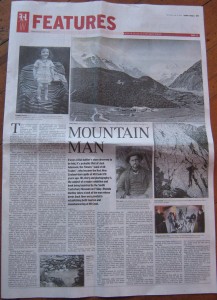
A newspaper feature on the man and story captured in Rhian Gallagher‘s “Feeling for Daylight”
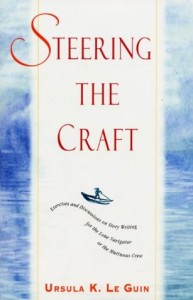
So all we need do to find ideas is open our eyes and ears and pay attention — or as the great Ursula Le Guin puts it in her book Steering The Craft (subtitled, Exercises and Discussions on Story Writing for the Lone Navigator or the Mutinous Crew):
“…The world’s full of stories, you just (have to) reach out.”
Recent “Inside the Writing Life” Posts on the Craft of Writing
- Finding Inspiration
- Inspiration vs Perspiration
- Bandersnatch Meters & Vorpal Blades
- Zoom In; Zoom Out
- Shooting the Rapids of “Why” and “What”
(c) Helen Lowe, 2026