Regular visitors here will know Rebecca from her regular Big Worlds On Small Screens column and will probably be as pleased as I am that she has popped back from her sabbatical (focusing on her studies — how does that work! 😉 ) to share her Top 5 shows of 2016.
The same as for the books, my request was for shows viewed by Rebecca in 2016; they did not have to be released this year.
So without further ado, let’s check out Rebecca’s picks.
—
Rebecca Fisher’s Top 5 Shows of 2016
Science Fiction
I’ve been feeling a little fatigued with superhero-themed shows lately, but I made an exception for Marvel’s Jessica Jones. Krysten Ritter stars as the show’s heroine, a young woman with super strength, a detective agency, and a serious case of PTSD. She’s already struggling emotionally and financially, but her life takes a turn for the even worse when she realizes that her abusive ex-boyfriend Kilgrave is still alive (after being presumed dead in a car accident) and out for revenge.
What makes Kilgrave (David Tennant) so terrifying is that he has the power of persuasion. Any verbal command he gives must be instantly obeyed by whoever hears it, and he’s been honing this talent for his entire adult life. It’s this cat-and-mouse game between the two of them that makes Jessica Jones so riveting: there’s none of the alien invasions or planetary destruction prevalent in the big-screen Marvel films – just one good woman versus one bad man.
.
Historical Drama
By combining the real-life figures of Charles Vane, Jack Rackham and Anne Bonny with Robert Louis Stevenson’s fictional Long John Silver, Captain Flint and Billy Bones, Black Sails becomes a unique fusion of historical pirate biopic and prequel to the novel Treasure Island. Somehow, the combination works.
I’ve been watching this show since its inception, and each season is better than the one before, becoming less about the sex and violence, and more about the intricacies of piratical society and the constant shift of power from one individual or alliance to another. With the final season due to air early next year, the various plots are drawing together and aligning themselves with the opening chapters of Treasure Island – I can’t wait!
.
Dystopian Fantasy
Dystopian futures are a dime-a-dozen these days, but the strength of Into the Badlands comes from the intensity of its visual style. A mash-up of feudal Japan and the plantations of the American South is not a likely combination, but even more surprising is the vividness of colour that’s on display: fields of blazing poppies, rich green forests, bright blue kimonos – it’s a far cry from the usual drab tones of your typical dystopia.
It’s the striking look of this show that helps carry it through its slightly thin plot and characterization: a young soldier wants to escape his current life of serving a ruthless baron by leaving the Badlands with his pregnant girlfriend – and the discovery of a boy with a destructive power may provide him with the opportunity. The story has all the political intrigue, backstabbing and betrayal you could wish for, but its true strength lies in its energetic fight scenes and unique aesthetic.
.
Science Fiction
In the not-to-distant future humans live alongside “synths”, robotic A.I.s that perform all sorts of menial tasks around the home and at work. But as well as exploring some of the downsides to free labour (such as unemployment and relationship breakdowns) the show also focuses on one middle-class family that becomes increasingly suspicious their household synth is self-aware.
It’s this that makes Humans so compelling: the microcosmic perspective of a premise that grapples with worldwide issues of free will and morality. It’s not just another robot invasion story, but one that concentrates on the disrupted dynamics of a single relatable family.
.
Fantasy
The world needs this show more than ever, not because it’s particularly clever or enlightening or innovative, but because it exists for the sole purpose of making you laugh. Set in a Generic Medieval Fantasy Land and starring a handsome knight with sparkling teeth, Galavant is on a quest to rescue his true love from a tyrannical king – only to crash the wedding and find out that she actually prefers the perks that come with marrying into royalty.
That’s just the first fairy tale subversion that Galavant delivers, though it never becomes cynical or nasty. Things like chivalry and kindness and true love aren’t ridiculed – only cast into a more realistic light. And did I mention it was a musical? Alan Menkin (you’ll know him from scoring nearly all of the Disney animated films) provides the songs, and dozens of celebrities show up for singing cameo roles. It’s been a rather grim year, but Galavant always managed to put a smile on my face.
—
About Rebecca Fisher
Rebecca Fisher is a graduate of the University of Canterbury with a Masters degree in English Literature, mainly, she claims, because she was able to get away with writing her thesis on C.S. Lewis and Philip Pullman. She is a reviewer for FantasyLiterature.com, a large website that specializes in fantasy and science-fiction novels, as well as posting reviews to Amazon.com and her They’re All Fictional blog. Rebecca won the 2015 Sir Julius Vogel Award for Best Fan Writer.
—
To read the previous instalment in this Top 5 series, click on:
Paul Weimer’s Top 5 Reads of 2016
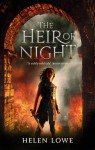
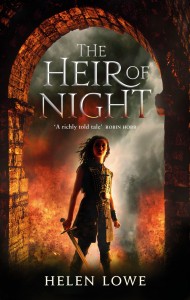
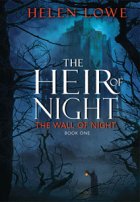
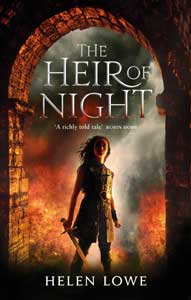
I may not have been chanting “all I want for Christmas is a new review for The Heir of Night“, but it was certainly an unexpected bonus coming on the eve of the holiday season. 🙂
The review is from Joe Grech of First Light SciFi and Fantasy blog, who appears to have enjoyed the read:
“The Heir of Night by Helen Lowe is rich in detail and dark in tone — with healthy does of intrigue, betrayal, magic and action.”
So there you go!
If you’d like to check out the review, the link is:
First Light SciFi and Fantasy: The Heir of Night by Helen Lowe — Reviewed
Christmastide
Christmas—and we
like so many others
are washed north
on a tide of summer,
our route signposted
by pohutakawa,
all flowering late
against a mirage
of cabbage trees,
dusty in the heat
that shimmers
above melting tar—
the whole country baking
as the nation makes
its annual pilgrimage
of Christmas and New Year:
“Good to see ya,” we say,
or simply “Mate”, pouring out
a cool one before we sit
down together, buoyant
with the sunshine
and the colour,
the high tide of summer.
© Helen Lowe
—
Although there is a sea allusion to this poem, I will officially take it as “time out” from my “sea” theme, in favour of Christmas.
And it is definitely the season of this sort of travel for many of us — if a little more daunting for those traversing the northern half of the South Island post the Kekerengu Fault quakes.
Take care in all your journeyings, my friends, and travel safely.
Yes, Christmas may be looming at the end of the week, but things are still happening in the interim!
First and foremost, this week Rebecca Fisher (of Big Worlds On Small Screens (BWoSS) fame joins the “Avid” series — only Rebecca (perhaps unsurprisingly given BWoSS) has opted to be an Avid Viewer. To catch her viewer’s take on 2016, check back in on Thursday for her Top 5 of 2016.
ICYMI, the previous two “Avid” features are here:
Paul Weimer’s Top 5 Reads of 1016
Karen McMillan’s Top 5 Fiction Reads of 2016
Rebecca wasn’t a 2015 contributor to the “Avid” series, but if you want to Check Out Moar, you might like her Tropes posts, featured on her home They’re All Fictional blog:
Exploring Tropes: “Gondor Calls for Aid”
Exploring Tropes:The Self-Fulfilling Prophecy
Fun stuff, indeed — not to mention thoughtful , and fascinating writing!
Sometimes when you’re writing — and reading too — you see something so often it becomes invisible. Seamlessly blended into the background, so to speak. (I’m sure you have similar experiences from other aspects of life, e.g. “domestic blindness”.)
One of the great things about writing, though, is that part of the discipline is to look at what you’re writing (as well as the world you’re writing about, Emily Dickinson style) “slant”. This involves looking out for cliches (although they’re very tricksy and adept at slippin’ by ya) and phrases that appear to mean something but actually don’t make much sense when examined closely.
One of my favourites is “an invisible breeze”, which begs the question as to what breeze, anywhere, is actually visible. 😉
Another is, “S/he said through clenched teeth.” Familiar right? I suspect you’ve encountered versions of it reasonably frequently. Possibly because of its ubiquity, I find the temptation to write it myself is fairly strong (strong enough that it may very well have slipped into one of my manuscripts, especially in “Helen the Early Writing Years.”)
But here’s the thing, have you ever tried to speak through clenched teeth? That’s right, grit those teeth, clench that jaw — and now try and speak…
So far, I have found it a physical impossibility and so it will never (consciously) appear in my writing again. However, if you can manage the feat I’d certainly be interested in hearing of your success. 😀
—
Note: "One Day Out Writing" is a riff on the title of an Alan Duff novel, One Night Out Stealing (1991.)
December being the Season of Lists, on December 5 I heralded the return of my Avid Reader guest series, which proved very popular in 2015.
Paul Weimer kicked off in style last week and today I am delighted to welcome Karen McMillan, who like Paul is one of the most indefatigable readers and reviewers I know, as well as being an author herself. 🙂
As noted last week, the post parameters are for books read in 2016, not necessarily published this year.
—
Karen McMillan’s Top 5 Reads Of 2016
It was difficult choosing my top five books for 2016 as I have read so many fabulous books this year. In the end, to help with my decision making, I’ve limited myself to fiction books only. So in no particular order, here goes:
.
Days are like Grass by Sue Younger
Literary fiction – New Zealand, current day
Convinced by her partner to leave London to return to New Zealand’s shores, pediatric surgeon Claire Bowerman finally agrees – as long as he promises not to bring up her family. But when parents refuse to let her operate on their son – even though without surgery the boy will die, Claire finds herself in the media, accused of bullying. But this becomes the least of her worries when people from her past emerge, bringing to life painful events she would rather forget. Is her father innocent or guilty of murder? Sentenced to prison, but then pardoned, has justice really been served? Sue Younger writes beautifully, and she has created complex characters to care for. The plot is fast-paced, but there is also a quiet elegance to the story that sparks many questions about how childhood shapes us as adults and how the past impacts on the present – even if we try to keep these worlds apart.
.
Truly, Madly, Guilty by Lianne Moriarty
Commercial fiction – Australia, current day
Liane Moriarty is the queen of the slow tease. Right from the get-go, the reader knows that something happened on a regular Sunday afternoon barbecue. There were six responsible adults, three lovely children, and one yapping dog. But the ‘something’ is not revealed until near the end of the novel, and in the intervening period, there is plenty of time to get to know – and to fall in love with – the main characters. There is Clementine, the talented cellist who is preparing for an audition that is making her even more nervous than normal. And her usually supportive husband seems to be having a crisis of his own. The complicated relationship with Erika, Clementine’s supposed good friend, becomes even more fraught after the events of the barbecue, and old hurts are brought to the fore. But uptight and very proper Erika can’t remember very much about the afternoon in question – except that Erika and her husband had asked the other couple for a significant favour. Meanwhile, their hosts, the expansive and social Vid, and his wife Tiffany with her unusual past, host an event that turns to disaster, through no real fault of their own.
Part of the pleasure of this book is the reading to find out the mystery at its heart. Excellently plotted, superb characters and a truly fabulous book.
Ladder to the Moon by P.J. Fry
Historical fiction – Lebanon, 1977
A story of love and war, this debut novel is stunning in its realism, and emotionally engaging in its moving love-story. In 1977 John Ferris, a New Zealand Army captain is serving as a UN military observer on the Israel-Lebanon border. He meets Leila Ashrawi, a beautiful Palestinian woman. Despite the violence and confusion surrounding them, they fall passionately in love with each other – and they must risk everything to start a new life together. The day-to-day reality of war had me on the edge of my seat, and the convincing but complicated love story had me reaching for tissues. P.J Fry is an excellent writer, and he brings all facets of this particular conflict to life, from all sides of the fence, ultimately showing how futile and destructive war is in many and varied ways. This is a gripping, intelligent novel with plenty of heart.
Speculative Thriller – San Francisco, the future
This futuristic novel is set in San Francisco, in a world where crime has been eradicated, and people look perfect and seem to live flawless lives. But twins Tila and Taema already know that life is not perfect. They escaped a cult as teenagers to join this unspoiled world, but as conjoined twins they had major surgery to divide their shared heart. Ten years on they have created independent lives for themselves, but then Tila is accused of murder, and Taema goes undercover in a drug syndicate to see if she can find out what really happened and save her sister. This is a very cool book, with shades of Blade Runner. I really enjoyed the sense of San Francisco in the future, and the characterisation is excellent. My only complaint? That the book had to come to an end. This is a great, emotional, roller-coaster of a read. Highly recommended for anyone who likes a novel that is fast paced with a great story.
Historical fiction – Spain 1937, London 1967
A beautiful, lyrical novel of art and creation, love and legacies. It is the story of two young women and a painting that ties the two stories together. Olive is the daughter of a Viennese Jewish art dealer, and in 1937 she arrives in Spain with her parents in a poor village on the southern coast. She grows close to her young housekeeper, and falls in love with the housekeeper’s half-brother, Isaac Robles; an ambitious painter caught up in revolutionary fervor. Olive is herself a talented painter, but her father is unaware of her great potential. In 1967, Odelle is a Caribbean immigrant trying to make her way in London. She gets a job at the prestigious Skelton Art Gallery and discovers a painting that is the work of Isaac Robles. He is famous for his art, but even more so for his mysterious death. The Muse is beautifully written with overarching themes of art – the making of art, the importance of art, and what people sometimes sacrifice when creating them. This is an enthralling tale.
—
About Karen McMillan:
Karen McMillan is the author of Unbreakable Spirit, The Paris of the East, and The Paris of the West — but despite this typically modest bio there is a great deal more to Karen’s writing and industry career, which you can read about in more detail here. She is also on Twitter: @KarenMcMillanNZ
—
To read the previous instalment in this Top 5 series, click on:
An Avid Reader Special: Paul Weimer’s Top 5 Reads of 2016
On November 7 I did a somewhat longer than usual “Just Arrived” post for Commonwealth, titled:
“Commonwealth by Ann Patchett, with a Riff to Bel Canto, Inverse Correlations and Pascal”
There, I hope that title whets your appetite a little, because I do think it’s worth a read in its own right. However, I have now read Commonwealth so that’s what I need to talk about today, rather than my great and enduring love for Bel Canto and all the consequences of that. 🙂
Overall, I think Commonwealth is a fascinating book. It’s a tale of two families that sort of become one family—and also don’t. It’s also a story about the individual people that make up those two families and the criss-cross of personal connections between them. I think the book captures childhood and the fraught intense relationships between children—as well as what they become in adult life—brilliantly. The look at relationships between adult human beings in all their patchiness and light and shade is also captured with an unerring eye.
Overall, as a lens on family and experiences that shape people within those bounds, I think Commonwealth is exceptional writing.
The second story woven through the first is that of one sibling, Franny (who is the central although not the sole protagonist in the book) who shares her family’s history with her novelist lover, Leon Posen. (Whose surname may or may not be an allusion to “Poser”; one wonders.) Leon then proceeds to turn Franny’s personal story into fiction—hugely successful fiction, which also sends shock waves through the adult family.
The backcover blurb in the edition I read suggested that this sequence of events was what the Commonwealth story was about—and I can only say that was not my experience of the book. It’s part of it certainly, but the book I read was about family and the individuals within families in all their permutations, far beyond the ripple effects of Leon Posen’s novel.
Another pertinent (imho) observation is that Commonwealth is a gentle story, including in terms of pace. I do not say that as a negative, because in fact there is plenty of fabric-of-life grit in the book, but those who prefer their contemporary realism grimdark or action packed may be disappointed.
One other noteworthy (to me) fact gleaned from reading Commonwealth is that the US state of Virginia is officially a commonwealth, hence the title of the book (although of course it has wider implications—such is the nature of titles.) But I enjoy learning new facts, however small, so was glad to add this to my grab-bag of such things.
In conclusion, I enjoyed Commonwealth greatly and found it a very satisfying read. I believe it will appeal, not only to fans of Ann Patchett’s other writing, but to those who have enjoyed books like Kate Atkinson’s Behind the Scenes At the Museum, Michael Cunningham’s The Hours, and Kate Grenville’s The Idea of Perfection.
Additional Information:
I purchased and read the paperback edition of Commonwealth, 326 pages, published by Bloomsbury in 2016.
from the hill
boats turn
at their moorings,
facing into the wind:
I can see every
shift in the weather
from up here,
she says, standing
at my shoulder —
the boats better
than any
weathervane…
we take our tea
out, onto a deck
made of timber
from old hulks
dredged out
of harbour mud,
she speaks
of the home to
which she does
not return, of the
much younger man
who will not let
her go — nor she him —
turns again to watch
the boats, talks
of a change
in the wind.
(c) Helen Lowe
First published in Takahe 62, 2007
—
Recently I’ve been posting poems that are broadly themed around “the sea” and this is a favourite among my own poems that fits into that category.
So as we begin the wind down into the Christmas-New Year break (or windup for some, I’m sure!) I thought I’d share it with you here. Enjoy! 🙂
Prior ‘Sea’ Poems (in this current feature sequence) include:
“Dover Beach” (Excerpt) by Matthew Arnold
“Breathing You In” by David Gregory
“We are more than half water” by Helen Rickerby
The Rime of the Ancient Mariner, Part 1 by Samuel Taylor Coleridge
“The Seafarer” Excerpt from the Anglo Saxon poem (Anonymous)
Two Short Poems by Bernadette Hall
“The woman who swims with jellyfish” by Janice Freegard
“the rough sea” — a haiku by Matsuo Bashō
“beachcombing” — a haiku by Helen Lowe
“Ti” by Helen Lowe (Again! How does that work? Oh, it’s m’own blog, that’s right… 😉 )
Last week, Paul Weimer kicked off the “…on Anything, Really” Avid Reader special with his Top 5 Reads of 2016 — and this Thursday it will be Karen McMillan’s turn. If you want to do some prep ahead of time, you can check out Karen’s Top 5 from last year:
An Avid Reader Special: Karen McMillan’s Top 5 Reads Of 2015
A few weeks back I promised you a fortnight of book reports. Now, just on a month later (because reading and posting on books always takes longer than you think!) I’ll be bringing you the last of the 5 books I listed then, namely Ann Patchett’s Commonwealth.
My posts on the 4 previous books are:
.
Magpie Murders by Anthony Horowitz
The Three-Body Problem by Cixin Liu
Also this week, I’ll be continuing my Tuesday feature on poems that are broadly themed around “the sea” — check back tomorrow for that. 🙂