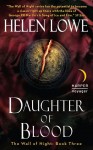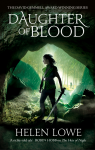
Check it out in all its glory on the Orbit blog:
Daughter Of Blood The Wall Of Night Book Three: UK Cover Reveal
![]() |
![]() |
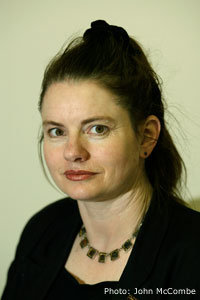
| I am a novelist, poet, interviewer and lover of story. Welcome to my blog. |
Check it out in all its glory on the Orbit blog:
Yes! As promised in Friday’s post, A Teaspoonful of Excitement, the joint USA/UK (HarperVoyager/Orbit) cover reveal for Daughter Of Blood, The Wall Of Night Book Three, is happening today.
Yes, that’s right: TODAY, Monday 13 July!
Because of time zones, though, the Voyager/Orbit posts will not be live until Monday rolls around in UK and/or USA time. (Probably USA, I’m guessing, because it’s the latest, timezone-wise.)
So despite NZ being the first country in the world to see the new day, I’m not going to jump the gun…
…but I will be posting in as close to synchronicity as I can manage, so you can either check back here a little laterz or keep your eye on HarperVoyager and Orbit’s respective sites (links embedded in their names.)
I would love to hear what you think, though, so do consider leaving a comment here at any time after the reveal “happenates.” 😉
Now, I’m off to watch the clock–when I’m not wrapping up the copyedit, that is.
Recently, I was asked what was the most important lesson I had learned in the process of becoming—and I suppose being—a published author.
The answer, which I found a pretty easy one, was this:
What I mean by that is: that it is frequently a long and solitary (so yes, sometimes lonely!) slog writing a book in the first place, and no light task getting it out into the world either.
Once you do, there is no assurance of plain sailing — sales may not be steady, reviews may be hard to come and not all will be friendly, so building a readership may be proverbially tough.
That’s why I believe a writer really has to feel passionate and positive about the story she or he is telling, because it’s that passion and commitment and love of the work itself that keeps an author on course, and gets her or him through the rough patches.
Or that has been my experience at any rate.
Today, owing to circumstances serendipitous, I reacquired a copy of Richard Adams’ The Tyger Voyage, with the wonderful and evocative illustrations by Nicola Bayley.
Here’s what the backcover says:
“A gentleman tyger and his son set sail from Victorian England into the timeless unknown.
Together they roam across the seas, through jungles, past ice-covered mountains and erupting volcanoes and many more unexpected hazards along the way.“
I have always thought The Tyger Voyage a magical picture book for children, not only because of the illustrations, but because of the adventurous story within, told entirely in rhyme:
.
“My father’s got some curious friends —
…
He takes a friendly interest
…..in neighbouring bird and local beast.
The Dubbs live just across the way.
…..(The Dubbs are tygers, I may say.)”
The milieu of the book is Victorian, and Adams has managed to capture that flavour while keeping the story accessible for contemporary readers. In short, The Tyger Voyage really is wonderful storytelling.
And because I love great storytelling in all its forms, as well as the magic of the physical book, I was very sad—oh, quite some years ago now—when my copy was unfortunately destroyed and I was unable to acquire another.
So I was delighted today, to learn—quite unexpectedly—that it had been reprinted. No doubt I should have discovered that fact eventually, anyway—but here’s where the serendipity comes in. I had been to a meeting, then got as far as my car and realised I had left my diary behind. So I went back, but chose—on impulse—to walk another way, and so saw a special display of children’s picture books that I would not otherwise have encountered. And one of them was The Tyger Voyage.
Of course, I bought it straight away, even before I had retrieved my diary. 😉
I am looking forward to sneaking in a peek at its delights, in between discharging copyediting duties for my own book.
If you get the chance, I hope you will take the opportunity to enjoy reading this wonderful story — or better still, make the chance!
Meanwhile, here’s the cover again, this time ’embigenated.
Following on from Wednesday’s Teaspoonful of Luck, today we have a Teaspoonful of Excitement — because next Monday, dear readers, both the US and UK COVERS for Daughter Of Blood shall be REVEALED!
And I have to say, I am REALLY looking forward to it!
Because although I have been telling you all that there is a book and it’s going to be published in January, having covers makes it all seem so much more Real. (Even if logic asserts that it will, in fact, be no more or less real after Monday than it was before. 😉 )
And, just to add to our teaspoonful of excitement, because the Wall of Night series is being re-released (and re-jacketed) in the US, that means this cover will be breaking step with what’s gone before. A wee bit of extra excitement indeed!
So if I don’t see you before then, do drop by on Monday — or otherwise rock on over to either the Orbit (UK) or Voyager (US) sites and check out the goodness there.
In yesterday’s post on “Keeping Fantasy Fresh — & (With A Teaspoonful Of Luck!) Interesting”, I opined that “The second part of keeping Fantasy real (and fresh, and interesting) is developing those fantastic worlds…”
So in the spirit of that statement, and because I see it’s been generating a few visits lately, and because I am still deep in the mire of copyedit, I have decided to revisit the backlist and re-post “Place As Person.”
If you’ve read it before, I hope you may enjoy it again. If you’re reading it for the first time: enjoy!
—
I first became consciously aware of the interface between place and character as an undergraduate, when writing an essay on the city in literature. As soon as I began researching the topic, I quickly realized that whether Lawrence Durrell’s Alexandria or Italo Calvino’s invisible city, these places were so vital to the story being told that they were more than simply setting or backdrop—they were “characters” in their own right.
Of course, utilising the benefits of 20/20 hindsight, I can see that an unconscious awareness of place as character began a great deal earlier—with the snowy forest and lamp-post that was my first experience of Narnia, the encroaching darkness of Alan Garner’s Elidor, and the lonely reaches of Earthsea. Yet ‘place as character’ only implies that locale must be strongly enough drawn to pervade the unfolding story. I believe the premise of “place as person” takes both reader and writer a great deal further and that to realise it fully the place must have an actual personality, i.e. it must in some sense be sentient, or at very least a conscious player in the story’s game.
I wrestled with this premise when writing The Heir of Night and developing both the Wall of Night and wider Haarth world. I believe there is no question that the Wall of Night is “place as character”—its bleak, windblasted, and literally dark physical presence dominates The Heir of Night. But we get no sense that it is either sentient or conscious. On the contrary, its brutal physicality is almost the opposite, a monolithic indifference mirrored in the Derai people who garrison its keeps and holds. But toward the end of the book the world begins to open out for the central characters and they find themselves in a new place, known as Jaransor. Once again, I believe Jaransor exemplifies “place as character”—but if I have done my writer’s work well then the reader may begin to question whether there is not more to the matter: if it might, in fact, be possible that Jaransor is not just a chaotic force, but a personality, albeit a fractured one, that has consciously entered into the conflict being played out.
The Heir of Night ends with this question unanswered, but I pick it up again in The Gathering of the Lost when Malian, the central protagonist, is forced to ask herself whether not only Jaransor, but the world of Haarth itself, could be aware…
To say any more at this point would be a spoiler, and in fact the jury is still out on how Haarth’s role, if it is indeed a personality, could play out through the series. But I do feel that in order for either the world or a particular place within it, such as Jaransor, to be said to be “place as person” then it must be a conscious participant in the story. And even the possibility—but not necessarily the certainty, because that would be ‘telling’—of that being the case is an exciting notion, one that introduces a Gaian consciousness into my epic fantasy.”
—
"Place As Person" first posted on Mary Victoria's Chronicles Of The Tree blog in 2011, as part of a series celebrating release of the anthology River, edited by Alma Alexander.
Keeping storytelling fresh is always a challenge, simply because there are very few distinct stories: two people meet, a farm boy/girl finds a destiny (Carnivale, anyone?), families fall out and come together again, star-crossed love, an ordinary person is faced with an extraordinary challenge…
These are the stories that speak to us in every generation and not just in Fantasy. The difference in Fantasy is that we add magic…(Then stir!)
This is why I argue that the secret to great storytelling is not necessarily about finding the “new”, but about how we tell stories that are already—if not quite as old as time—at least as enduring as the human race. In short, it is about authenticity. And authenticity is about keeping it real.
A big part of keeping it real in all fiction is developing authentic characters. It’s even more vital with Fantasy because the characters operate in a fantastic setting, which may be completely “other” worlds, or our own world, but with magic added. To believe in the world, we first have to believe in the characters at an emotional level. Their hopes, dreams, and fears have to be real for us as readers.
One way I strive to achieve that, as a writer, is to understand that no matter how large or small the part in the story, a character is always important to him or herself. Even the most minor of characters will have a history and a life that matters to them, and as the writer I have to convey a sense of that, even if the reader will only ever catch the most fleeting glimpse of the character on the page.
The second part of keeping Fantasy real (and fresh, and interesting) is developing those fantastic worlds—which I believe is what distinguishes the SFF genre from any other form. Other literary genres are all bound to the world-as-we-know-it, whether in its contemporary or historical context. Perhaps all fiction asks “what if?” But speculative fiction asks, “What if a world could be like this, or this, or that?” While fantasy adds the coda, “What if there really were magic? How would that work?”
It’s the infinite variety of possible “what if’s” that keeps Fantasy exciting.
The Wall Of Night series—I’m currently copyediting the third book, Daughter Of Blood—is set in a completely “other” world, that has been described by readers as a compelling ‘character’ in its own right. It’s also a story of magic and adventure, roof top pursuits and tourneys, hidden identities and springtime love. The heart of the story, though, is always the characters: Malian, the Heir of Night, and her comrade-in-arms, Kalan, and their tale of honor, ambition, and duty, as well as responsibility: to each other, to the world in which they live, and to their families, whether of blood or friendship.
I believe these are matters that not just speak to, but compel us in every generation. And you don’t get any more interesting than that.
—
*In the interests of copyedit progress, this post was adapted from a guest article on Marianne De Pierres site, ca.2013.
she was a corsetière
threading whale bone
through cloth
placing herself close
to the ocean
became lucrative
when whales surfaced
she saw
bustles, derrières,
the amazement of men
on their wedding night
she scraped her learning
from medical notes
collapsed lung
block and tackle
.
© Frankie McMillan
Hour glass first appeared in Turbine (2012) and is included in There are no horses in heaven, Canterbury University Press, 2015.
Reproduced here with permission.
—
About the Poem:I am currently engaged in the process of re-posting poets who have had multiple poems featured here on “…Anything, Really” , or by me on the Tuesday Poem Hub, since I joined the Tuesday Poem community in June 2010.
Today I am delighted to continue featuring the “unique and insightful” (Beatties Bookblog) poetry of Frankie McMillan. I featured this poem earlier this year, on The Tuesday Poem Hub, which you should check out if you would like to read a fuller commentary. But it’s nonetheless a pleasure to have the opportunity to highlight both it, and Frankie, again today.
—
Frankie McMillan is the author of The Bag Lady’s Picnic and other stories, and a poetry collection, Dressing for the Cannibals. In 2005 she was awarded the Creative NZ Todd Bursary. In 2008 and 2009 her work was selected for the Best NZ Fiction anthologies. Other awards include winner of the New Zealand Poetry Society International Competition (2009) and the NZ National Flash Fiction award (2013). In 2014 she held an Ursula Bethell writing residency at Canterbury University. Her second book of poetry, There Are No Horses in Heaven was published by Canterbury University Press in March, 2015.
Very recently, Frankie both won and also took third place in the National Flash Fiction competition. You can read all about it here: A National Flash Fiction Heroine: Congratulating Frankie McMillan
—
To read the featured poem on the Tuesday Poem Hub and other great poems from fellow Tuesday poets from around the world, click here.
In lieu of more weighty Monday morning reflections, here’s one copyedit-derived reason for thinking that those who maintain that one should ‘write what you know’ may just — er — know a thing or two…
After all, if one only wrote what one knew thoroughly, think how much less research would have to be undertaken when embarking on a writing project. It would certainly reduce — or if one really got the “write what you know” thing down, possibly eliminate altogether — the need to painstakingly check facts in areas so diverse as medicine, military manoeuvres, and animal behaviour, to name a few that are currently on my copyedit plate …
Notwithstanding, as one innocent inquirer said not long ago, “But I thought you wrote fantasy-fiction. Can’t you just make everything up however you want, or say it’s magic, or something.”
If only, indeed … 😉
“It is important to know when you are fretting it; when you are fretting it because it is not working, it needs to be scrapped.”
~ Toni Morrison
—
Usually, I feature these quotes because I am in 100% agreement with the sentiment being expressed. With this one, though, I am somewhat less certain, because at what point does one decide that something that is not working needs to be scrapped?
From my own point of view, sometimes when a piece of writing appears not to be working, all that means is that I have to work harder, writing and throwing away until I finally hit the right story track through the creative jungle. So I feel it’s important to distinguish between a particular line of approach to a story, that may well need to be dispensed with in favour of another, and scrapping the story altogether…

Jacket art by Greg Bridges
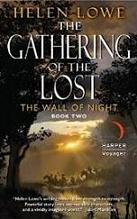
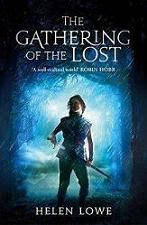
The Gathering of the Lost: USA Cover (Harper Voyager) - Read More Here!
"A richly told tale" -- Robin Hobb
"A vividly imagined world" -- Juliet Marillier
"This is an author with a gift for fantasy” -- Catherine Asaro
To read reviews, click Here.

Jacket art by Greg Bridges
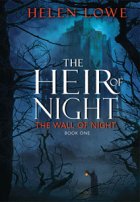
The Heir of Night: USA Cover (Eos) - Read More Here!

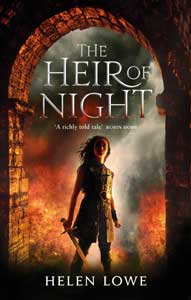
The Heir of Night: UK/AU/NZ Cover (Orbit) - Read More Here!
HEIR won the international Gemmell Morningstar Award 2012 for Best Fantasy Debut.
"THE HEIR OF NIGHT by Helen Lowe is a richly told tale of strange magic, dark treachery and conflicting loyalties, set in a well realized world."--Robin Hobb

Jacket art by Antonio Javier Caparo
Thornspell is my first novel and is published by Knopf (Random House Children's Books, USA). It won the Sir Julius Vogel Award 2009 for Best Novel: Young Adult and was a Storylines Childrens' Literature Trust Notable Book 2009.