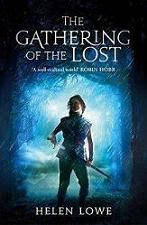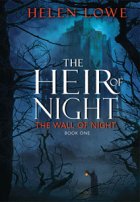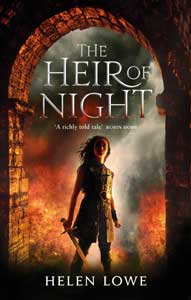

The A Geography of Haarth post series is traversing the full range of locales and places from The Wall of Night world of Haarth.
This week brings the penultimate entry for “L.” 🙂
—
Lion Throne: the court of the Shah of Ishnapur
.
‘ He looked at the ambassador. “But Mykon also has a point. I think we would all like to hear why the Lion Throne has taken the unprecedented step of including a demonhunter as part of its embassy to the River.” ‘
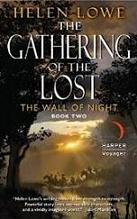
~ from © The Gathering Of The Lost: The Wall of Night Book Two; Chapter 8 — The Demonhunter
I am currently running a blog “mini-series” titled “Here’s SpecFicNZ Wellington” in which my fellow members are introducing themselves using a series of common headings:
Here’s Who: a short, first person introduction to the member
Here’s Why: the member writes or works in speculative fiction
Here’s What: an example of the member’s work
Here’s Where: you can find out more about the writer and their work—and I really hope you will!
This week, my penultimate SpecFicNz Wellington guest is Jonathan James Todd: welcome!
—
Here’s SpecFicNZ–Wellington: Featuring Jonathan James Todd
Here’s Who:
Well hello! I am and have been variously a writer, film-maker and musician.
I did a post-grad degree in Psychology, then spent a decade as a caregiver to a family member, which allowed me to read widely and teach myself things across many disciplines. Thus my writing reflects a rare, comprehensivist perspective.
So far I have written five book length manuscripts – three novels (two near future SF, one fantasy) and two non-fiction. A nonfiction manuscript about consciousness and reality was shortlisted for the 2009 Ashton Wylie Unpublished Manuscript award. Currently none of these manuscripts are published, and sadly I have done very little about seeking publication… I get distracted by creating. (I see why agents exist!)
Somewhere along the way I played in some bands and made a feature film and travelled the world. Now I am setting up my own business as a life coach. Aiming to crank out a couple of first drafts by the end of the year – one non-fiction, one contemporary fiction – then get back to polishing the fantasy and submitting things places.
Here’s Why:
When I was 14 I knew I was a writer. Just knew.
Fantasy seems like the language of story which I internalised. While my first two novels wore the trappings of SF, they obeyed the rules of fantasy. Ultimately genre is meaningless. Story is about propelling us into a transcendent space beyond words. What gets you to that place is a matter of taste; and the best stuff transcends any genre limitation.
The archetypal nature of story is that of the shaman traveling into the otherworld and bringing back the tale of what they encountered to their community. Fantasy is a modern variant – the author takes us into an alternate world which is unavoidably a mirror to and comment upon our own. The challenge is to make what we bring back from this journey relevant and useful to people now. As well as entertaining.
Why specfic? Because it is fun. It lets the imagination run free, and gives complete freedom to explore. But much as I love it, I don’t feel at all bound to specfic. I will write whatever comes out, be it contemporary or non-fiction or the most beautiful and demented fantasy.
Here’s What:
From Harvesting the Gyre (published in Regeneration, Random Static Press, 2013)
“So this video shows this guy with his machine. It looks like a miniature washing machine, or a pressure cooker – yeah, that’s it. A baby piece of whiteware. You dump the plastic in the top, screw the lid down with these tap like handles. Turn it on. Slowly it heats the plastic, melting it down. First it liquefies, then turns into gas. As a gas it rises and makes its way along the thin metal pipe from the lid, which decants into a large flask of water. As the gas passes into the water, it cools, and turns back into oil.
He pours out the oil from the machine into a long glass flask, goes outside, pours some into a metal pan, sets it alight. Whoosh. It burns vibrant like the future.
The rest of the video – it is only a few minutes long, but time stretches out like childhood wonder – shows him all around the world, the third world, in front of kids, mostly black and brown, demonstrating that you can turn garbage into oil. Explaining to them that garbage is in fact treasure. Because most people just don’t know.”
Here’s Where:
If you wanted to know about me, try http://about.me/jonathanjamestodd for personal data;
www.undulatingungulate.com for a long running sporadically updated blog – these days mostly just reviews of what I am reading, but there is a lot of stuff from across the years, and it will likely revive at some point.
You can watch my documentary about Kiwiburn (the NZ regional Burning Man Festival) free at www.combustinunity.com.
The story Harvesting the Gyre came out this year in the anthology Regeneration, ed. Anna Caro & Juliet Buchanan, Random Static Press, 2013.
The piece The Anatomy of Inequality is forthcoming in issue 31 of the literary magazine JAAM, ed. Clare Needham & Harvey Molloy, 2013.
—
The “Here’s SpecFicNZ–Wellington” series will conclude next week, Thursday 19 December.
Last week Rebecca Fisher wrapped up what was to be “Stop Motion October” with a final December “Stop Motion” instalment of what has been a very enjoyable look at some of the classics in the genre. As Rebecca said:
“…it’s been my experience that any film that uses stop-motion animation as its medium will feature the highest quality of talent and provide the most entertainment value.”
I know I’ve enjoyed Rebecca’s review and discussion of these films very much and hope you have also. Here’s the complete roundup of the “Stop Motion” films she looked at:
I wonder if any of you have a personal favourite amongst these movies — mine, for instance, is Coraline — and what you think about the Stop Motion format generally as opposed to other styles of animation?
Rebecca and I would love to hear your thoughts. 😉
do you?
the full moon swims up
into amethyst sky,
a car engine fades
along unsealed road . . .
the wind touches your face
with ghost fingers, whispers
my name into your ear …
do you remember,
do you – forget
even to remember,
do you?
.
© Helen Lowe
Published in Blackmail Press 24: Secrets, June 2009 (ed. Miriam Barr)
—
To read the featured poem on the Tuesday Poem Hub and other great poems from fellow Tuesday poets from around the world, click here or on the Quill icon in the sidebar.
Recently, The Gathering Of The Lost was shortlisted for the David Gemmell Legend Award, and as a finalist I was interviewed on a number of fora around the traps.
I was asked a number of great questions so thought I’d share a few of them—plus my answers, of course!—here on the blog over a number of weeks.
Alex Davis conducted my official Gemmell Legend Award finalist’s interview, which appeared on the Awards’ site, and one of his questions was about developing characters.
—
“Alex: Your books to date have made a real impact, with your characters in particular being praised. How do you go about creating and developing your characters?
Helen: That is an interesting question, because I’m not sure it’s a “how” I’ve ever consciously thought about! Usually the characters come to me in one of two ways: they either spring forth fully formed, Athena style, or they evolve. Usually though, even with the evolving characters who have been with me for a number of years, there’s a flashpoint moment – usually an image of the character in a place or situation where their identity becomes ‘concrete’, although sometimes it can be the ‘voice’ of the character I hear first. Usually the flashpoint comes with with far more backstory around what the character’s life is, and the challenges ahead, which is when the writing begins.
In the case of Malian, in the The Wall Of Night series, the flashpoint was a vision of her scaling the interior wall of an ancient, ruined castle that was imbued with shadows and a bloody history. Even that image though, was still only the end of the beginning in terms of the development of her character, which has continued to grow and evolve in relation to both events and changes in the characters around her. It’s important to me that should happen, as I feel it’s a vital part of making characters real. I also feel strongly that character continuity is vital to the authenticity of the story—which means that a character cannot just go and do something against her or his nature, as established in the story thus far, simply to advance the next element in the plot. Not if I’m “keeping it real” as a writer.
Malian is a major character and so obviously gets a lot of attention. But a telling measure of writing quality for me is whether the minor characters, for whatever brief time they are on the stage of the story are also real. One way I like to think about this in my own writing is that even if a character is not important to the story being told, he or she (or it, in the case of certain speculative entities) will be important to him or herself. Even the most minor of characters will have a history and a life that matters to them, and as the writer I have to convey a sense of that, even if the reader will only ever catch the most fleeting glimpse of the character on the page.
When a writer does this successfully, I believe it adds depth and texture, as well as conviction, to the story. I know it adds greatly to my enjoyment of a book when I don my reader’s hat.”
The A Geography of Haarth post series is traversing the full range of locales and places from The Wall of Night world of Haarth — and this week finds us still in “L.”
—
Lathayra: one of the Southern Realms of Haarth
.
“Now she rode a sturdy gray cob and called herself Heris—a name that could equally well originate on the River or in northern Emer—an itinerant scribe on a pilgrimage to all the shrines of Serrut in Emer and Aralorn. And maybe Lathayra, although the shabby scribe was undecided on that point whenever his plans were discussed. Lathayra, he had heard, was a dangerous place for those not adept with the weapons of war.
“Perilous far, too,” one farmer deep in the Ormondian hills opined.”
~ from © The Gathering Of The Lost: The Wall of Night Book Two; Chapter 53 — The Solitary Tower
I am currently running a blog “mini-series” titled “Here’s SpecFicNZ Wellington”in which my fellow members are introducing themselves using a series of common headings:
Here’s Who: a short, first person introduction to the member
Here’s Why: the member writes or works in speculative fiction
Here’s What: an example of the member’s work
Here’s Where: you can find out more about the writer and their work—and I really hope you will!
And now I am very pleased to welcome this week’s guest, Dan Rabarts.
—
Here’s SpecFicNZ–Wellington: Featuring Dan Rabarts
Here’s Who:
I’m a writer of all forms of speculative fiction, with a particular interest in the macabre and the slightly twisted. I’ve had short stories published in a number of print and electronic venues across a range of genres, including psychological SF, hard SF, dark fantasy, Weird West, steampunk, and rural horror (it’ll be the next big thing after urban horror, you mark my words).
Most recently, my entry “Children of the Tide” took first place in the AHWA/Melbourne ZomCon short story contest, drawing comments from the judges like “The pathos and suspense in this story are arresting and clearly deserving of the highest award.” Yeah, I was pretty happy to hear that.
My fiction and non-fiction have both been finalists for the Sir Julius Vogel Awards over the past four years.
A major project I found myself inextricably wrapped up in this year has been Baby Teeth – Bite-sized Tales of Terror, an anthology of (mostly) flash-length fiction donated by a horde of Kiwi and US authors, with all proceeds going to Duffy Books in Homes. Horror for charity. Go figure.
As well as short fiction, I have several longer works on the go, including about half a million words across a series of six fantasy novels which I’m currently shopping around. I still have this crazy idea that a publisher might like them. I’m currently working on a comic/dark fantasy novel and a gothic horror/apocalyptopunk novel (it’s a word, it really is. You can tell that because I wrote it just there).
I’m also involved in an exciting collaborative novella project which seems to be getting better as we go, and I look forward to being able to share more but for now, alas, it remains top secret. Just in case we both go mad, or something like that.
.
Here’s Why:
The short answer to that: “What else is there to write?”
But that’s a bit disrespectful to all those lovely people who write that fancy literary stuff. Instead, let me say that I spend a lot of time contemplating the “what-if” of, well, just about everything.
The big issues that affect us as a species lead me to writing SF with a view to exploring where humanity as a race is destined – for better or worse.
Questions of where we draw the line between real and unreal, possible and impossible feed my penchant for fantasy.
The possibility that beneath this veneer of civilisation we’re never more than a few meals away from our savage, animal sides and that, for some, not even this much is required, informs my horror stories. By looking past the faces the world shows us and wondering what’s there beneath the surface, we might see something truly terrifying.
Because fiction is about more than story and setting and character and craft. It’s also about asking questions. The “why” of fiction is why I write. I might not give you the answers – in fact, to do so would be contrary to the “why” of it all. But asking questions, being curious, is what makes life interesting. And, of course, you might need to find that question yourself, and what you find might not be what I thought I was asking. But that’s the fun of it.
Fiction is examination, a reflection of who we are, what we see and don’t want to see. I write to get a glimpse of what might be. Somewhere in there, you’ll find equal amounts of hope and terror. Just doing my bit to keep the universe level.
.
Here’s What:
Here’s a snippet of my first published short story, Crucible, as it appears at the Wily Writers online magazine and podcast, a finalist for the SJVs in 2012, and still a favourite of mine:
.
“I am the thunder.
I am the arc of silver that sets the skies to burning.
I am both Lifebringer and the Blossom of Death.
I am deathless even in dying, and they will sing my name long after I am gone.
I am the echo at the end of time, and at the birth of a new age.
The storms will cry for me, as brittle and beautiful as a newborn wail.
I was everything; I am nothing, as I fall, fall, for her.
#
Once, we trod upon the stars, fleeing the gods. Now, we are the gods. Parsing the heavens on wings of steel and light, we sank into eternal sleep, light years unwinding around us, morphing the constellations into new mythologies. With technology already ancient we seeded new worlds, wrought civilizations on the bitter anvils of new suns. Then, again, to sleep, our cruciform vessels voyaging across lifetimes and voids of endless dead space, bearing us where no god could follow.
“And what are we now?”
I glance through the projections of atmospheric pressure and wind patterns far below our hull. “What we always were: Refugees. Pioneers. Dreamers. And it seems that we’re having this conversation again.”
“But how can we value what we create if we have no memory of loss?”
Kayla’s slipping back into one of her moods; they have been more frequent over the past few months. It troubles me. Sometimes I think she forgets how far we’ve come.”
(c) Dan Rabarts
Read or listen to the rest at Wily Writers.
.
Here’s Where:
Find links to all my published work, including stories, podcast narrations, old blogs, and other introspections at http://dan.rabarts.com. Please drop by and say Hi. You can also find me on Facebook and Twitter.
—
The “Here’s SpecFicNZ–Wellington” series will be posting every Thursday for the next two weeks.