I am delighted that my poem North was featured on fellow Tuesday Poet, Elizabeth Welsh’s “Small Marks” blog yesterday.
You can read North, my “about the poem” commentary and Elizabeth’s response, all here:
North on “Small Marks”
Enjoy.
![]() |
![]() |
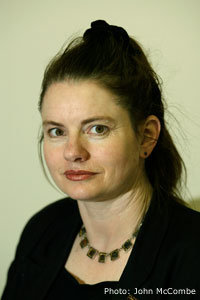
| I am a novelist, poet, interviewer and lover of story. Welcome to my blog. |
I am delighted that my poem North was featured on fellow Tuesday Poet, Elizabeth Welsh’s “Small Marks” blog yesterday.
You can read North, my “about the poem” commentary and Elizabeth’s response, all here:
Enjoy.
Molly is a useless pet,
nervous, unfriendly.
She will not sit on my knee.
Molly is not sleek any more
she is middle-aged
and shows it.
She is greedy and fussy,
she won’t eat
bargain meat.
Sometimes she rubs
against my leg,
purrs after dinner.
She is drawn round the face,
her belly sags
from kittens she bore –
she is past all that,
she is past her best,
I know it.
She lies all day in the garden,
her rusty coat blends with the weeds,
I hardly notice her.
She and I
in the large backyard –
and only me to miss her.
.
© Barbara Strang
Published in The Corrosion Zone, HeadworX, 2011
Reproduced with permission.
—
I shall return to the poems themed around war, but I felt it was time for a break — but there is a connection since Barbara Strang’s poem For a Song was one of the first I featured in the war poetry series.
Old Pet is drawn from the same collection, The Corrosion Zone, and has always been one of my favourites. At one level it is straightforward — but that fabulous final line punches home every time. For me, this poem captures life’s transience and pathos, especially around ageing, but its power comes from its restraint — the recitation of facts about “Molly”, spare and precise, and then that final coupling of “she and I”, before the final line delivers the emotional weight of the poem.
I am very pleased that Barbara has allowed me to share it with you today.
—
Barbara was born in Invercargill. She is a published and award-winning poet and haikuist. She has had two well-received collections of her poetry published. The first, Duck Weather (Poets Group) appeared in 2005, and The Corrosion Zone (HeadworX) in 2011. She is the leader of Airing Cupboard Women Poets and editor for Sudden Valley Press. She edited the NZ Poetry Society’s 2009 and 2010 anthologies. The various awards she has won include the Aoraki Festival Contest, 1998, the NZ Poetry Society’s International Haiku Competition, 1997 and 2003, and the Takahe Cultural Studies Competition 2002. Barbara has an MA in Creative Writing from Victoria University, and she lives at McCormacks Bay, Christchurch, New Zealand.
—
To read the featured poem on the Tuesday Poem Hub and other great poems from fellow Tuesday poets from around the world, click here or on the Quill icon in the sidebar.
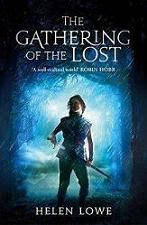
Yes, today is the Very Last Day you can vote for the final round, closing 11.59 pm, UK time — so if you haven’t already done so, but would like to support The Gathering Of The Lost or another of the shortlisted books to win, the link is here:
http://www.gemmellaward.com/page/the-legend-award
(Click on the ‘Author Name – Book Title’ of your choice, then click ‘Vote’ to confirm.)
And again, if you haven’t already checked it out, my finalist’s interview is here:
http://www.gemmellaward.com/profiles/blogs/legend-award-interview-helen-lowe/
Oh, you want to know when the result will be out? Not for another month: I believe October 31 is ‘the’ day, with the announcement being made as part of the World Fantasy Convention.
—
Also, as you’ll have seen from my Saturday post, a bunch of giveaways and specials are closing today — so if you missed the Saturday update, you can still catch it here.
—
Book ReviewI’ll have a new book review for you Thursday, again from Andrew Robins and covering Kim Stanley Robinson’s recently released Shaman.
—
Tomorrow’s my regular 1st of the month post for the Supernatural Underground — not sure what I’ll be doing yet, but it’ll be up tomorrow evening so all will be reveal-ed then.
—
“Ghost Hold” LaunchAlso today — but US time, my friend Ripley Patton will be having the Facebook launch party for Ghost Hold the second novel in her YA series, the PSS Chronicles
You can read Ripley’s cover release guest post, here.
—
Have a great week, everyone! 😉
—
Paul made the comment on this week’s “A Geography Of Haarth” post. Paul is an SF Signal regular, posting reviews, and convening Mind Melds. He also contributes to Functional Nerds and has recently had a story published in Tales Of Eve.
Just a reminder not to forget the following, which all end 30 September:
The A Geography of Haarth post series is traversing the full range of locales and places from The Wall of Night world of Haarth. Today is the last entry for “H.”
—
Hills of the Hawk: an alternate name for the range of hills called Jaransor
.
“She walked on alone to the edge of the trees, staring out over the wild terrain to the west and the steep, bush-clad heights bathed in evening amber—and was struck again by the immensity of the land, and a sky that held nothing except the falcon’s hovering speck.
We came from the stars, Malian thought, staring up at the hawk. Or so the histories say. I should not feel intimidated by this country, however vast it seems.
Nevertheless, she was intimidated. “Jaransor,” she murmured, as if saying the name aloud could empower her. “The hills of the hawk.” Leaves rustled and there was a footfall in the grass but it was not Kalan who came to stand beside her. “I feel like I am standing on the very edge of the world,” she said to Kyr.“
~ from © The Heir Of Night: The Wall Of Night Book One; Chapter 25 — The River Of No Return
On Monday, I mentioned the conversation between Kristin Cashore’s Bitterblue and Malian of Night from my own Wall of Night series, which is currently featured on Kristin’s blog:
Something else that’s very cool on Kristin’s blog is one of her featured quotes, which is from The Tricksters, by NZ’s very own Margaret Mahy:
“Then, at last, sitting on her stretcher-bed, she took from the very bottom of her pack an old peacock-blue scarf folded around a heavy, square book. She unwrapped it and opened it very carefully, as if guilty secrets might fall from between its pages like pressed flowers. This was Harry’s secret. She was a writer.”
I hope you enjoy both the quote and the conversation. 🙂
—
I also have three more guest posts out there in the wild at the moment.
The first is with Marianne De Pierres on her Burn Bright site, in which I talk on:
—
The second is on Fantastical Imaginations, in which I post on:
—
The third is a reminder about last week’s post with Rising Shadow:
Enjoy! 🙂
by Rebecca Fisher
Sugar… spice… and everything nice. These were the ingredients chosen to create three perfect little girls. But Professor Utonium accidentally added an extra ingredient to the concoction: Chemical X! Thus, The Powerpuff Girls were born! Using their ultra-superpowers, Blossom, Bubbles, and Buttercup have dedicated their lives to fighting crime and the forces of evil!
So goes the opening sequence of The Powerpuff Girls, the popular animated series that ran for six seasons (seventy-eight episodes in all) on the Cartoon Network, and which also managed to generate a movie, a few TV specials, and a lot of merchandising. I still have the Powerpuff Girl pencil case and stationary. Created by Craig McCracken, the show was a huge hit during its run, combining stylised animation with quirky humour, genuine warmth and a unique trio of four-year old superheroes.
From left: Buttercup, Blossom and Bubbles
The central gag inherent in the show’s concept is that of three tiny pre-schoolers taking on hardened criminals and giant monsters derived from Japanese films. It is not just their age and size that provides the contrast of sweetness and violence within the show, but that they are so thoroughly feminine, fighting crime with cute hairstyles, in Mary Jane shoes, and bearing the names Blossom, Bubbles and Buttercup.
Set in the City of Townsville, the sisters are cared for by their jovial and caring father-figure Professor Utonium, and are called to various emergencies by the Mayor via a telephone hotline (which has a smiley face and a flashing nose). Each one has a distinct personality: Blossom is the most mature and responsible of the girls, as well as their unofficial leader. Bubbles is the sweet and giggly one, who can be naïve and timid at times, but also surprisingly temperamental when she feels threatened or insulted. Lastly, Buttercup is the abrasive tomboy who loves fighting and often gets into trouble thanks to her inability to toe the line between what is and isn’t socially acceptable behaviour.
But despite their superpowers of flight, strength and laser vision (among others), they are still little girls who have to deal with things such as tantrums, bed-wetting, precocious crushes, school bullying, soft toys, fear of cooties and dependence on security blankets. They attend Pokey Oaks Kindergarten and have to carefully regulate their crime-fighting activities between classes, chores and bedtime, as well as being accountable to strict rules such as no fighting in the classroom.
The girls and their father: Professor Utonium
This naturally results in a fair amount of mood whiplash what with all the sweetness-and-light running parallel to the extreme violence required to defeat various monsters and criminals, but again – that’s all part of the charm.
Because each story is less than fifteen minutes long (each episode is broken into two mini-episodes) some storytelling shortcuts are taken, which cleverly feed into the quirky humour of the show. For instance, when three criminals decide to impersonate the Powerpuff Girls they easily find costumes and masks lying about in their cell. When the city is infested by cockroaches, Blossom deals with the situation by fetching a giant jar to scoop them all up, an inexplicable scenario casually summed up by the Narrator: “so with her lightning-fast speed and her knowledge of where to find giant jars, Blossom makes quick work of cleaning up the town.”
The good-guys-defeating-evil premise seems simplistic enough, but there is a surprising depth to the show, allowing adults as well as children to enjoy various episodes.
Some of the best episodes are told from the villain’s point-of-view or revolve around peripheral characters, providing a fresh spin on the usual formula. In one episode the girls’ painfully shy classmate has an imaginary friend whose antics spiral out of control, leading the girls to defeat it by summoning their own imaginary friend. In another, we meet the girls’ neighbour who is achingly bored with his life and increasingly resentful of his neighbours. Getting a secret thrill out of watching villains on television, he plans his own escape from the banality of non-heroic life, and the story paints a surprisingly vivid portrait of the supposed glamour of criminality.
Another simply involves the girls getting bored on a rainy day and re-enacting some of their adventures with toys and dress-ups, whilst another has the trio relate their latest adventure Rashomon-style, with each lending her own perspective to the events (thus Bubble’s version is visualized as childish crayon drawings, whilst Buttercup sees things as a series of dark and gritty comic-book panels.)
Perhaps the show’s most distinctive element is the existence of an unseen narrator, whose enthusiastic commentary is peppered throughout each episode. He offers observations, makes droll comments, points out story elements, breaks the fourth wall and sends off each episode with a rousing repetition of: “and so the day is saved, thanks to: the Powerpuff Girls!” He ends up being one of the most humorous parts of the show, particularly in his futile attempts to warn characters of what is obvious only to the audience.
The show’s success lies in subverting and playing with their established formula, not just the stories they tell, but in how they tell those stories – not to mention inserting plenty of girl power into the proceedings.
As mentioned, all three girls have distinct personalities, but are also backed up by a strong supporting cast. As well as Professor Utonium as a loving single parent, the girls have their kindergarten teacher Miss Keane, and the Mayor’s shapely assistant Sara Bellum, to offer them guidance (though not so much the dim-witted and diminutive Mayor). In a nice touch, many episodes focus on the citizens of Townsville and the friends, family and classmates of the Powerpuff Girls saving them from peril, demonstrating that anyone can be a hero and proving the truth of the old adage: “it takes a whole village to raise a child.”
As well as this, the girls have an impressive rogue’s gallery, ranging from the spoiled Princess (think Veruca Salt from Charlie and the Chocolate Factory, only worse) to Fuzzy Lumpkins (a hillbilly pink bear who hates people trespassing on his property) to HIM, a truly scary devil with a pointy goatee, thigh-high boots and a creepy voice that echoes as though in a cave, ranging from a high-pitched falsetto to a deep demonic growl. Perhaps most significantly is Mojo Jojo, who is to the girls what Lex Luthor is to Superman, or the Joker is to Batman: their main nemesis.
A talking monkey with an oversized brain and the personality of a mad scientist, his repetitive and convoluted speech patterns (“I am Mojo Jojo. Mojo Jojo is my name. The name that I have is Mojo Jojo”) is partially modelled on bad anime dubbing, making him the show’s most memorable villain.
The level of creativity and innovation in The Powerpuff Girls are its most enduring qualities, for each episode is filled with irreverent humour, clever wordplay and visual gags, many of which are slipped in under the radar, which in turn provides the possibility for rewatchability. It’s therefore ironic that the world’s youngest superhero team caters just as much to an adult audience as it does children, as it’s likely that not many under-ten year olds would appreciate one of the show’s most celebrated episodes: a story composed almost entirely of references to The Beatles. (Believe it or not, it manages to reference about sixty-five songs and events in its fifteen-minute timespan).
—
The next time I post one of these reviews it’ll be October, the month of Halloween. So in celebration of that, I’ll be watching and commenting on some of my favourite spooky Stop-Motion animated films, starting with The Nightmare Before Christmas.
—
Rebecca Fisher is a graduate of the University of Canterbury with a Masters degree in English Literature, mainly, she claims, because she was able to get away with writing her thesis on C.S. Lewis and Philip Pullman. She is a reviewer for FantasyLiterature.com, a large website that specializes in fantasy and science-fiction novels, as well as posting reviews to Amazon.com and her own LiveJournal blog.
To read Rebecca’s detailed introduction of both herself and the series, click on Big Worlds On Small Screens.
—
Previous Big Worlds On Small Screens Reviews: [click on the title to view]
I asserted last week that World War 1 marked a significant change in the treatment of war in poetry, and by poets. I also said that probably no one rang in that change more significantly than Wilfrid Owen, with his poetry that juxtaposed compassion with the grim realities of war. I feel Anthem For Doomed Youth displays both qualities, from the record of death in which there is no glory, to the blinds drawn down on a generation of young men. To requote Owen again from last week:
.
“My subject is War, and the pity of War. The Poetry is in the pity.”
As part of being shortlisted for the David Gemmell Legend Award, I’ve been doing a few Q&A’s and also guest blog posts (I suspect you may have noticed!)
Last week though, I promised you something “special” coming up that was also under wraps in the meantime — but yes, right now on Kristin Cashore’s blog, you can read a conversation between her character, Bitterblue, and Malian of Night.
Here’s Kristin’s intro, by way of a lead in:
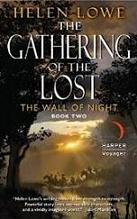
“Last year, I spoke with New Zealand-based fantasy author, Helen Lowe, about Bitterblue, an interview that has since been translated into both French and Chinese – probably because Helen asks good questions! Recently, Helen’s novel The Gathering Of The Lost, the second novel in her wall of night series, was shortlisted for the David Gemmell Legend Award for epic-heroic fantasy. Congratulations, Helen!
Authors can always get together and talk. But what if our characters talked to each other? Helen had the idea of writing a guest post for my blog that was a conversation between Bitterblue and her lead character, Malian of Night. The result, which you can read below, is a really nice introduction to Malian and her situation. Thank you for writing this conversation and letting me share it on my blog, Helen!”
To read the full interview, click on:

Jacket art by Greg Bridges
The Gathering of the Lost: USA Cover (Harper Voyager) - Read More Here!
"A richly told tale" -- Robin Hobb
"A vividly imagined world" -- Juliet Marillier
"This is an author with a gift for fantasy” -- Catherine Asaro
To read reviews, click Here.

Jacket art by Greg Bridges
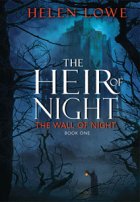
The Heir of Night: USA Cover (Eos) - Read More Here!

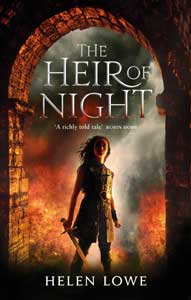
The Heir of Night: UK/AU/NZ Cover (Orbit) - Read More Here!
HEIR won the international Gemmell Morningstar Award 2012 for Best Fantasy Debut.
"THE HEIR OF NIGHT by Helen Lowe is a richly told tale of strange magic, dark treachery and conflicting loyalties, set in a well realized world."--Robin Hobb

Jacket art by Antonio Javier Caparo
Thornspell is my first novel and is published by Knopf (Random House Children's Books, USA). It won the Sir Julius Vogel Award 2009 for Best Novel: Young Adult and was a Storylines Childrens' Literature Trust Notable Book 2009.
| M | T | W | T | F | S | S |
|---|---|---|---|---|---|---|
| 1 | 2 | 3 | 4 | 5 | ||
| 6 | 7 | 8 | 9 | 10 | 11 | 12 |
| 13 | 14 | 15 | 16 | 17 | 18 | 19 |
| 20 | 21 | 22 | 23 | 24 | 25 | 26 |
| 27 | 28 | 29 | 30 | |||