
Andrew Robins did a “proper” review of Hannu Rajaniemi’s The Fractal Prince recently, so this is going to be a very brief reading report, not a reiteration of that review.
But you’ll also recall that I read and enjoyed Rajaniemi’s The Quantum Thief last year, so I was very keen to read the second book in the series for myself. Like The Quantum Thief it is set in a future solar system in which human beings and the societies they inhabit have become as much virtual as real. There also appears to be a war going on between those who wish to see society fully uploaded into a virtual existence (think Matrix here) and those who have other objectives—although I remain unclear as to what those objectives are at this point in the series. Just to add in further layers, there is also an internal conflict going on within the uploader faction.
Like Andrew, I did enjoy The Fractal Prince, mostly for one of the reasons I mentioned in relation to The Quantum Thief last year: “it’s not only definitely space opera, but a richly baroque variant distinguished by the sheer imagination of the world building.” I not only like the whole ‘verse Rajaniemi has created, but also enjoyed the specific world of Sirr (on the last remnant of Earth) in this book—effectively the counterpart of the Oubliette in the first book.
I also liked that readers get to learn more about several of the characters, particularly Mieli and Perhonen and the backstory to their mission.
Overall, I still enjoyed the book a lot—in terms of sheer imagination, I think it’s a series that would be hard to beat over the past few years. But although the ethos of this story is what Andrew Robins described as “a story with layers, as well as plenty of smoke-and-mirrors”, I did not feel that the twists and turns hung together quite as well as they did in the earlier book. In fact there were elements where at the end I thought: “What on earth was that all about? Why was it in the book?” As well as: “How the heck did that happen at all?”
Now it may be that these apparent disconnections are simply a failure of perception on my part. Or it may be that they will resolve in the third book—I do hope so. But even if they don’t, I will still hold to my view that overall I enjoyed the book, liking many of the characters a great deal and loving the extravagant imagination of the world building.
—
So how about you—what are you reading and enjoying this weekend?
The A Geography of Haarth series features locales and places from The Wall of Night series’ world of Haarth.
—
“Arun-En: a town on the Wildenrush river, on the boundaries of The River Lands .”
.
“‘The whole world comes to Ij in the springtime’—isn’t that what they say?” He addressed the gray-clad rider cheerfully. “Just my luck to be going the other way as the festival’s beginning! But Arun-En, on the Wildenrush, has lost its minstrel and someone must take her place.” He settled the pack on his back into a more comfortable position.”
~ from © The Gathering of the Lost: The Wall of Night Book Two; Chapter 1 — The Road To Ij
I sometimes think “…there is nothing, absolutely nothing, half so…” much fun as receiving new books in the post!
Last week’s book fun was an advanced review copy of Juliet Marillier’s first short story collection, Prickle Moon, which is due for release in April (2013) from Ticonderoga Press.
The book contains 14 tales, many previously published but 5 written specifically for this collection, including the eponymous Prickle Moon.
One of the previously published stories is Juggling Silver, which you may recall I featured as part of my A Peek Inside Tales for Canterbury series, here. Lovers of Ms Marillier’s Sevenwaters series will also be pleased to find the novelette, “‘Twixt Twilight And Water” in the collection.
Prickle Moon has already received a very positive review from Publisher’s Weekly: click here to read — early review.
As a taster, here’s that excerpt from Juggling Silver again:
—
from Juggling Silver
by Juliet Marillier
“Grandmother kept her silver plates in a row on a high shelf. They sat there looking down at us like three round eyes. Every day she took them off the shelf and polished them with a soft, red cloth, and then she put them carefully back. If we climbed up, we could see our faces in them. Ulli climbed up a lot.
“Ulli, Ulli, what are we going to do with you?” Grandmother would say. “Eight years old and never out of trouble! Eight years old and still babbling baby talk! Get down off there before you break something!”
The plates were very old and very valuable. They had belonged to Grandmother’s great-great-grandmother. On the rims of them were silver berries and leaves, owls and wolves, whales and dolphins. Grandmother called them the tree plate, the eye plate and the sea plate. Sometimes she let me hold them.
“Careful, Sami! That’s treasure you have in your hands!” She never let Ulli hold them.
Ulli was different.The other boys and girls his age ran around and played with a ball. They hunted for shells and went swimming in the rock pools. They helped their mothers to salt fish and gave their fathers a hand with tarring boats or untangling nets. I could talk to them and they’d understand me. Not Ulli. My little brother wasn’t safe on the beach by himself. He’d just walk into the water and keep on going. I’d waded in and fished him out hundreds of times. Ulli didn’t understand what people told him. And he couldn’t talk, not the way other folk talked. All he would say was a sort of rhyme, over and over, in words that didn’t make any sense: tipi api sipi oh, tipi api sipi oh. He’d sit on the bottom step outside Grandmother’s hut and play with a little pile of round, black stones, throwing them up in the air and catching them one, two, three, and all the time he’d be saying it, tipi api sipi. There was no point yelling, “Stop it!” Words meant nothing to my brother. Grandmother said Ulli would never be able to cast a net or paddle a canoe, not even when he grew up. All he would ever do was talk nonsense and juggle stones and get into trouble. It was just as well he had me to watch over him. Taking care of Ulli was my job.”
Welcome To The World Of The BookSworn:
Who are not just spinners of tales and weavers of worlds—although we are all that!—but 16 newer Fantasy-SF authors from the USA, UK and NZ.
The new BookSworn site will be a (mostly) Fantasy “coffee house” where we host giveaways, announce news about our books and our writing, and discuss writing in the fantasy genre.
But Wait, There’s More: A Masked Ball & Bookpalooza Giveaway!
Yes right now, we’re hosting our grand launch event — a combined masque and 15 book epic giveaway!
So how does an online masked ball work? Well, it’s pretty easy! 😉
The ball is being hosted at the BookSworn site, where very day this week you will encounter three “masked” characters, each one drawn from a novel by one of the 15 BookSworn authors featured. (To make things even easier, the books and authors are listed in the posts.)
At stake — a grand giveaway of a signed book from each of the BookSworn authors participating in the masque. To win you have to discover the name of the character behind each mask, and the novel in which he/she/it appears. (The full conditions of entry, including how to enter are also listed in every post.)
Sound like fun? One commenter has already called it “…probably one of the coolest ideas for a giveaway contest I’ve ever seen.” — so I do hope you’ll come on over to the BookSworn, dance a measure with each of the masqueraders at our ball, and email in your ‘bookpalooza’ giveaway entry at the end of the week!
.
Here’s The Full List of BookSworn Authors:
.
.
SEASON of mists and mellow fruitfulness,
Close bosom-friend of the maturing sun;
Conspiring with him how to load and bless
With fruit the vines that round the thatch-eves run;
To bend with apples the moss’d cottage-trees,
And fill all fruit with ripeness to the core;
To swell the gourd, and plump the hazel shells
With a sweet kernel; to set budding more,
And still more, later flowers for the bees,
Until they think warm days will never cease,
For Summer has o’er-brimm’d their clammy cells.
.
Who hath not seen thee oft amid thy store?
Sometimes whoever seeks abroad may find
Thee sitting careless on a granary floor,
Thy hair soft-lifted by the winnowing wind;
Or on a half-reap’d furrow sound asleep,
Drows’d with the fume of poppies, while thy hook
Spares the next swath and all its twined flowers:
And sometimes like a gleaner thou dost keep
Steady thy laden head across a brook;
Or by a cyder-press, with patient look,
Thou watchest the last oozings hours by hours.
.
Where are the songs of Spring? Ay, where are they?
Think not of them, thou hast thy music too,—
While barred clouds bloom the soft-dying day,
And touch the stubble plains with rosy hue;
Then in a wailful choir the small gnats mourn
Among the river sallows, borne aloft
Or sinking as the light wind lives or dies;
And full-grown lambs loud bleat from hilly bourn;
Hedge-crickets sing; and now with treble soft
The red-breast whistles from a garden-croft;
And gathering swallows twitter in the skies.
by John Keats, 1795 – 1821
—
“To Autumn” is said to have been written on September 19, 1819, and published the following year in Lamia, Isabella, The Eve of St. Agnes, and Other Poems.
An internet source claimed that this is the most anthologized poem in the English language, and it is certainly one of my favourite autumn poems. I have always loved the lyricism of Keats’ poetry and the richness of his descriptive language. And since the autumn equinox is upon us, and autumn colour too, here in Christchurch, New Zealand, posting “To Autumn” seemed a fitting end to my recent focus on summer-themed poems.
—
To read the featured poem on the Tuesday Poem Hub—and link to other Tuesday Poets posting around NZ and the world—either click here or on the Quill icon in the sidebar.
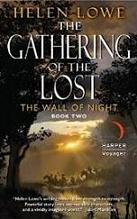
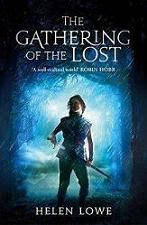
With the mass market edition of The Gathering Of The Lost recently published in the UK, I’ve been re-posting a few of the features from last year’s Blog Tour.
This article was first published on Phillipa Ballantine and Tee Morris’s The Shared Desk blog—and because they are steampunk authors, I have contrasted and compared adventurous storytelling in the epic fantasy and steampunk milieux.
—
“Love of Adventure: The Crossover Between Steampunk Tales & Epic Stories
Adventure is definitely one of the key ingredients I enjoy in my storytelling. Yes, I like the deeper questions around who we are and why we are here, and what makes for the good and true between protagonists or within a society. But if that comes in a wrapping of rooftop chases and duels, border skirmishes and glorious charges, bands of brothers—and/or sisters—standing shoulder to shoulder against the odds, then I know I shall more than likely enjoy the read. And the two most adventurous classes of fantasy, in my humble opinion, are steampunk and epic fantasy.
Another similarity between the two is that both tend to draw heavily on particular historical periods. With epic it is usually the medieval period, although David Gemmell’s Lion of Macedon and Dark Prince duology uses alternate classical history. Steampunk’s era is the mechanical age of the nineteenth and early twentieth centuries, although tales such as Scott Westerfeld’s Leviathan series also bring in “Darwinist” ideas of genetic engineering.
The ethos of each genre is not only the culture of weapons and clothes, technologies and social mores, but also the sense of adventure inherent in the age. This can mean the tournaments and heavily armored knights that feature in The Gathering of the Lost, or the Victorian notion of the “gentleman adventurer” that pervades books like Phoenix Rising and The Anubis Gates. Full-blown war characterized both historical eras and can be seen not only in The Lord of the Rings, but also in tales such as Girl Genius and Leviathan. In The Gathering of the Lost, too, one feels that war is coming…
I have also been debating whether there is a substantive difference between the two styles of fantasy, beyond the trappings of culture and historical era. On balance, I think there may be—but it is not a toss up between “mad science” and magic. Instead I feel that conflict in epic fantasy is more often centered around a “twilight of the gods”, the notion that everything will fail if the great war is lost. (And there is almost always a “great war.”) I pick up on this theme in The Wall of Night series with the epithet, “If Night falls, all fall.”
In steampunk, I find that the conflict is usually less “final”—a society or regime may be at stake, but not life and the universe as we know it. Within these respective frameworks though, the style of storytelling remains very similar. These are tales of quests and chases and mysteries to be resolved, with plenty of swashbuckling fun and edge of the precipice adventure to keep the reader entertained.
And on that note, here is a little rooftop adventure from The Gathering of the Lost:
‘… Kalan was moving as he spoke and Malian sprang to catch up, feeling a rush of exhilaration, so darkly fierce it was almost joy, as they cleared the first narrow street, cobbles flashing beneath them. To fall would be to die—but they were not going to fall. Her blood sang as they ran on, keeping to the narrow lanes and close-packed houses of the poorer quarters where there were plenty of sharp angles and deep shadows to hide in.
Soon they were running as one, each knowing intuitively how the other would move, racing up roof slopes without hesitation and plunging down the far side, floating effortlessly across the gaps between buildings until Malian felt as though she were flying above Caer Argent. The pale gold moon kept pace alongside, so close it seemed she might touch it, or gather the white stars for a crown … if only she stretched out her hand at the right moment.
They dropped down to street level again several times, but the old parts of the city were a maze, the streets little more than alleys with many dead ends. The roofs offered a clearer path, and they could orient themselves by the towers of the palace complex, and the basilica’s dark crown. Malian was unsure when the mindsweeps stopped, but it was a long time after that when she noticed the stars growing pale, a reminder that the midsummer dawn came early. She knew they must have crossed half the city and by rights she should feel tired, but instead she felt wonderfully and gloriously alive.’”
“You think your pain and your heartbreak are unprecedented in the history of the world, but then you read. It was books that taught me that the things that tormented me most were the very things that connected me with all the people who were alive, or who had ever been alive.”
~ James Baldwin
—
To learn more about James Baldwin, click here for his Wikipedia entry.
Last week, fellow SpecFicNZ-er, Mark English, drew my attention to the following article:
22 Rules of Storytelling by a Pixar Storyboard Artist
The 22 rules are attributed to Former Pixar storyboard artist, Emma Coates, and have apparently been collated from her tweets.
Anyway, I think they constitute a very interesting list, and the following particularly resonate:
- Trying for theme is important, but you won’t see what the story is actually about til you’re at the end of it.
- Simplify. Focus. Combine characters. Hop over detours. You’ll feel like you’re losing valuable stuff but it sets you free.
- Putting it on paper lets you start fixing it. If it stays in your head, a perfect idea, you’ll never share it with anyone.
But do check the 22 out for yourself and choose your own favourites. 😉
The A Geography of Haarth series features locales and places from The Wall of Night series’ world of Haarth.
—
“Argent: one the main rivers of Emer, in the Southern Realms of Haarth.”
.
“The countryside they rode through was a far cry from the emptiness of the Northern March. Whitewashed homes, some roofed with deep thatch and others with lichened tiles, were dotted amongst fields divided by neat hedgerows. Each house had its garden and orchard, and Malian frequently saw the curved sails of a windmill in the distance. Every other crossroads boasted a smithy or an inn, sure signs of prosperity, and the whole great valley of the Tenne, from the Bonamark border to the river Argent, was as fertile and peaceful as the River lands.”
~ from The Gathering of the Lost: The Wall of Night Book Two; Chapter 30 — The Welcome Cup