

May
05
2013

Well, I’ve been cracking on with the book writing this week, knocking Daughter of Blood, The Wall of Night Book Three into better shape—merging sections, adding new chapters, you know, all the book-write-y stuff that you do!—but I have also been meeting my guest post-y obligations.

Bringing in the may...
Which on the first of the month always means the Supernatural Underground. And 1 May being–y’know!–May Day and all that, I did a 1 May, first of summer post (Northern Hemisphere bias, I know—but what the heck, the Supernatural Underground is a Northern Hemisphere site and who really wants to focus on #winteriscoming? (OK, I’ll admit it’s done some pretty good things for George RR Martin…)
(Actually, what the feck is it about epic fantasy authors and assonance/consonance/alliteration & the multiple initials, can anyone tell me? I mean JRR Tolkien, George RR Martin, Guy Gavriel Kay… OK, on second thoughts, clearly it’s a guy thing—OK, an epic fantasy guy thing (which some might allege is dealing in synonyms anyway.) But seriously, can any of you think of gal authors with the whole multiple, repetitive initial, alliterative multiple names thing going on? NK Jemisin was the nearest I could get to, but there’s not nearly enough initials and/or repetition/alliteration: just sayin’! )
(I was going to say ‘chick’ authors, but I realized that might be sexist, and That Would Never Do… So no ‘chick’ authors today.)
Come to think of it, I’m a chick author m’self, tho’ not writin’ chicklit—oh well, never mind…
And Now—-Back to The Very Serious Business Of Blog Posting:

USA
So I posted on the dear old Supernatural Undergound about May Day, bonfire lighting (but not guy burning, despite the whole names thing—oops!) and Summer’s Eve in The Gathering Of The Lost (which is Book Two in The Wall of Night series—OK, right, keep forgetting, you already know the drill….)
(Actually, some folk think The Gathering Of The Lost is a pretty durned good book, just sayin’. Who knows, they might even be right. Either that or the amount of lucre I’ve been paying out in bribes hasn’t gone entirely a-miss… So many cases of whisky galore; sighz. ;-))

UK/AU/NZ Cover
OK, where were we? Oh yes, May Day, bonfire lighting, and Summer’s Eve. On the Supernatural Underground: check.
Anywayz, to get on with the serious post-y stuff (not to be confused with a ‘postie’ who puts actual, tangible, real world stuff in your letter box (mostly advertising these days, mind you, but never mind):
Festivals in our world, such as Valborgsmassafton in Sweden, where I once lived, and May Day in the UK, have definitely influenced my ideas around seasonal festivals and their connection to cultural celebration in my writing. (There, see: got to it, finally!)
The seasonal cycle in the Southern Realms of the world of Haarth—which broadly comprise all those lands and kingdoms “from Ij to Ishnapur”—is tied not only to the formality of solstice and equinox, but also to that sense of a shift in the seasons that can come almost overnight, where you step outside and feel the “change” that speaks to you through air and light. For example, the early morning crispness that starts around 20 February (here in NZ), accompanied by a noticeable change in the quality of the light, that tells us that yes, even though autumn equinox is still a month away, the world has already begun its in exorable turn toward winter. (Did I mention #winteriscoming before? Oh yes, I believe I did! Very good, moving right along…) And I believe the Japanese celebrate a corresponding turn in mid-late February with the ume matsuri festival, celebrating the plum blossoms that are the first harbingers of spring.
So these are the seasonal celebrations in the Southern Realms of Haarth (as encountered in The Gathering Of The Lost—I know you know the rest of the drill 😉 ):
- The First of Spring—this takes place approximately eight weeks after the winter solstice, but ahead of the equinox, and celebrates the beginning of spring
- Spring Night—spring equinox
- Summer’s Eve—held approximately half way between the spring equinox and summer solstice, on the first new moon of summer
- Midsummer—the summer solstice, usually celebrated by a three day festival
- Summer’s End—celebrated approximately eight weeks after the summer solstice; also a harvest festival
- Autumn’s Night—the autumn equinox
- Winter’s Eve—the last old moon of autumn, marking the advent of winter
- Midwinter—the winter solstice
And in the book (The Gathering of the Lost), the arc of the story is marked by the passage of these seasonal celebrations, from spring through to summer’s end.
Enjoy your weekend: I aim too! 🙂
May
03
2013

The Wall of Night Series map; design by Peter Fitzpatrick
The A Geography of Haarth series features locales and places from The Wall of Night world of Haarth.
—
Brackwater: an islet on the seaward side of the River city of Ij.
.
‘“That is arranged,” the assassin replied. “If you leave here at dusk and go to the lower harbor where the fishing boats and ferries dock, a boatman will meet you. His name is Nevi and his boat is the Seamew—she has eyes painted on her prow. He will take you out to Brackwater where you will find new clothes and money for your journey. “‘
~ from © The Gathering of the Lost: The Wall of Night Book Two; Chapter 9 — Portside
May
02
2013
Bringing in the may...
The 1st of the month (US time) is my regular guest post day on the Supernatural Underground—and last month you’ll recall I celebrated Great Fantasy Courtships (a popular post, judging by the hits 🙂 )
Since 1 May is is also May Day I’m celebrating by discussing the overlaps between that and “Summer’s Eve” in The Gathering Of The Lost, as follows:
“In The Gathering Of The Lost, the second novel in my The Wall of Night series, the equivalent festival is called “Summer’s Eve” and is “always held on the first new moon of summer.”
To read more — or even all about it 😉 — click on the post title, following:
Celebrating May Day & Summer’s Eve In “The Gathering Of The Lost”
Have fun!
Introduction:
Last week I began a new “mini-post” series titled “Here’s SpecFicNZ-Christchurch.” As explained, effectively my fellow authors will be introducing themselves using a series of common headings:
Here’s Who: a short, first person introduction to the writer
Here’s Why: the writer writes speculative fiction
Here’s What: an example of the writer’s work
Here’s Where: you can find out more about the writer and their work—and I really hope you will!
And now I am very pleased to introduce this week’s guest, Kevin Berry.
—
Here’s SpecFicNZ–Christchurch: Featuring Kevin Berry
 Here’s Who:
My name’s Kevin Berry and I’ve been writing off and on approximately forever. I’m middle-aged in a chronological sense, but young at heart. I work part-time as a software engineer, but my aim is to write and edit fiction full-time. I’ve got a degree which I’ve never used and two diplomas, one in Hypnotherapy and the other in a subject I don’t mention to anyone, as it was so long ago. I read widely, particularly specfic and YA, but also contemporary and some non-fiction. My favourite author is Connie Willis, but I mostly read indie authors nowadays. My other interests include editing, hanging out with other writers, walking, playing backgammon, dancing Ceroc and spending time with my two boys.
I’ve co-authored three humorous fantasy books with Diane Berry: “Dragons Away!” (on the strength of which we won the Sir Julius Vogel Award 2012 for Best New Talent), “Growing Disenchantments” and “Fountain of Forever” (coming out this year), and have written one romance comedy novel of my own, “Stim”, set in Christchurch, featuring students with Asperger’s Syndrome.
Here’s Why:
I like to joke that I don’t have the imagination for real life, so instead I write fantasy, but I actually enjoying writing specfic because that’s what I like to read. And it must be humorous because ordinary life is far too serious an affair, and people need to escape from it for a while with a great book; at least, I do anyway. I like character-driven speculative fiction the best. There must be plot, of course, but it’s the likeable characters that you tend to remember, and that’s why I try to create life-like, believable characters with real flaws that the reader can relate to, even if they’re not human, or they’re only partly human, and they deal with magic and fantastic devices. Even the most powerful sorcerer may have trouble keeping up with the housework.
Here’s What:
 This is the blurb for the second humorous fantasy novel, “Growing Disenchantments”, that I co-wrote with Diane Berry, released last year.
“Just when he’d been looking forward to another quiet night delving into mind-bending arcane lore and mentally wrestling with the deepest magicks, along came this mysterious thief to disturb him. Why was it nothing in Ragonnard’s life ever went to plan?
Rather than turn her in to the law (or into something else), the young sorcerer offers Ganfrey a deal – steal a portrait from the palace for him. But it’s no ordinary portrait. For 500 years it’s been a magical prison for Syranax, the most powerful sorcerer in history. His enchanted Amulet was entombed with him, and Ragonnard wants it. More than anything.
In releasing the Amulet, Ragonnard unleashes a devastating sequence of sorcerous events, the like of which has not been seen for hundreds of years. And, no, things definitely don’t go to plan.
Ned Merrivel is a time traveller from the future. His job is to sort it out when it all goes wrong and save the world somehow. If only he can find a pair of trousers first.”
Here’s Where:
To find out more about my writing, see www.kdberry.com
My co-authored novels are available at most online retailers. Here are two links:
Dragons Away! at Amazon (US)
Growing Disenchantments at Amazon (US)
—
The “Here’s SpecFicNZ–Christchurch” series will be posting every Wednesday for the next six weeks.
Apr
30
2013
Female nude
The things we prize. Innocence,
that sleeping fire that speaks
through the long white flower
of her spine, the curve
of her hips the rim of a slow
turning wheel
on which to break a man.
.
© Joanna Preston
Featured here with permission.
—
As I noted in March 26th’s Tuesday Poem post, I am currently running a series of poems in response to works of art (ie “ekphrastic” poems), which will include a note from the poet. This week’s poem and note is from Joanna Preston.
—
Poet’s Note from Joanna Preston
This poem was triggered by Man Ray’s “Ingres’ Violin” – itself triggered by another painting (Jean-Auguste-Dominique Ingres’s “La Grande Baigneuse”). The phrase ‘Ingre’s Violin’ has come to mean something a person does as a hobby, but does so well that it could easily be what they were famous for. (In Ingres’ case, he was a famous painter who also played the violin to an extremely high standard.)
Both artworks show a semi nude woman with her back to the viewer. In both cases the woman is curvaceous, and adult. Which made me start thinking about the whole issue of the depiction of women’s bodies in art. How male nudity is usually presented as strength (think of Michelangelo’s ‘David’) but female nudity is often presented as clandestine, with viewer as voyeur, or else as sexually provocative. As though the idea that a female could just be unselfconsciously naked – not teasing, not challenging, not provoking, not hiding, just ‘not wearing clothes’ – is somehow unthinkable.
The saying goes that a gun you don’t know how to use may as well be in your enemy’s hands. The female body is that kind of instrument. This poem doesn’t try to offer an answer to the problem. But hopefully it makes people think.
—
About the Poet:
 Joanna Preston is an Australian-born poet, editor and freelance writing tutor who lives in a small rural town in Canterbury, New Zealand. In 2008 she won the inaugural Kathleen Grattan Award for Poetry. Her first collection, The Summer King, was published by Otago University Press in July 2009, and won the Mary Gilmore Award for the best first poetry collection by an Australian author in 2010.
She has an MPhil in Creative Writing from the University of Glamorgan (Wales). She worked for three years as a part-time tutor in Creative Writing at Christchurch Polytech, and and was co-editor of Kokako magazine from 2009 to 2012.
—
 To read the featured poem on the Tuesday Poem Hub and other great poems from fellow Tuesday poets from around the world, click here or on the Quill icon in the sidebar.
Apr
29
2013
A great many people around the world have gotten to know New Zealand as “Middle Earth” in The Lord of the Rings films.
And since I am a Fantasy author living right here in Middle Earth, over the next wee while I thought I’d share a few images of “my” Middle Earth right here on the blog.
First up, the Queen of the North, or Tamaki Makarau ( ‘Tamaki of the Thousand Lovers’), aka Auckland and its environs — New Zealand’s largest city. I posted a poem about it a while back, titled “Something About Auckland”—and there really is something rather special and magical about the place, imho.
Do you recall the U2 song “One Tree Hill” from the Joshua Tree album–well, these first two photos are taken from One Tree Hill at sunrise… The first one shows the dawn breaking over the isthmus (the core of Auckland is an isthmus that lies between two harbours—the Waitemata in the east, and the Manukau in the west.)

credit: B Miller
The second photo, still at first light, is looking north and east to Rangitoto Island, a dormant volcano that marks the entrance to the Waitemata harbour:

Rangitoto island, first light: credit A. Robins
And then we head west, to the wild Muriwai Beach and the gannet colony at its southern end:

Muriwai Beach; credit A Robins
With gannets — one with chicks on the headland…

Gannet & chicks, credit B. Miller
And one in flight:

Gannet in flight; credit B. Miller
Then over to the gentler East Coast…

Credit: A Robins
… complete with gull on a shell strewn beach:

Credit: A. Robins
The back to the downtown heart of the Queen City, with the ubiquitous Sky Tower centre stage, but note to the mangroves, because yes, Auckland is a subtropical region:

The Queen City; credit B. Miller
Hmm, love that road sign in the picture… 😀
And finally, an Auckland sunset:

Queen City sunset; credit B. Miller
And there you have it, installment the first of “Inside Middle Earth”, an adventure told in photographs. 😉
Apr
28
2013

Original US hardcover; K Craft art
As those of you who follow this blog may be aware, I’m a bit of a fan of Guy Gavriel Kay’s style of fantasy—most recently mentioning his Fionavar trilogy as one of my Favourite Epic Fantasy series, and Tigana as one of my Favourite Fantasy Standalone Novels. And I also did a book report on Under Heaven ‘way back’ in 2011.
Also recently, I found myself dipping back into another Kay favourite, A Song for Arbonne, and was reminded again of why I enjoy so much of his writing. In fact there are many reasons why with this book, but the element I particularly want to share today is how Kay can insert a small and apparently incidental happening at the beginning of his tale—and wham kapow, hit you with it again at the end as a major point in resolving the story. Personally I just love this sleight-of-storytelling approach, especially when it is so masterfully done.

Original UK cover
And no, I am absolutely not going to tell you the how and why, because that would be spoiler territory—and to appreciate the artistry I really feel you have to read A Song for Arbonne for yourself. Besides, it’s such a great story anyway, that I don’t want to deny you one iota of reading pleasure…
Alsoz, dear readers, for those of you who know I’m also a Kinuko Craft fan, it will come as no surprise to you that I very much “heart” the original US hardcover art for A Song for Arbonne. Yup, love it! But the UK cover (the one I have on my shelves) is also cool. 😉
I was very pleased to see the announcement of New Zealand’s Sir Julius Vogel Award shortlist earlier this week, comprising a full array of nominations in both the professional and fan award categories. (To find out more about the Awards and the name, see my post here.)
For the full 2013 shortlist in all categories, please click here, on Sir Julius Vogel Award Finalists 2013.
My congratulations to all the finalists—but I would like to ‘particularly mention’ friends and SFF community members who have appeared on “…Anything, Really” in recent years: 🙂
Best Novel:
 KD Berry for Growing Disenchantments — I reported on my read of KD’s previous novel Dragons Away, here.
 Adam Christopher for Empire State — I interviewed Adam on SF Signal, here
.
Best Youth Novel:
 Frederik Brounéus for The Prince of Soul and the Lighthouse — book report here
 Rachael King for Red Rocks — my ‘Just Arrived’ post is here
 Juliet Marillier for Shadowfell — my interview with Juliet on SF Signal is here
 James Norcliffe for The Enchanted Flute — a guest post from Jim is here
 And of course Alicia Ponder for Wizard’s Guide to Wellington is a fellow Tuesday Poem community member and regular commenter on this blog.
.
It’s also very gratifying to see fellow SpecFicNZ members Simon Petrie, M. Darusha Wehm, Dan Rabarts, Darian Smith, Grant Stone, Matt and Debbie Cowens, Grace Bridges, and again Alicia Ponder, represented in the Best Novella / Novelette, Best Short Story, and Best Collected Work categories respectively.
And a shout out for friend Lee Murray for Hope is the thing with feathers, again in the Best Short Story category.

 I’m also particularly thrilled to see such a strong line-up in the Best New Talent category, including Adam Christopher and Matt and Debbie Cowens again, as well as Jane Higgins, whom I interviewed on SF Signal, here.
And a well-deserved nomination to Stephen Minchin of Steam Press for Services To Science Fiction, Fantasy And Horror — again, I interviewed Stephen on SF Signal, here.
It’s also a very great pleasure to see friend June Young up for the award for Best Fan Writing — June is another regular commenter here, as well as around the SFF traps.
But again: congratulations to everyone — or dare I say, “Awesome, High Five!”* 😉
—
* from The Prince of Soul and the Lighthouse
Apr
26
2013
The Wall of Night Series map; design by Peter Fitzpatrick
The A Geography of Haarth series features locales and places from The Wall of Night world of Haarth.
—
Border Mark: the stone pillar that marks the boundary between the Gray Lands, which adjoin the Wall of Night, and the Barren Hills.
.
“A thin, shrill wind had risen in the night and was blowing steadily from the north. It brought a cold dawn with it, creeping across the Gray Lands and around the Border Mark. The pillar of weathered stone had been standing long before the Derai ever came to the world of Haarth and the inscriptions on its surface were worn down by time. No one could read them anymore, just as no one knew who had placed the pillar there. It served now to mark the boundary of Derai influence and the end—or beginning—of the road that snaked south into low, rounded hills, toward the River lands.”
~ from © The Heir Of Night: The Wall of Night Book One; Chapter 27 — The Border Mark
.
”“Just what we need,” said Garan. “A coterie of Stone priests.” He had led his company out of the Barren Hills just on dusk, intending to camp overnight by the Border Mark, only to find another group of travelers already settled in by the standing stone.”
~ from © The Gathering of the Lost: The Wall of Night Book Two; Chapter 28 — Border Crossing
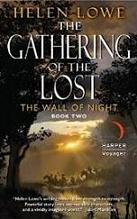
Jacket art by Greg Bridges
The Gathering of the Lost: USA Cover (Harper Voyager) - Read More Here!
"A richly told tale" -- Robin Hobb
"A vividly imagined world" -- Juliet Marillier
"This is an author with a gift for fantasy” -- Catherine Asaro
To read reviews, click Here.
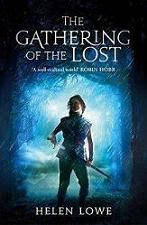
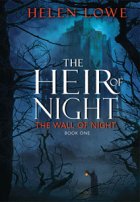
Jacket art by Greg Bridges
The Heir of Night: USA Cover (Eos) - Read More Here!
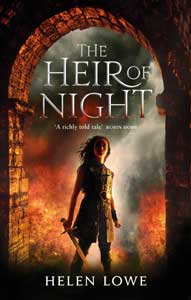
The Heir of Night: UK/AU/NZ Cover (Orbit) - Read More Here!
HEIR won the international Gemmell Morningstar Award 2012 for Best Fantasy Debut.
"THE HEIR OF NIGHT by Helen Lowe is a richly told tale of strange magic, dark treachery and conflicting loyalties, set in a well realized world."--Robin Hobb

Jacket art by Antonio Javier Caparo
Thornspell is my first novel and is published by Knopf (Random House Children's Books, USA). It won the Sir Julius Vogel Award 2009 for Best Novel: Young Adult and was a Storylines Childrens' Literature Trust Notable Book 2009.
