As I’ve said on several occasions now, one of the great things about the internet is that it getting to know fellow authors in the same field—even those on the far side of the world—something I particularly enjoy. Someone I have gotten to know recently via Twitter, SF Signal, FantasyReddit and Abhinav Jain’s “Names: A New Perspective” guest author series, is Teresa Frohock.
Having enjoyed what Teresa has to say in all these fora, naturally I was keen to read her debut novel, Miserere, An Autumn Tale (Nightshade Books, 2011.) So I was delighted when she agreed to a similar author exchange as with Courtney Schafer and Elspeth Cooper. And I am equally keen to read it, especially as it sounds a wee bit different to your bog-standard Fantasy fare.
As usual, the back cover text is immediately below, but if you would like to check out Teresa’s post in the “Names: A New Perspective Series”, it’s here: “A Game of Names.”
.
From the Back Cover:
“Exiled exorcist Lucian Negru deserted his lover in Hell in exchange for saving his sister Catarina’s soul, but Catarina doesn’t want salvation. She wants Lucian to help her fulfill her dark covenant with the Fallen Angels by using his power to open the Hell Gates. Catarina intends to lead the Fallen’s hordes out of Hell and into the parallel dimension of Woerld, Heaven’s frontline of defense between Earth and Hell.
When Lucian refuses to help his sister, she imprisons and cripples him, but Lucian learns that Rachael, the lover he betrayed and abandoned in Hell, is dying from a demonic possession. Determined to rescue Rachael from the demon he unleashed on her soul, Lucian flees his sister, but Catarina’s wrath isn’t so easy to escape.
In the end, she will force him to once more choose between losing Rachael or opening the Hell Gates so the Fallen’s hordes may overrun Earth, their last obstacle before reaching Heaven’s Gates.”
Introduction:
As an author myself, I only feel comfortable talking about books I’ve enjoyed on my blog, mainly because I don’t really think it’s possible to “run with the hares and hunt with the hounds.” (Just my humble opinion—am sure many will agree to disagree, which is fine by me. 😉 )
But I also know just how hard it is to get reviews these days, so when Andrew Robins said he would be interested in doing (mainly) SFF reviews for “…on Anything, Really” I was very pleased to accept.
I was also delighted when I saw that one of his reviews, for Iain M Banks The Hydrogen Sonata, had made it into “…on Anything, Really‘s 10 most-read posts of 2012.
So I’m reprinting the review immediately below, but if you want to read the other reviews Andrew has done to date, check out his Category in the far-right side bar: “Book Reviews by Andrew Robins.”
.—
“Book Review: “The Hydrogen Sonata” (Orbit, 2012; 517 pp.) by Iain M Banks — Reviewed by Andrew Robins
I am a fan of Iain M Banks and the Culture “universe”, so it has been a rare treat for me to get the opportunity to read and review a second Culture novel this year. (The first was Surface Detail.)
The Hydrogen Sonata has some flaws as a story (in my opinion), but once I recognised these and accepted them, they did not really detract much from my enjoyment while reading.
The Culture is a very rich back drop for story telling. Banks makes full use of the diversity that a society beyond scarcity allows. Many of the events of the story are driven by a group of Culture vessels – who are simply that, a group of Culture vessels. They have chosen to involve themselves in the affairs of the Gzilt, as the Gzilt embark on the process of subliming, because it seems to them to be right to do so. And a little bit interesting. These are their sole imperatives.
The story starts with the Gzilt 23 days away from “disappearing uselessly up their own fundament” and departing normal reality for good. The author does a good job of providing, as a backdrop, the image of a society that has already mostly shut down, switched off, and disappeared in preparation for the big day.
There are a variety of different tensions that need to be resolved. A major theme of the book for me was the slow unravelling of the ability of individuals and institutions within the Gzilt society to deal with these tensions. And also of the constraints that they placed on themselves in dealing with them. As the big day got closer and closer the “rewards” people were chasing got smaller and smaller, and the actions they were prepared to take got more extreme.
And in the end, every individual faced the process of subliming on their own.
Looking at the books flaws – the main character, Vyr Cossont did not really work for me. I have got this far in the review without mentioning her, after all. My main issue would be her lack of agency. The only real reason she is important to the story is because she knew someone once. She is not, at any stage, in control of events or even particularly important to them (in my opinion). I am reasonably certain the author would differ with me on this point though.
My other issue is that the big dark and terrible secret that the Culture is pursuing – is neither that big and dark, nor that secret in the end. Difficult for me to say much more here without spoilers.
Still – as I said earlier in the review, once I recognised these issues and accepted them, I was still able to enjoy the book immensely. As you experience the last days of the Gzilt themselves, you also get to experience: Girdle city, obsessive sand sculptures, a moon orbiting below a planet’s surface, the everlasting party, and a truly awesome Culture ship name or two–just to list a few elements of a very long list of things that made this story good.
To conclude, I believe The Hydrogen Sonata is a very worthy addition to the Culture canon. If you are a fan of other Culture novels I am pretty certain you will like this one as well. The Hydrogen Sonata should also appeal to readers who like Peter F Hamilton and Neal Asher.
For more information on Iain M Banks and his writing, see his site, here.
—
About the Reviewer:
Andrew Robins is a long time reader – and sometime reviewer – of science fiction, fantasy and history. People pay him to test stuff, mainly radios, which most of the time is more fun than it has any right to be. Any and all views expressed in this review are entirely his own.
Recent reviews by Andrew include:
- “2312″ by Kim Stanley Robinson, here.
- “Redshirts” by John Scalzi, here.”
—
To see the original post please click here.
Apparently it’s the bicentenary of Pride & Prejudice—two hundred years: how amazing is that?
And yes, I will put my hand up with all the other authors out there who would love Jane Austen’s longevity. 😉 Actually, I would also love to match her keen eye for the foibles and eccentricities of human nature, as well as her skill in presenting it all without “moral commentary.”
I think the “10 Best Characters”—in pictures—selected by Austen biographer Paula Byrne for The Observer well reflects that keen eye. And no clues as to “who” is included: I think to properly appreciate you need to click through and check out the 10 characters for yourself.
So without further ado—click to read The 10 Best Jane Austen Characters – in Pictures
But here’s a question for you: is this your ’10 Best’ as well, or is there another (or several) Austen characters you would prefer over those listed?
Introduction:
Today is Tuesday, so although the Tuesday Poem community will not be resuming activity until the end of the month, it seems fitting to feature the second Tuesday Poem that made it into my 10 most-read posts for 2012. The poem is AB Negative (The Surgeon’s Poem) by US poet Brian Turner, who has become well known internationally for his collections of war (and post-war) poetry, Here, Bullet and Phantom Noise, both published by Bloodaxe Books in the UK.
A strong, beautiful, sad poem—and I was also very pleased to be able to feature another of Brian Turner’s poem, VA Hospital Confessional from Phantom Noise, on the Tuesday Poem Hub on 8 May. Another wonderful poem and I invite you to read it here.
But for now, here is AB Negative (The Surgeon’s Poem), one of my 10 most-read posts for 2012.
—
“Tuesday Poem: “AB Negative (The Surgeon’s Poem)” by Brian Turner
.
AB Negative (The Surgeon’s Poem)
Thalia Fields lies under a grey ceiling of clouds,
just under the turbulence, with anesthetics
dripping from an IV into her arm,
and the flight surgeon says The shrapnel
cauterized as it traveled through her
here, breaking this rib as it entered,
burning a hole through the left lung
to finish in her back, and all of this
she doesn’t hear, except perhaps as music —
that faraway music of people’s voices
when they speak gently and with care,
a comfort to her on a stretcher
in a flying hospital en route to Landstahl,
just under the rain at midnight, and Thalia
drifts in and out of consciousness
as a nurse dabs her lips with a moist towel,
her palm on Thalia’s forehead, her vitals
slipping some, as burned flesh gives way
to the heat of the blood, the tunnels within
opening to fill her, just enough blood
to cough up and drown in; Thalia
sees the shadows of people working
to save her, but she cannot feel their hands,
cannot hear them any longer,
and when she closes her eyes
the most beautiful colors rise in darkness,
tangerine washing into Russian blue,
with the droning engine humming on
in a dragonfly’s wings, island palms
painting the sky an impossible hue
with their thick brushes dripping green…
a way of dealing with the fact
that Thalia Fields is gone, long gone,
about as far from Mississippi
as she can get, ten thousand feet above Iraq
with a blanket draped over her body
and an exhausted surgeon in tears,
his bloodied hands on her chest, his head
sunk down, the nurse guiding him
to a nearby seat and holding him as he cries,
though no one hears it, because nothing can be heard
where pilots fly in blackout, the plane
like a shadow guiding the rain, here
in the droning engines of midnight.
(c) Brian Turner
from Here, Bullet by Brian Turner (Bloodaxe Books, 2007)
About the Poem:
On January 7 I did a “Just Arrived” post for two books of poetry, US poet Brian Turner’s Here, Bullet (Bloodaxe, 2007) and Phantom Noise (Bloodaxe, 2010.) As I said in that post: “I first heard of Brian when I was driving to one of the Autumn Poetry Readings of the Canterbury Poets’ Collective in 2009 and tuned into a public radio documentary on contemporary war poetry. Brian Turner was one of the featured poets and I heard his poem ‘AB Negative (The Surgeon’s Poem)‘ for the first time.”
I found the poem deeply moving because of that connection it gives us to the frail humanity of Thalia Fields who is “about as far from Mississippi//as she can get.” Currently, I am slowly working my way through the Here, Bullet collection and it is full of poems that make that same connection. These poems are about the war in Iraq and the key adjective I would use to describe them is “observational.” The poems observe, record, note, but make no judgments outside of the personal—leaving the reader to make up his or her own mind on the subject of this war, its brutality and its human cost. In this sense, I am finding it war poetry in the tradition of the First World War poet, Wilfrid Owen, who wrote: “My subject is War, and the pity of War. The Poetry is in the pity.”
About the Poet:
To read the featured poem on the Tuesday Poem Hub and other great poems from fellow Tuesday poets around the world, click here or on the Quill icon in the sidebar.”
Well, we began on December 17, when I announced a 3 book giveaway of “A Memory of Light” for New Zealand and Australian readers, with the books to be supplied and forwarded by Hachette New Zealand. (Thank you, Hachette. 🙂 )
As I said then, I was delighted to have the opportunity to be part of the giveaway, because as both an epic fantasy lover, as well as an author, I really feel that this is an “epic” moment. After all, this series began almost quarter of a century ago and bringing it to completion has required another author, Brandon Sanderson to pick up Robert Jordan’s creation and complete it to the satisfaction of the Wheel of Time’s dedicated readership. The stuff of epics indeed.
I also linked entry for the giveaway to a series of questions. I hope not difficult questions—for readers of the series at any rate. And that is the very reason I asked them, because as much as possible I wanted this giveaway to be for those who love the series, many of whom may have followed it for a long time.
From reading the posts, those who commented seem to have enjoyed the questions. I am glad of that, because I have very much enjoyed your responses—not least because of your enthusiasm for the series and its characters. So thank you to everyone who did comment—and although, alas, there are only three books to giveaway, I hope you have also had some fun reading each others’ comments.
And here we are, poised not only for the 3rd and final giveaway, but also for the worldwide release of “A Memory of Light”, and completion of the Wheel of Time series, tomorrow on January 8—an historic moment!
But for now, onto that draw:
The winner of the 3rd and final giveaway copy of “A Memory of Light” is:
Elysha Smith
Congratulations Elysha!
Elysha, if you email me via my website on contact[at]helenlowe[dot]info with your postal address, I will pass it on to HachetteNZ so they can forward you the book. ![]()
- To see the inner of the first giveaway book, click here
- For the winner of the second giveaway book, click here
—
Notes re the Giveaway:
- The giveaway is resticted to readers resident in Australia and New Zealand only.
- Each draw was made using Random.Org with the results posted on the blog on 24 and 31 December, and 7 January respectively.
- If the winners have not contacted me by Friday 11 January at the latest, I shall re-draw for any of the books that are unclaimed.
- Hachette NZ have confirmed that the books are embargoed until January 8, but they will forward the winning copies after that date.
Thank you again, very much, to everyone who has participated!
Introduction:
Yesterday I posted another of my 10 most-read posts for the year—publication day for The Gathering of the Lost in the USA, Australia and New Zealand. As part of that release, I did an indepth blog conversation with US Fantasy author, Robin Hobb on our publisher, Harper Voyager’s blog, with the executive summary version appearing on Barnes & Noble’s site. So whether you like in-depth or the sound-byte version, there’s an interview for you! 😉
But there was also more—an “easter egg”, aka additional snippet of interview, that only appeared here on “…Anything, Really.”
So take your pick of the 3 conversations—but the post remains one of my ten most-read of 2012! 🙂
—
Robin Hobb & Helen Lowe in Conversation—Plus an “Easter Egg” for “…on Anything, Really”
I woke up this morning to very exciting news.
Last week, I participated in a Reddit Fantasy AMA with Robin Hobb , which I enjoyed immensely—and today a conversation ‘in brief’ between Robin & myself features on B&N.com in the States.
To check it out, click Here.
But there is more. The full, indepth conversation—where Robin and I talk world building, characters, magic, the writing life, and more—appears on both the Harper Voyager website and on Robin’s own blog.
To read on the Harper Voyager website, click Here.
To read on Robin Hobb’s blog, click Here.
.
Plus: An “Easter Egg”—of Robin Hobb & Helen Lowe in Conversation
But as promised in the title, here is more again just for ‘…on Anything, Really‘—an extra “easter egg” (Faberge style) of conversation between Robin and myself:
—
Robin: So in terms of your obvious love of books and storytelling, most of us come to fantasy writing after years of fantasy reading. So, if you were selecting a set of fantasy books for a child of 11, boy or girl, to put them on the path to enjoying fantasy the rest of their lives, what books would you select? Are they ones you read at that age? And how would that compare to the recent SF Signal Mind Meld list you put together on books for teenage girls who read at an advanced level?
Helen: Because the Mind Meld brief was “young teen girls” I did tend to select more on the basis of books with female protagonist, although I noted that I didn’t think it was strictly necessary. I do feel “good genre” and “good storytelling” are most important and some of my choices reflected that, especially in the “almost” list that didn’t make the Top 10 (and even then there were probably at least another twenty or so really good books I could have put in!) I also think a list for “advanced” readers would differ quite a lot than one for a kid, whether boy or girl, who was having reading difficulties.
But given a list for both boys and girls at around age eleven—which to me still essentially means a child, much more so than even a 13 or 14 year old—I would look for books that are primarily “good genre” and should have universal appeal. Possibly partly influenced by my belief that good Fantasy doesn’t comes with a “blue” or “pink” identity card.
Books that were both my and my brothers’ favorites at a similar age include CS Lewis—particularly The Lion, the Witch & the Wardrobe or The Horse and His Boy (the story I loved best in that series,) Tolkien’s The Hobbit, and Madeleine L’Engle’s A Wrinkle In Time—and just about anything from Andre Norton or Diana Wynne Jones. I’ve always particularly loved Eight Days of Luke. which like many of both Norton and Wynne Jones’ books has a boy protagonist. Ursula Le Guin’s A Wizard of Earthsea has to be there, as well, as does Robin McKinley’s The Blue Sword and Tamora Pierce’s LIONESS series. I might have hesitated over the LIONESS series as appealing to both boys and girls, except that I recently had to loan the whole set to a boy in exactly that age group who began reading the first one and then had to read them all!
I would also add more recent works, written for younger readers but which I have still enjoyed as an adult reader—and which I know both boys and girls in the age group have also liked. Philip Pullman’s The Golden Compass stands out, as does Neil Gaiman’s The Graveyard Book. And I can’t leave out the great Harry Potter: at least the first three books are just right for the age group. If allowed to step outside Fantasy I would also add in Paolo Bacigalupi’s Ship Breaker and a novel by a new New Zealand author, Jane Higgins, called The Bridge. Both are fine examples of dystopian SF, in my view.
How does this compare with your own list? And would you have a different take on more gender oriented lists?
Robin: Well, you’ve named a lot of my favorites, but my experience via kids and grandkids has been that boys do read a different set of books from girls at that age. That’s not to say there is no overlap, but I do feel that in many cases boys are not offered as good a selection at that reading level as girls are. I think the wild success of Harry Potter was a pretty clear indication that given SF/ fantasy that appeals to them, boys can be as voracious readers as girls are. At one time, there were a lot of book series slanted to boys, such as The Hardy Boy Mysteries and the adventures of Tom Swift. And of course, Edgar Rice Burroughs John Carter series, not to mention Tarzan. But I’m not seeing many books that target boys as much as the publishers used to.Helen: I loved Tarzan when I was a young teen, although it did take me some time to figure out exactly what was meant by a “dusky” maiden… But other, recent books I might specifically suggest for boys include the Percy Jackson series, starting with The Lightning Thief, Philip Reeves’, Immortal Engines and Scott Westerfeld’s Leviathan.
—
To see the original post, including comments, please click here.
Introduction:
I couldn’t help but be pleased that this post made it into the ten most-read posts for last year—because let’s face it, as an author, the only thing more important than writing your books is getting them “out there” into the world.
So it’s nice when your stats tell you that the world “oot thar” thinks it’s at least a little bit important, too. 😉
Here’s the post itself:
—
It’s Publication Day for New Zealand, Australia & the USA: Welcome to “The Gathering of the Lost”
We’ve survived earthquakes and liquefaction, we’ve counted down with excerpts from the book and finally the first 100 pages, we’ve talked celebrations and blog tours—and now finally, it’s The Day.
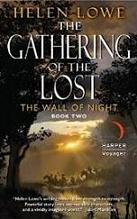
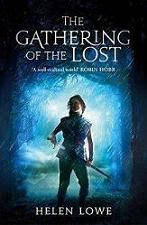
Today I’m welcoming The Gathering of the Lost, the second novel in The Wall of Night series, fully into the public arena right here in New Zealand, over the Tasman in Australia (it’s official my books are now Tasmanauts! — waves out to Joanna Preston) and in the USA and Canada. (And in just 9 days time, on April 5, it’ll be out in the UK as well.) And although there’s plenty happening here, later on in first Australian, and then USA, time I’ll be linking through to guest posts on Orbit and SF Signal respectively.
... [To avoid confusion, I have excluded details of the book
giveaway and Tuckerization competitions that were part of
the original post.]
.
Associated Posts:
5.00 pm: My first guest post on the Australian leg of my Blog Tour posted on Orbit: “Celebrating “‘The Gathering of the Lost’ and the Power of Environment.” Click on the link to check it out—and I’d love it if you supported the Blog Tour with a comment. ![]()
8.00 pm: And now my first guest post on the North American leg of my Blog Tour has posted as well—over on SF Signal I’m “Celebrating Epic Fantasy & Publication of The Gathering of the Lost.” …
—
To see the original post, including comments and competitions, please click here.
Introduction:
Some posts, I feel, speak for themselves. Needless to say, this was one of the highlights of my 2012, both on the blog and in real time. And recalling the magical “call” from Orbiteers Jenni Hill and Anne Clarke, shortly after the result was announced, is still a *warm glow* moment.
And yes, it really is a “most-read” post for 2012. 🙂
—
The Heir of Night Wins — Yes, Wins! — the 2012 Gemmell Morningstar Award!
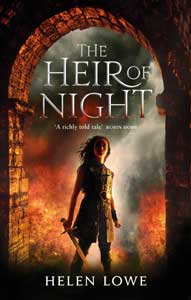
I am thrilled to announce that The Heir of Night, The Wall of Night Book One, has won the 2012 Gemmell Morningstar Award for Best Fantasy Newcomer.
You can read the official announcement on the Gemmell Award site Here.
I found out this morning, via a telephone call from my Orbit UK editor, Jenni Hill. I believe my first words were “I don’t believe it” but I’ve been working on trying to believe it ever since!
The winners in the other two categories were:
The Legend Award for Best Fantasy Novel 2012: The Wise Man’s Fear by Patrick Rothfuss.
The Ravenheart Award for Best Jacket Art: Raymond Swanland for The Blood Of Aenarion (Black Library.)
In terms of the The Heir of Night and the Morningstar Award win, I will post my official acceptance speech—read out for me by Jenni—tomorrow, but I am over the moon that “my story” has just won a major international Fantasy Award — and Reader’s Choice ‘to boot!’
The Heir of Night‘s win also checks several firsts, I believe, being the first time either the Legend or Morningstar awards have been won by either a Southern Hemisphere book or a woman author—so go the HEIR, I say!
Most of all though, a HUGE thank you to everyone of you who voted for The Heir of Night—because we couldn’t have done it without you!
—
To see the original post, including comments, please click here.
And here, by way of a ‘bonus photo’, is the award itself! 😉
Introduction:
I wrote this post very early in 2012—but it’s good to see that it came in as one of the top 10 posts on the blog this year, particularly as it is heartland territory for me, traversing why I’m writing epic and some of the important drivers for my writing as well, especially around character.
So without further ado, here it is…
—
Tropes Not Cliches: More Thoughts On Making ‘Epic Fantasy New’ & The Importance of Character
On Saturday I cross-posted to a guest post on SF Signal, titled “Making Epic Fantasy New–Do We Need To?” (to find out my conclusion, you’ll have to check out the post, here) in which, amongst other matters, I discussed tropes and my personal view that every class of ficton has its own set.
On Friday, my post, here, marked the UK mass market release of The Heir of Night (with that funky new cover everyone seems to be liking!) Although I was mainly cross-posting to my UK publisher Orbit’s blog, I did add a few thoughts on how the big ideas behind a story have to work their way out through the characters.
I’ve been thinking a bit about both posts since, because I think there is an overlap. In both posts I come right out and say that I’m unashamedly writing classic epic fantasy. Yes, epic has tropes, but so does every style of fiction, and these happen to be tropes that I’ve always loved—of quests, high adventure and strange magic, heroism, friendship and love. However, I did think Paul’s comment on the “Making Epic Fantasy New” guest post, was also very valid:
“I think there is plenty of life in the old Tropes, if they are told well. That’s the key, though. Painting straight by the numbers gives any genre, especially one as prominent and large as epic fantasy, a bad name.”
To me, what Paul is underlining is the difference between a trope and a cliche. And avoiding cliche’s is where the characters come in. For example, I watched the first two episodes of Carnivale again over the weekend and it struck me that of course the central character of Ben Hawkins is literally the classic epic fantasy trope of a farm boy with a destiny. And although Carnivale is set in the Great Depression in the USA, and not a medieval Europe lookalike, it’s still very much epic fantasy in its conception, with forces of light and dark contending, the band of companions and plenty of strange magic, not to mention the farm boy with a destiny and superpowers.
But here’s the thing—I had never consciously noticed the trope when watching Carnivale previously. The reason for that, I believe, is because Ben Hawkins is not a cliche. As soon as he appears at the opening of the story he is very much a real person and distinct character—definitely not done by the numbers. I suspect the wonderful evocation of the world of the 1930s dust bowl also helps erode a feeling of cliche, even if the opening narration speaks very clearly of forces of light and darkness and the conflict-without-end between them.
So I was brought back to one of my assertions in the “Making Epic Fantasy New” post: “the thing I believe drives storytelling more than anything else, regardless of genre, is the level of interest in the characters …”
And also to my Friday post on The Heir of Night, which is both classic epic fantasy in its conception, but also very much character-driven storytelling. In addition to the two central protagonists, Malian and Kalan, I also discussed Malian’s father, the Earl of Night, and how even if not easily likeable, I hoped he would prove an interesting character for readers.
If that proves to be the case, then I also regard it as an achievement, because in his earliest conception he was definitely a cliche, ie ‘the tyrannical father.’ But as soon as I got into the guts of the story, that take on ‘who he was’ felt really unsatisfying to me. Sure it would have made writing the story a whole lot easier of he could have just been straight-out unsympathetic, but I really felt that character type wasn’t a trope—it was a cliche and a really boring one at that. In fact, pursuing it would have made Malian into a cliche as well, i.e. “feisty rebellious daughter” who opposes “tyrannical father”—and as I said in my “The Evolution of Character” post on Orbit, the whole thing about Malian is that she isn’t rebellious. She actually has a really high sense of duty and has grown up knowing and accepting both her destiny and duty as Heir of Night.
So if Malian wasn’t to be a cliche, then it wasn’t going to work casting her father, the Earl, as a cliche either—besides my being bored by that whole “rebellious daughter/tyrannical father” scenario. But what it did mean was that I had to spend a great deal of time thinking about why the Earl became the way he is (discussed on Friday so I won’t repeat here), and the forces that constrain him into a square that it’s equally important Malian thinks outside. I suspect a whole lot of that background thinking will never make it directly into the book, but my hope is that it helps make the characters and their relationship with each other authentic, real even, however classically epic-heroic the stage on which they play their parts.
—
To see the original post, including comments, please click here.