
Recently, I’ve posted two tributes to Patricia McKillip, 1948 – 2022:
In Memoriam: Patricia McKillip, 1948 – 2022
Patricia McKillip: Marvels and Magic
As I first wrote, then posted them, illustrating both with covers from some of Ms McKillip’s many publications, I couldn’t help thinking that she really did have the most gorgeous book covers.
On balance, I think Kinuko Craft was her most enduring cover artist, delivering many fine covers like the one previously featured for Ombria in Shadow — and today’s, for the mystical Alphabet of Thorns.

You’ll recall from earlier, more general book-cover posts, that I am a fan of Kinuko Craft’s art.
When it comes to gorgeous covers, though, I think Thomas Canty’s art for The Forgotten Beasts of Eld and Dreams of Distant Shores is right up there.

I also really like the Ian Miller covers for The Sorceress and the Cygnet (1992) and The Cygnet and the Firebird (1994)


As for the original Michael Mariano covers for the Riddlemaster trilogy, I’ve always loved them.


Last week, I mentioned that Joanna Preston’s second poetry collection, Tumble—which recently won the Ockham NZ Book Award for Poetry—had just arrived on the To Be Read table.

I also mentioned that I am a huge admirer of Joanna’s poetry.
In fact, I’ve shared Joanna’s poems here on the blog more than once — with her permission, of course! When guest editor on The Tuesday Poem blog, I also featured Joanna as a guest poet.

Here’s the list of those posts so you, too, may share in the goodness and either discover or rediscover one of NZ’s foremost contemporary poets:
The Tuesday Poem Blog:

…on Anything, Really Blog
How can it be June already? Welp, it is — and on the plus side, although it means we’re racing through the year, it also means I have a new post on Supernatural Underground.

Moreover, it’s post #4 in the What Makes A Hero (In Fantasy) series, and this month’s theme is Courage.
Essential to the making of a hero? Well, I think so…

Katniss Everdeen: courage personnified
In the way of such things, here’s a snippet to get you started:
“…today’s post is zeroing in on Courage.
Because in order to be a hero, it’s not enough to just turn up for the regular nine-to-five of fantasy adventure, or even to go above and beyond the norms of everyday duty. The action or deed required of the protagonist has to really matter, and the risk in terms of following through has to be considerable, if not extreme.”

Sam Gamgee: demonstrating there are many forms of courage…
But I do hope you’ll click on over and read the rest:
What Makes A Hero? #4 — Courage
Feel free to leave a comment too, if the spirit moves you. I’ll watch for them—and you!* 😀
—
“Watch for Me” is the nephilim catchcry in T Frohock’s Los Nefilim series. It’s set during the Spanish Civil War and WW2, so plenty of call for courage.

Two weeks ago, I posted a personal tribute to the great Patricia McKillip, who recently passed away.

In that tribute I mentioned her powerful gifts of storytelling and language, worldbuilding and characterization—but as I continued to revisit her books over the intervening period, I realized that I had left out something really important.
You’ll know from the title that it’s something to do with magic. Specifically, I realized that Patrica McKillip’s ability to create worlds where magic is not only possible but real, and not only real but part of the essential warp and weft of life, while simultaneously creating a sense of the possibility and reality of magic in the reader, may just be her most significant attribute as a Fantasy author.

Magic breathes from every page, beginning with the opening lines in The Forgotten Beasts of Eld:
“The wizard Heald coupled with a poor woman once, in the king’s city of Mondor, and she bore a son with one green eye and one black eye. Heald, who had two eyes black as the black marshes of Fyrbolg, came and went like a wind out of the woman’s life, but the child Myk stayed…There was a streak of wizardry in him, like the streak of fire in damp, smoldering wood.”

To the opening pages of Ombria in Shadow…
“A shadow city rose behind Ombria, a wondrous confection of shadow that towered even over the palace. … [Lydea’s] … voice became dreamy, entwined in the tale. “The shadow city of Ombria is as old as Ombria. Some say it is a different city completely, existing side by side with Ombria in a time so close to us that there are places — streets, gates, old houses — where one time fades into the other, one city becomes the other. Others say both cities exist in one time, this moment, and you walk through both of them each day, just as, walking down a street, you pass through light and shadow and light …”

…and those of The Changeling Sea:
“Her mother was enchanted, Peri decided. Enchanted by the sea.
She knew the word because the old woman whose house she stayed in had told her tales of marvels and magic, and had taught her what to do with mirrors, and bowls of milk, bent willow twigs buried by moonlight, different kinds of knots, sea water sprinkled at the tideline into the path of the wind. The old woman’s enchantments never seemed to work; neither did Peri’s. But for some odd reason they fascinated Peri, as if by tying a knot in a piece of string she was bending one stray piece of life to another, bridging by magic the confusing distances between things.”
On balance, I think failing to mention Patricia McKillip’s power to weave an inextricable magic through her stories, and create believable magical worlds, must count as a glaring omission.
In fact, I’m going to nail my colours to the mast and say that when it comes to making magic real, yet keeping the sense of magical possibility fresh and new through successive books, Patricia McKillip is the master.

“We are so small between the stars, so large against the sky.”
~ from Stories of the Street, Leonard Cohen, 1934 – 2016
~*~
I love this quote, from the closing lines of Stories of the Street, on Leonard Cohen’s debut album, Songs of Leonard Cohen (Colombia Records, 1967.). The balance of the lines is so perfect and encapsulates the ache of our human existence so well.
No surprises there, of course—because this is Leonard Cohen with his lifetime of contributing amazing and gorgeous words.
I just felt like celebrating this one today, and by extension, the man and his genius.
Very recently (11 May), Australian-born but Canterbury-based poet, Joanna Preston, won the Ockham NZ Book Awards’ Mary and Peter Biggs Award for Poetry, 2022.

The Award was for Tumble (Otago University Press, 2021), which is Joanna’s second collection. Her first, The Summer King, was also published by Otago University Press (2009) and won both the inaugural Kathleen Grattan Award (2008) and Australia’s Mary Gilmore Poetry Prize (2010.)
I love The Summer King and am a huge admirer of Joanna’s poetry generally, and have been privileged to feature a number of her poems on this blog. So I was always going to buy a copy of Tumble—but the Ockhams NZ win definitely spurred me along. Needless to say, I’m looking forward to reading it very much.

Just to whet your poetic appetites, here’s what the back-cover matter has to say:
“In tumble, Joanna Preston’s bold and original voice swoops the reader from the ocean depths to the roof of the world, from nascent saints, Viking raids and fallen angels to talking cameras and an astronaut in space.
This beautifully crafted collection traverses the lyric, free verse and traditional forms. It’s earthy and embodied, while at the same time woven through with myth and magical realism. Always, the human heartbeat is at stake, as Preston explores love, loss, longing and lust – how we stumble, how we soar.”
I note that one of the poems in Tumble, titled Earthrise, was selected for Best New Zealand Poems 2014. I’ll leave you with the opening stanzas, by way of a promise for more on Tumble, in due course:
“Tethered by a thought, as much
as by the slender umbilical
— half a metre for every year of her life —
she hangs in space above
the slow-turning planet,
tiny as a moth, orbiting …”
from Earthwise, (c) Joanna Preston, Tumble, Otago University Press, 2021
.

Currently I’m reprising a Q&A series from 2019, which began on March 31 — and today’s refeatured question came from Lindsay. 😀

UK/AU/NZ
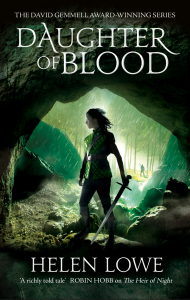
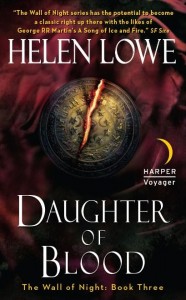
Lindsay: Which Battles Did You Research When You were Writing The Siege of the Camp? (Ed: In Daughter of Blood, The Wall Of Night Book 3.)
Helen: Well, I did a LOT of research, I can tell you that — most of which never made it into the book but was pretty fascinating stuff. Some of it was on pre-modern warfare generally, not just sieges, although I gradually honed in on those. In terms of specific sieges, I focused on those where the defenders were badly situated defensively, poorly supplied, and/or outnumbered:
- the siege of the Lucknow Residency during the Indian Mutiny (also considered the first war for Indian independence from British rule) of 1857;
- the siege of the Kabul Residency in 1879, during the Second Anglo-Afghan War;
- the defence of Rorke’s Drift in 1879, during the Anglo-Zulu War; and
- the siege of the Legation Quarter in Peking during 1900, and also the distinct but concurrent siege of the Beitang, the North Cathedral of the Roman Catholic Church.
I also looked at the siege of Metz (1552-3), and similar sieges of that era, particularly in terms of the effects of disease on siege warfare; the Roman approach to fortified camps; and several engagements of the American frontier in terms of assaults and sieges on scantily fortified positions and the tactics used by both the attacking and defending forces.

USA
I have learned with great sadness of the passing of renowned Fantasy author, Patricia McKillip, on May 6.
LocusMag has an obituary, here, that charts her literary contribution, and OregonLive also features her career, here.
What I would like to celebrate today is how much I love her work and the extent of her writing’s influence on my own. Whenever I get asked about writers I admire, Patricia McKillip is always on the list — and what we love, as I know I’ve said here before, we generally aspire to emulate.
My love and enthusiasm for Patricia McKillip’s work has always centered on her “gorgeous words”, sympathetic and identifiable characters, and the wonder and delight of the worlds created with each new story.
She wrote many books, so some are very old friends now. As recently as last year, I posted (again) on rereading The Riddlemaster of Hed — which was the very first Patricia McKillip novel I encountered.
That first encounter set a trend, which has endured from that day to this. And the Riddlemaster series (which includes Heir of Sea and Fire and Harpist in the Wind respectively) was swiftly joined on the bookshelf by The Forgotten Beasts of Eld.

Other favourites, over the years, include The Changeling Sea (1988), Ombria in Shadow (2002), and Solstice Wood (2006.) Most recently, in 2016, I was charmed all over again by Kingfisher and the creation of a world in which Arthurian-style knights drive cars and carry cellphones. (The same world appears in the short story, The Knight of the Well, which appears in the McKillip collection, Wonders of the Invisible World.)

I’ve mentioned Ms McKillip’s language and storytelling, characterization and worldbuilding gifts, but the threads and themes that endure through her work include kindness and compassion, warmth and human understanding — whether as self-knowledge or resolving problems through knowing others. In short, her books are life affirming in their essence, which I believe may be why I return to them time after time.

I am not the only reader to fall beneath Patricia McKillip’s spell. Not long after first reading The Riddlemaster of Hed, I encountered an eleven-year-old boy who could not stop talking to me about the story. Clearly, he loved it as much as I did. A university friend married a man who was an equally avid fan, resulting in many in-depth and enthusiastic conversations. And Rebecca Fisher, who posted the Big Worlds on Small Screen series here for a couple of years, is also a devotee.

I don’t believe there can be a greater tribute for a person’s life and work than having touched the lives of innumerable people in positive ways — and that is my summation of Patricia McKillip and the gift of her writing to the reading world. Although I never knew her, except through the pages of her books, I shall miss her greatly.
.
~*~
.
Prior Posts On The Books and Writing of Patricia McKillip:
On “…On Anything, Really”:
- Gorgeous Words: Patricia McKillip & “The Riddlemaster Of Hed”
- Why I Like Patricia McKillip’s “The Riddlemaster of Hed” So Much
- Spending Time With The Best of Book Friends: I Revisit “The Riddlemaster of Hed”
- My Favourite Fantasy Standalone Novels
- What I’m Reading: Patricia McKillip’s “The Changeling Sea”
On Supernatural Underground:
On SF Signal:
- Heroines That Rock My World: Raederle of An (Heir of Sea and Fire)

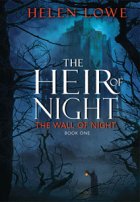
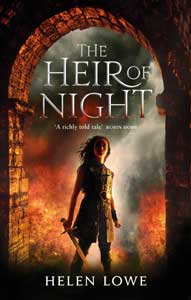
The About The Characters post series focuses on the minor characters in The Wall Of Night series, in large part because:
“I think it’s the presence of the smaller characters that “makes” a story, creating texture around the main points of view.”
~ from my Legend Award Finalist’s Interview, 2013
Initially, the series focused exclusively on characters from The Heir of Night, but now I’m continuing on with minor characters from both The Gathering Of The Lost and Daughter of Blood — in alphabetical order, by name, of course!
Last time, we finally exited “L” for “M” and in the spirit of my Heroes series on the Supernatural Underground, today’s character, Madder, is nonhuman. I’m not entirely entirely sure he’s a hero, but he’s definitely a “warrior.”
—
Madder: an Emerian destrier, raised and trained by the squire, Jarna; later gifted to Kalan.
.

USA

UK/AU/NZ
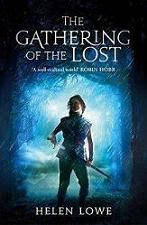
Carick nodded, looking around the forge and then back to the horse, which was a tall, red roan destrier, bred to carry the weight of its own armor, as well as that of a knight, into battle. “Is this a great horse? The breed for which Emer is famous?”
“The finest in all Emer,” said Hamar. “But that’s because Jarna trained him.” He grinned at the lad holding the horse, and Carick, looking more closely, realized that the boy was in fact the girl squire who had formed part of his escort to Normarch.
“Hello,” he said, and the girl nodded back. “Did you really train him? What’s his name?”
For a long moment, Carick thought Jarna was not going to answer, but then she met his eyes, a quick shy look. “Madder,” she said finally. “It’s another way of saying ‘red.’”
~ from © The Gathering of The Lost, The Wall Of Night Book Two – Chapter 13, Normarch
.

USA

UK/AU/NZ
Shadows leapt and Madder screamed, not in terror, but a warhorse’s cry of defiance and rage. That warcry would rouse the dead let alone the ship, Kalan thought, catapulting down the ladder as Tawrin backed away from Madder’s stall. The destrier half reared, his hooves striking at the wooden barrier between them before he lunged forward, his ears well back and his teeth snapping at the Sword warrior.
~ from © Daughter Of Blood: The Wall of Night Book Three — Chapter 10, Ship’s Business