
First off, I have to confess to some queue jumping. A few weeks back I posted on Reading Older Books, but Prodigal Summer was not one of the books mentioned. Although it’s a little more recent than some of the others discussed, being first published in 2000 – as opposed to Maquis in 1945, for example – the main reason was that I was just starting to read it.
Now here it is, jumping the Reading Older Books queue.

For the very good reason, dear readers, that I loved this book! I really enjoyed everything about it: the strong and compelling environmental themes; the equally strong sense of place (West Virginia / Appalachians, I believe), interwoven with family, community, and historical continuity – along with the contemporary challenges to that; the characters (dear readers, I adored the characters); the storylines; the strong beautiful prose – and just the sheer heart of the narrative.
In fact, it’s one of those books where I kept going back and rereading previous chapters, just to ensure I hadn’t missed any of the goodness.
Needless to say, I recommend it highly, although I’m quite sure any number of you may have beaten me to the draw and read it long ago.

Prodigal Summer is also my first Barbara Kingsolver novel (I “know”, how can that be – nonetheless, so it is!) but now I know what I’ve been missing out on, it’s great to know she has a fifteen book backlist. 🙂
I’ll very likely start with The Poisonwood Bible, given it’s probably the author’s most well-known work, but we’ll see… Watch this space!

Oh, what’s it all about you say? Well, I would call Prodigal Summer “contemporary realism” (twenty years not being so very long ago!) but basically there are three point-of-view protagonists, two women, one man, but with a number of other, important non- point-of-view characters. All three reside in a small rural community adjoining a national/forest park and wildlife reserve. The story is about the impacts of human settlement and development on nature, both historically and in the present time, but also about how nature works full stop.

Prodigal Summer also centres on what binds small rural communities – and the families that make them up – together, and the challenges of keeping both viable. Finally, it’s a story about three people and those closest to them, who they are, what draws them together, and what drives them apart – and it’s a story about life and death, love and purpose, family and friendship. I think that sums it up, pretty much. 😉
Overall, though, Prodigal Summer is just a really great read, imho.
I read a trade paperback edition, 444 pp, published by Faber & Faber in 2000, which I acquired secondhand.




 I am scheduling this post ahead of time, as we are currently in the middle of a Very Heavy Rainfall Event, with a state of emergency declared in the area where I am and the possibility of both power failure and evacuation on the cards. So I thought I’d get this loaded, no matter what occurs between my now (midday Sunday) and when this goes live at 6.30 am on Monday morning.
 Aside from all of that, Monday 31 is the 11th anniversary of my
  While this is unsurprising, in looking back over the blog I realized that it contains a considerable backlist of material on these key topics, much of which is still of interest.


 For those of you who are not on Twitter but are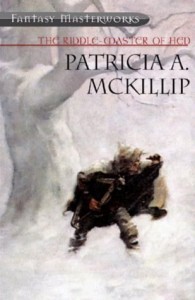


 On
On 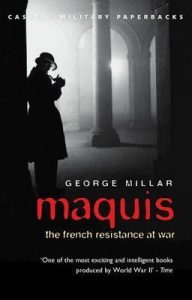 Today my theme is the somewhat eclectic array of older titles that have crossed my reading ken of recent times, originating in such diverse quarters as the back of the bookshelf (somewhat cobwebby, but hey, that’s what dusters are for!), the local hospice shop, the library remaindered table*, and the neighbourhood “book fridge.”**
 by George Millar, DSO, MC – the “first book of true war adventure to be published in England and America after the War (1945)”, it’s a firsthand account of the authors’ experience as an operative in Nazi-occupied France. My edition was republished by PAN in 1956 and was not, I gathered, quite so heavily censored.
 The Grandiflora Tree by Shonagh Koea. Published in 1989 by Penguin, this novel is the only one set in New Zealand and explores bereavement and how little we may actually know those to whom we are (ostensibly) closest.