
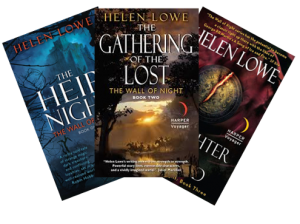
The About The Characters post series focuses on the minor characters in The Wall Of Night series, in large part because:
“I think it’s the presence of the smaller characters that “makes” a story, creating texture around the main points of view.”
~ from my Legend Award Finalist's Interview, 2013
Initially, the series focused exclusively on characters from The Heir of Night, but now I’m continuing on with minor characters from both The Gathering Of The Lost and Daughter of Blood — in alphabetical order, by name, of course!
At present, we’re currently in the realms of “L.” 🙂
—

USA

UK/AU/NZ
Lawr: an honor guard, serving the House of Night
.
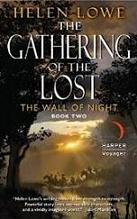
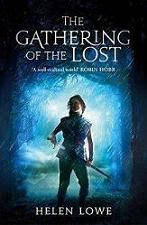
“[Asha] had been promoted from the Keep garrison after the Swarm attack five years before, one of the few guards who had managed to survive the ambush that killed the former Keep Commander and most of his troop. Her shield comrade, Lawr, another survivor of that disaster, was on watch … in the darkness beyond their camp perimeter.”
~ from The Gathering Of The Lost, The Wall Of Night Book Two – Chapter 28, Border Crossing
.
USA
UK/AU/NZ
“Doesn’t this place creep you?” Asha asked Garan, “It’s vast, but so empty, too… The only voice you hear in this whole wing, outside our rooms, is the wind?” …
“No wonder they needed nursemaiding,” Lawr said, from his place by the fire. “I don’t think any of the old Lady’s lot had even been outside their towers before.” He paused, frowning. “And there aren’t enough of them to hold even half of this great pile, assuming they know how to do it.”
~ from Daughter of Blood, The Wall Of Night Book Three – Chapter 13, Watch and Ward

 Along with film and television viewing, a rainy Christmas – New Year break also presented the opportunity to settle in with a good book.
 On occasion, literature is discussed as if character and plot driven stories are mutually exclusive. In my view, the best stories deliver on both – and The Dry does this “in spades.” (No pun intended. 😉 ) I particularly liked that I did not start to suspect the actual perpetrator, or their motivation, until immediately before the big reveal. I also really liked the way the events of the past and present resolved. In fact, I found the ending, along with every other aspect of the book, extremely satisfying.
 I know, I know, I am clearly shallow – but I liked it!
 Emily is rom-com so of course (rolls eyes) there is a love triangle. Sometimes who you fall for can be complicated, but I am reserving judgment on how the show handles the triangle going forward. Not least because it appears to intersect several of the strengths that made Emily work for me, such as the women’s friendships and #Me,Too aspects.
 Last week I shared a few pics from the Christmas-New Year holiday, and also let fall that it had been a fairly rainy experience. The great thing about that, though, is that it totally justifies concentrating on catching up on reading and viewing, both ‘at home’ (TV!) & ‘abroad’ (cinema!)
 While the past has famously been said to be, “… a foreign country: they do things differently there” (LP Hartley, The Go-Between) I felt Nomadland opened a window into an aspect of America that was previously unknown to me, where people do indeed live in a way that is foreign to my experience. I found the viewing experience thought-provoking and rewarding. Accordingly, I’m recommending the film.


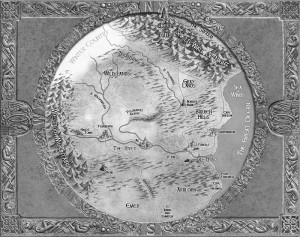


 Then (deep breath) shortly before Christmas, I commenced writing the intro into what is effectively the endgame of the book and series. I say ‘effectively’, because as I’ve indicated before, there is a lot of wrap up to do for this series. Nonetheless these are the sections that definitely wrap it up. And although I hope this will not prove to be wildly optimistic (touches wood, takes an even deeper breath, and casts a wary eye toward the muses), I am aiming for the middle of the year to reach the endpoint.