UK/AU/NZ
Last year, I resumed my “About the Characters” post series that focuses on the minor characters in The Wall Of Night series, because:
“I think it’s the presence of the smaller characters that “makes” a story, creating texture around the main points of view.”
~ from my Legend Award Finalist's Interview, 2013
Initially, the series focused exclusively on characters from The Heir of Night, but now I’m continuing on with minor characters from both The Gathering Of The Lost and Daughter of Blood simultaneously — in alphabetical order, of course!
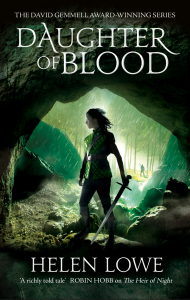
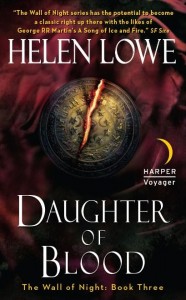
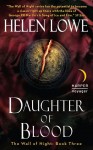
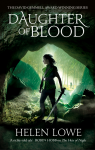
(The quotes, together with the covers, indicate whether the character appears in both or only one of the books — and we’re back to a single entry today. 😉 )
—
USA
Fray: lord of the House of Blood’s Bane Hold
So much spectacle, Myr reflected, as she had the previous night—although at least the speeches held the warriors still enough to survey their faces over the rim of her goblet. The servers remained active, refilling cups and sweetmeat platters, but Myr finally located Taly and Dab at the far end of the hall. The Storm Spear was seated close by, and all three had their eyes lowered as Lord Fray recounted highlights from the past two days, emphasizing the prowess of his Bane Hold warriors.
~ from © Daughter Of Blood: The Wall of Night Book Three, Chapter 22 — Honor Contest

 Genre: Fantasy/Urban Fantasy
 The “mentor” or “wise guide” is a time-honored aspect of epic tales so it was unquestionably remiss of me to contemplate a post series on tropes that did not include it. 🙂
 Other examples include the centaur, Charon, who raised Jason (of the Argonauts and Golden Fleece fame), and of course, Merlin, who guides the young Arthur. Later in the Arthurian cycle, the wise counselor role is sometimes assumed by Vivian, the Lady of the Lake, and the enchantress Nimue.
 In fairytale and folklore, the mentor and wise counselor may also take the form of an animal companion, such as the horse Falada in The Goose Girl fairytale or the cat in Puss and Boots.
 Although less powerful, Keyoke and Nacoya (Mara’s nurse turned First Counselor) in Janny Wurts and Raymond E Feist’s Daughter of the Empire also represent the tradition. Other famous examples include Belgarath the Sorcerer in the Belgariad, Moiraine in the early Wheel Of Time novels, and Count Brass in Michael Moorcock’s Chronicles of the Runestaff.
 I can’t overlook Albus Dumbledore in the Harry Potter series, but I would also cite Luthe in Robin McKinley’s The Hero and the Crown, Deth in Patricia McKillip’s The Riddlemaster of Hed, and Aidris’s hidden grandmother in A Princess Of The Chameln.
 Jasnar Kholin is clearly a mentor and preceptress to Shallan in Brandon Sanderson’s Stormlight Archive series. Yet Shoka, in CJ Cherryh’s The Paladin, may qualify in his role as swordmaster to Taizu, but his motivations are so murky otherwise that I feel he’s a suspect candidate overall.
 Sometimes, too, the mentor may turn out to be undertaking that role for reasons that entirely benefit him or herself as opposed to the mentee. A classic example of this is Mr Wednesday in Neil Gaiman’s American Gods.
 Merlin was far more human and less magical in Mary Stewart’s Arthurian series than in the legends, but he still fulfilled the traditional mentor role to Arthur in The Hollow Hills. When it comes to fairy or otherworldly mentors, however, Felicity Fortune in Elizabeth Ann Scarborough’s Godmother series is a quintessential example.
 Another valid contender, imho, is the immortal, River, in Cate Tiernan’s Immortal Beloved, as is the witch, Maelga, in McKillip’s The Forgotten Beasts of Eld.
 The Forgotten Beasts of Eld also gives readers a magical animal mentor in the character of the talking boar, Cyrin. In Tolkien’s The Hobbit, a thrush tells Bard where to aim his arrow so it will find the only weak spot on the armoured body of Smaug the Dragon.
 Thornspell, which is a retelling of Sleeping Beauty from the perspective of the prince, has several mentor characters. The primary one is Balisan, the prince’s swordmaster and protector. Syrica, the fae who transformed the death spell into the hundred-years’ sleep, also plays a mentor’s part in the story, as does Auld Hazel, the witch of the wood, although to a lesser degree.




 Genre: Science Fiction
 Yes, it is! Albeit at the end of the month, but hey—best to be prepared right?! (Correct answer: Cor
 I’m also lingering a little over jack o’ lanterns and one or too spooky, eerie, or downright supernatural reads I haz known, aka Books That Go Bump In The Night… (Yes, there are a few reading suggestions: who’d’ve guessed?)