

Apr
19
2016

 Dragonslaying featured here last week, starting on Wednesday when Rebecca featured the ’80s film Dragonslayer in her Big Worlds On Small Screens column — and apparently, the film wasn’t that bad. 😉
Her look at the film inspired me to look at some of the great dragonslayers of legend and fantasy fiction — and then on Friday I added another worthy contender, the hero Yorindesarinen, from my own The Wall of Night series.
 At which point Rebecca kicked the can along a bit further by wondering when the shift occurred, from fantasy concerning itself with dragon slaying to the far more likely scenario now, when the hero is a dragonrider and the dragons can be friends and mentors rather than ravening terrors.
I was inclined to think Anne McCaffrey was the turning point, with her Hugo Award-winning novella Weyr Search, the forerunner of Dragonflight (1968), published in 1967 — a lot earlier than my initial pick of the early to mid-1970s for Dragonflight.
 However the change may have been in the air in the late 1960s because when Ursula Le Guin’s The Farthest Shore came out in 1973, the dragon Kalessin was more a mysterious mentor than the dragons of Pendor that the mage Ged had defeated in A Wizard of Earthsea (1968.)
 By the 1980s there were several contenders in adult literature, from RA MacAvoy’s scholarly and zen philosophizing black dragon (Tea With the Black Dragon, 1983) and Melanie Rawn’s Dragon Prince series (1985-1994) — and very many more.
 Not least Robin Hobb’s dragon influenced Liveship series and George RR Martin’s A Game of Thrones, both of which had their beginnings in the mid-90s. Not to mention the more recent Eragon — and Balisan the Red in my own Thornspell.
 However, I can point to a much earlier story that heralds the contemporary theme: Kenneth Grahame’s 1898 children’s story, The Reluctant Dragon, which was made into the 1941 Disney film of the same name. The story concerns an erudite, poetry-loving dragon that would really rather not fight. Fortunately St George is of the same mind so they fake a joust instead. Anyway, I’m sure you know the story, but my point is that it was published around 70 years before Anne McCaffrey’s novella.
So the new, you see, is not as new as we may have thought, after all. 🙂
“Through books you will meet poets and novelists whose creations will fire your imagination. You will meet the great thinkers who will share with you their philosophies, their concepts of the world, of humanity and of creation. You will learn about events that have shaped our history, of deeds both noble and ignoble. All of this knowledge is yours for the taking… Your library is a storehouse for mind and spirit. Use it well.”
~ Neil Armstrong, ca. 1971
This note from Neil Armstrong was in response to the children’s librarian of Troy, Michigan’s new public library, who wrote to notable figures across the globe, asking them to address the children of Troy and speak about the importance of libraries, books, and reading.
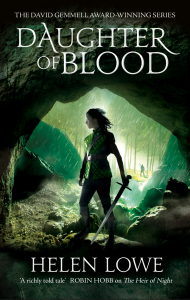
UK/AU/NZ
Every April since 2012, Fantasy Cafe has featured Women in SF&F: science fiction and fantasy, that is.
Within that broad umbrella, the topic is completely open: contributors can discuss their own writing, others’ writing, the state of the genre, being a woman SF&F writer — or any other permutation on the topic.
I have chosen to discuss women characters in SF&F who are leaders, both drawing on the work of other writers but also looking at the evolution of Malian as a leader in The Wall of Night series. Here is how the post begins:
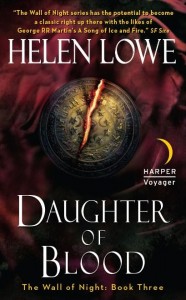
USA
“During the course of writing Daughter of Blood, the recently published third novel in my epic fantasy quartet, The Wall of Night, I thought a great deal about leadership. This consideration took several turns, from what makes a leader in the first place, to how the form of leadership may vary depending on circumstances…”
To read more, click on:
Fantasy Cafe: Women in SF & F Month — Women As Leaders in Fantasy Fiction
Enjoy!
Apr
15
2016
This is all Rebecca’s fault, you realise — she reviewed the ’80s movie offering “Dragonslayer” for Big Worlds On Small Screens on Wednesday. Which got me thinking about dragonslayers from both legend and a raft of well-loved fantastic stories.
So yesterday I decided to inaugurate a League of Fantastic — & Extraordinary! — Dragonslayers. I have realised, though, that I left out one dragonslayer, or at least Worm-slayer who most definitely should be in my league.

UK/AU/NZ
USA
That’s Yorindesarinen*, of course, from the legendary backstory to The Wall of Night series. She is the greatest hero of the Derai, the people that garrison the Wall, and she fell fighting the Worm of Chaos. Her legend comes into the very beginning of the Wall story, in the first chapter of The Heir of Night (Book One):
‘The background was darkness, rimed with fire, but the foreground was occupied by a figure in hacked and riven armour, confronting a creature that was as vast as the tapestry itself. Its flat, serpentine head looked out of the surrounding darkness, exuding menace, and its bulk was doom. The figure of the hero, dwarfed beneath its shadow, looked overmatched and very much alone.’
UK/AU/NZ
USA
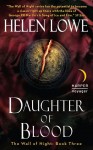
The confrontation between Yorindesarinen and the Worm is still very much woven into the main story in the recently released Book Three, Daughter of Blood:
‘…the vision persisted, wrapping her in the darkness of another plain that was scored by a multitude of smoldering brushfires. Their glow outlined a small hill, but it was not until Malian drew closer that she realized the mound was the ruined bulk of some giant beast, dead upon the plain. She stepped back, stumbling over metal shards, and when she looked down saw the shattered remains of a shield. A warrior’s body lay beyond it, sprawled not far from the dead beast, with one gauntleted hand still resting on the hilt of an unsheathed sword. …
We did for each other, that Worm and I. … “I know who you are,” Malian whispered, “where this is.” ‘
Whether a Worm is precisely the same as a dragon remains to be seen, but I think these passages make it clear that it’s close enough — and that Yorindesarinen belongs in any self-respecting League of Extraordinary Dragonslayers.
—
* To find out more about the tradition of long names in epic fantasy, click through to:
My Love Affair with the Long Names of Fantasy Fiction: How It All Began
Apr
14
2016
Yesterday, Rebecca reviewed the 1980s film Dragonslayer (which it seems wasn’t that bad 😉 ) — and that got me thinking about the great dragonslayers of epic and fantasy that I’d enrol in a personal “League of Extraordinary Dragonslayers.”

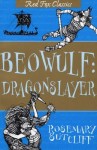 First off the blocks would have to Beowulf, the hero of Saxon epic who took on a dragon in his twilight years, and died doing so even though he did for the dragon as well. My earliest encounter with Beowulf was through Rosemary Sutcliff’s retelling, titled Beowulf: Dragonslayer, but I have since read Seamus Heaney’s interpretation of the Anglo Saxon poem, which is quite wonderful. Both, though, capture the sombre ‘twilight of the hero’ that is Beowulf’s battle with the dragon.
 Second in my league is Bard the Bowman from JRR Tolkien’s The Hobbit, who slays the dragon Smaug with a well-placed arrow to the one small, vulnerable spot in the dragon’s armored hide. A thrush whispers the secret to him, but Bard has the eye and skill to loose the vital arrow successfully — and the courage to wait for the right moment, despite the dragon’s onslaught.
 No League of Extraordinary Dragonslayers would be complete without Aerin from Robin McKinley’s The Hero and the Crown. Disregarded by the rest of her extended family because she has no magical gifts (kelar), Aerin befriends an “injured-out” warhorse and sets out to establish a place for herself by slaying dragons. Although still fearsome, these are mostly small — until that is, she comes up against Maur… Maur almost does for Aerin and the kingdom in more than one way, but you’ll have to read the book for yourself to find out more.
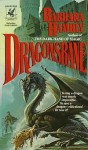 One of my favourite dragonslayers has always been John Aversin, from Barbara Hambly’s Dragonsbane. A reluctant hero, John Aversin only fights his dragon—a pastime that tends to get you messily killed—out of a sense of duty, since he is the only knight available to protect the people of the north. He lives in a brutal world, where survival is a brutal business, so he doesn’t take on his dragon by charging nobly to meet it, waving a sword, but by catching it asleep, shooting it with poisoned harpoons, and chopping off its wings with an axe before it can take to the air. And then comes the day when he has to take on Morkeleb the Black… Undoubtedly, my league would be incomplete without him.
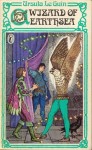
 Sometimes, though, the solution may not be to slay the dragon but to get it to talk to you instead of fighting. That’s why the League needs Ged, the mage from Ursula Le Guin’s Earthsea trilogy. Ged becomes one of the mages known as a Dragonlord, not — as he tell Tenar in The Tombs of Atuan — because he controls dragons, but because he can generally count on a dragon to talk with him rather than eating him. Of course, in A Wizard of Earthsea, Ged also kills a brood of dragons and banishes the greatest of them, the dragon of Pendor — but in the latter instance, too, the ability to speak with the dragon is an important part of the whole deal.
So there you are, there’s my League of Fantastic — and Extraordinary — Dragonslayers. Who else would you add to the team?
~ by Rebecca Fisher
As it happens, Dragonslayer is the only movie that I hadn’t seen prior to starting this column, basing my decision to include it entirely on positive hearsay. So – was I right to trust the opinions of others before watching the movie myself?

Kind of. It’s not that I didn’t enjoy Dragonslayer, it’s that a lot of the plot twists that would have undoubtedly been fresh and unexpected at the time of its release now feel like fairly well-trod material.
The “grimdark” atmosphere (which involves everybody and everything being covered in mud) is a pretty popular aesthetic these days, and the hero’s preference for the tomboyish action girl over the pretty princess isn’t that surprising either. Perhaps it’s important to recall that these were surprising innovations back in 1981, especially for a Disney film, as are the (still impressive) effects that bring Vermithrax the dragon to life.
Wisely keeping her out of sight for most of the film’s duration, letting the audience glimpse only a shadow here and a claw there, the creature instils the same sort of dread as the shark from Jaws, since often the unseen is more frightening than what’s right in front of you.
 An unfortunate maiden is chosen to abate the dragon’s appetite
This dragon has been preying on the kingdom of Urland for years, and the king has resorted to a terrible solution to defend his people. One young girl is chosen at random from a lottery and sacrificed to the dragon to sate its hunger – at least for a little while. Finding the cost of this arrangement too steep, a group of villagers seek out help from the sorcerer Ulrich (Ralph Richardson), but end up enlisting the services of his apprentice Galen (Peter MacNicol) instead.
Given his career in more comedic roles, it’s a little odd to see Peter MacNicol in such serious surroundings, and even taking into account the fact this was one of his first roles, he still feels a little out of sync with the rest of the cast.
 Valerian and Galen approach the dragon’s lair
Dragonslayer is perhaps most interesting when it’s exploring the moral implications of the situation at its core. Nobody is fully good or evil, but rather acting out of self-preservation or a desire to prove oneself. The question arises as to whether or not any course of action is the right one to take. Is it wrong of the king to sacrifice innocent girls for the sake of the greater good? Is Valerian right in saving herself from the lottery by disguising herself as a boy? Should Galen take on the dragon and risk enraging her to the point where she commits further destruction?
All things considered, Dragonslayer is an odd duck of a film, with its sword-and-sorcery plot belying its dark tone. None of the characters are hugely memorable, and yet care is taken to ensure none of them adhere to the strict black and white character alignments of other fantasy films – there’s pathos to be found even in the dragon.
 They don’t make them like this anymore!
And as the title suggests, said dragon is definitely the highpoint of the movie – and I wasn’t at all surprised to learn that twenty-five percent of the budget was spent on bringing her to life!
.
Next Time:
This movie is a sequel, but there’s a forty-five year gap between it and the original film’s release. Of course, many don’t consider it a direct sequel, as Disney’s Return to Oz is a very different creature from MGM’s colourful and light-hearted The Wizard of Oz. Much darker and scarier, this movie sees Dorothy return to Oz only to find it facing destruction at the hands of the Nome King and the terrible Princess Mombi.
.
About The Reviewer:
 Rebecca Fisher is a graduate of the University of Canterbury with a Masters degree in English Literature, mainly, she claims, because she was able to get away with writing her thesis on C.S. Lewis and Philip Pullman. She is a reviewer for FantasyLiterature.com, a large website that specializes in fantasy and science-fiction novels, as well as posting reviews to Amazon.com and her They’re All Fictional blog.
To read Rebecca’s detailed introduction of both herself and the series, as well as preceding reviews, click on:
Big Worlds On Small Screens
Rebecca won the 2015 Sir Julius Vogel Award for Best Fan Writer, for writing that included Big Worlds On Small Screens.
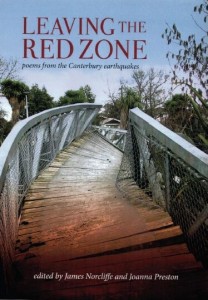 Over the past few weeks I’ve been sharing some of the wonderful lines and stanzas from Leaving the Red Zone — the poetry anthology (edited by James Norcliffe and Joanna Preston, and published by Clerestory Press) that commemorates the fifth anniversary of the February 22, 2011, earthquake.
Today, I share the second of a two-part focus on the anthology’s “Aftermath” section — which is also the final section of the anthology and of this post series.
—
from “Aftermath”
“…
We are already on the other side of a year of crustal schisms
pop ups
……….prop ups
…………………restarts
………………………..re the de builds …”
~ Robynanne Milford, “Meet Me after Julia Morrison“)
.
“…
Gulls swim in the basement
of a half demolished building.
Sparrows perch on a tangle
of reinforcing steel which just
from a crumbling pillar.
On vacant lots weeds hold dominion …”
~Catherine Fitchett “Vacant”
.
“…
Repair the fabric of our city,” CERA says
“restore the heart of it.”
I feel too fraught to be a part of it
there’s too much warping in my weave
My world packed in a moving van,
I leave”
~ Annette Chapman, “Possibilities of the Now”
.
“picking over the bones of our life
packing the precious and practical
cartons crouch to go
…
tomorrow the truck
will swallow up
these fragments and comforts
another day the bulldozer
will erase all traces
of a life together
down the lane.”
~ Don Rowlands, “Leaving the Red Zone”
.
“This poem is like a city. It is full of words.
Doing words. And Being words. And words
that compare one thing to another thing
and words that hold everything together…”
~ Fiona Farrell, “The Poem That is Like A City”
.
And just has the poem can be like a city, a book can be like us, telling our story with its myriad voices. I hope that I have given you enough of a taster these past few weeks for you to want to open the book and traverse the full story.
Women in SF&F — yep, I can do this thing!
Coming up later this week, Thursday 14 US EST, which means Friday 15 here in the southern hemisphere, I have a guest post featuring as part of Fantasy Cafe’s “Women in SF&F Month” — which has been running now since 2012.
To read the intro for this year’s post series, click on:
Introducing Women in SF&F Month 2016
You can also check out last week’s programme and this week’s schedule of guest and posts, here:
Women in SF&F Month: Week 2
But I’ll link here and via twitter when the post is live.
—

Black Widow: Superheroines r us!
Also happening on Supernatural Underground: Five Super Super-heroines
Yep, this was my fun post for the weekend over on Supernatural Underground. To find out my five super-heroines, all from a version of the silver screen, click on:
It’s Superheroine Time on Supernatural Underground: Here Are 5 We Heart!
But I only went with five and already a couple of commenters have suggested more.
So please do add to the roll of honour via the comments — I’d love to hear your favourite superheroine. 😉
Apr
10
2016
~ by Andrew Robins
To read Part 1 of “The Game Behind The Story”, click here.
.
58 Eridani: The Game Behind The Story, Part 2
My goal in writing the 58 Eridani game log, and in serialising it here on “ …Anything Really”, was to capture the sense of the game we played, while adapting the delivery of the story to a new medium.
58 Eridani turned out to be a game that was heavy on problem solving, and relatively light on action sequences. Also, most of the problems the party faced required social interaction to resolve.
This was mainly driven by the fact that as a games master I made the Vaders way too horrifying. My players quite rightly, would do almost anything to avoid dealing with them face to face. Which meant they tended to spend a lot of time on the bridge of the Mistral talking things through rather than fruitlessly flinging around blaster bolts in the face of an implacable enemy.
This left me with a bit of a problem when it came time to write up the game log: “How do I avoid an endless sequence of talking heads”?
I decided to mix things up by using a variety of different mechanisms. Hence the mix of personal log entries, transcripts, meeting minutes and communications records that make up the online version of the story.
I hoped that the frequent change of perspective and delivery method would allow me to use a mix of direct and indirect storytelling that would move the narrative forward. Much of the actual action in the 58 Eridani game log takes place off camera. I set a situation up in one entry, and then I talk about the outcome in the next. This was a more or less deliberate ploy on my part that was designed to match the flavour of the game we played. In the game itself, much of the actual “action” was more or less incidental once we got to it. The drama tended to be more in deciding what to do, rather than the actual doing of it.
I also have to admit that I did portray some of the characters slightly differently in the game log from the way that they were generally played.
In the case of some characters, chiefly Glandin Frutnok and Lepanto, I took character traits that were present in the game, and strengthened them. Glandin was not quite as much of a stuffed shirt in the game as he is in the game log. For Lepanto , it was a case of using the game log to reveal some of the emotion that was driving the ship’s behaviour. It took a while for the player characters to realise that they were dealing with something much more than just a really smart computer, and given the centrality of the Lepanto / Bringer story arc to the unfolding drama of the game I decided to bring this element in very early in the game log.
In other cases I added in depth and complexity that could have been present in the game but was not.
In the game, the party pretty much ignored the members of the Ramadan collective. In the game log, I felt that the story would be improved if I changed this so I made the choice to use Didi Turner as a narrator, and to have Bob Stark interact with the Ramadans a lot more, in order to add another layer to the story.
And finally there is Bringer. In the game, Bringer only ever got to speak through Lepanto, and the characters did not spend much time digging in to Bringer’s motivations, or trying to understand why Bringer was what it was. I had a bit more story to tell here – and so I brought a bit more of Bringer’s back story out via the log.
All in all I had fun telling the story. I hope you had fun reading it.
—
 Andrew Robins is a long time reader – and sometime reviewer – of science fiction, fantasy and history. People pay him to test stuff, which most of the time is more fun than it has any right to be.
To check out Andrew’s book reviews, see “Book Reviews for ‘on Anything, Really’” in the right-hand side bar.
—
What, You Haven’t Read 58 Eridani Yet?
Fear not, gentle readers — here is the full list of posts, from the introduction through to the 15th and final instalment.
Introducing 58 Eridani, a Game Log
58 Eridani Episode 1
58 Eridani Episode 2
58 Eridani Episode 3
58 Eridani Episode 4
58 Eridani Episode 5
58 Eridani Episode 6
58 Eridani Episode 7
58 Eridani Episode 8
58 Eridani Episode 9
58 Eridani Episode 10
58 Eridani Episode 11
58 Eridani Episode 12
58 Eridani Episode 13
58 Eridani Episode 14
58 Eridani Episode 15
The Game Behind The Story, Part 1
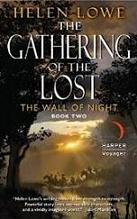
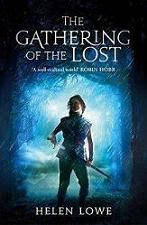
Jacket art by Greg Bridges
The Gathering of the Lost: USA Cover (Harper Voyager) - Read More Here!
"A richly told tale" -- Robin Hobb
"A vividly imagined world" -- Juliet Marillier
"This is an author with a gift for fantasy” -- Catherine Asaro
To read reviews, click Here.
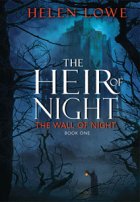
Jacket art by Greg Bridges
The Heir of Night: USA Cover (Eos) - Read More Here!
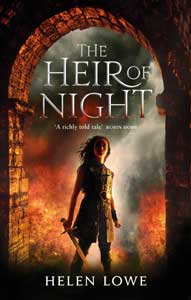
The Heir of Night: UK/AU/NZ Cover (Orbit) - Read More Here!
HEIR won the international Gemmell Morningstar Award 2012 for Best Fantasy Debut.
"THE HEIR OF NIGHT by Helen Lowe is a richly told tale of strange magic, dark treachery and conflicting loyalties, set in a well realized world."--Robin Hobb

Jacket art by Antonio Javier Caparo
Thornspell is my first novel and is published by Knopf (Random House Children's Books, USA). It won the Sir Julius Vogel Award 2009 for Best Novel: Young Adult and was a Storylines Childrens' Literature Trust Notable Book 2009.
