When June told me that she and her partner, Simon, would be heading to the 73rd convention, Sasquan, in Spokane, I put in a special request for a report back on June’s Worldcon experience. We agreed that it would focus on June’s personal experience of the Con (“Con” is established shorthand for a Science Fiction-Fantasy convention), as one NZ fan attending her second Worldcon — and “first ever” SFF convention in the summer months.
It sounds like she and Simon had a wonderful time — I hope you enjoy her report.
—
SASQUAN – Worldcon 2015, the 73rd World Science Fiction Convention – 19 – 23 August 2015: A Summer Convention in Spokane
by June Young
Introduction:
Sasquan (Washington State, USA) was my first summer science fiction-fantasy convention, since our New Zealand conventions take place over the winter or autumn (fall). So the promise of a beautiful, relatively windless summer in Spokane proved extremely tempting for this New Zealand fan – except that this year’s convention was impacted by widespread wildfires, with smoke haze throughout the city and the state.
I attended Sasquan with my partner, Simon, and our first encounter with the wildfires was when we crossed from Canada into Washington and had to take the longer Route 97, as Route 33 was closed due to the wildfires. But we made it safely despite seeing smoke and grey skies all the way from just pass the Canadian border to Spokane. We were near enough to the wildfires at one point of our trip to see helicopters with monsoon buckets. It was a long, hot, slightly worrying drive due to the less than straight-forward route we had to take.
After checking into our hotel, we encountered our first Sasquan celebrity, short fiction editor, Rich Horton. Simon is a serious reader of short fiction, so he knew Rich Horton’s name and had already purchased his most recent work The Year’s Best Science Fiction & Fantasy 2015 Edition. I thought that was a pretty auspicious start to Sasquan, and it hadn’t even started at that point! Later in the convention, we were able to congratulate Mr Horton personally when Lightspeed Magazine, which he co-edits, won the Hugo Award for “Best Semiprozine” (Best Semi-Professional Publication.)
Getting Into The Convention Spirit:
All conventions start with registration so we got there relatively early on the 19th August 2015, the first Day of Sasquan. We were not in the Registration queue that long, considering that I had not been able to complete the chapter of Prudence, by Gail Carriger, that I was reading before registration was complete. We had already prepaid which also made it a lot quicker. Then it was put on our convention name badges, sit, read and wait for the Dealers Room to open at 12 noon. The queue had considerably lengthened by the time we completed Registration and picked up our convention bags. I later heard over the intercom that the registration period was to be extended.
While we were waiting, we checked out the contents of our convention bags. Of note, was the Sasquan convention book with its beautiful jewelled owl cover and the smaller Sasquan Convention Guide which included the Sasquan program of events. One very useful item was the “Sasquan Restaurant Guide”. Some serious work went into this guide, in the presentation, writing and the research.
We only ate at three of the places in the guide but we found it to be very reliable. There were so many places that sounded wonderfully delicious but it was just too far and too hot to get to from where we were staying on foot. We could have taken the Sasquan shuttle bus to be dropped off at the nearest hotel to any given restaurant but it would still have involved a short walk in very hot weather.
First Night being the first night of the convention was like a fairground, in that it was held outside around the grounds of the convention centre, complete with an ice cream truck. It was fortunate in that this was one of the few days during the convention that was not affected by the wildfire smoke. I got a free Ben and Jerry’s ice cream courtesy of Sasquan, in honour of Leslie Turek, the Fan Guest of Honour who came up with the idea.
I had a delicious butter pecan ice cream with a waffle cone for an extra $1.00. I don’t think we get this flavour in New Zealand and it came with big pieces of pecan nuts. When Ms. Turek was autographing, I got in her queue and thanked her for the ice cream.
Strolling With The Stars:
I did one Stroll With the Stars on the 20th August. This is an activity where attendees go for a roughly 30 to 40-minute walk with the listed Sasquan “stars” – well-known authors, editors, and artists who work in the field of science fiction and fantasy. The aim of the stroll is to allow fans to have a chat, mix and mingle with the “stars”. On the 20th, it was authors, David Gerrold, Vonda N. McIntyre, Cat Rambo, Lawrence M. Schoen, editor and writer, Stephen H Segal, and singer-songwriter, Tom Smith. The strolls were organised by Stu Segal, and this event has its own Facebook page.
It was an early start at 9am but the day was lovely. I picked this stroll because the two Guests of Honour, David Gerrold and Vonda N. McIntyre were going to be there. I’ve been a Star Trek fan for a very long time, so this was a very good stroll to be on for me. The area around the Spokane Convention Centre is perfect for this kind of activity – flat, scenic and elegant, just right for a gentle stroll.
It also wasn’t hot at this time of the morning, which made for a very pleasant walk, and there was a refreshing breeze, I didn’t get to speak to any of the Stars but I did talk to other fans. I did see David Gerrold and Vonda N. McIntyre, but it was a very good turn-out, so it was easy not to see others in the crowd.
Costumes are a big part of conventions, and I was impressed some people were already wearing them this early in the morning. The most eye catching were the steampunk costumes, which often involved layers of cloth, boots, hats and corsets, and were relatively elaborate.
Kaffeeklatschs and a Literary Beer:
The most important thing I had to do at Sasquan was attend the two kaffeeklatschs and the one “Literary Beer” event I had booked prior to leaving New Zealand. A kaffeeklatsch is when you sit around a table with other fans and drink coffee, tea or something with the author or editor you booked to meet. “Literary Beer” is the same thing but you also have the option of alcohol as this event is held in the bar. Both have the advantage of a cosy, relaxed setting where you can actually have a conversation.
I was following File 770, a fan news service website, to keep up with the Sasquan news. File 770 is very fast to get news and put it up on their website, so when the announcement came that you can now book the Sasquan events that require individual booking, I was in fast. These things have a limit and the limit was 10 attendees at Sasquan.
My first kaffeeklatsch was with Nebula winning Paris-based author Aliette de Bodard, on the Thursday. I have read some of her short fiction over recent years but it was her 2013 Nebula Award-winning novelette The Waiting Stars, that inspired me to buy her newest novel, The House of Shattered Wings (newly released in hardback), and get it signed at her reading. I like her short fiction. I can just about smell the food when I read some of her fiction. I prefer my genre science fiction to have a good balance of action, suspense, technology and humanity, with The Waiting Stars being an outstanding example of this mix. I have yet to start reading The House of Shattered Wings but I expect to get around to it before the end of the year.
My second kaffeeklatsch was with American comedy-steampunk author, Gail Carriger, who wrote the Parasol Protectorate series. I’d been a fan of her writing ever since I read a portion of her first novel Soulless, that that came in my 2010 Hugo voter pack, when Miss Carriger was a John W. Campbell Award nominee (for Best New Writer) at Aussiecon 4 — my first Worldcon.
I wore my polka dot vintage cut dress for the kaffeeklatsch. I wasn’t the only fan who made an effort. One young gentleman was very well dressed in a full Victorian black suit with steampunk accessories. “Vintage styling” is Miss Carriger’s author brand, and her fans have taken to dressing up for her events, either in vintage or in steampunk costume.
I had finish reading Prudence by then and I really liked it. Good comedy is hard to find in any genre, and I find her work to be very polished. I got Prudence signed at the kaffeeklatsch, got a photograph taken with Miss Carriger, and we all got to ask questions. I will be buying the sequel, Imprudence, as soon as it is available!
Part of the reason I was so desperate to finish Prudence to the point of reading it in the Sasquan registration queue was to come to the kaffeeklatsch all read and prepared for titbits of information that are not commonly available, like the name of Miss Carriger’s Orbit US editor – Devi Pillai.
My other booked event was a Literary Beer with Neil Clarke, editor-in-chief of Clarkesworld. I decided to book this event on the strength of this editorial by Neil Clarke entitled “Once Again Down the Rabbit Hole.” It is a piece that made me think real hard about why I read what I read now, and I have it listed on my Hugo 2016 sheet under Best Related Work. I have a similar pattern as to why my own reading tastes have changed over the years, but Mr Clarke articulated it much better.
The article then goes on to talk about influences authors had when they were developing their writing craft, and that is when it gets really interesting. All the attendees received a complimentary copy of Clarkesworld, and I got mine signed as well. Clarkesworld Magazine won the Hugo award for Best Semiprozine in 2010, 2011, and 2013. I learnt from Neil Clarke that Clarkesworld has since stepped up to become a professional magazine and so is no longer eligible in this category.
Signings:
Getting books signed required a bit of advanced planning, as I either had to pack the books I wanted signed or buy new ones to be signed. This meant that I had to check out the Program Participants page to see who was attending, and then comb my bookcase for their books. A lot of the reason why Simon and I took so many books with us, and purchased more as we travelled around Canada, was that we just don’t get that many authors or people who work in the publishing industry visiting New Zealand in any sort of capacity, so we took the opportunity to buy books that we would read and get them signed.
In that respect, Sasquan was “autograph heaven”. I spent three to four hours in the autograph queues. Simon got a lot of autographs as he got both his short fiction and novels signed. There were signing limits for the longer queues but if the queue was short you could potentially get all your books signed by re-queuing. I limited myself to one book per author as I had to think about getting it all home!
Sasquan put George RR Martin, the author of A Game of Thrones (A Song Of Ice and Fire book series), in an auditorium with a very large seating capacity for his signing—with a big sign about what you could and could not do. In short it said “no photos of any sort and one item only”. I let out a sigh when I saw this. I had considered taking my one George RR Martin book to Sasquan in an attempt to get it signed, but I just knew his autograph queue was going to be way longer than any other author’s, with the risk that some fans were going to miss out.
I think this was the fairest way to ensure that as many fans as possible got at least one item signed. I was in that part of the convention centre around about 1.10pm, having just attended the kaffeeklatsch with Gail Carriger. The George RR Martin signing was due to start at 2pm, and there were already fans waiting in the queue inside.
I also attended American author Elizabeth Bear’s reading, where I got given a badge for her latest book, Karen Memory — which I already had on my e-reader when I was at Sasquan. I was able to read it at the airport and on the flight home, where it grabbed my attention and wouldn’t let go until I had finished. I loved it, and this too, is going on my Hugo 2016 nomination sheet under Best Novel.
is an alternate history, steampunk Western story, and quite different to her External Sky trilogy which I had also read and really enjoyed courtesy of the local public library. I’ve always really liked the book covers that came with this trilogy, and the world-building is amazing. Ms. Bear is a Hugo-winning author, and needless to say, I was in her autograph queue, too.
I just want to thank Sarah Monette, author of the Locus Award-winning Best Fantasy novel, The Goblin Emperor (under her pen name Katherine Addison), for staying past her allocated signing time so that everyone in her autograph queue got their books signed. I was just on, or just after the cut-off point when I got my copy of The Goblin Emperor signed, and I heard her say she could stay on to finish. I really appreciated that and I am sure the remaining fans who were still waiting in her queue did, too.
Conclusion:
Despite the size of the Convention, I managed to do all of the things I really wanted to do. I attended readings and panels, viewed the artwork, attended the masquerade and the Hugo awards, purchased books in the Dealers room and socialised. The forest fires remained a ‘constant’ throughout. A few days into the convention, signs were placed on all the exiting doors of the convention centre advising people to stay indoors because of the health risk associated with the smoke.
We only had about two days when there was no smoke, but I was lucky, the wildfire smoke didn’t affect me. I saw enough fans walking around Sasquan with masks on or their faces were covered with scarves, obviously much more affected by it than I was. On social media there were reports of people being ill in their hotel rooms because of the smoke, and one local fan had to rush home because her place was at immediate risk of fire. We didn’t do any sight-seeing between the smoke and the warning to stay indoors, but I had a very good time at Sasquan, and I thought that Spokane was a good choice for a convention.
Thank-you, too, to all the fans who volunteered their time, experience, skills and in some cases a large part of their lives to make Sasquan happen. For readers who don’t know, all Worldcons are run by volunteers as a “not-for-profit” event. Any surplus funds that resulted from a Worldcon go to future or past Worldcons, or some local convention. No-one gets paid a wage for the two years of work they put into it: from the time they win the bid to host a Worldcon, to the work leading up to it to make sure it is up and running on the day, or for all the work that gets done to keep it running smoothly for the five days the convention is in progress, and afterwards. It is all voluntary work done for love and/or dedication to the genre, or maybe some other sentiment — but you get the idea.
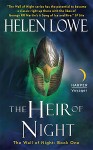
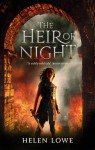
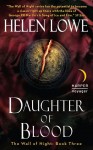
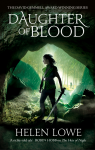
With less than three months now until Publication Day for Daughter Of Blood, I’ve been inspired to spend some time with characters from The Wall Of Night series, in the same way I spent time on the worldbuilding in A Geography Of Haarth.
I decided to start by focusing on minor players to begin with, because: “I think it’s the presence of the smaller characters that “makes” a story, creating texture around the main points of view.”
Today’s character is:
.
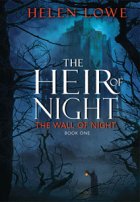
Khorion: Lieutenant of the Gate bastion, in the Keep of Winds.
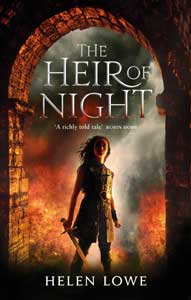
“Khorion, the Lieutenant of the Gate, simply looked bleak. It must be hard, Nhairin supposed, when one expected to bear the brunt of any attack, to be tied to the main gate while a major battle was being fought inside the keep itself.”
~ from © The Heir Of Night: The Wall of Night Book One, Chapter 5 — The Broken Gate
As we’ve just celebrated Halloween, it’s only fitting that my return to “Big Worlds on Small Screens” focus on a good old-fashioned ghost story. Marchlands aired back in 2011, a three-part miniseries that spans the lives of three different families living in the same house across five decades.
In 1960, Ruth Bowen is a grief-stricken mother mourning the death of her daughter, Alice. Though the police have deemed her drowning an accident, there are several strange inconsistencies in the story that makes Ruth think there might have been foul play. Why did her usually obedient daughter run away? And where’s her duffel coat and crucifix?
In 1987, Eddie and Helen Maynard move into Marchlands with their two children: surly teenager Scott and precocious daughter Amy. The latter is soon raising eyebrows with her talk of an “imaginary friend” called Alice, to the point where the Maynards grow concerned that she has some kind of mental disorder.
Finally, Mark Ashburn and his pregnant partner Nisha Parekh arrive in 2010, only for Nisha to start uncovering clues that the old household was once inhabited by a little girl called Alice…
The complete cast, each in the same room across three different periods
It’s an innovative premise, with the stories of the three families intertwining across the course of each episode, and the audience being privy to a gradual uncovering of answers when it comes to the death of little Alice.
Much of its intrigue comes from the reappearance of supporting characters across all three strands of the plot (played by different actors of varying ages) and how they can add fresh – or old – insight into what really happened when Alice died.
As well as the ghost story, it also explores the domestic lives of each family – issues such as bereavement, strained marriages, old love affairs, the generational gap, the worries of parenthood –and everyone from the writers to the actors to the costume and set designers clearly had a great time capturing the décor, fashion, technology and social mores of each period.
Helen tries to figure out what’s wrong with her daughter
The cast is pretty rock-solid, with the most familiar face being Alex Kingston (Doctor Who fans will recognize her as River Song) and some surprisingly good child actors.
That said, it’s not a hugely suspenseful or frightening ghost story. Heck, Mark and Nisha barely even notice they’re being haunted until well into the fourth episode. Instead, Marchlands is more concerned with the differences between the different time periods, and how unexplained occurrences can have an adverse effect on family life.
It probably deserves at least two watches just to catch all the clues and foreshadowing strewn throughout, but be prepared for a rather low-key haunting. This is more of a mystery than a chills-and-thrills ghost story, but it’s still a rewarding and engrossing drama.
Next Time: The Others
We continue with our spooky theme and take a look at The Others, a short-lived supernatural series that may have been cancelled prematurely, but still had some ideas worth exploring.
.
About The Reviewer:
Rebecca Fisher is a graduate of the University of Canterbury with a Masters degree in English Literature, mainly, she claims, because she was able to get away with writing her thesis on C.S. Lewis and Philip Pullman. She is a reviewer for FantasyLiterature.com, a large website that specializes in fantasy and science-fiction novels, as well as posting reviews to Amazon.com and her They’re All Fictional blog.
To read Rebecca’s detailed introduction of both herself and the series, as well as preceding reviews, click on:
Big Worlds On Small Screens
Rebecca won this year’s Sir Julius Vogel Award for Best Fan Writer, for writing including Big Worlds On Small Screens.
Penelope Dreaming
He made this bed you know,
crafted first from the aged olive,
then joined to its hoary brother –
its leaves still sing
of winds no longer blowing;
I feel it stir, murmur
in that phantom breeze
when I lie here, as if in your arms
my husband, my beloved, my lover,
waiting for the first light
to ambush me, waiting …
I hear your voice sigh
out of the deep ocean, and sink
with it, down to where you hide,
an apparition spun out of leaves,
silvered bark and light, gnarled
and twisted as Old Man olive,
timeworn, shifting to every wind,
forever slipping away
from my outstretched arms,
my eager touch,
elusive as leaf shadow, dappled
chimaera of heart’s longing.
© Helen Lowe
Published in Broadsheet 7, 2011
Featured on Michelle Elvy’s Glow Worm Blog, March 4, 2014
—
As I said (among other observations) when Michelle featured this poem last year:
“The Ithaca Conversations sequence reflects my long held love of myth and legend … Like all the poems in the Ithaca Conversations sequence, Penelope Dreaming provides a slant into the Odysseus legend, in this case from the perspective of the wayfarer’s wife, left behind on Ithaca with her son, Telemachus. I have long had an interest in Penelope, exploring several perspectives on what her ‘story’ could be. Another of these, titled simply Ithaca, appeared in short story form in JAAM 26, edited by Tim Jones.”
—
To read this week’s poem on the Tuesday Poem Hub, and other great poems featured by fellow Tuesday poets from around the world, click here.
Happy Monday, dear “… on Anything, Really” readers — if the juxtaposition of “happy” with “Monday” is not an oxymoron… But even if it is, there’s plenty happening this week.
Supernatural Underground:
Starting with my 1 November post on the Supernatural Underground, which features the full UK cover — the front, spine, and rear cover views, plus updated backcover text. And I’ve included an excerpt, too.
With publication day only three months away now, on 26 January 2016, you may expect more excerpts and book-related features to come. As the saying goes, watch this space.
Meanwhile, to check out the full cover look, click on:
From the UK With Love …
And if you entered our Supernatural Underground Halloween book giveaway, the result is here:
The Power of 13; We Have Giveaway Winners
The Return Of Big Worlds On Small Screens:
Rebecca Fisher has gotten out of the study woods and will be resuming normal service with Big Worlds on Small Screens this Wednesday — where I have it on good authority she’ll be checking out Marchlands.
I know quite a few of you have been eagerly awaiting the end of Rebecca’s recess, so stay tuned for Wednesday. 🙂
A Summer Convention in Spokane — June Young Reports On Sasquan, the 73rd World Science Fiction Convention (Worldcon)
June Young and I both attended the 68th Worldcon held in Melbourne in 2010 — the first World Science Fiction Convention for both of us. So when June told me that she and her partner, Simon, would be heading to the 73rd convention, Sasquan, in Spokane, I put in a special request for a report back on June’s Worldcon experience.
I’m not sure how many “…on Anything Really” readers are aware that there was a fair bit of controversy associated with this year’s Con, surrounding nomination and voting for the Hugo Awards. But the subject has been so very thoroughly canvassed on the interwebs that June and I felt that her article should report on something different. So we agreed that it would focus on June’s personal experience of the Con (established shorthand for a Science Fiction-Fantasy convention), as one NZ fan attending her second Worldcon — and “first ever” SFF convention in the summer months.
I think June’s post will give you a really good firsthand account of a major convention and the sort of events on offer for those willing to travel to the far side of the world. (And yes, George RR Martin of A Games of Thrones fame was there.)
June’s post will be up on Friday, so if you don’t visit again before that, do check back then.
Those of you who have followed “…on Anything, Really” for a while may have picked up that I am into my garden.
It’s definitely a “real” garden, too, which means that it’s not easy care, particularly in spring when all winter’s “stealth” weeds suddenly burgeon “full throttle.”.
So a few years back, when I was storm-tossed on the vasty deeps of writing Daughter of Blood, the garden and those unstealthy weeds did rather get away from me—but I remember a friend assuring me that “gardens are patient.”
It occurred to me then that books are also patient, in the sense that an idea can lie fallow waiting for the right time to take shape, and even once the process of writing begins, it can take time and the passage of seasons for the work to come to reach its full growth.
And it requires patience to work through that process, and a willingness to do what I call listening to the story, as well as trust that a book will emerge at the end of the journey.
So I do feel there is a lot of overlap between the creative processes of writing and gardening. But they intersect in other ways as well.
Writing is cerebral, it’s about ideas and giving those ideas flesh, but only through words set down on paper or in noughts and ones on a computer screen.
Gardening is physical: it’s about getting out into the sun and fresh air, working with dirt and tools and watching living things grow and develop according to their own internal rules and mysterious (to the observer) natures.
But the two complement each other. There is certainly nothing like getting out in the garden to shake loose a recalcitrant idea or resolve a gnarly plot or character development issue. It’s something about the physicality, but also the rhythm of garden work.
Yet I find the vision of the writing process, the ability to envisage worlds, both at the broad brush and also detail level, stands me in good stead when making decisions about the shape of the garden.
Of course, there’s nothing new in any of this. Writers have been gardening and writing about it pretty much since writing was invented. But I’m glad to have experienced the reality for myself.
On Thursday (Wednesday, US time), my Fantasy Heroines That Rock My World series on SF Signal featured Sheera Galernas and The Ladies of Mandrigyn, from the book of the same name.
But this is more than just “a strong and exciting Fantasy story” with a cast of interesting characters (a significant number of whom happen to be feisty, determined heroines)—although those are vital qualities in any top read.
The Ladies of Mandrigyn comprises another essential ingredient as well: it has its fair share of gorgeous words, strung together into powerful sentences. Like this, for example:
“They left the magical silence of the foothills to climb the Stren Water valley.
Fed by the drowning rains on the uplands above, the Stren Water roared in full spate, spreading its channels throughout the narrow, marshy country that lay between the higher cliffs, cutting off hilltops into islands … Starhawk and Anyog made their way along the rocky foothills that bordered the flooded lands, always wet, always cold. Anyog told tales and sang songs; of wizardry and Altiokis they did not speak.”
It’s not exactly comforting, but it’s wonderfully atmospheric, creating a clear sense of the physical landscape, the winter journey, and the mood and preoccupations of the travellers, in just a few short sentences.
In Fantasy and Science Fiction, this is what we mean by “worldbuilding.”
My guest series Fantasy Heroines That Rock My World is still going full throttle on SF Signal — but this time the feature focuses on not just one heroine, but a “band of sisters”: Sheera Galernas and The Ladies Of Mandrigyn.
As I observe in the post, Barbara Hambly’s novel contains so many outstanding heroines that this has to be a two-part feature.
In introducing Part 1, I also observed that:
“I have always felt the quintessential band of Fantasy sisters is Sheera Galernas and her fifty comrades-in-arms – The Ladies of Mandrigyn in Barbara Hambly’s 1984 novel of the same name…”
To find out more, click on:
Helen Lowe on the Fantasy Heroines That Rock Her World: Sisterhood Is Powerful, Part 1 – Sheera Galernas & THE LADIES OF MANDRIGYN
It’s now only three months to the publication of Daughter of Blood — huzza!
But that fact, together with the recent cover reveals here, there, and everywhere (!), inspired me to spend some blog time with The Wall Of Night series’ characters, in the same way I spent time on the worldbuilding in A Geography Of Haarth.
I also decided to start by focusing on minor players to begin with, because: “I think it’s the presence of the smaller characters that “makes” a story, creating texture around the main points of view.”
And today’s character is (drum roll):
Jiron: scribe to the Earl of Night
“Jiron, the Earl’s scribe, stood beside Teron … and he turned his head with a quick, unhappy smile.
“Not good?” she murmured and he shook his head.
“Very bad,” he replied, equally softly. “We have won the battle it seems, but at a bitter cost …”
~ from © The Heir Of Night: The Wall of Night Book One, Chapter 5 — The Broken Gate