
Jan
18
2014


Jan
17
2014

The Wall of Night Series map; design by Peter Fitzpatrick
The A Geography of Haarth post series is traversing the full range of locales and places from The Wall of Night world of Haarth.
This week, together with the New Year, we enter “M”— the halfway point, alphabetically at least, of the series.
—
Main Road: the road that runs the length of the River lands, which is maintained by the Company of Engineers from Ar and kept safe by the Patrol.
.
“Spring came to the River in a flurry of blustering winds and driving rain that turned the local roads into quagmires and hurled the first fragile blossoms to the ground. Two heralds were blown out of the city of Terebanth with the weather and turned east toward Ij, following the great Main Road that had endured since the days of the Old Empire.”
~ from © The Gathering Of The Lost: The Wall of Night Book Two; Chapter 1 — The Road To Ij
Genre site Fantasy Faction posted their Top 30 Anticipated Fantasy Books For 2014 on January 1 — and Daughter Of Blood, The Wall Of Night Book Three clocked in at No. 18: pretty cool huh?!
You can check out the full post by clicking here:
Top Anticipated Fantasy Books For 2014 – Readers’ Choice
by Rebecca Fisher
Introduction:
Imagine that you had the power to revive the dead with a touch of your finger. What would you do with this gift? How would it affect your relationships? What kind of person would it make you?
Airing between 2007 and 2009, Pushing Daisies explores these questions through its unique central premise: an otherwise ordinary man who can wake dead things by simply touching them. Created by visionary Bryan Fuller, the mind behind Dead Like Me and Wonderfalls (equally quirky shows also cancelled before their time), Pushing Daisies garnered critical and popular acclaim, was nominated for over a dozen Emmy Awards (of which it won seven), and looked all set to become a successful long-runner.

But ironically for a show that focused on homicide and the balance of life and death, Pushing Daisies was itself a victim, first of the Writers Guild of America Strike, and then by poor network programming that saw it cancelled long before its time. What audiences were left with was a short first season (only nine episodes) and a longer but under-promoted second season (thirteen episodes) before it was gone for good.
But for its short life, it managed to be so many things: a forensic fairytale, a storybook come to life, a poignant love story, and a quirky dark comedy.
Premise:
As a child, Ned discovers that he has a special gift: with a touch of his finger, he can bring the dead back to life. But there are two important caveats. The first is that a revived person can only be brought back to life for a minute before someone else has to die in their place. The second is that once Ned touches a dead thing, he can never touch it again, or else it will instantly die once more.
 Young Ned first discovers his gift on a housefly
Now an adult, he works as a pie-maker at his own restaurant, using his gift to surreptitiously bring rotten fruit back to full ripeness and remaining extremely careful not to involve himself in any serious relationship. This changes the day he meets Emerson Cod, a private investigator who discovers his gift and proposes a business venture: together they can solve crimes by sneaking Ned into the morgue, touching dead murder victims, learning who the culprit was and collecting the reward money from the victim’s families.
Then the day comes when Ned breaks the rules. While investigating the death of a tourist murdered on a cruise ship, Ned realizes that the young woman in question is Charlotte “Chuck” Charles, his very own childhood sweetheart. At the funeral parlour he touches her… but cannot bring himself to let her die again. The minute runs its course, the sleazy funeral director collapses, and Chuck is restored to permanent health and happiness. But of course, there are complications: not only must she keep her resurrection a secret from her family, but Ned must never again touch the woman he loves lest he loose her forever.
 This is as close as they can get…
Story:
You would think that this setup of homicide and tragic love would create a dark and morbid atmosphere, but Pushing Daisies veers extremely far in the opposite direction. Everything in this world is awash with colour and light, and the gruesome deaths of various murder victims are treated as the height of comedy, whether they’ve been eaten by sharks, or crushed by chandeliers, or drowned in a car filled with circus performers. The show runs on a certain kind of gallows humour which is encapsulated perfectly in its title – after all, to say someone is pushing daisies is just a cheerful way of saying they’re dead.
 Ned and Emerson go undercover (badly)
The general gist of each episode involves a mysterious death, our protagonists heading for the morgue to speak to the murder victim, and subsequent investigation, which can take place in anything from a Chinese restaurant, a lighthouse, a bee-keeping factory, the window displays of a department store, or a water theme park. Oftentimes Ned’s ability can be a hindrance (such as when he has to negotiate a room filled with stuffed animals) or a help (when the gang has to move a heavy-set murder victim from one location to another in the space of a minute).
As it happens, don’t expect any sort of reasoning behind Ned’s ability. The show isn’t interested in how or why he can raise the dead, only that he can. Pushing Daisies runs on intensely quirky logic, such as Chuck helping her aunts cope with her death by sending them pies spiked with homeopathic anti-depressants, or Emerson trying to track down his missing daughter by publishing a pop-up book filled with clues on how to find him.
Unfortunately, thanks to the show’s early cancellation there are several plotlines that don’t get wrapped up satisfactorily, namely the issues that both Chuck and Ned have with their respective fathers – but while it lasts, watching Pushing Daisies is like eating fresh fruit pie. The set-design, the costuming, the cinematography – everything looks stunning, and Jim Dooley (who won an Emmy Award for his work) composes a light and whimsical soundtrack that captures the heart of the show.
Characters:
Lee Pace (now best known as playing Thranduil in The Hobbit) plays Ned as a nervy but good-hearted introvert, usually standing with his hands clasped behind his back in his attempt to make as little physical contact as possible.
 From left: Emerson Cod, Ned, Chuck Charles, Aunts Vivian and Lily, and Olive Snook
Anna Friel is Chuck, who comes to dearly love the pie-maker but pines for the life she left behind. Having been raised by her two maiden aunts, she’s gravely concerned for their mental health after her (apparent) demise, roping in Ned’s waitress Olive Snook (Kirsten Chenoweth) to regularly check up on them. It’s hard to say which of the two women exudes the most sunshine, but because of Olive’s unrequited love for Ned and her powerful curiosity about the new girl in his life, she ends up uncovering yet more secrets when she visits the home of Aunts Vivian and Lily.
Off-setting the cheeriness of Chuck and Olive is the cynical and verbose Emerson Cod (Chi McBride), driven more by financial profit than a desire to see justice served. And then there’s the Narrator (Jim Dale), the unseen but omniscient voice that describes events with precise accuracy, detailing things right down to the day, the hour, the minute – and by doing so, not only giving the show its storybook quality, but serving as a constant reminder of death’s inevitability.
The dialogue is witty and funny, filled with a love of wordplay that can only be described by directly quoting it (though something is lost without the actors’ deliveries):
“What’s wrong with picking somebody up the old-fashioned way? Walking up to them and saying “hi, my name is blah-de-blah, you like bloo-de-blooing? Me too! Let’s be friends!”
“While being chased, Olive Snook harkened back to an educational film on alligators, and what to do when pursued by one: run zig-zag until you can climb a tree.”
“I love magic as much as I love other forms of popular entertainment, like Boxarate Tae-Kill-Do cage-fighting or monster trucks on ice.”
“You don’t get to just put those pictures in my head. That’s an assault on my imagination.”
There’s more. Much, much more. Heck, practically every spoken line is a quotable gem.
 Our private investigators examine their latest victim
Conclusion:
Pushing Daisies is up there with Firefly as one of TV’s most tragic cancellations, a show which ended just as it was picking up steam. Part detective show, part quirky fantasy, part ’50s romantic comedy — Pushing Daisies manages to combine all these genres and make it work. The characters are lovable and the colour palette so vibrant and bright that you’ll want to dive through your television screen into it. But perhaps its most remarkable quality is the way it infuses such a deep sense of yearning and poignancy into such a strange premise.
This is a show where the horror of murder becomes comedy, the tragedy of never being able to touch your beloved becomes whimsical, and the cosmic mystery of Ned’s gift is treated as a matter-of-fact business venture. Yet though the tone is off-beat, the content remains thought-provoking and heart-warming – and the biggest tragedy is that it was gone so soon.
Next Time:
We travel back to the 1980’s to rediscover another cult show that was cut down in its prime: Richard Carpenter’s Robin of Sherwood, often considered one of the best dramatizations of the Robin Hood legend. Does it still hold up to that reputation, or has it dated in the intervening years? Expect giant hair and the repeating leitmotifs of Clannad.
—

Rebecca Fisher
About The Reviewer:
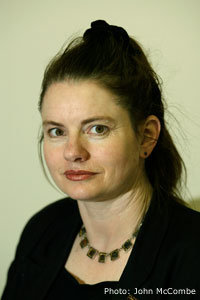
Rebecca Fisher is a graduate of the University of Canterbury with a Masters degree in English Literature, mainly, she claims, because she was able to get away with writing her thesis on C.S. Lewis and Philip Pullman. She is a reviewer for FantasyLiterature.com, a large website that specializes in fantasy and science-fiction novels, as well as posting reviews to Amazon.com and her own LiveJournal blog.
To read Rebecca’s detailed introduction of both herself and the series, as well as preceding Big Worlds On Small Screens reviews, click on:
Big Worlds On Small Screens
Yesterday was the last of 2013’s “most read” posts, which I’ve been posting over the past ten days. Here’s the complete list as posted (in random order):
Tuesday Poem: In Memory of Sarah Broom, 1972-2013
My Favourite Standalone Novels
An Interview with Elspeth Cooper, Author of “The Wild Hunt” Series
Tuesday Poem: “Female nude” by Joanna Preston
One Of My “Most Disliked” Tropes Of SFF / Epic Fantasy
Celebration: “The Gathering Of The Lost” Makes The David Gemmell Legend Award Shortlist!
“Here’s SpecFicNZ–Christchurch”: Featuring AJ Fitzwater
Five Books That Changed Me (Warning: This Is not An Exclusive List!)
Is Epic Fantasy Currently Enjoying A Resurgence?
I said at the outset that I’d be interested to see if there was a change in what readers found most interesting in 2013 as opposed to 2012. Yet when I took a look back, the most-read posts over both years were generally those that discussed aspects of fantasy, especially epic fantasy and reading lists, as well as showing a similar interest in interviews with fellow authors, but with poetry and poets maintaining their place in the pantheon. You also show a consistent interest in my own books and their achievements, so thank you kindly for that. 🙂
Now though, we are two weeks into 2014 so it’s time to start getting back to routine. We’ll begin the way we mean to go on tomorrow, with Rebecca Fisher resuming the “Big Worlds On Small Screens” series with a look at Pushing Daisies.
The “A Geography of Haarth” series will begin again in its usual Friday slot and although I am not quite sure when The Tuesday Poem will resume for the year I do have some poetry related quotes to share with you from next Tuesday.
Speaking of The Tuesday Poem though, “One Story and the other” by Sarah Broom is still featured there from last year and I do hope you’ll take a look (just click on the poem title) if you have not done so already.
Jan
13
2014
This, the tenth and final entry in the “Most-Read Posts” series (which you will recall has been put up in ‘no particular order’) was sparked — like January 7’s feature, “What Makes Fantasy Epic?” — by having made the Gemmell Legend Award shortlist (January 10’s feature.)
As with ‘”What Makes Fantasy Epic?”, I feel the interest lies in the discussion — and apparently you do, too. Anyway, to complete the relook at “…on Anything, Really’s” most-read posts for 2013, here’s a reprise of the question:
“I … perceive epic fantasy as having had a dry spell but currently enjoying a resurgence—but am I right? And if you agree, what do you think has driven the resurgence?”
To revisit the responses, go to:
Is Epic Fantasy Currently Enjoying A Resurgence?
As it also says in the long title: “Warning, This Is Not An Exclusive List!” 😉
“I saw this question “oot thar” somewhere on t’interwebs and thought—what fun, I should do it on “…Anything, Really.” So here goes…”
Anyway, it was nice that you all seemed to find it fun and/or interesting, too. 🙂
To check out or refamiliarize yourself with the five books, go to:
Five Books That Changed Me (Warning: This Is not An Exclusive List!)
This year, I ran two mini-series featuring fellow authors from Speculative Fiction New Zealand. Titled “Here’s SpecficNZ”, the one earlier in the year featured fellow members from Christchurch, while the one later in the year focused on Wellington-based members.
The interview with Christchurch writer, Amanda Fitzwater, made it into the ten most-read posts.

AJ Fitzwater
“Here’s Who:
How to pin down /who is Amanda (A.J.) Fitzwater is like trying to eat water with a knife and fork.
There’s the facts, ma’am: I grew up a very staid small town life in Blenheim, where to get out you needed a job, not a dream of being a writer. Being the Big W didn’t pay the bills. So I followed that need to Christchurch in my early twenties. After securing my Piece of Paper (Bachelor Broadcasting Communications – Radio) and getting a job in the advertising industry, I set about being a good little capitalist. Choose life, choose a career, choose a job, choose a family, choose a … big television & etc…
But in amongst all that, I read. I devoured books. Science Fiction or Fantasy? Bring it on! And I started to think “I like that, I could do that, I want that. I can write things for a living, but where’s my dream?“
To find out or refresh your memory, click on:
“Here’s SpecFicNZ–Christchurch”: Featuring AJ Fitzwater

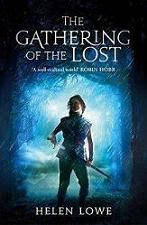
UK/AU/NZ Cover

USA
I posted this on August 15, although the shortlist was actually annpunced on the 11th (I believe) — but I was afraid to check out the result before then!
But seeing The Gathering Of The Lost on that list was probably the highlight of my year. To check out how I felt at the time, the post is here:
Celebration: “The Gathering Of The Lost” Makes The David Gemmell Legend Award Shortlist!
And sure, ultimately The Gathering Of The Lost didn’t win, but you know, although it’s easy to say, I really am OK with that: as a still-very-new author, being on the shortlist felt like a tremendous achievement—which I canvass to a certain extent here , in my ‘concession’ post:
Not Yet Legend 😉
I wrote this post because it was very much in my thoughts as I was plugging away on Daughter of Blood, The Wall Of Night Book Three — but it appears to have struck a chord. 😉
“One of the great dangers of writing SFF is what the great Ursula Le Guin calls the “Expository Lump”, ie in lieu of a Vulcan Mind meld between author and reader, the author downloads details of worldbuilding, backstory, or other essential plot information in a giant lump of text.
Urrgh, I hear you all cry, quite rightly.
But there is an SFF trope ‘sometimes’ deployed to counteract this — or worse, simply to make the plot work — which drives me crazy as a reader…”
To read on, or refresh your recollection, click on:
One Of My “Most Disliked” Tropes Of SFF / Epic Fantasy
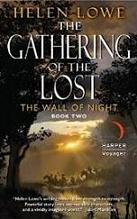
Jacket art by Greg Bridges
The Gathering of the Lost: USA Cover (Harper Voyager) - Read More Here!
"A richly told tale" -- Robin Hobb
"A vividly imagined world" -- Juliet Marillier
"This is an author with a gift for fantasy” -- Catherine Asaro
To read reviews, click Here.
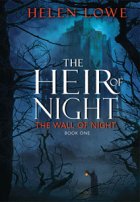
Jacket art by Greg Bridges
The Heir of Night: USA Cover (Eos) - Read More Here!
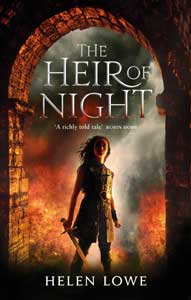
The Heir of Night: UK/AU/NZ Cover (Orbit) - Read More Here!
HEIR won the international Gemmell Morningstar Award 2012 for Best Fantasy Debut.
"THE HEIR OF NIGHT by Helen Lowe is a richly told tale of strange magic, dark treachery and conflicting loyalties, set in a well realized world."--Robin Hobb

Jacket art by Antonio Javier Caparo
Thornspell is my first novel and is published by Knopf (Random House Children's Books, USA). It won the Sir Julius Vogel Award 2009 for Best Novel: Young Adult and was a Storylines Childrens' Literature Trust Notable Book 2009.
