
Last year, I resumed my “About the Characters” post series that focuses on the minor characters in The Wall Of Night series, because:
“I think it’s the presence of the smaller characters that “makes” a story, creating texture around the main points of view.”
~ from my Legend Award Finalist's Interview, 2013
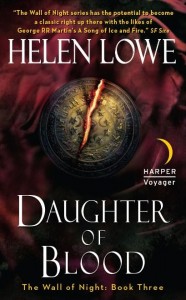
Although as noted in the original Garan entry, I do think it’s questionable whether he really qualifies as a “minor character” anymore. He is, after all, in all the books and a point of view character in The Gathering Of The Lost and Daughter of Blood.
However, for now I shall continue as we started with an updated entry in this series.
—

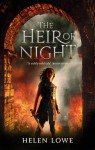
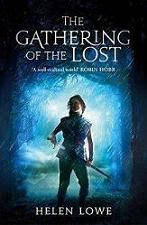
UK/Aus/NZ
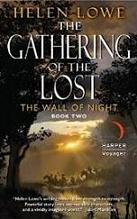
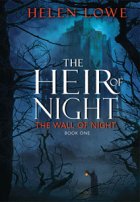
USA
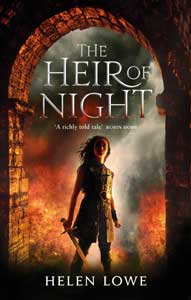
Garan: an honor guard, serving the House of Night
“…the two priests retained their cautious station down the hall. Their faces had remained expressionless throughout, but the young woman was flying two spots of color high in her cheeks. Teron’s belligerent stare shifted back to them. “I still say they shouldn’t be here,” he said loudly.
Garan’s amused expression did not change, but there was a warning note in his voice. “Captain’s orders, young Teron, which means yours too. So pipe down like a good lad, else I’ll have to send you packing.”
~ from © The Heir Of Night: The Wall of Night Book One, Chapter 7 — The Tower of the Rose
.
USA

USA

UK/AU/NZ
“Just what we need,” said Garan. “A coterie of Stone priests.” He had led his company out of the Barren Hills just on dusk, intending to camp overnight by the Border Mark, only to find another group of travelers already settled in by the standing stone. And not just any travelers, Garan thought with an inward groan. Stone priests were the nearest thing to a warrior class within the three priestly Houses, and as rigid as the House of Blood in their adherence to the divisions that had arisen out of the civil war.
~ from © The Gathering Of The Lost, The Wall of Night Book Two: Chapter 28 — Border Crossing
.
UK/AU/NZ
USA
Entering as bidden, Kalan saw Garan and Nerys salute crisply despite their dirt. They were both worn to leanness and shadowed eyes, but nodded in courtesy to Kalan as they left.
~ from © Daughter Of Blood: The Wall of Night Book Three, Chapter 28 — Field of Play


 In the 1 October post I mentioned that I had seen an interesting looking recipe for Orange and Poppy Seed Cake in a recent edition of NZ House & Garden (September 2018), so I felt honour bound to make it next.


 I was also fascinated, when watching the V for Vendetta film, to see how the Gunpowder Plot was reshaped into a far more anarchic concept, one I suspect bears very little resemblance to the conspirators’ historical motivations. However, quite some years ago now an historian told me that history is always being retold to fit the times, so perhaps I should not be surprised if storytelling follows suit. 🙂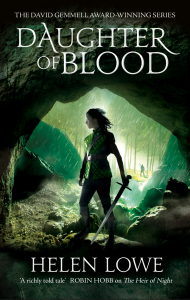
 Genre: Fantasy/Urban Fantasy
 The “mentor” or “wise guide” is a time-honored aspect of epic tales so it was unquestionably remiss of me to contemplate a post series on tropes that did not include it. 🙂
 Other examples include the centaur, Charon, who raised Jason (of the Argonauts and Golden Fleece fame), and of course, Merlin, who guides the young Arthur. Later in the Arthurian cycle, the wise counselor role is sometimes assumed by Vivian, the Lady of the Lake, and the enchantress Nimue.
 In fairytale and folklore, the mentor and wise counselor may also take the form of an animal companion, such as the horse Falada in The Goose Girl fairytale or the cat in Puss and Boots.
 Although less powerful, Keyoke and Nacoya (Mara’s nurse turned First Counselor) in Janny Wurts and Raymond E Feist’s Daughter of the Empire also represent the tradition. Other famous examples include Belgarath the Sorcerer in the Belgariad, Moiraine in the early Wheel Of Time novels, and Count Brass in Michael Moorcock’s Chronicles of the Runestaff.
 I can’t overlook Albus Dumbledore in the Harry Potter series, but I would also cite Luthe in Robin McKinley’s The Hero and the Crown, Deth in Patricia McKillip’s The Riddlemaster of Hed, and Aidris’s hidden grandmother in A Princess Of The Chameln.
 Jasnar Kholin is clearly a mentor and preceptress to Shallan in Brandon Sanderson’s Stormlight Archive series. Yet Shoka, in CJ Cherryh’s The Paladin, may qualify in his role as swordmaster to Taizu, but his motivations are so murky otherwise that I feel he’s a suspect candidate overall.
 Sometimes, too, the mentor may turn out to be undertaking that role for reasons that entirely benefit him or herself as opposed to the mentee. A classic example of this is Mr Wednesday in Neil Gaiman’s American Gods.
 Merlin was far more human and less magical in Mary Stewart’s Arthurian series than in the legends, but he still fulfilled the traditional mentor role to Arthur in The Hollow Hills. When it comes to fairy or otherworldly mentors, however, Felicity Fortune in Elizabeth Ann Scarborough’s Godmother series is a quintessential example.
 Another valid contender, imho, is the immortal, River, in Cate Tiernan’s Immortal Beloved, as is the witch, Maelga, in McKillip’s The Forgotten Beasts of Eld.
 The Forgotten Beasts of Eld also gives readers a magical animal mentor in the character of the talking boar, Cyrin. In Tolkien’s The Hobbit, a thrush tells Bard where to aim his arrow so it will find the only weak spot on the armoured body of Smaug the Dragon.
 Thornspell, which is a retelling of Sleeping Beauty from the perspective of the prince, has several mentor characters. The primary one is Balisan, the prince’s swordmaster and protector. Syrica, the fae who transformed the death spell into the hundred-years’ sleep, also plays a mentor’s part in the story, as does Auld Hazel, the witch of the wood, although to a lesser degree.