
“The Heir Of Night” map: artist, Peter Fitzpatrick
The A Geography of Haarth post series traverses the full range of locales and places from The Wall Of Night world of Haarth.
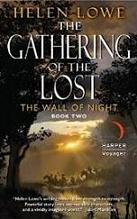
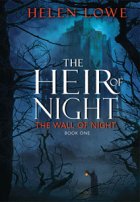
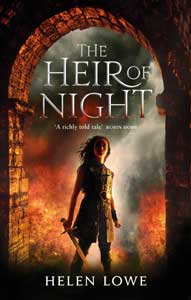
From January 25, 2013 to November 25, 2014, the series explored locations encountered in The Heir Of Night and The Gathering Of The Lost.
Now it’s returned to gazette the geography of Daughter Of Blood (The Wall Of Night Book Three.) The new series comprises updates of previous entries as well as new listings.
—
Port Farewell: a major Southern Realms trading port and the capital of Aralorn
.

USA

UK/AU/NZ
Kalan paused, glancing toward the upstairs voices. “If I leave tonight I should catch up with the heralds. I can ride with them to Port Farewell and take ship for Grayharbor, then find another there to reach the Sea Keep. But I need to say good-bye to the others first, and see Jarn.” He took the gauntlets from his belt, but did not put them on. “I will meet you back here afterward and we can settle any other plans before I leave.”
~ from © The Gathering Of The Lost, The Wall of Night Book Two: Chapter 51 — Reports From The Wall
.
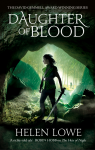
UK/AU/NZ
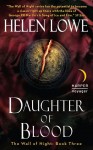
USA
The nearest shipping office was little different from the one in Port Farewell, a small room just inside the wide double doors of a ship chandler’s warehouse. The names of ships were chalked onto a blackboard beside the office door, but the clerk pursed his lips, assessing Kalan much as the Halcyon’s bosun had done. He looked like he might have been a sailor himself once, with a silver ring in one ear and callused hands that reached for a leather-bound ledger. “You’ll be wanting a Derai ship, then? I take it you’re going north?”
~ from © Daughter Of Blood: The Wall of Night Book Three, Chapter 5 — Blood Warrior

 Genre: Science Fiction
 Yes, it is! Albeit at the end of the month, but hey—best to be prepared right?! (Correct answer: Cor
 I’m also lingering a little over jack o’ lanterns and one or too spooky, eerie, or downright supernatural reads I haz known, aka Books That Go Bump In The Night… (Yes, there are a few reading suggestions: who’d’ve guessed?)


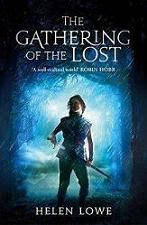

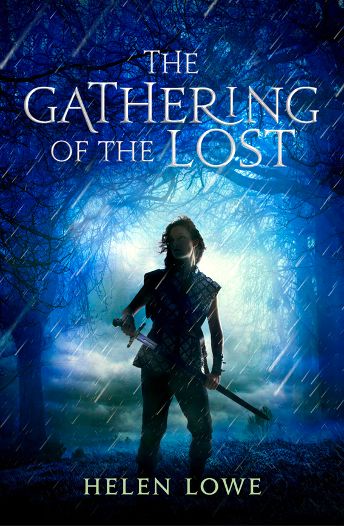
 The main difference is that the “surround” of the final cover has been “blacked out” and the pale blue and the light-burst surrounding Malian seem muted by contrast—although I acknowledge that Malian herself is highlighted more, too, which is probably an improvement on the original. And overall, it’s still a great cover. Nonetheless, I really love the brighter, almost lapis-lazuli blue of the original concept and the contrasting brilliance of the light-burst around Malian. The title lettering seems more silver in effect as well, which I also heart.


 Another perennial and recurring aspect of the number three is the “love triangle”, with famous threesomes that include Helen, Menelaus, and Paris; Arthur, Lancelot and Guinevere; Tristan, Isolde, and King Mark; Brynhild, Sigurd, and Gudrun… You get the picture! (And that “the triangle” did not spring fully fledged from Twilight and /or paranormal romance generally…)


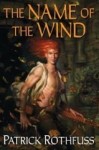 It’s perhaps not surprising, therefore, that the alchemy of numbers is firmly embedded in Fantasy storytelling—and epic fantasy does not escape. In fact, one might argue that a literary subgenre with a predilection for Chosen One’s, actively embraces the significance of numbers.
 Remember, too, that Buffy the Slayer was “one girl in all the world”, while in the now cult film, Highlander, famously “there can be only one.” 🙂
 The more I think about it, the more I realise that two is a vital part of epic alchemy. Its aspects include oppositions, such as (arguably) saidin and saidar in Robert Jordan’s Wheel Of Time series, and outright hatreds like the bitter antagonism between Bertran de Talair and Urte de Miraval that shapes the world of Guy Gavriel Kay’s A Song for Arbonne.
 The power of two also comprises complementaries, like the Prime and Secchi (father and daughter) Pairs in Roberta Gray’s The Sword And The Lion, the Aes Sedai and their Warders in the Wheel Of Time, and the wizards and their sources in Guy Gavriel Kay’s Fionavar trilogy.
 Two encompasses dualities as well, such as the relationship between Morgon and Deth, in Patricia McKillip’s The Riddlemaster of Hed trilogy. The duality is set up in the opening chapter with the rhyme of Belu and Bilo:
 And then of course there’s true love and some truly epic couples. Some of my favourites include Karou-Madrigal and Akiva in Laini Taylor’s Daughter of Smoke and Bone and Beren and Luthien from Tolkien’s Silmarillion.
 Then there’sShoka and Taizu in CJ Cherryh’s The Paladin; Jenny Waynest and John Aversin in Barbara Hambly’s Dragonsbane, Diago and Miguel from Teresa Frohock’s Los Nefilim… There are many more, so I could go on, but I won’t. 😉 However, two is unquestionably the number of power couples.
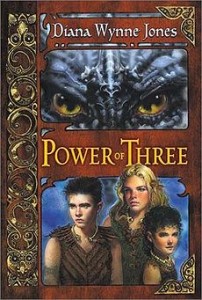 If I recall correctly, the first Diana Wynne Jones’ novel I read was Power of Three and—unsurprisingly—combinations of three, not least the three peoples around which the story is spun, play a significant part in the narrative. Morgon of Hed, in the Riddlemaster series, has three stars on his forehead and must master three treasures that carry the same stars, while Daenerys Targaryen in George RR Martin’s A Song Of Ice and Fire series (aka A Game Of Thrones) is accompanied by three dragons. The defence of Dros Delnoch in David Gemmell’s Legend is primarily down to the triumvirate of Druss (the eponymous Legend), Rek, and Serbitar—who leads The Thirty, an order of paladin-mages. And thirty, of course, is another multiple of three…
 NK Jemisin’s Inheritance trilogy centres on the triangle of Yeine, Nahadoth, and Itempas, while the conclusion of Courtney Schafer’s Shattered Sigil series is shaped by the three-sided relationship of Dev, Cara, and Kiran.
 I don’t think it’s possible to bracket the number seven and epic fantasy together without mentioning the book Seventh Son, which began Orson Scott Card’s Alvin Maker series. The series is set in the pioneering United States, in the first half of the nineteenth century, and draws on the history and folklore of the era, including the mystical lore of seventh-born sons.
 Seven is also the theme of John R Fultz’s Shaper trilogy, which comprises Seven Princes, Seven Kings, and Seven Sorcerers. A legendary king and his six brothers form The Seven-Petalled Shield in Deborah J Ross’s series of the same name—while in Juliet Marillier’s Daughter of the Forest (the first in her Sevenwaters series), it is Sorcha, the seventh and youngest child, who must save her six brothers from the enchantment that transforms them into swans.
 Other signficant sevens include the seven seals to Shaitan’s prison in the Wheel Of Time, the seven unified kingdoms in the Westeros of the A Song Of Ice and Fire series, the Seven Cities in Steven Erikson’s Malazan world, and seven horcruxes in Harry Potter—to name just a few!
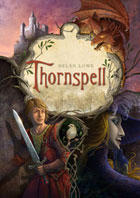 The numerical alchemy in