
“The Heir Of Night” map: artist, Peter Fitzpatrick
The A Geography of Haarth post series traverses the full range of locales and places from The Wall Of Night world of Haarth.
From January 25, 2013 to November 25, 2014, the series explored locations encountered in The Heir Of Night and The Gathering Of The Lost.
Now it’s returned to gazette the geography of Daughter Of Blood (The Wall Of Night Book Three.) The new series comprises updates of previous entries as well as new listings.
—
Old Empire: the empire said to have existed prior to the Derai arrival on Haarth and to have stretched from the hills of Jaransor in the north to the desert borders of Ishnapur in the south.
.
USA
UK/AU/NZ
“The Guild emerged out of the ruins of the Old Empire, when its last vestiges were swept away in fire and fear. But there were still some who sought to hold to their posts, to wrest some form of sanity out of the chaos of those times, which we now call the Anarchy…”
~ from © The Heir Of Night, The Wall of Night Book One: Chapter 7 — The Tower of the Rose
.

UK/AU/NZ

USA
“The island of Emer,” Malian murmured, knowing that this foothold in the Argent had been the dukedom once, during the troubled centuries that followed the Cataclysm, when war had surged back and forward across what was now Emer. Control of the island with its command over the river and surrounding countryside had been one of the great prizes, but the Black Tower was an Old Empire structure and had never fallen, in part because of foundations dug too deep into rock to be undermined”
~ from © The Gathering Of The Lost, The Wall of Night Book Two: Chapter 35 — Caer Argent
.
USA
UK/AU/NZ
Raven continued to study the flames. “The name means ‘lord of the hawk’ in the Old Empire’s northern dialect, just as Jaransor was once J’ara Ensor, the hills of the hawk. A Hill chieftain first called me Raven, which was both chance and irony, since it resembled Ravirien.” His grin, directed at the fire, was wry. “I still answer to it most days.”
~ from © Daughter Of Blood: The Wall of Night Book Three, Chapter 38 — Dawn Wind

 September 1 was the day for my regular


 I am delighted to do a Just Arrived post for you today, because the new arrival is a novella-in-flash, The Crazed Wind (Truth Serum Press), written by my friend and fellow Christchurch author, Nod Ghosh.


 Stormbringer from Michael Moorcock’s Elric of Melnibone series
 And one cannot discuss artefacts or swords of power without reference to Excalibur from the many variants of the King Arthur legend. Not the least of those was Excalibur’s re-imagining as Caliburn, the sword of the fallen (Roman) Emperor Maximus, in Mary Stewart’s wonderful Arthurian sequence.
 “Hold on,” you may cry, “what about Druss, the legendary axeman in David Gemmell’s groundbreaking heroic fantasy, Legend?” To which I reply—nodding sagely—that although Druss is clearly one of the three leading protagonists in Legend, in the context of the book he is i) not of the high, knightly classes; and ii) does not see himself as heroic, although others clearly do. It is Rek, who becomes the Earl of Bronze, albeit through marriage, who is the great swordsman. Serbitar and the Thirty, who are mostly if not all of noble birth, also primarily use swords.


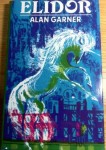 Alan Garner goes directly to the Four Treasures of Celtic myth in Elidor, which are found in a mound. These may also be found, although not necessarily in their official Four Treasures guise, in other Celtic-inpsired fantasy novels, such as Guy Gavriel Kay’s Fionavar series and Susan Cooper’s The Dark Is Rising quintet.
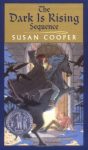 In Garner’s The Weirdstone of Brisingamen the treasure is a stone and not the necklace of Norse myth, but it’s rightful resting place is also a cave. Returning to Susan Cooper’s The Dark Is Rising series (as mentioned in the MacGuffin post), the five books centre on the finding of longlost artefacts that will support the power of the light and turn back the dark. These include the grail, a codex to decipher it, and the “six signs” of Will Stanton’s Twelfth Night quest in the second book, also titled The Dark is Rising. As for where to find such items, “over sea and under stone” and generally secreted in unexpected places is the order of things.
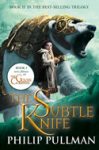 In Philip Pullman’s Golden Compass trilogy, the first book is centered around the mysterious alethiometer, a truth-telling and predictive compass that only Lyra can readily interpret. In the second book, The Subtle Knife, the blade for which the book is named opens gateways between parallel universes. The armour of the panzerbjorn is also a significant artefact as well as the essence of the bears’ physical and spiritual being. The latter are only found in the forges of the frozen north.
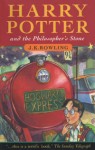 As for JK Rowling’s Harry Potter, in which the books grow increasingly epic as the story progresses, the series features an abundance of artefacts of power. These include the philosopher’s stone of the first book (try Gringott’s vaults and/or caves beneath Hogwarts), the cloak of invisibility, the sword of Gryffindor (the Sorting Hat provides sure access), Hermione’s timeturner (professors such as Minerva McGonagall are a reliable source), and the goblet of fire (enchanted within a maze) for which the fourth book is named—not to mention the seven horcruxes in which Lord Voldemort has secreted part of his being. The latter will always be concealed in secret and highly dangerous locations.
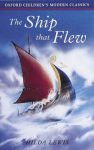 If we look back to ships such as the Argo and
 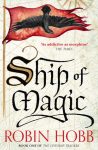 In terms of artefacts that bridge Children’s and Adult literature, one can say that this is “all of them!” since artefacts of power are integral to epic fantasy. Ships, though, are one of my particular favourites, possibly because I always wanted to be an Argonaut as a kid. 😉 So it may then come as no surprise to learn that Robin Hobb’s Liveship Traders trilogy, which starts with Ship of Magic, is a favourite of mine and that I heart all the ships. Vivacia and Paragon are definitely just as much characters as the human protagonists. (At this point, of course, I yearn to mention Iain M Banks’s Culture ships, but of course I can’t because, fantastic though they are, they’re definitely Science Fiction and not Fantasy.)
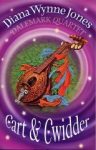 Musical instruments are another of my favourite artefacts of power. I’ve always had a particular fondness for the cwidder (a musical instrument, reminiscent of a lute) that Moril uses to bring down mountains in Diana Wynne Jones’ Cart and Cwidder. In literature for older readers, I’ve always respected Morgon of Hed’s starred harp (in Patricia McKillip’s Riddlemaster trilogy), which has a lowest string that will snap steel and shatter stone. Unlike the cwidder, though, which belonged to Moril’s father before he inherited it, Morgon’s harp is a “found” object.
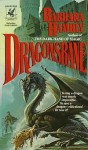 When it comes to artefacts of doom, stones hold a distinguished place in the literature. The stone called the Terrenon, in Ursula Le Guin’s A Wizard Of Earthsea, and the Stone-at the-Heart-of-the-Deep in Barbara Hambly’s Dragonsbane, are both sources of great power that can be drawn on by others. The difference is that in Earthsea, the Terrenon is clearly evil, whereas the Dragonsbane Stone is neutral but the will of the user determines whether the magic is turned to good or evil ends. Both stones are to be found in secret chambers, deep within the earth.
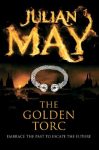 Golden torcs are a crucial artefact in Julian May’s Saga of the Exiles quartet, as it is the torcs that enable the Tanu (i.e. the sidhe or fey) and those humans allied with them, to access their psychic and magical powers. Being born to or enlisting in the ranks of the Tanu is the usual way to obtain one. Golden torcs also play a significant part, for weal and woe, in Diana Wynne Jones’ Power of Three.
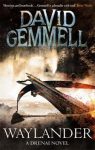 In David Gemmell’s Legend (mentioned above), Druss’s axe Snaga may be named but it has no magical powers. The armour of the Earl of Bronze, however—which also appears in Waylander, the prequel to Legend—is known as “the soul of the Earl of Bronze” and has considerable legendary and mystical status in the hearts and imaginations of the populace. As to where to find it, it is in “a deep cave high up the side of a tall mountain” in Waylander, and in a locked room beneath the fortress of Dros Delnoch in Legend—where the Earl’s sword is encased in a block of mysterious crystal.
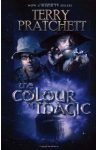 No discussion of artefacts of power would be complete without reference to The Luggage from Terry Pratchett’s Discworld series. The Luggage is first encountered following the tourist, Twoflower, who hails from the Counterweight continent and gifts The Luggage to the wizard, Rincewind. The Luggage is distinguished by being able to follow Twoflower or Rincewind anywhere, including into alternate dimensions. It also devours thieves and is the only entity in the Discworld that presents a real challenge to the invincible Coen the Barbarian. If you want your own set of similar luggage, I’m guessing the Counterweight continent is the place to look…
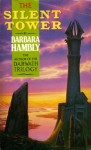 Fantasy in general and epic fantasy in particular is often categorized as intrinsically nostalgic and inherently anti-tech. Yet I find it fascinating that artefacts are integral to fantasy storytelling, since they are created or shaped objects and in this sense technological, although usually from an earlier age. The stolen computer in Barbara Hambly’s The Silent Tower is one exception to that rule, though.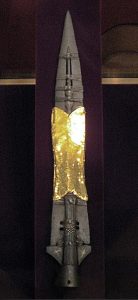
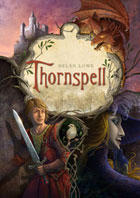 An excellent question. As a reader, listener, and viewer, I have always loved artefacts of power in all their forms so it’s no surprise one or even quite a few of them appear in