

Mar
24
2016

Mar
23
2016
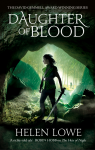
UK/AU/NZ
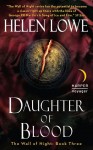
USA
Just a headsup, after last week’s roundup, that there’s more fun stuff coming up in the interview, guest post, and podcast fun department.
Right now I’m working on an interview for Fresh Fiction, which recently reviewed Daughter of Blood.
I’m also pleased to have been invited to contribute to Fantasy Cafe’s April spotlight on Women in SFF, which has been running now since 2012 — so it’s nice to become part of the tradition. However, this also means I have a guest post to pen—umm-huumm…
Later this week I’ll also be doing a podcast interview with Mur Lafferty — am not 100% sure when it will go live, but I’ll keep you posted.
Always good to keep busy, right—on which note, what are all you lot up to?
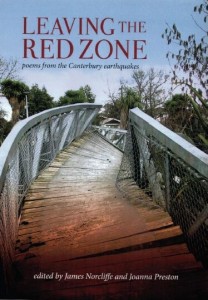 Over the past few weeks, I’ve been sharing some of the wonderful lines and stanzas from the “September” (ie 4th, 2010: the 7.1 earthquake) from Leaving the Red Zone — the poetry anthology (edited by James Norcliffe and Joanna Preston, and published by Clerestory Press) that commemorates the fifth anniversary of the February 22, 2011, earthquake.
Today, I am sharing some lines and stanzas from the “Aftershock” section of Leaving the Red Zone.
—
from “Aftershock”
“3.
All unpicked
The city is a shaken place.
There are cracks and broken lines.
There are scars that define the wounded.
The earth is wounded.
When the earth bends, so do we.
Things cannot be returned.
One writes; it is a matter of trust.
But
in this time?”

Flowers for remembrance, February 22nd
~ Tom Weston, “Aftershock”
.
“…another earthquake has splintered a window
shards on the carpet — it’s no surprise — nothing is
as it seems
when something known or unknown
leaves its mark and is gone —
as in a dream, nothing is”
~ Barbara McCartney, “Nothing is’
.
“…the world is shattered and laid to rest
creaks and hisses beneath an impossible weight
…………………………………………………………………………….the heart pumps
.
and flutters like so many trapped birds”………………………………………………………………….
~ Jeffrey Paparoa Holman, “When All You”
.
“People who have stayed talk in colours. Red and greens mostly but occasionally whites
and oranges. They go round in circles like hula hoops round and round reluctant to stop
spinning to be reduced to reality in all its finality.”
~ Emma Currie, “Eastern Christchurch”
.
But the last word, like the first, goes to Tom Weston:

“…trees…pushing back
on despair…”
“12.
How should a citizen replace
the stolen city,
having no safe assumptions, nothing
but the same fear,
following hope
out over
the horizon, when the bleak edge
give way
to softer edges,
when trees fall in and try to keep
their feet, pushing back
on despair,
as the last word before rapture
takes me out?
I’m waiting for it now.
And what should I do about hope?”
~Tom Weston, “Aftershock”
UK/AU/NZ
Recently, in a guest post on TOR.com — The Art Of Falling — I confessed to a childhood love of armour and weapons. We lived in Singapore for some years, too, so in addition to western traditions including medieval armour, cuirassiers and the long rifle, I was also aware of oriental armour and weaponry. I even had a Chinese sword—imitation, of course—and horse rider’s composite bow.
From endless childhood games in which wars and battles were re-enacted, it is perhaps not surprising that I graduated to fencing during my high school and university years. As an adult, I trained first in Tai Chi and kung fu, and then the Japanese martial art aikido, which involves both “empty hand” training and weapons, including the Japanese sword, knife, and staff.

USA
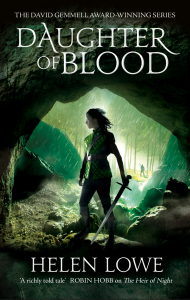
Perhaps because of this background, since commencing The Wall of Night series I’ve always had a very clear vision of the armour and weapons used by the characters, as well as all the other aspects of their physical appearance, their back stories, and their magical powers. The armour worn by the warriors of the Derai House of Night, for example, is predominantly European in character, from the period where armour was transitioning from chainmail to full plate armour.
So the Honor Guards of the Earl of Night wear chainmail hauberks, but with plate breast- and backplates, gorgets and vambraces. They carry straight swords and their bows are either the longbow or the crossbow—and it is this concept of armour and weaponry that you see reflected in the figure of Malian, the Heir of Night, on the UK/Australian/New Zealand covers for the series.

USA
Although the action of The Wall of Night is centred around the people known as the Derai — particularly in Book One, The Heir of Night and the recently released Book Three, Daughter of Blood — they are not the only characters in the book who bear arms. The herald, Tarathan of Ar, who comes from the wider Haarth world, beyond the Wall of Night, does not wear amour, but he carries two short “swallowtail” swords, which would look familiar to those who know the Chinese butterfly swords. He also uses a composite bow when on horseback, such as those used by the nomadic peoples that crossed into the European steppes, including the Huns and the Sarmatians.
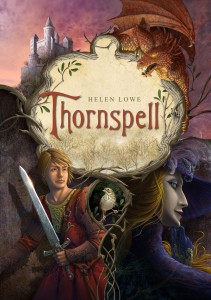
 Strictly speaking, because I am writing Fantasy, I am not required to adhere rigidly to one system of weapons. But in both The Wall of Night series and my first novel, Thornspell, I found it easier to maintain continuity and authenticity if I stuck loosely to a historical period for my armour and weaponry.
I have also been asked to what extent my martial arts background influences my writing and I believe it goes without saying that it must. Weapons, armour, martial arts, telling fantastic stories—these are all things that I love, and have loved, for a long time. I also believe that it helps to write about weapons, and using weapons, if you understand the physicality of picking up a sword or a bow, and of “wearing” what happens when you miss your strike or are outwitted by an opponent—or conversely, how it feels when you are the one who prevails.
 In the end, I believe everything in writing comes back to authenticity* and this is no less true of fantasy: do your world and your characters, your use of magic and weapons feel credible to the reader? I hope my own enduring love of weapons and armour, as well as my fun with fencing, kung fu and aikido, have helped, not just to create the Wall of Night world in that respect, but to “keep it real.”
—
* Kate Elliott, Courtney Schafer and I discussed “authenticity” in our Fantasy roundtable, hosted by Paul Weimer, that featured on the Skiffy and Fanty Show last week. If you haven’t already checked it out, you might enjoy the discussion. To find out, click on:
Skiffy and Fanty Episode 292: Fantasy and Worldbuilding
Mar
20
2016
~ by Andrew Robins
Free_Trader_Mistral\ Core\Private_Log_Amelia_Delaware \2825
Months of work, and it has come to this. We are thirty minutes out from our jump back to normal space.
Lepanto’s mindstate is fully transferred into what used to be Mistral’s gestalt. Turns out that Lepanto is genuinely really nice, so we still get to camp out in there when we need to.
We also got really lucky with Bringer.
Turns out that “the horn” that we picked up back on Mission Target Three is/was an actual part of Bringer. There is some sort of multidimensional interconnectedness going on that gives us a fighting chance of preserving something that will be genuinely recognisable as Bringer, when he/she/it brings this whole house of cards crashing down on us in about 25 minutes from now.
Of course we have had to turn most of our hold over to what Glandin is calling “the biggest quantum level Babbage machine that any one has ever conceived”, which is going to be Bringer’s new home. It glows, and looks pretty disturbing to me – but Glandin is in raptures over it.
Assuming everything works to plan, we should end up back in system at 58 Eridani. Of course, like any plan ours has its flaws.
So, the Vaders get to come back with us. And in this case “with us” means roughly 15 thousand years in the past, relative to the time line we left. We haven’t been able to find a way around that.
The good news for us is that we have a working jump drive again so we can get out of harm’s way pretty quickly on arrival.
The bad news for us is that the Vaders are going to turn up on a planet which is chock full of somewhat decayed but very high tech artefacts.
So we are going to nuke the hell out of them before we go. Bringer has given us a comprehensive list of targets – and we still have most of Lepanto’s ordinance to expend. There isn’t going to be much of a tech base left once we’ve finished.
A couple of missiles appear to have been equipped to carry anti-matter payloads as well, so we’ve spent some time making some of this. So goodbye ecosphere as well. Some models also show most of the atmosphere being stripped away.
We figure this buys us some time to do whatever it is we are going to need to do to get ready for when the Vaders bust out and come looking for us.
Part of me feels bad about what we are about to do to them. But we do figure that most individual Vader consciousness’s are going to survive even this. They are incredibly hard to kill.
Bottom line is that we will be going back to a time that still has people in it, human and not – and we need to try to protect those people.
So that is why we are going to do what we’re going to do.
Log entry ends.
—
Check back in next weekend for Episode 15 — the concluding installment of 58 Eridani.
—
You can read the previous issues by clicking on the following links:
Introducing 58 Eridani, a Game Log
58 Eridani Episode 1
58 Eridani Episode 2
58 Eridani Episode 3
58 Eridani Episode 4
58 Eridani Episode 5
58 Eridani Episode 6
58 Eridani Episode 7
58 Eridani Episode 8
58 Eridani Episode 9
58 Eridani Episode 10
58 Eridani Episode 11
58 Eridani Episode 12
58 Eridani Episode 13
—
 Andrew Robins is a long time reader – and sometime reviewer – of science fiction, fantasy and history. People pay him to test stuff, which most of the time is more fun than it has any right to be.
To check out Andrew’s book reviews, see “Book Reviews for ‘on Anything, Really’” in the right-hand side bar.
Mar
19
2016
58 Eridani will post tomorrow due to Andrew being overwhelmed by Other Life Stuff, which happens yanno… (I’m sure you do all know.)
…but meanwhile, what else to post?
All sorts of ideas skittered around in m’head, and Paul Weimer suggested a “just arrived” book post, except none have lately, so that one wouldn’t fly. 😉
So in the end I’ve opted for a photo, of Birdlings Flat on the road to Akaroa.

Cool, huh? The photo was taken by Malcolm—the husband of Marion, The Heir of Night’s Dutch translator—when they visited last month. Marion’s in the foreground, facing away; I’m in the background, more against the sky.
I wrote a poem for Birdlings Flat “a long gal ago” now, so I’ve posted that as well—so you see, a photo and poetry: double Saturday goodness. 🙂
Birdlings Flat
walking on stones
the southern ocean
heaves itself
onto a shore stripped bare,
the solitary log
pared to bleached bone —
eyes stream,
stare into spindrift,
long plumes lift,
tossed back
as the waves curve,
crashing onto stones
…every one
………worn smooth.
© Helen Lowe
Published in The Christchurch Press, April 18, 2007
 *It wasn't wild the day the photo was taken--the opposite in fact,
but Birdlings Flat can be very wild indeed. The beach is testament to that.
Mar
18
2016
USA
When embarking on a High Epic tale like The Wall Of Night series, with its diversity of heavily armed societies, making an inventory of the epic armoury becomes a priority.
Any good armoury, after all, should comprise an array of weapons—some magical, some mythic, some even real—that may, depending on circumstances, save the day for the story’s protagonists.
The Soul-Sucking Sword
A favoured contender for any self-respecting High Epic tale has to be The Soul-Sucking Sword. After all, they do abound within the annals of the epic literature we love: from Elric of Melniboné and Stormbringer, to CJ Cherryh’s Morgaine with Changeling, and Steven Erikson’s Anomander Rake and Dragnipur.
Even Robin McKinley’s (far) more benign Blue Sword has an ambivalent sense of humour. When the chips are down, a soul-sucking sword—or one that can drop whole mountain ranges, like the Blue Sword—has to be handy to any protagonist with worlds to save and a destiny to fulfil.
UK/AU/NZ
There may not precisely be soul-sucking swords in Daughter Of Blood, but there is reference to black blades:
“Black blades.” The moth’s spiral from his vigil was a phantom whisper as Parannis stalked forward, power and terror billowing ahead of him like a Wall storm. Kalan drew a deep, tearing breath and prepared to cut his wards loose—but the moth flutter brushed his mind again: “Black blades; paired blades. Darkness draws darkness, Kalan-hamar-khar.”
Darkness draws darkness. … Kalan hurled his shield into the face of Parannis’s advance, drew Asantir’s second sword and closed again with the Son of Blood.”
There is also a frost-fire sword with a liking for geas—but to say any more than that might be a spoiler.
The Spear of Power
USA
Spears of power are almost as popular in the epic armoury as soul-sucking swords. Tolkien’s Gil-galad carried Aiglos, which “none could withstand”, into battle against Sauron at the end of the Second Age, while the Irish hero, Cuchulain, possessed the Gáe Bolg, the spear of mortal pain.
Whether the spear of power is quite as effective as a soul-sucking sword remains moot however. Tamora Pierce’s heroine, Keladry, may wield the glaive to good effect in the Protector of the Small series, but proficiency with a spear does not preserve Oberyn Martell in George RR Martin’s A Song of Ice and Fire series. Nor does it appear to have done Kaladin a great deal of good, so far, in Brandon Sanderson’s The Way of Kings.
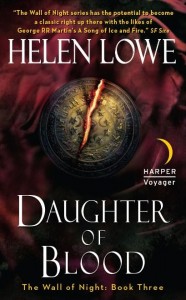
Perhaps this is why the spear-based action in The Gathering of the Lost (The Wall Of Night Book Two)—in the absence of weapons of power—focuses on the Keladry-style glaive, with its advantage of reach, which is known colloquially as the “ladyspike” in Emer:
“The defender waited until the assailants were close enough to block the aim of any enemy archers, before stepping clear of the entrance. He was holding a ladyspike in a businesslike fashion and wearing one of the bestial helms—a contradiction Kalan was still trying to work out when the ladyspike severed one opponent’s head, the return cut taking the next assailant at the knees.”
USA
Taking Care of Business: the Axe
Probably the most famous axe in the epic armoury would have to be Druss the Legend’s Snaga, from the David Gemmell classic, Legend—and of course the dwarf Gimli, in The Lord of the Rings, is an axeman. The axe of the Goddess, in Guy Gavriel Kay’s Fionavar trilogy may be a weapon of power, but otherwise the axes of Fantasy tend to be non-magical, even everyday weapons: the epitome of their functional brutality being John Aversin in Barbara Hambly’s Dragonsbane, who first drugs his dragons, then butchers them with an axe.
Daughter of Blood keeps faith with this epic tradition, with several axe references focusing on its functionally brutal uses:
“He drew the axe and swung in one swift, fluid movement. If Malian had not been expecting an attack, the blade would have split her skull. Yet even as he moved, her mind was burrowing into the wooden handle, splintering it to shards as the weapon cleaved the air.”
The Giant-Killing Bow
UK/AU/NZ
From Paris slaying Achilles from the walls of Troy, through Robin Hood righting wrongs, to the archers of England versus the might of French chivalry at Agincourt, the longbow has always been the weapon that evens unequal odds, whether in legend or history.
Legolas is probably the most famous single archer of current Fantasy, but it is Bard of Dale’s black arrow that slays the dragon Smaug in The Hobbit. Bands of archers also feature throughout the genre, with notable examples being those that join the defence of Dros Delnoch (Legend) and Ritgers Gap (The Blue Sword.)
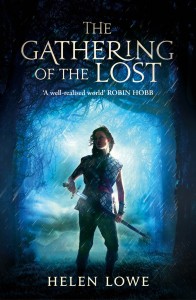
Like axes, the bows that appear in Epic Fantasy are largely non-magical, a tradition I have respected, while sneaking in just a hint of that giant-killing element of legend and history in The Gathering Of The Lost:
“Ser Raven gave no obvious signal, but at his last words a circle of archers emerged from between the tents. Ser Alric was with them, an arrow notched to the longbow he carried, with more bowmen from Wymark on either side—but Kalan could see the badges of Bonamark, Allerion and Tenneward as well, and several of the tall, quiet men from Aralorn. He could not see the Darksworns’ faces, but a look at Orth convinced him that it was only the archers that had stopped him. The giant warrior did not look like he cared a clipped coin for any truce, even the Derai’s, if it did not suit his purpose.’
Soul-sucking swords, spears of power, the businesslike axe, or giant-killing bow—these are all just a sample of the Fantasy armoury’s inventory.
But on your quest to fulfil your destiny and save the world, which Fantastic weapon would you choose?
Mar
17
2016
… it all decided to happen at once! 😀
 Skiffy and Fanty Podcast:
So on Tuesday, the Skiffy and Fanty Fantasy Roundtable discussion between Courtney Schafer, Kate Elliott, and myself, with the indefatigable Paul Weimer as moderator, went live — and actually, it sounds pretty good. We managed to canvass worldbuilding, magic systems, characters and more, and there are some great quotes in there. For example:
 “It doesn’t matter what the story is, it’s how you tell it.” ~ Courtney Schafer
“I want to see the world through others’ eyes — that’s why I read.” ~ Kate Elliott
“When I write, I have to be true to the storytelling. That’s the prime imperative.” ~ Helen Lowe (aka Yours Truly. 😉 )
To listen for yourself, click on:
Skiffy and Fanty Episode 292: Fantasy and Worldbuilding
—
Campaign For The American Reader: Writers’ Read
 Courtesy of Campaign for the American Reader, I got to pen a Writers’ Read feature, checking out a book I’ve read and loved — in my case Emily St John Mandel’s Station Eleven.
To see what I had to say, click on:
Writers Read: Helen Lowe
—
SF Signal: Fantasy Heroines that Rock My World — Post 14
 This time, my heroine is Canny Mochrie, from Elizabeth Knox’s YA novel, Mortal Fire.
To find out why I’m not sure I entirely like Canny but she still rocks my world, click on:
Fantasy Heroines That Rocky My World: Canny Mochrie
—
I think there should be something in there for most of you to have a bit of fun with — so go on, enjoy!
~ by Rebecca Fisher
In researching this collaboration between famed fantasy-peddlers Jim Henson, George Lucas and Terry Jones, I was pretty astonished to discover that when Labyrinth was first released to theatres in 1986, it was largely considered a flop, spurned by critics and ignored by audiences.
Today it’s considered a cult classic, and with the recent passing of David Bowie, I doubt I’m the only one who took the chance to rewatch him in his most famous movie role.

Sarah (Jennifer Connelly) is a petulant teenage girl who escapes her hyperbolic imprisonment as a live-in babysitter for her father and stepmother by delving into a rich imaginative world. One stormy night as she’s looking after her baby half-brother, Toby, she makes a wayward wish: for the goblins to take him far away from her.
They oblige.
Instantly regretting her words, she makes a deal with Jareth the Goblin King (David Bowie). If she can make her way through the Labyrinth to the castle beyond the Goblin City where Toby is being held captive, she can return home with him. But if she can’t reach him within thirteen hours, he’ll be irreversibly changed into a goblin.
 It’s easier said than done.
The interior of the Labyrinth is very much an excuse for Jim Henson’s Creature Shop to show off their creativity. Filled with an array of unique goblins, talking door knockers, giant stone heads that intone dire warnings, and a pit full of hands that work together to form faces, the Labyrinth is practically bursting with imaginative power.
It’s not without its dark side though – the environment is summed up nicely when Sarah picks up a beautiful little winged fairy, only to get badly bitten. The place is a beautiful Freudian soup of symbols and images, and though there’s no profound message to the film (thematic lines such as “life’s not fair”, “you have no power over me”, and “it’s all junk!” don’t exactly resonate) digging a little deeper below the surface yields some interesting rewards.
 Jareth offers Sarah her heart’s desire.
For instance, Labyrinth is clearly a coming-of-age story, with the labyrinth itself as a metaphor for Sarah’s adolescence, and Jareth as the embodiment of the fear and allure of adulthood. Across the course of the film Sarah goes from a whiny, self-absorbed brat to a wiser and more empathetic young woman, and a keen eye will notice that most of the denizens of the Labyrinth are first glimpsed in Sarah’s bedroom as a collection of posters, toys, games, and other trinkets.
There are even clues as to her mother’s absence: newspaper clippings and photographs on Sarah’s mirror reveal she ran away with a rock star who bears a passing resemblance to a certain Goblin King.
Sure, the film has its rough patches: the mumbling Wise Man and his bird-hat, some of Bowie’s extended song-and-dance numbers, the Fireys that attempt to pull Sarah’s head off in a completely pointless sequence – but the treasure box of delights the film offers far outweighs its negatives.

From a misshapen dwarf to a cavalier fox, a tiny caterpillar to a giant monster, this is the Jim Henson Company at its creative height. The animatronics on Hoggle’s face are incredible, so too is the set design and costuming for David Bowie’s Jareth (showing off his assets to best effect – that’s right, no Labyrinth review is complete without at least one pointed comment about Bowie’s pants).
Nowadays Labyrinth is considered a staple part of many an Eighties/Nineties kid’s childhood. Perhaps even J.K. Rowling is a fan – at one point Sarah mistakenly calls Hoggle “Hogwart” and the recurring motif of a white owl is highly reminiscent of Hedwig, so I like to think that little traces of this film ended up in the Harry Potter series.
.
Next Time: The Dark Crystal
Since we’re on the topic of Jim Henson, it seems natural to follow this up with a review of The Dark Crystal. Populated entirely by puppets, it was released to theatres before Labyrinth, but is definitely a precursor of what was to come in regards to its distinctive style.
.
About The Reviewer:
 Rebecca Fisher is a graduate of the University of Canterbury with a Masters degree in English Literature, mainly, she claims, because she was able to get away with writing her thesis on C.S. Lewis and Philip Pullman. She is a reviewer for FantasyLiterature.com, a large website that specializes in fantasy and science-fiction novels, as well as posting reviews to Amazon.com and her They’re All Fictional blog.
To read Rebecca’s detailed introduction of both herself and the series, as well as preceding reviews, click on:
Big Worlds On Small Screens
Rebecca won the 2015 Sir Julius Vogel Award for Best Fan Writer, for writing that included Big Worlds On Small Screens.
Last week, I shared some of the wonderful lines and stanzas from the “September” (ie 4th, 2010: the 7.1 earthquake) from Leaving the Red Zone — the poetry anthology (edited by James Norcliffe and Joanna Preston, and published by Clerestory Press) that commemorates the fifth anniversary of the February 22, 2011, earthquake.
The September 4 earthquake may have been bigger on the Richter scale, but it was the violent vertical accelerations of the February 22nd quake (6.3), which struck at 12.51 pm, that really devastated my home city of Christchurch.
Today, I am sharing some lines and stanzas from the “February” section of Leaving the Red Zone.
—
…………………………………………….”“…Students
repeating the phrases — Good Morning, Good Evening, Good
-bye. It is nine o’clock, it is ten to eleven. The time
is twelve fifty-one.”
Joanna Preston, “Fault”
.
“The earth roared, jack-hammered
bucked like a brahman bull
at a rodeo.”
Keith Westwater, “February 22, 2011, Report 1”
.
“I am driving through the river/that is my road/to find my
daughter…
my daughter is three/ she shelters under the battle-club/ she hides
inside the ground/ the enemies of god/ circle on the backs of
buzzards/ they rain bricks on the bus dept/ the primary school/
the preschool
I snatch her up/like a football/ I sprint the slowest steps/it is
underwater/ this dream/ it is eternal”
Tusiata Avia, “Finding Sepela; 22 February”
.
“Listen —
Ruaumoko*
walks the land
…
his first steps close
violent,
his last echoes
he treads down the hallway
he moves away
he leaves the door
open”
Rangi Faith, “Walking The Land”
Christchurch, February 22nd 2011
*Ruaumoko is the Maori god of earthquakes
Jacket art by Greg Bridges
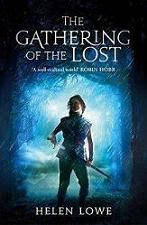
The Gathering of the Lost: USA Cover (Harper Voyager) - Read More Here!
"A richly told tale" -- Robin Hobb
"A vividly imagined world" -- Juliet Marillier
"This is an author with a gift for fantasy” -- Catherine Asaro
To read reviews, click Here.
Jacket art by Greg Bridges
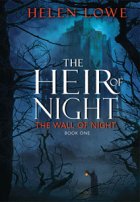
The Heir of Night: USA Cover (Eos) - Read More Here!
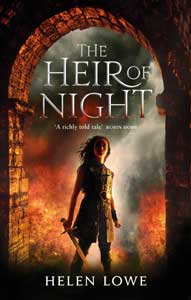
The Heir of Night: UK/AU/NZ Cover (Orbit) - Read More Here!
HEIR won the international Gemmell Morningstar Award 2012 for Best Fantasy Debut.
"THE HEIR OF NIGHT by Helen Lowe is a richly told tale of strange magic, dark treachery and conflicting loyalties, set in a well realized world."--Robin Hobb

Jacket art by Antonio Javier Caparo
Thornspell is my first novel and is published by Knopf (Random House Children's Books, USA). It won the Sir Julius Vogel Award 2009 for Best Novel: Young Adult and was a Storylines Childrens' Literature Trust Notable Book 2009.
