

Apr
27
2014


Apr
25
2014

The Wall of Night Series map; design by Peter Fitzpatrick
The A Geography of Haarth post series is traversing the full range of locales and places from The Wall of Night world of Haarth. Each locale is accompanied by a quote from either The Heir Of Night, The Gathering Of The Lost, or both.
And this is the final entry for “R”!
—
Road Gate: the gate where the great Main Road enters the River city of Ij
.
“Bunting fluttered from the city walls, dominated by the heraldic colors of the Three: gold for the sages, the crimson of the minstrels and assassins’ white. The three colors were repeated in the great standard of Ij, quartered by the city’s shield-of-arms—the river galley and the scales, the mace and the galleon—which floated above the Road Gate. Both the heralds raised a hand in formal salute as they clattered beneath the gate arch and the guards on duty there saluted in reply.”
~ from © The Gathering Of The Lost, The Wall of Night Book Two: Chapter 1 — The Road To Ij
 Can you tell I’ve just finished a manuscript with the “Just Arrived’s” coming in thick and fast? 😉
This one, Words Of Radiance by Brandon Sanderson is one I have been keenly awaiting because his The Way Of Kings, the first (published in two parts) in the Stormlight Archive series, was one of my top reads of 2011 and quite possibly my favourite new epic fantasy series of recent years.
To check out my report back on the read click on: The Way Of Kings
So I am very pleased to have all 1080 pages of Words Of Radiance ready and waiting on the TBR table now that I have a few spare moments for fat Fantasy reads. In the meantime, I shall content myself with what the back cover says:
“It began with The Way Of Kings…
And Roshar, a world both alien and magical, where gigantic hurricane-like storms scour the surface every few days and life has adapted accordingly. Roshar is shared by humans and the enigmatic, humanoid Parshendi, with whom they are at war. Among those caught up in the conflict are Highprince Dalinar Kholin, who leads the human armies; his neice Jasnah, a renowned scholar; her student Shallan, a brilliant but troubled young woman; and Kaladin, a military slave who, by the book’s end, was becoming the first magically endowed Knight Radiant in centuries.
In Words of Radiance their intertwined stories will continue and, as Sanderson fans have come to expect, develop in unexpected, wonderfully surprising directions. The war with the Parshendi will move into a new, dangerous phase, as Dalinar leads the human armies deep into the heart of the Shattered Plains in a bold attempt to finally end it. Shallan will come along, hoping to find the legendary, perhaps mythical, city of Urithuru, which Jasnah believes holds a secret vital to mankind’s survival on Roshar. The Parshendi take a dangerous step to strengthen themselves for the human challenge, risking the return of the fearsome Voidbringers of old. To deal with it all, Kaladin must learn how to fulfill his new role, while mastering the powers of a Windrunner.”
In terms of the ever-important cover treatment, Words Of Radiance continues the same black-white-red, somewhat ‘flat’ visual treatment of the previous Gollancz editions, which I must admit I am not keen on.
Having said that, it is not a treatment that repels me either, which is a good thing since I am rarin’ to read! However, I shall have to bide a wee, because I have several reading commitments ahead of this in the queue, but definitely “don’t wanna wait!”
And my partner, taking ruthless advantage of those commitments, has already jumped ahead of me in the queue—and advises that I shall not be disappointed!
by Rebecca Fisher
Introduction:
In developing a spin-off series for Joss Whedon’s cult hit Buffy the Vampire Slayer, the character of Angel seemed the natural choice for a leading role in his own show. Always on the outskirts of Buffy’s inner-circle, and a character whose story-arc in Season Two made him a danger to Buffy’s well-being, Angel eventually makes the decision to move to Los Angeles in order to fight the good fight there.

Much of Angel’s backstory was already covered in Buffy, although the gift of immortality is that there’s always plenty of space in which to explore more of such a lengthy life. The short version begins with Liam, a directionless and debauched young man living in Ireland in the 18th century – who becomes a soulless vampire and embraces his newfound freedom as a creature unbound by the rules of morality. Acquiring the moniker of “Angelus”, he soon becomes known as one of the most sadistic vampires in Europe – at least until he crosses paths with a vengeful gypsy clan.
As punishment for killing one of their young women, the gypsies place a curse upon Angelus – the reinstating of his human soul. It’s simple, but effective. Hounded by guilt and disgusted by his nature, the ensouled vampire ends up as little more than a homeless man living on the blood of rats – at least until he’s given renewed purpose when he meets Buffy Summers, the Vampire Slayer.
But the gypsy’s curse came with a caveat. They wanted Angel to suffer the agony of having a soul, not enjoy its benefits, and so the spell cast upon him had one crucial condition: that if he ever experienced one moment of pure happiness, he would immediately lose his soul again. I’m sure you can guess where this is going. Buffy made Angel happy, he lost his soul in consequence, and on regaining it once more, realized that it was too dangerous for them to be together.
Next stop – Los Angeles.
Premise:
Whew, that’s quite a set-up, and we haven’t even gotten to the spin-off yet!
Significantly darker and more adult than its parent show (for despite dealing with some hefty themes, Buffy never quite let go of its comedy-horror roots), Angel was originally envisioned as a film-noir detective series, with each episode devoted to a specific case that needed solving. Of course, this show’s detective was an immortal vampire, so the mysteries he investigated naturally had a supernatural bent.
 Angel — without the fangs
Even though most episodes were standalone, many of them contributed to an over-arching storyline. And whereas Buffy would centre each season around a specific antagonist to be defeated, Angel portrayed its protagonists as minor players in a much larger battle between good and evil, as represented by champions of the mysterious Powers That Be and the corrupt law-firm Wolfram and Hart. With this framework, the show immediately throws itself into shades of grey, for its main conflict revolves around a vampire trying to defeat a bunch of powerful lawyers.
 Angel — WITH the fangs
This naturally begs the question – how do you defeat the law? Since most of Wolfram and Hart’s employees are human, Angel can’t simply go around murdering them. Unlike Buffy, in which defeating evil was usually accomplished with super-strength, teamwork and witty one-liners, Angel had to face more incorporeal threats: corruption, temptation, despair, addiction, entropy, poverty, law suits, as well as his own feet of clay: the ever present threat of Angelus bubbling just below the surface.
Story:
Across its five seasons the show never strays far from Angel’s struggle against what Wolfram and Hart represent: corporate evil. On this show, evil is not necessarily horned and red-skinned, but dressed in business suits and flashing charming smiles. Here, evil is a commodity, one that begets further evil through ordinary people giving into their baser instincts. Even Angel himself is susceptible to their machinations, going through a crisis of faith over the course of Season Two.
 The face of pure evil (of course it would be a law firm)
The law-firm symbolizes the banality of evil and how it permeates everything (heck, even in another dimension Angel runs across an alternative version of the organisation), and a rather ingenious twist in the fifth season has the firm’s Senior Partners decide to make Angel head of the L.A .branch, offering him all its personnel and resources to do with as he wishes.
The show also features guest-stars from Buffy such as Drusilla and Faith, and plenty of flashback sequences that explore Angel’s past as Angelus. Oh, and in one episode he gets changed into a puppet. It’s awesome.
 It’s a long story
Characters:
A further dissimilarity from Buffy the Vampire Slayer is that unlike the parent show, which had a core cast of four main characters that remained the same from start to finish (though other characters came and went), Angel had a revolving cast that changed dramatically from season to season. As it stands, David Boreanaz as Angel is the only actor to appear in all one hundred and ten episodes.
 The original team
When the show starts, Angel is initially joined by Cordelia Chase (Charisma Carpenter), another Sunnydale High survivor, and Doyle (Glenn Quinn), a human-demon hybrid whose psychic visions direct Angel toward various innocents that need help. Doyle didn’t last long, being killed off very early in the show’s run, thus fulfilling Joss Whedon’s dream of catching the audience off-guard by abruptly writing out a character who’d featured in the opening credits (though the actor’s rumoured drug problems probably also had something to do with it).
Doyle was replaced by Wesley Wyndam-Pryce (Alexis Denisof), a wannabe “rogue demon hunter” and Buffy’s ex-Watcher (he certainly wasn’t missed in Sunnydale). Later in the show’s run they’re joined by Charles Gunn (J. August Richards), the leader of a gang of vampire-hunters who struggles with the idea of a “good” vampire, Fred Burkle (Amy Ackers) a physicist who was trapped for five years in another dimension, and Lorne (Andy Hallet), a singing demon who can read the auras of others.
 The final season’s team — including Spike from Buffy
Quite an eclectic group! Calling themselves Angel Investigations, their mission is to “help the helpless”, though Angel’s personal motto is more rooted in his quest for redemption. Unable to forget the horrific deeds he committed whilst a soulless vampire, he’s especially intrigued by various prophesies that seem to suggest that if he saves enough souls, he might well get the chance to regain his humanity.
Conclusion:
The inevitable question when it comes to spin-offs is always: is it better than the original? In my humble opinion, the very best that Buffy had to offer was superior to Angel – but Angel was more consistent in its quality, whereas Buffy had some real stinkers in its time.
Angel was mature and sophisticated storytelling (though it wasn’t afraid to make fun of itself at times), with a central theme that provided plenty of food for thought: that the fight for good can never be truly won, but neither can it be abandoned. In Angel’s own words: “if nothing we do matters, then all that matters is what we do.” From the beginning to the very end, that message shaped the course of the show: of people fighting for what was right regardless of whether or not they stood a chance of winning.
Next Time:
I have no idea. Enjoy the suspense. 😉
About The Reviewer:

Rebecca Fisher
Rebecca Fisher is a graduate of the University of Canterbury with a Masters degree in English Literature, mainly, she claims, because she was able to get away with writing her thesis on C.S. Lewis and Philip Pullman. She is a reviewer for FantasyLiterature.com, a large website that specializes in fantasy and science-fiction novels, as well as posting reviews to Amazon.com and her LiveJournal blog.
To read Rebecca’s detailed introduction of both herself and the series, as well as preceding reviews, click on:
Big Worlds On Small Screens
Ellen’s Vigil
……..Benjamin……..Isaac…….Tom
Passchendaele…..Ypres…and Somme
…………….three ovals float
…………….on the cold wall
plastered whiter
………………………………..than their bones,
young, khaki’d,
…………………..their bud-tender eyes
…………………..premonition filled.
Ellen,
her three boys gone,
………………transplanted seventy years
……………………from Lurgan’s linen
no longer counts crops
……………………………………in season
…..but digs, diligently, delicately,
…………………………………….digs down
……………………………………….further down
…..her spade searching
……………………her garden for
……….three lost sons
.
………….Thomas Isaac and Ben.
.
© Lorna Staveley Anker, 1914 – 2000
From The Judas Tree, edited by Bernadette Hall, Canterbury University Press, 2013
Reproduced with permission.
—
 Over the past four years since joining the Tuesday Poem community I have featured a considerable number of other poets “of a Tuesday”, so over the next while will be refeaturing all those who have have had more than one poem posted here. As this is ANZAC week I will begin with Lorna Staveley Anker’s Ellen’s Vigil. The poem was first featured on September 13 last year.
Bernadette Hall, the editor of the recently published Lorna Staveley Anker anthology, The Judas Tree, provided the following note:
“When Lorna was a very small child, she lived for a time with her grandmother, Ellen. This poem arises from her wartime memories of her grandmother’s grief stricken household. This is the most frequently published of Lorna’s poems. It was included in Lauris Edmond’s 1986 collection of prose and poetry ‘Women in Wartime’. And in the first Australasian volume of women’s poetry ‘Kiwi & Emu’‘, 1989, edited by Barbara Petrie. A copy of the poem lies in the tomb of the Unknown Warrior in front of the National War Memorial in Wellington.”
—
 To read the featured poem on the Tuesday Poem Hub and other great poems from fellow Tuesday poets from around the world, click here or on the Quill icon in the sidebar.
In terms of my recent Sir Julius Vogel Award nomination for Services to SFF, over the past few days I’ve looked at support for NZ speculative fiction and writers through interviews, guest posts, and articles. But I’m an avid reader as well as being a writer, so I was always going to feature books by other writers on this blog — and I have tried to actively include NZ books, as well as those by international authors.
I’ve featured the books in two ways, through my “Just Arrived” posts and the “What I’m Reading” series. For the purposes of this post, if a book also features under “What I’m Reading” (as opposed to in a subsequent interview or guest author post), then I have not linked to it under “Just Arrived”, below. Where a link is provided, some of the posts will have multiple book entries, so you may have to scroll down to see the NZ title.
Just Arrived:
Nalini Singh’s Archangel’s Consort
Random Static Press, Tales For Canterbury
Pip Ballantine & Tee Morris, Phoenix Rising: A Ministry of Peculiar Occurrences Novel
Mary Victoria, Oracle’s Fire
Rachael King, Red Rocks
Juliet Marillier, Shadowfell
Adam Christopher, Seven Wonders
Karen Healey, When We Wake
Phillip Mann, The Disestablishment Of Paradise
What I’m Reading:
Interactive Press, Voyagers: Science Fiction Poetry From New Zealand [anthology]
Mary Victoria, Tymon’s Flight
Karen Healey, Guardian Of The Dead
Random Static Press, A Foreign Country [anthology]
Mary Victoria, Samiha’s Song
Jennifer Fallon, Lion Of Senet
Joanna Orwin, Sacrifice
Fredrik Brouneous, The Prince Of Soul And The Lighthouse
Jane Higgins, The Bridge
KD Berry, Dragons Away
Juliet Marillier, Prickle Moon
Lee Murray, Battle Of The Birds
And that’s it: there’s probably a few more posts and reading recommendations squirrelled away in the blog backlist, but I think that’ll do to give the flavour of my approach to books and reading.
—
You can also read:
The List Of My Interviews Focusing On NZ Writers & SFF
“…On Anything, Really” Guest Posts Featuring Fellow New Zealand SFF Writers
Apr
20
2014
Last week I posted on having made the shortlist for the 2014 Sir Julius Vogel Award for “Services to Science Fiction, Fantasy and Horror.” I also posted the citation, which includes mention of my “… blog and … space in SF Signal and [my] presence at events to inform the world” of NZ SFF.
So over the past few days I’ve been posting some of those interviews, guest author features, and articles on NZ speculative fiction literature. Today I thought I’d reprise the “A Peek Inside Tales For Canterbury” post series.
 Tales For Canterbury was a project initiated by fellow SpecFicNZ-ers Cassie Hart and Anna Caro, and published by Random Static: an anthology of short fiction put together as a fundraiser for the Red Cross Christchurch Earthquake Appeal following the February 22nd earthquake in particular. So of course it had my wholehearted support, including donating one of my short stories, The Fountain. Although the anthology also had widespread international support from writers such as Neil Gaiman, Jay Lake, and the Van Der Meers (to name only a few), a large number of NZ speculative fiction writers also donated stories.
To support the book and the fundraising cause, I featured several of the stories in a special blog series, “A Peek Inside Tales For Canterbury“, mostly focusing on some of the NZ (or then, NZ resident) authors — so here they are:
“The Bus To Nostalgia” by Ripley Patton
Karen Healey’s “The Unicorn Bell”
“Juggling Silver” by Juliet Marillier
“The Daughter of the Khan” by Mary Victoria
“The Magician” by Janis Freegard
“Sign of the Tui” by Tim Jones
Tomorrow, I’ll look at the “What I’m Reading” posts.
—
Meanwhile, you can also check out:
The List Of My Interviews Focusing On NZ Writers & SFF
“…On Anything, Really” Guest Posts Featuring Fellow New Zealand SFF Writers
My Posts Focusing On New Zealand Speculative Fiction
Last week I posted on having made the shortlist for the 2014 Sir Julius Vogel Award for “Services to Science Fiction, Fantasy and Horror.” I also posted the citation, which includes mention of my “… blog and … space in SF Signal and [my] presence at events to inform the world” of New Zealand SFF.
For those who might be interested to find out more in what is now several easy posts  , I am collating some of the material here in a series of posts (because one or even two was going to be Way Too Long!) Interviews was Wednesday 16 and Guest Posts/Features on Thursday 17 — and today we’re on to some of my feature posts on New Zealand speculative fiction.
Being A New Zealand SpecFic Writer
I wrote this NZ SpecFic Blogging week in 2010
Speculative Fiction In New Zealand
Good discussion on this post, which may be why it got a link on TOR.com — putting Enzed on the international map, ay! 😉
Is There A Distinctively New Zealand Speculative Fiction?
Another post from 2011… Also one of the “most-read” from that year.
Maori Mythology in New Zealand SFF: A Few Favourite Tales
I posted this in early 2012 and it was one of my “most read” posts of that year and still gets regular hits.
Margaret Mahy, 1936 – 2012: A Personal Tribute
This came later in 2012 and although the cause was sad, I didn’t feel that I could let Margaret Mahy and her amazing contribution to NZ literature and also Children’s /YA speculative fiction literature, pass without salute.
Waitangi Day: Celebrating Us — In Literature
— including speculative fiction literature, as it happens…
Next Up:
For tomorrow, I think I’ll look at “A Peek Inside Tales for Canterbury” as a specific blog series, with the “What I’m Reading” posts on Monday.
And then I think we might be all done here. 😉
—
You can also read:
The List Of My Interviews Focusing On NZ Writers & SFF
“…On Anything, Really” Guest Posts Featuring Fellow New Zealand SFF Writers
Apr
18
2014
The Wall of Night Series map; design by Peter Fitzpatrick
The A Geography of Haarth post series is traversing the full range of locales and places from The Wall of Night world of Haarth. Each locale is accompanied by a quote from either The Heir Of Night, The Gathering Of The Lost, or both.
This week, we’re still in “R.” 😉
—
River Port: the city of Ij’s port for barges and galleys plying the river Ijir and its tributaries
.
“They let the gray horses increase their pace as the road cleared further—and crested a last, low hill in the early afternoon to see Ij spread out below them, glittering beneath the rainbow arch of a sun shower. Both heralds had seen the jewel of the Ijir before, but they still paused to take in its vastness, which spanned a series of islands between the river and the sea. Three great bridges led into the city on its western, landward side, with the River Port to the south that was still clogged with the galleys and barges that plied the Ijir and its navigable tributaries. There was a Patrol fort close by the port, one of the major bases for their fleet of black galleys that patroled the river from Ij up to Enkot in the far west. On the city’s seaward side, the islands were hemmed in by the masts of oceangoing ships, the great merchant vessels that traded from Ishnapur to Grayharbor.”
~ from © The Gathering Of The Lost, The Wall of Night Book Two: Chapter 1 — The Road To Ij
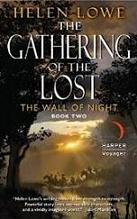
Jacket art by Greg Bridges
The Gathering of the Lost: USA Cover (Harper Voyager) - Read More Here!
"A richly told tale" -- Robin Hobb
"A vividly imagined world" -- Juliet Marillier
"This is an author with a gift for fantasy” -- Catherine Asaro
To read reviews, click Here.
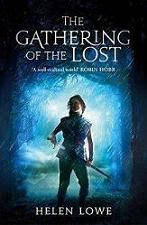
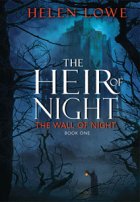
Jacket art by Greg Bridges
The Heir of Night: USA Cover (Eos) - Read More Here!
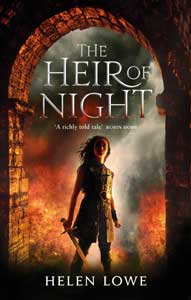
The Heir of Night: UK/AU/NZ Cover (Orbit) - Read More Here!
HEIR won the international Gemmell Morningstar Award 2012 for Best Fantasy Debut.
"THE HEIR OF NIGHT by Helen Lowe is a richly told tale of strange magic, dark treachery and conflicting loyalties, set in a well realized world."--Robin Hobb

Jacket art by Antonio Javier Caparo
Thornspell is my first novel and is published by Knopf (Random House Children's Books, USA). It won the Sir Julius Vogel Award 2009 for Best Novel: Young Adult and was a Storylines Childrens' Literature Trust Notable Book 2009.
