…in my humble opinion, one cannot go past Steering The Craft by the great Ursula Le Guin.

The subtitle promises “exercises and discussions on story writing”…(hooray!)…“for the lone navigator”…(that’s me!)…“or the mutinous crew.” (I’m pretty sure that’s the muses, in my case: O-o.)
My current theme is worldbuilding and while Steering The Craft is not specifically about that topic, I don’t believe anyone could read Le Guin’s passages on language, or how to make point-of-view work for the story, without coming away with a wonderful feeling for worldbuilding as well.

Le Guin’s world of Earthsea
BUT, for matters germane to the art and craft of worldbuilding, the most useful chapter may be “Indirect Narration, Or What Tells”: i.e. how to provide information in the narrative.
Here’s what Le Guin has to say about SFF in this context:
“This is a skill science fiction and fantasy writers are keenly aware of, because they often have a great deal of information to convey that the reader has no way of knowing unless told…The world of the story must be created and explained in the story…But it’s a tricky business.”
“I hear you!” many aspiring worldbuilders may cry, which is why I’m giving the book a shoutout as part of my current worldbuilding focus.
The subsequent chapter, “Crowding and Leaping”—about what stays in the book and what must be left out—is also useful reading from a worldbuilding (as well as a general writing) perspective.

Le Guin’s world of Gethen, aka Winter
The thing I most like about Steering The Craft, though, is the sheer joy and love of writing, in all its permutations and guises, that quickens to life and breathes out of every line.
In fact, it may just be time for a reread…


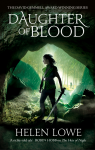
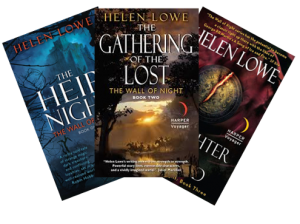
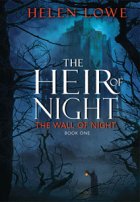
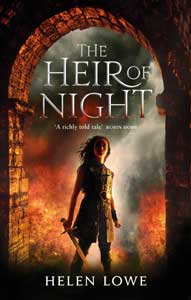
As I grew up and my original world idea developed, I realized that a dark world, while atmospheric, made for challenging worldbuilding and difficult storytelling, so I revised the “darkness” back to more of a twilit world, with an accompanying stark and bleak landscape, that became the Wall of Night. I also originally thought the wall would be an actual constructed wall (like the Nightwatch’s Wall of Ice in A Game of Thrones) but the more I thought about it the more the “mountain range as shield-wall” idea took hold.
Other “Big Ideas” I (believe I) perceive in Fantasy worldbuilding, which pervade the stories, include:
If you think of a world as being similar to a human body, the spine is the central column, or core idea, that connects everything else.
In order for the world to be real for readers, it must first be real in your mind so that the characters can experience their surroundings in a real way.
Yet it is not enough to simply experience, the characters must also respond emotionally to what they experience. For example, in any given situation, does the character feel fear or horror, foreboding or doubt; happiness or confidence? Do they respond to stimuli with joy and delight, or disgust and loathing?
The reality of the worldbuilding will help you, as author, to know how your characters respond. It will also help your readers not only understand what’s going on for your characters, but to understand environment and world through their senses and perceptions, i.e. the world becomes real for all involved.


The 


Yes, it’s finally time for 


Reading and thinking about books, storytelling, and writing is a big part of a writer’s life. No surprises, then, that reading and discussing books is also a central plank of my blog.